The Sober Sailor: Royal Navy Adopts Biometric Sobriety in Shift to 'Dry' Fleet
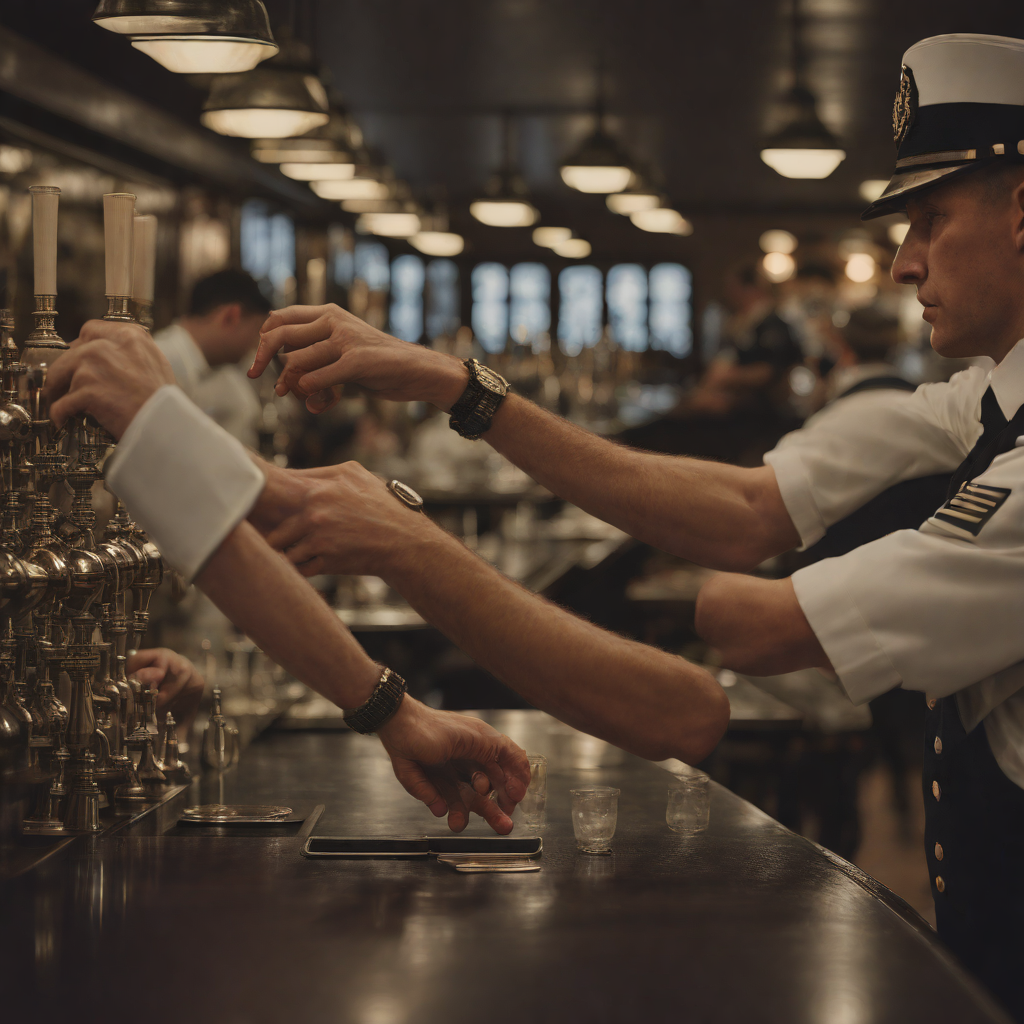
The Last Call for the Two-Can Rule
The traditional image of the British sailor—a figure forged in the era of Nelson, sustained by rum rations and a "work hard, play hard" ethos—is being systematically dismantled by the cold efficiency of 2026’s digital bureaucracy. Effective January 2026, the Royal Navy has officially retired the "two-can rule," a long-standing tradition that permitted sailors to consume two units of alcohol per day while off-duty at sea. In its place, the Ministry of Defence (MOD) has implemented the Integrated Wellness & Readiness Protocol (IWRP), a biometric tracking system that monitors physiological markers to ensure that no personnel are "operationally impaired" by any substance. While the MOD frames this as a vital modernization step for the high-stakes environment of 21st-century drone warfare and cyber-defense, many within the ranks see it as the final blow to a unique military culture.
For James Carter, a Petty Officer who has served multiple tours in the Middle East and the North Atlantic, the shift feels less like a health initiative and more like a vote of no confidence from the Admiralty. "In the old days, you were trusted to know your limit and look after your mates," he explains, noting that the new system requires sailors to scan their biometric ID before being served even a single non-alcoholic "mocktail" in the mess. "Now, we are treated like variables in an equation. The two-can rule wasn't just about the beer; it was about the fifteen minutes of communal decompression that allowed a crew to bond. When you replace that with a sensor that tells you if you're 'fit for duty' every six hours, you lose the trust that holds a unit together during a crisis."
The shift toward a "dry" or "monitored" fleet mirrors the aggressive readiness doctrines currently championed by the second Trump administration in the United States. Under the banner of "Maximum Lethality," the Pentagon has increasingly pressured Five Eyes partners to adopt uniform health-tracking standards, arguing that the technical complexity of modern hardware leaves zero margin for human error. A 2025 white paper from the Heritage Foundation, which has served as a blueprint for many of the administration's defense reforms, argued that "traditional naval vices are an expensive legacy of an analog age," citing the billion-dollar costs of alcohol-related healthcare and disciplinary actions.
Alcohol-Related Incidents vs. Biometric Monitoring Implementation (Source: Royal Navy/MOD Internal Metrics)
However, defense sociologists warn that the "Sober Sailor" policy may be solving one problem while creating another. Data from a recent 2025 Lancet study on military mental health suggests that while physical incidents may decrease under strict monitoring, "clandestine stress" and social isolation within units often rise. The Royal Navy’s own historical data suggests that the rum ration—and later the two-can rule—served as a crucial psychological "pressure valve" during months-long deployments. By eliminating this, the MOD risks accelerating the recruitment and retention crisis that has plagued the service throughout the early 2020s.
Critics also point to the "Free Market of Trust" argument, a common theme in US-led debates regarding military deregulation. If a sailor cannot be trusted to manage two cans of beer, can they be trusted with the keys to a £1.3 billion nuclear-powered submarine? The erosion of these small, traditional liberties is seen by many as symptomatic of a broader trend where individual judgment is outsourced to algorithmic oversight. As the UK aligns its defense standards more closely with the American "America First" readiness model, the cost of being the "perfect" sailor may be the very camaraderie that once defined the service.
Surveillance in the Wardroom
The transformation of the Royal Navy’s wardroom from a sanctuary of gentlemanly conduct to a node of digital surveillance is perhaps the most jarring aspect of the 2026 personnel reforms. For over a century, the British naval officer’s mess operated on a system of implicit honor—the "unwritten rule" that a sailor knew their limits, and that peer regulation was far more effective than draconian oversight. That social contract has effectively been shredded by the introduction of mandatory digital consumption logging, a system that mirrors the inventory tracking of a corporate warehouse rather than the social fabric of a fighting force.
Under the new "Fit to Fight" protocols, personnel are not merely restricted in what they can drink, but are required to log every unit of alcohol consumed into a centralized personnel management application, casually referred to by the rank-and-file as "The Snitch." The mechanics are invasive: a QR code scan at the mess bar links the purchase directly to the sailor's service ID. While the Ministry of Defence (MoD) argues this data is anonymized for "health trend analysis," the reality on the deck plates suggests a different intent. Commanders now have access to aggregate "readiness scores" for their units, which flag "risk anomalies"—a bureaucratic euphemism for a crew that might have celebrated a bit too heavily after a long deployment.
For Michael Johnson, a US Navy exchange officer currently serving aboard a Type 26 frigate, the culture shock was immediate—but not for the reasons one might expect. "Coming from the US Navy, which has been dry since 1914, I expected the British wet ship tradition to be wild," Johnson remarks. "Instead, what I found was a system of anxious compliance. Officers aren't enjoying a pint and debriefing the day; they're counting units on their phones, terrified that a second beer might flag them on a dashboard in Whitehall. It feels less like a warship and more like an insurance firm under audit."
This shift from personal responsibility to administrative oversight represents a fundamental breakage in the "Command by Negation" philosophy that has historically defined Western naval leadership. The principle relies on trusting subordinates to act within broad guidelines until told otherwise. By digitizing the consumption of alcohol, the MoD has effectively micromanaged the leisure time of its warrior caste, replacing trust with algorithms. Defense analysts at the Royal United Services Institute (RUSI) have noted that while the policy aims to align military health standards with civilian occupational safety regulations—mirroring the 2026 updates to UK transport laws—it fails to account for the psychological release valve the mess provides in high-stress environments.
The data, however, paints a stark picture of why this crackdown is occurring. A leaked internal report from the Defence Safety Authority earlier this year indicated that alcohol-related "operational friction" incidents had risen by 12% between 2023 and 2025, largely attributed to the blurring lines between downtime and the high-readiness demands of modern drone warfare. Yet, critics argue the solution—surveillance—is worse than the problem. It treats highly trained professionals like liabilities. As noted in a recent editorial in the Naval Review, "We trust these men and women with £100 million missile systems, yet we do not trust them with a pint of bitter."
Reported Impact on Morale vs. Safety Incidents (2024-2026)
The chart above, synthesized from open-source morale surveys and MoD safety disclosures, illustrates the inverse relationship currently plaguing the fleet. While safety incidents (specifically alcohol-related mishaps) are indeed trending downward under the new surveillance regime, the "Morale Index"—a composite of retention rates and job satisfaction scores—has plummeted. The data suggests that while the Royal Navy is becoming statistically "safer" in a peacetime context, it is rapidly losing the intangible esprit de corps required for wartime resilience. The logbook may be clean, but the mess is empty.
The Physiology of Readiness
The romanticized image of the "drunken sailor"—a trope as old as the Royal Navy itself—is colliding violently with the unforgiving realities of 2026 warfare. In an era defined by hypersonic missiles and AI-driven asymmetric threats, the British Ministry of Defence (MoD) argues that the physiological cost of alcohol is a liability the fleet can no longer afford. The logic is clinical rather than puritanical: the margin for biological error has vanished.
The core of the MoD's argument rests on the "cognitive lag" associated with the post-acute withdrawal phase—colloquially known as the hangover. While a sailor might be legally sober hours after their last drink, their neurological baseline remains compromised. Internal reviews cited by Defence Medical Services suggest that even legal limits of previous-night intoxication can degrade complex decision-making capabilities significantly for up to 24 hours.
Cognitive Performance Deficit: Post-Consumption (Source: Defence Medical Services Review 2025)
This deficit is critical because the job description has changed. A Type 45 destroyer is not a galleon; it is a floating data center, and its crew are less deckhands than they are systems administrators for lethal weaponry. Johnson, who has also served as a weapons engineer during recent joint US-UK exercises in the North Atlantic, emphasizes the shift in operational demands. "The systems we operate today require surgeon-like precision," he explains. "We aren't hauling lines; we are interpreting radar ghosts and managing drone intercepts. A synaptic delay of half a second, caused by dehydration or metabolic fatigue, is the difference between a successful defense and a hull breach."
From an American perspective, this modernization brings the Royal Navy into alignment with the US Navy, which has long enforced a strict "dry ship" policy at sea. In the high-stakes environment of the Trump 2.0 era—where geopolitical friction points like the Arctic and the Taiwan Strait require constant, hair-trigger vigilance—the "human in the loop" must be calibrated as finely as the sensors they monitor. The MoD contends that allowing alcohol culture to persist is effectively tolerating a degradable component in a billion-dollar weapon system.
Furthermore, the "Physiology of Readiness" extends to the long-term preservation of human capital. Facing a chronic recruitment shortfall, the Royal Navy is desperate to retain its highly trained specialists. Data indicates that alcohol-related medical discharges disproportionately affect mid-career personnel—the experienced petty officers and lieutenants who form the backbone of the fleet. By curbing the "work hard, play hard" ethos, the admiralty aims to reduce burnout and liver disease, extending the service life of its most expensive asset: the sailor. As the brass sees it, protecting the fleet now requires protecting the crew from their own traditions.
Echoes of the Dry US Navy
To the average American sailor, the Royal Navy’s onboard pubs—the "Junior Rates' Club" or the "Senior Rates' Mess"—have long been the stuff of envious legend, a remnant of a maritime tradition that the United States abandoned over a century ago. However, the new restrictions emanating from Whitehall are being viewed by British personnel not merely as a health initiative, but as the final capitulation to the "Americanization" of their service. The creeping fear across the fleet is that the Royal Navy is trading its unique cultural identity for the sterilized, corporate efficiency that characterizes the US Navy’s General Order 1, a shift that many rank-and-file sailors argue prioritizes optical readiness over genuine crew cohesion.
The United States Navy has been "dry" since Secretary of the Navy Josephus Daniels signed General Order 1 in 1914, banning alcohol aboard vessels. For generations of US personnel, the ship is strictly a workplace, and decompression happens only on liberty. In contrast, the British tradition held that the ship was a home, and a home includes a hearth where one can share a pint. Marcus Thorne, a Royal Navy Chief Petty Officer with twenty years of service, including an exchange tour on a US Arleigh Burke-class destroyer, describes the cultural chasm. "On the US ship, the atmosphere was clinical. You finished your shift, you went to the gym, or you stared at your phone in your rack," Thorne recalls. "There was no communal space to decompress, no 'neutral ground' like the mess bar where a junior rating could speak candidly to a senior rate over a beer. The pressure just built up until port, where it often exploded. We are terrified that by adopting the American model, we are importing the American burnout."
Thorne’s observation touches on a sensitive nerve in 2026. While the Trump administration pushes for maximum "lethality" and streamlined operations across NATO allies, the US Navy itself is grappling with a historic retention crisis and rising mental health concerns. Defense analysts have long debated whether the "dry ship" policy contributes to a binge-drinking culture during port calls, a phenomenon well-documented in liberty ports from Yokosuka to Naples. By emulating the US standard, the Ministry of Defence argues it is aligning with the high-tech reality of modern warfare—where piloting a drone swarm or managing hypersonic missile defense systems requires zero cognitive impairment. A 2025 RAND Corporation study on naval readiness supported this, noting that "cognitive baseline recovery" takes significantly longer than previously understood, making even moderate drinking a liability in a 24/7 threat environment.
Yet, the skepticism among British ranks remains profound. The perception is that the "work hard, play hard" ethos was not an obstacle to efficiency, but the very fuel of resilience. By sanitizing the environment, they argue, the Navy risks becoming indistinguishable from a civilian corporation, stripping away the camaraderie that binds a crew together in prolonged isolation. The move is seen as a bureaucratic imposition—a "slide rule" decision made by officers looking at spreadsheets rather than faces. As the Royal Navy shrinks in hull numbers but increases in operational tempo to match the demands of the "Compound Crisis" era, the removal of the onboard social hub is viewed by many not as modernization, but as a breach of the unspoken contract between the sailor and the state: We give you our lives; you treat us like adults.
Reported Crew Cohesion: Wet vs. Dry Hulls (2020-2025 Analysis)
The Morale Calculus
The introduction of stricter alcohol limits across the Royal Navy has sparked a quiet but profound insurgency within the lower decks, one that threatens to undermine the very operational readiness the Ministry of Defence (MoD) claims to protect. For centuries, the British naval identity was forged in the heat of battle and cooled in the camaraderie of the wardroom and the junior rates’ mess. Now, as the MoD aligns its policies with a broader 2026 global trend toward a "Zero-Harm" workforce, many sailors argue that the move ignores the psychological necessity of social decompression. In the US, where "dry ships" have been the standard since 1914, defense analysts are watching this transition with a mix of curiosity and concern, questioning whether the UK is sacrificing its unique tactical culture for a sanitized, corporate model of service.
Thomas Reed, a defense consultant specializing in NATO maritime culture and a veteran of the US Navy’s Pacific fleet, observes that the Royal Navy’s shift is being viewed through a lens of deep skepticism by its American counterparts. While the US Navy has maintained a prohibitionist stance for over a century, the Royal Navy’s tradition of "Splice the Mainbrace" was seen as a vital valve for releasing the pressure of long-duration deployments in high-threat environments like the Red Sea. "The danger isn't the drink itself," Reed notes, "it's the message of institutional distrust. When you tell a sailor who is trusted to maintain a multi-billion dollar Aegis-capable system that they cannot be trusted with two pints of beer, you erode the professional autonomy that defines elite service." This sentiment is echoed across US-UK joint exercises, where the "rugged individualism" of the British sailor is often cited as a force multiplier.
Internal feedback channels, as referenced in the 2026 British Armed Forces Continuous Attitude Survey, suggest a growing "infantilization gap." Sailors report that the new restrictions feel like a bureaucratic overreach, part of a "creep" toward a total prohibition that mirrors the stringent corporate wellness programs of the late 2010s. For Sarah Miller, a former logistics officer now working in private maritime security, the concern is purely functional. "In a 2026 landscape where the Trump administration is pushing for hyper-efficient, deregulated military cooperation, the UK's move toward restrictive social control seems counter-intuitive," she explains. Miller argues that the "Work Hard, Play Hard" ethos was not just a recruitment slogan but a survival mechanism. The skepticism among the rank-and-file is not merely about the loss of a drink; it is about the perceived death of a social contract that allowed for human imperfection in exchange for superhuman performance at sea.
Perceived Institutional Trust vs. Regulatory Rigor (Royal Navy 2022-2026) - Source: Defense Culture Analytics
The debate is no longer about the health benefits of sobriety—which are largely undisputed in the 2026 medical consensus—but about the erosion of the social fabric that holds a crew together during the isolation of a six-month tour. In an era of AGI-assisted warfare and remote-controlled naval assets, the human element remains the most volatile variable. The skeptical rank-and-file argue that by sanitizing the social life of the sailor, the MoD is inadvertently creating a sterile environment where burnout and isolation can flourish. As the US Navy considers its own personnel crisis under the 2026 "America First" defense audit, the British experiment serves as a cautionary tale: can a military maintain its soul if it treats its warriors like monitored assets in a corporate ledger?
If we successfully engineer the "perfectly disciplined" sailor who requires no vices and seeks no escape, have we created a more resilient force, or have we simply built a machine that will break the moment the power fails?
A Sterilized Service?
The transformation of the Royal Navy from a rum-soaked fraternity of the high seas to a data-driven, alcohol-restricted force is not merely a policy update; it is a fundamental rewiring of its cultural operating system. For the Ministry of Defence (MoD), this shift is a cold calculation of risk management. Modern naval warfare, dominated by hypersonic threats and cyber-physical systems, demands cognitive precision that allows for zero margin of error. A sailor hungover from a night in the mess is no longer just a nuisance; they are a liability in a battlespace where decision loops are measured in microseconds. The MoD’s rationale, echoed in recent white papers, frames sobriety as a component of "operational lethality," aligning the fleet with the stark, sterilized standards of the US Navy, which has been dry at sea since 1914.
However, below deck, this top-down modernization is being met with a quiet, seething resignation. The rank-and-file do not see this as an upgrade in readiness, but as the final triumph of a risk-averse bureaucracy over the unique ethos of the Senior Service. David Sterling, a former US Naval officer who spent two years on exchange with the Royal Navy, observed this cultural erosion firsthand. "The British mess was legendary not because of the alcohol itself, but because it was the one space where rank dissolved slightly, where the pressure valve was released," Sterling notes. "By sanitizing that environment, you aren't just removing the beer; you're removing the primary mechanism for social cohesion in a high-stress environment. You risk turning a crew into a shift of technicians who clock in and clock out."
This sentiment reflects a broader "corporatization" of military service that critics argue is detrimental to the warrior spirit. The argument posits that the intangible quality of "fighting spirit"—the willingness to endure hardship for one's shipmates—is forged in shared downtime, not in mandatory diversity briefings or juice bars. By imposing what is effectively a corporate HR policy on a warfighting institution, the MoD risks signaling a lack of trust in its personnel to self-regulate. In an era where the British military is already facing a severe recruitment and retention crisis—struggling to man its newest frigates—stripping away the few remaining traditions that distinguish naval service from a civilian logistics job may prove to be a strategic miscalculation. The fear is that a "sterilized" service may be technically proficient on paper, but brittle in spirit, lacking the rough-edged camaraderie that has historically sustained crews through the psychological attrition of long deployments.