Soft Power, Hard Tariffs: Samsung's Smithsonian Gamble

The marble halls of the Smithsonian National Museum of Asian Art have long served as a quiet sanctuary in a city fueled by noise, but last night, the silence was strategic. Inside the Freer Gallery, the unveiling of the "Lee Kun-hee Collection" offered a curated selection of Korean masterworks—pristine celadon, ink landscapes, and national treasures never before seen on American soil. Yet, for the tuxedoed elite maneuvering through the exhibit, the artistry was secondary to the guest list. In the shadow of the Trump administration’s aggressive new tariff regime, this gala was not merely a cultural exchange; it was a desperate, high-stakes bid for diplomatic survival.
The atmosphere in the room was a study in cognitive dissonance. While the hushed crowd admired a 12th-century Goryeo vase, the geopolitical reality outside the museum walls was fracturing. Just days earlier, the "Seoul Shock"—a market tremor triggered by the White House's abrupt announcement of resource annexation strategies in Greenland and renewed protectionist barriers—had sent the KOSPI tumbling and rattled supply chains from Pyeongtaek to Austin. The calm inside the Smithsonian was a veneer, a manufactured peace designed to facilitate the one interaction that mattered: Samsung Electronics Executive Chairman Lee Jae-yong and U.S. Commerce Secretary Howard Lutnick.
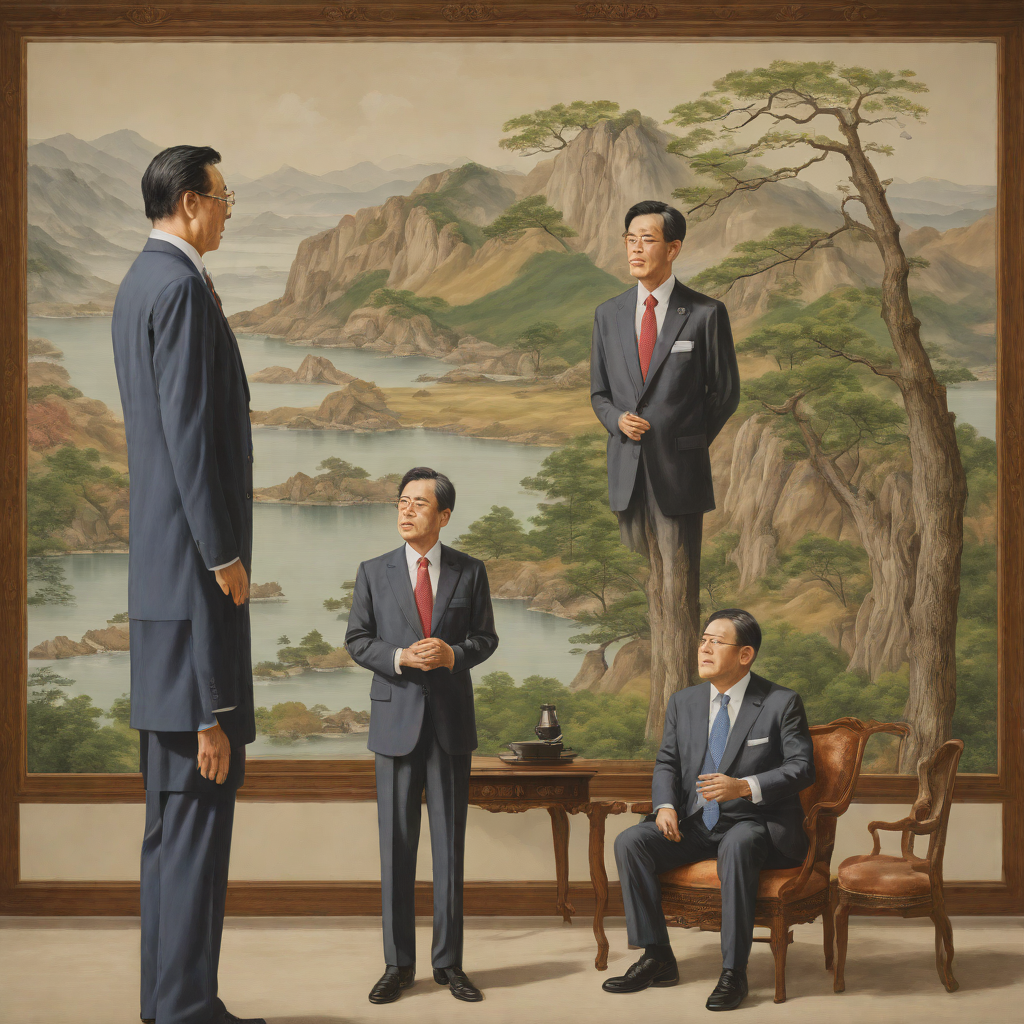
For observers accustomed to the blunt force of the current administration’s "America First" trade policy, the tableau was striking. Lutnick, the former financial executive now tasked with dismantling decades of free trade orthodoxy, was seen engaged in prolonged, animated conversation with Lee—not across a boardroom table, but in front of Inwangsan Mountain after Rain, a masterpiece by Jeong Seon. This is the new architecture of influence in 2026. With formal diplomatic channels frequently gridlocked by retaliatory tariffs and aggressive rhetoric, global conglomerates are pivoting to cultural patronage as a critical backchannel.
"It is soft power weaponized for hard survival," noted James Carter, a trade analyst and former lobbyist present at the event. "When the Commerce Department is threatening a 20% blanket tariff on imported semiconductors, you don't send a trade representative to argue focused on spreadsheets. You bring the decision-makers into a room where history and legacy make the argument for you. Lee isn't just showing art; he is reminding Washington that the alliance runs deeper than the current quarterly deficit."
The Lutnick Doctrine and the Cultural Shield
Howard Lutnick’s presence was a calibrated signal in the noise of Washington’s current trade turbulence. As the architect of the administration's renewed "America First" trade strategy, Lutnick has spent the opening weeks of 2026 redefining the Department of Commerce not as a facilitator of global exchange, but as the gatekeeper of the American market. The "Lutnick Doctrine," as it has come to be known inside the Beltway, operates on a stark premise: tariffs are less about revenue and more about leverage. Unlike the broad, ideological protectionism of previous eras, the current approach is surgical and coercive. It views access to the U.S. consumer base as a privilege to be renegotiated constantly.
For tech giants like Samsung, this presents an existential risk. With the administration threatening new levies on imported advanced memory chips—ostensibly to force domestic production but practically serving as a cudgel in broader geopolitical negotiations—the traditional avenues of lobbying have yielded diminishing returns. The aggressive posture was solidified following the formal annexation of Greenland’s resources, a move that signaled to global partners that the U.S. is prioritizing resource dominance over alliance maintenance.
In this high-stakes environment, the gala functions as a sophisticated counter-maneuver. By curating a space where the aesthetic heritage of Korea intersects with the institutional prestige of the Smithsonian, Samsung is effectively bypassing the hostile architecture of the Trade Representative’s office. It is "soft power" deployed to mitigate "hard power" threats. Observers note that Lutnick, a figure who prides himself on making deals rather than following diplomatic protocol, is uniquely susceptible to this form of engagement.
"He doesn't care about the World Trade Organization rulebook," notes Sarah Miller, a trade analyst at a D.C.-based think tank who has tracked the administration’s shifts since the inauguration. "He cares about leverage and perception. Seeing Korean cultural capital celebrated in the heart of Washington makes it harder to paint them purely as an economic adversary the next morning."
Semiconductors Meets Aesthetics
Under the vaulted ceilings, the delicate brushstrokes of a Joseon Dynasty landscape offered a stark, intentional contrast to the brutish reality waiting just outside: a looming trade war defined by silicon, not silk. The juxtaposition of high art and high-stakes manufacturing is a calculated maneuver by Samsung’s leadership. By showcasing the Lee family’s patronage—a collection that rivals the Guggenheim in scope—the conglomerate is subtlety framing itself not merely as a foreign vendor of memory chips, but as a sophisticated cultural peer essential to the American fabric.
However, for the Trump administration officials in attendance, the glamour serves a different function. It provides a neutral ground to reassess the terms of engagement. The "America First" doctrine views the semiconductor supply chain not as a collaborative ecosystem, but as a leverage point. The question hovering over the hors d'oeuvres was clear: Can cultural soft power lubricate the friction of a 10% universal tariff?
For Samsung, the Taylor, Texas fabrication plant represents more than just capacity; it is a physical insurance policy against geopolitical volatility. Yet, the facility has been plagued by inflationary cost overruns—a reality exacerbated by the very labor shortages the current administration’s immigration crackdowns threaten to worsen. Industry analysts note that while the Biden administration viewed the CHIPS Act as a cooperative security measure, the Trump 2.0 team views it as a leverageable asset to be renegotiated. Samsung is betting that the path to securing its semiconductor exemptions runs not just through the halls of Congress, but through the galleries of the Smithsonian, proving that in the art of the deal, art itself is a powerful bargaining chip.
The Limits of Champagne Diplomacy
The clinking of champagne flutes often masks the grinding friction of realpolitik, but in the sharp light of the Trump 2.0 era, the veneer is thinner than ever. While the gala successfully brought Samsung’s leadership into the same room as the Commerce Secretary, the warmth of the evening stopped abruptly at the museum doors. For seasoned Washington observers, the event highlighted a stark limitation of modern corporate statecraft: access is no longer a proxy for influence.
History offers a sobering precedent. In the late 1980s, Japanese conglomerates heavily invested in American cultural institutions during the height of the semiconductor trade wars. Yet, those gestures did little to stem the tide of Section 301 sanctions or the aggressive managed trade agreements forced upon Tokyo. The cultural bridge-building humanized the adversary but failed to alter the economic calculus of a Washington intent on protecting its industrial base. Today, with the "Seoul Shock" still reverberating through global markets, the stakes are considerably higher.
As the gala concluded and the black SUVs idled on Independence Avenue, the question lingering in the cold January air was whether cultural prestige still holds any currency in an economy increasingly defined by raw resource dominance and isolationism. Samsung is operating in an environment where the rules are rewritten weekly by executive order, and no amount of porcelain or poetry can fully insulate a foreign entity from the raw mechanics of an administration prioritizing domestic hegemony over global integration.