Seoul's Conservative Fracture: Mayor Oh's Ultimatum Risks 'Self-Destruction'
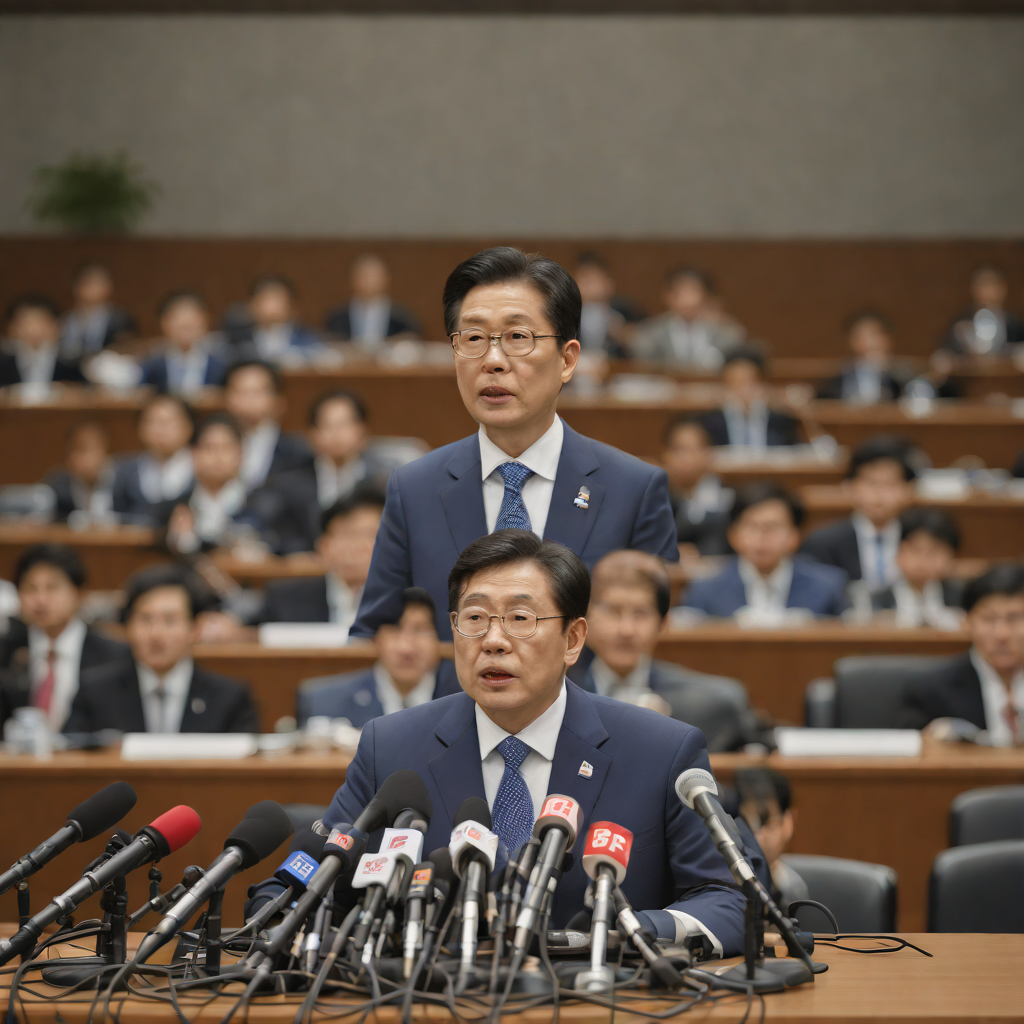
In a move that shatters the fragile façade of unity within South Korea’s ruling People Power Party (PPP), Seoul Mayor Oh Se-hoon has issued a stark ultimatum that reverberates far beyond the corridors of the National Assembly. By publicly demanding the resignation of Acting Representative Jang Dong-hyeok, Mayor Oh has effectively declared that the party’s current trajectory is not merely a strategic stumble, but a "path to self-destruction." This deeply public rupture confirms the fears of Washington analysts monitoring the Indo-Pacific: the recent removal of former leader Han Dong-hoon has not acted as a tourniquet for the bleeding conservative bloc, but rather as an accelerant for its fragmentation.
The timing of Oh’s intervention is calculated and devastating. With the critical June local elections less than five months away, the Mayor of Seoul—arguably the second most powerful elected official in the country and a leading contender for the next presidency—is signaling that the current interim leadership is incapable of steering the party away from an electoral abyss. Mayor Oh’s critique centers on the party’s "helplessness" in the face of escalating political warfare, a sentiment that resonates with a base increasingly disillusioned by the constant internal bloodletting. This is not standard factional infighting; it is a vote of no confidence from the party’s most significant administrative figure against its legislative command.
The Post-Purge Vacuum
The expulsion of Han Dong-hoon was intended by the PPP's establishment to be a surgical removal of a populist rival, a maneuver designed to consolidate authority around the presidential office. Instead, it has triggered a septic shock within South Korea’s ruling conservative bloc. Far from restoring discipline, the ouster has stripped the party of its most popular figure among moderates and younger voters, leaving a vacuum that the current leadership—headed by acting figures like Jang Dong-hyeok—has proven incapable of filling. The prevailing theory in Seoul was that once Han was gone, the party’s traditional hierarchy would naturally reassert control. That calculation has spectacularly failed.
What is unfolding now is not a return to order, but the onset of feudal warlordism. Oh’s public ultimatum demanding Jang's resignation is the clearest signal yet that the center cannot hold. By attacking the current leadership, Oh is effectively declaring that the party’s machinery is broken and that the "post-Han" stabilization strategy was a fantasy. For U.S. observers and investors watching the Korean Peninsula, this fragmentation is alarming. It suggests that the PPP is no longer functioning as a cohesive governing partner for the Trump administration but rather as a collection of warring factions, each prioritizing internal survival over the looming electoral threats of June.
The irony is palpable. The pro-establishment faction removed Han to eliminate "noise" and "instability," yet their heavy-handedness has amplified both. The party’s approval ratings have not rebounded; they have decoupled from the President’s own stagnating numbers, drifting into dangerous territory. Without Han’s ability to mobilize the 'concrete' conservative base and the swing voters who found his anti-establishment rhetoric appealing, the PPP appears rudderless. Oh Se-hoon’s intervention is an attempt to distance himself from the sinking ship of the current leadership, positioning himself as the only adult in the room. However, this internecine warfare only confirms the opposition’s narrative: that the conservatives are too busy eating their own to govern a nation facing a demographic cliff and an unpredictable American trade policy.
The Specter of a June Wipeout
The calculus in Seoul is grim, and Mayor Oh Se-hoon knows it. The removal of Han Dong-hoon—once hailed as the conservative bloc's standard-bearer—was sold to the public as a necessary "surgical strike" to restore order. Instead, it has triggered a systemic hemorrhage of support that threatens to turn the upcoming June local elections into a political graveyard for South Korea's ruling conservatives. Oh’s demand for the resignation of Jang Dong-hyeok is a frantic distress signal warning that the party is sleepwalking into a wipeout that could render the remaining year of the Yoon administration functionally paralyzed.
For Washington observers and Wall Street investors tracking Asian stability, the stakes extend far beyond municipal council seats. A decisive loss in June would strip the Yoon administration of its local enforcement arm, stalling critical deregulation initiatives that the Trump White House has signaled are prerequisites for sustained trade cooperation. The fear is palpable among the "middle belt" of voters—the moderate conservatives and centrists who determine election outcomes in the capital region.
Internal polling data leaked to local media suggests a double-digit swing away from the PPP in key battleground districts since Han’s ouster. The narrative that Han was a "divisive figure" has backfired; to the electorate, his removal looks less like discipline and more like a retreat into insular, hardline conservatism that has little appetite for the coalition-building required to win in 2026.
Voter Intent: Seoul Metropolitan Area (Jan 2026)
The trend lines are unambiguous. The sharp decline in PPP support following the leadership shakeup correlates directly with a spike in undecided voters, indicating that the base is not defecting to the opposition Democratic Party of Korea (DPK) so much as they are simply disengaging—a precursor to low turnout, which historically decimates conservative candidates. Oh Se-hoon’s intervention is an attempt to stem this tide by pinning the blame on specific operators like Jang, hoping to signal to voters that the party is capable of self-correction.
However, the risk of a "June Wipeout" carries profound geopolitical implications. A PPP defeat would embolden the opposition-controlled National Assembly to aggressively block the administration's pro-U.S. foreign policy agenda, specifically regarding trilateral security cooperation with Tokyo and Washington. In the era of Trump 2.0, where loyalty and stability are the currencies of alliance management, a fractured partner in Seoul becomes a liability. If the PPP cannot hold Seoul—the economic and cultural heart of the nation—it loses the mandate to govern the future of the alliance.
Washington's Watch: Stability on the Peninsula
From the vantage point of Foggy Bottom, the escalating fratricide within South Korea’s ruling People Power Party is rapidly transitioning from a domestic political intrigue to a tangible geopolitical liability. For the Trump administration, currently aggressively recalibrating Indo-Pacific security architectures under the "America First" doctrine, the stability of the Seoul-Washington axis is paramount. However, Mayor Oh’s blistering demand for resignation suggests that the party’s internal hemorrhage has not been cauterized; the wound has merely deepened.
State Department insiders, speaking on background, note a growing anxiety that the PPP is becoming an unreliable partner just as Washington is pushing for renegotiated defense burden-sharing agreements. The logic is brutal but clear: a party consumed by an existential "path to self-destruction" lacks the political capital to sell expensive alliance commitments to a skeptical Korean electorate. The removal of Han Dong-hoon was marketed to Washington as a necessary reset to restore party discipline. Yet, as Mayor Oh’s ultimatum proves, it has only accelerated the fragmentation, creating a power vacuum where factional warfare supersedes national governance.
For geopolitical risk analysts, the timing could not be worse. Legislative paralysis in Seoul is becoming a baseline scenario for the second quarter of 2026. When the ruling party is fighting itself more vigorously than the opposition, the capacity to pass complex trade addendums or ratified security protocols evaporates. This paralysis directly threatens the Trump administration's strategy of utilizing South Korea as a stable, high-tech bulwark against Chinese influence. If the PPP faces an electoral wipeout in the upcoming June local elections, the lame-duck status of the current administration in Seoul would effectively freeze diplomatic progress for the remainder of the year.
The friction is already palpable in the inability of the PPP to present a unified front on key bilateral initiatives, such as the renewed semiconductor supply chain protocols mandated by the U.S. Commerce Department. Mayor Oh’s "purge" rhetoric signals to Washington that the PPP is not preparing for a policy debate, but for a circular firing squad. In the transactional worldview of the current White House, a partner who cannot control their own house is a partner who cannot deliver on a deal.