The Seoul Fracture: Political Purge Risks Governance Paralysis Under Trump 2.0
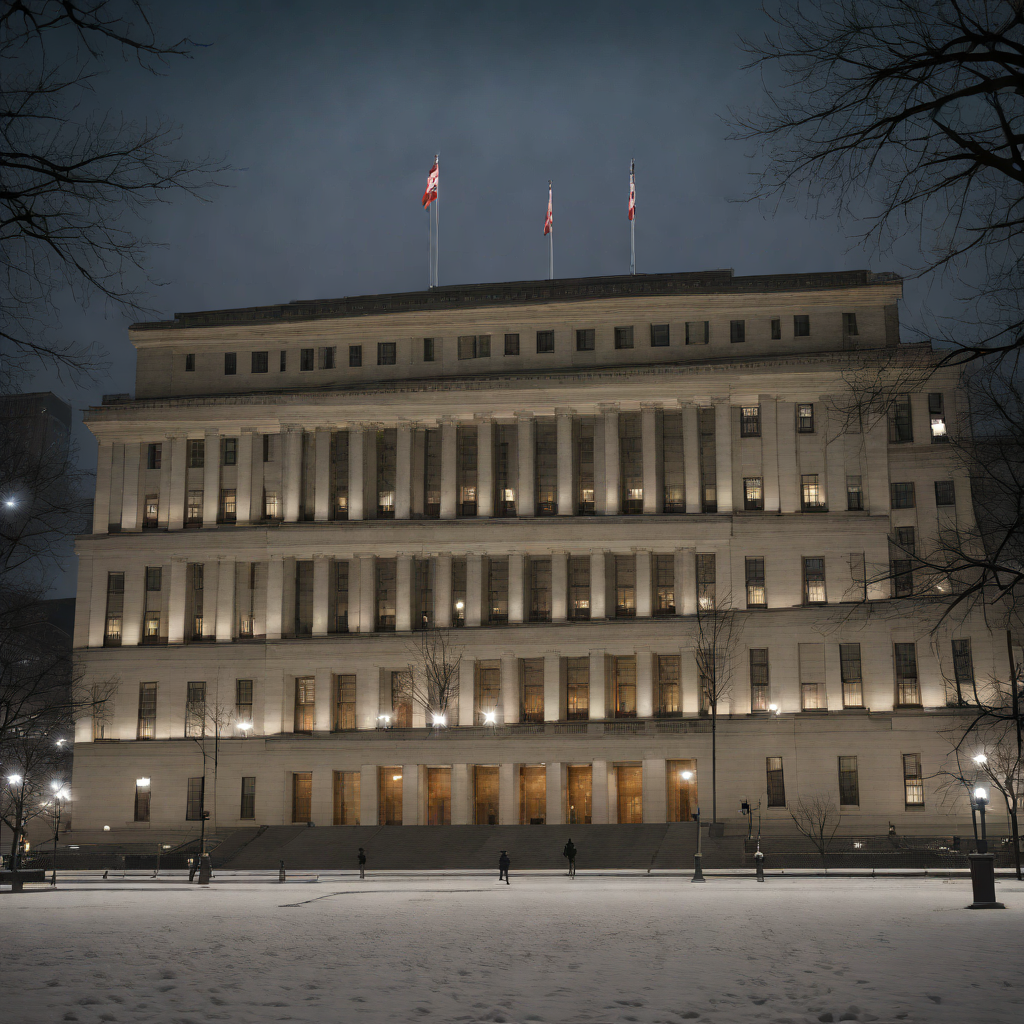
On the freezing evening of January 29, 2026, the fragile détente within South Korea’s ruling People Power Party (PPP) shattered, not with a whimper, but with a calculated political execution that has left Washington’s key East Asian ally in a state of paralysis. In a move that observers in Yeouido described as a "midnight coup," the party’s Ethics Committee formally expelled Chairman Han Dong-hoon, effectively decapitating the reformist wing of the conservative establishment just as the country faces its most severe economic trial in a decade.
The expulsion was swift, ruthless, and unmistakably orchestrated. For months, the friction between the pro-Yoon faction and Han’s leadership had been the worst-kept secret in Seoul, but few anticipated the finality of Thursday night's purge. The timing could not have been more disastrous. With the KOSPI index already reeling from the "Seoul Shock"—a market sell-off triggered by the Trump administration's aggressive new tariff frameworks—the removal of the party's most visible popular figure signaled to international investors that internal power struggles have now superseded national economic stability.
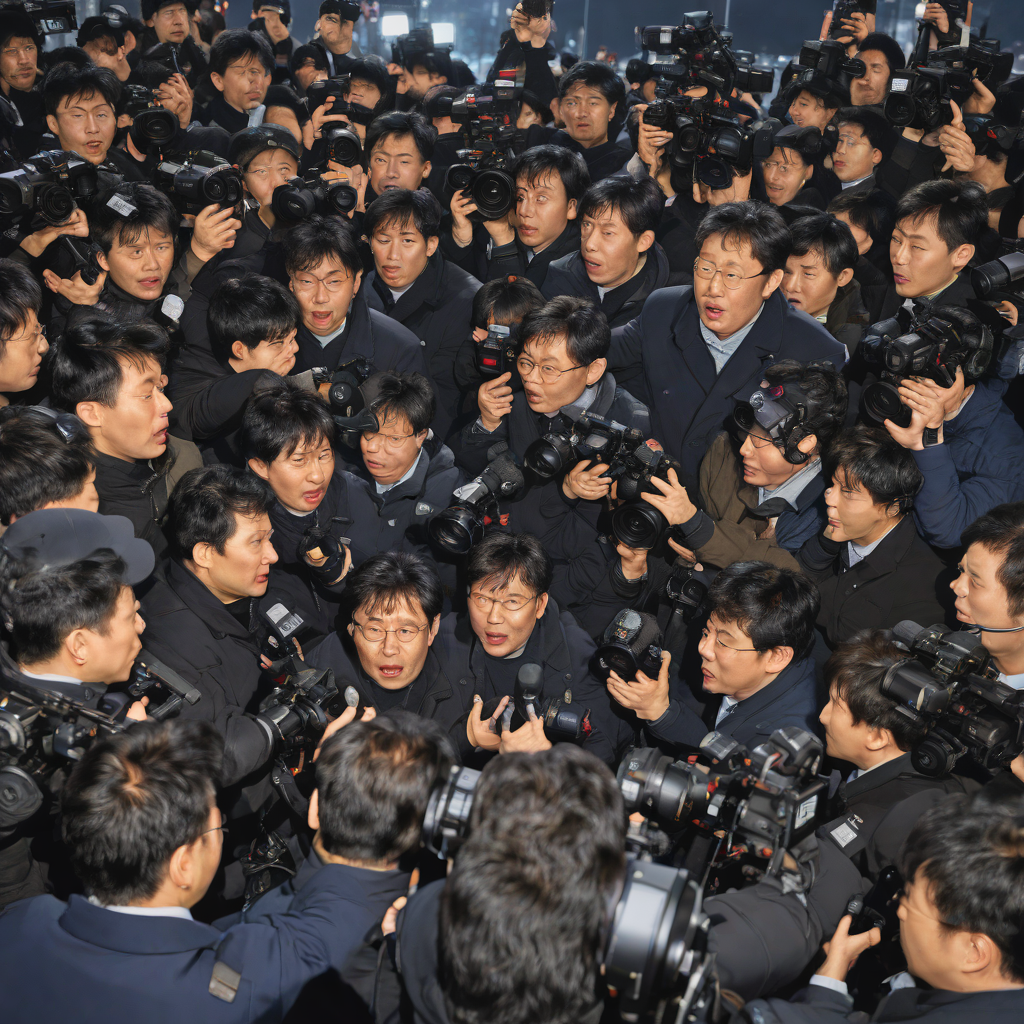
Han Dong-hoon’s response was immediate and defiant. Standing before a chaotic press scrum, he delivered a statement that instantly became the rallying cry for a fractured base. "I will not be pushed out by the shadows," Han declared, his voice cutting through the bitter January air. "We are the owners of this party, and no committee can erase the mandate of the people."
Governance Paralysis in the Shadow of the 'Seoul Shock'
While the tickers on Wall Street stabilized following President Trump’s "tactical pause" on tariffs, a far more dangerous volatility is breeding within the corridors of the National Assembly. The expulsion of Han was not merely a factional purge; it was an act of political self-immolation committed at the precise moment South Korea needed a unified front. For international observers, the timing is incomprehensible. Just as the "Seoul Shock" exposed the fragility of the nation’s export-led model to American protectionism, the ruling conservatives have chosen to decapitate their own leadership structure.
This governance paralysis transforms a manageable diplomatic friction into a systemic risk. James Carter, a senior sovereign risk analyst at a Manhattan-based firm, notes that the "Seoul Shock" was initially modeled as an external pressure event. "We priced in the tariffs," Carter explains, reviewing the plummeting won-dollar exchange rate. "What we didn't price in was a leadership vacuum. When the White House is demanding a renegotiation of your entire security architecture, you don't fire your chief negotiator. You don't burn down your own house to stay warm."
This internal chaos has immediate, tangible consequences for the trans-Pacific supply chain. Key legislation aimed at subsidizing the semiconductor industry to offset the new US "Foreign Entity of Concern" rules is now indefinitely stalled in a deadlock. The opposition Democratic Party, emboldened by the conservative fracture, has little incentive to cooperate, preferring to let the administration bear the full weight of the economic downturn. The result is a legislative zombie state. While Hyundai Motor Company faces a $3.95 billion impairment loss due to the new trade environment, the government apparatus meant to provide a buffer is consumed by a vendetta that feels dangerously detached from the reality of 2026.
The Anatomy of a Conservative Civil War
The removal of Han Dong-hoon was a surgical excision of the party's most vital, albeit volatile, organ. To the casual observer in Washington, this might appear as typical factional infighting—a bloodsport endemic to South Korean politics. However, for analysts tracking the stability of the Indo-Pacific alliance, the expulsion represents a catastrophic miscalculation by the Yoon administration. By prioritizing absolute loyalty over political viability, the ruling conservative bloc has effectively decapitated its own future leadership.
The conflict, simmering since late 2024, finally boiled over into what local insiders are calling a "loyalty purge." The core grievance of the pro-Yoon faction was never explicitly about policy divergence. Instead, it was rooted in the ancient Confucian dynamism of hierarchy. Han, once the President’s prized prosecutor and designated successor, committed the cardinal sin of the current Blue House: he sought to differentiate the party brand from the President’s sinking approval ratings. In a political culture that demands the leader and the party move in lockstep, Han’s attempts to modernize the conservative platform—advocating for more flexible labor policies and distinct distance from the First Lady’s controversies—were branded as betrayal.
Kim Ji-min, a 28-year-old staffer who joined the PPP during the 2022 election cycle, notes the toxic atmosphere. "It feels less like a political party and more like a besieged fortress," Kim says. "We are facing the greatest economic threat from the US in decades, yet the leadership is entirely focused on eliminating internal dissenters. They are burning the house down to kill a mouse."
The 'Trump 2.0' Factor: A House Divided
The fracture within South Korea’s ruling conservative bloc could not have arrived at a more precarious moment. As the Trump administration enters the second year of its term, aggressively pivoting toward a "resource-first" foreign policy, Seoul’s internal paralysis is transforming from a domestic political drama into a severe geopolitical liability. Washington’s trade representatives, currently enforcing a rigorous regime of deregulation and tariff renegotiations, are finding their counterparts in Seoul distracted by a fratricidal purge rather than focused on the survival of their export-driven economy.
To the pragmatic dealmakers in the Trump White House, this chaos signals vulnerability. A divided negotiator is a weak negotiator. "We are looking at a KOSPI that is pricing in not just economic headwinds, but a complete vacuum of political leadership," notes David Chen, a senior emerging markets strategist at a New York-based investment firm. "When we assess sovereign risk, we look for policy continuity. Right now, Seoul offers none. If the White House demands a revision to the semiconductor subsidy agreements or a hike in defense cost-sharing, who exactly has the political capital in Korea to push that deal through a fractured National Assembly? The answer is no one."
This governance void is particularly dangerous given the specific demands of Trump 2.0. Unlike previous administrations which prioritized alliance cohesion, the current executive branch views trade deficits and defense burdens as balance sheet errors to be corrected immediately. The "America First" doctrine of 2026 demands that allies demonstrate immediate, tangible value. With South Korea’s ruling party consumed by the removal of its own chairman, the bandwidth to strategize against new US tariffs on steel or demands for increased energy independence is nonexistent.
The 'Return' Narrative: Instability as the New Normal
The prevailing question in Seoul is no longer if Han will return, but how—and whether the scorched earth he leaves behind will render the government incapable of mounting a coherent defense against the Trump administration's aggressive economic nationalism. Political exile in South Korea has historically served as a crucible for resurrection, but the mechanics of a comeback in 2026 are fraught with systemic peril.
The prospect of a splinter party, a scenario increasingly whispered in the corridors of the National Assembly, represents the "nuclear option" for the Korean right. While it would offer Han a platform independent of the President's declining approval ratings, the electoral mathematics are punishing. A split conservative vote in the upcoming by-elections would almost certainly hand a supermajority to the opposition Democratic Party, creating a legislative deadlock.
The Splinter Effect: Projected Conservative Vote Share (Scenario Analysis 2026)
Ultimately, the belief that Han can return as a savior assumes there will be a functioning party left to save. The current trajectory suggests a distinct possibility of "Japanification" of the political crisis—a revolving door of weak leadership that leaves the bureaucracy autopilot-dependent while external shocks dictate the nation’s fate.
Conclusion: A Warning Sign for the Indo-Pacific
The internal combustion of South Korea’s ruling party is not merely a reshuffling of deck chairs; it is a hull breach in the engine room of one of America's most critical strategic partners. By prioritizing a domestic political purge over the urgent necessity of a unified economic defense, Seoul has effectively paralyzed its own ability to negotiate with a Trump 2.0 administration that views trade imbalances as actionable offenses.
The security architecture of Northeast Asia relies on a tripod of stability between Washington, Tokyo, and Seoul. With Japan grappling with its own defense autonomy debates and the U.S. pivoting toward transactional isolationism, a distracted South Korea becomes the weak link. If the leadership in Yongsan continues to view political survival as a higher priority than national economic resilience, they risk finding themselves isolated—not by foreign adversaries, but by their own inability to govern.