The Funeral Truce: South Korea's Lesson in Civility for a Polarized Washington
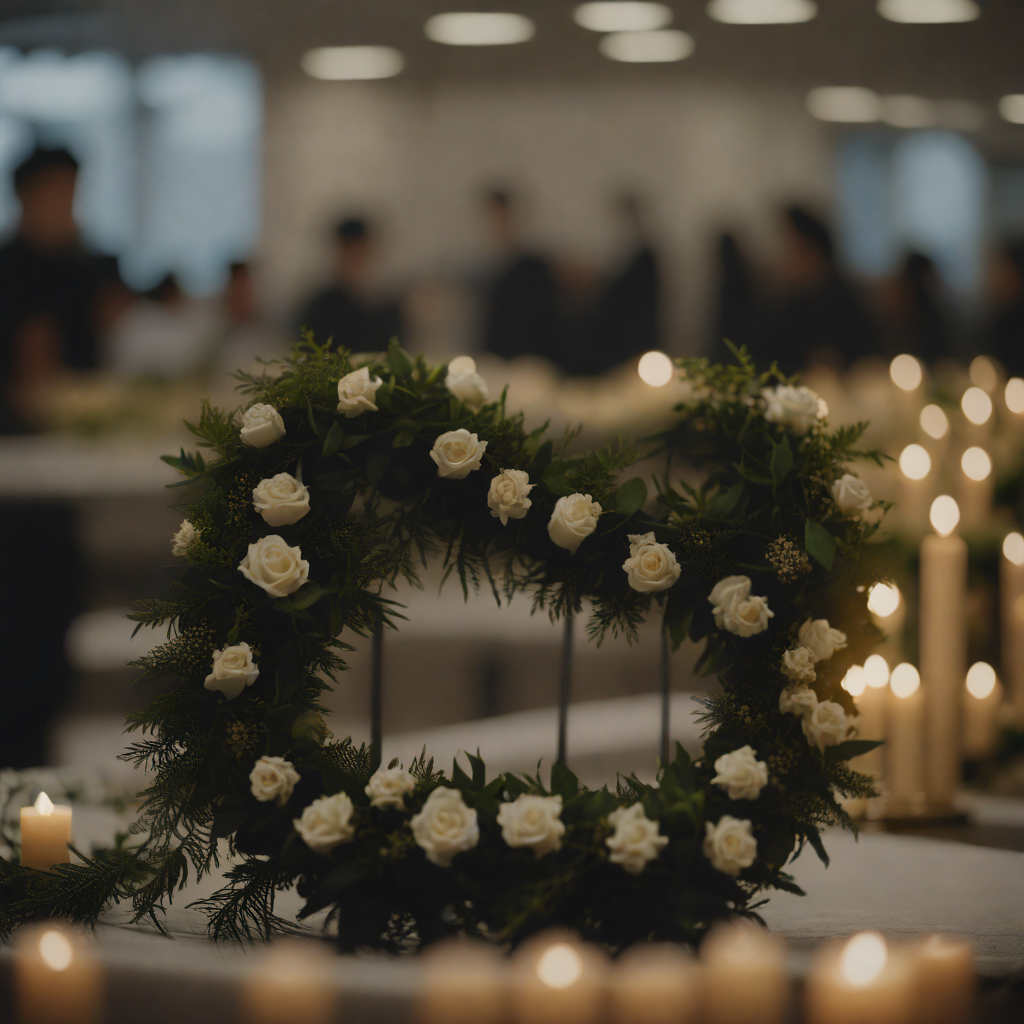
In the bitter cold of late January 2026, the funeral hall at Seoul National University Hospital in Jongno-gu became an unlikely stage for a demonstration of democratic resilience. As the "Seoul Shock" continued to roil the KOSPI and the repercussions of President Trump’s renewed protectionist tariffs echoed through the corridors of the National Assembly, the frantic pace of Korea’s political crisis ground to a temporary, solemn halt. The arrival of Na Kyung-won, a stalwart of the ruling conservative People Power Party (PPP), at the wake of Lee Hae-chan—the godfather of the liberal Democratic Party—marked a sharp deviation from the scorched-earth polarization that has come to define modern governance in both Seoul and Washington.
A Crossing of the Aisle
The atmosphere inside the hospital was thick with the weight of history. Lee Hae-chan was not merely a politician; he was a symbol of the progressive movement, a figure who had spent decades in the trenches of Korea’s democratization and subsequent liberal governance. For Na, a figure often vilified by Lee’s supporters as the archetype of the conservative establishment, to cross that threshold was a calculated act of statesmanship. It signaled that despite the ideological chasm separating the "liberty" of the right from the "equity" of the left, the foundational architecture of the republic—and the respect for those who built it—remains standing.
Upon exiting the memorial room, Na’s statement to the press was devoid of the usual partisan qualifiers. "We stood on opposite sides of the barricade for a lifetime," she remarked, her tone reflecting the gravity of the moment. "But no one can deny that he was a man who dedicated his entire existence to the Democratic Party and the values he believed in. I am here to honor that fidelity." This specific acknowledgment—validating the integrity of an opponent’s belief without endorsing the belief itself—offers a stark counter-narrative to the zero-sum politics currently dominating the U.S. Congress.
The Architect of the Liberal Era
To understand the gravity of the tribute paid by Na Kyung-won, one must first grasp the towering shadow cast by Lee Hae-chan over South Korea’s modern political landscape. For a Washington observer, Lee is best understood not merely as a former Prime Minister, but as the strategic architect of the South Korean liberal establishment—a figure combining the tactical acumen of a Mitch McConnell with the ideological anchoring of a Ted Kennedy. His passing marks the end of an era defined by the fierce democratization movements of the 1980s and the subsequent consolidation of progressive power.
Lee’s career was inextricably linked to the rise of two presidents, Roh Moo-hyun and Moon Jae-in, and his strategies fundamentally reshaped the calculus of voters in Seoul’s metropolitan corridor. His tenure was characterized by a rigid adherence to party discipline and a controversial, yet effective, centralization of political power. For the international business community, he represented the predictable, if occasionally adversarial, face of the South Korean Left. While his policies often favored fierce regulation of chaebols and a dovish stance toward Pyongyang—stances that frequently put him at odds with American hawkishness—he was a known quantity.
Civility in the Age of 'Trump 2.0'
This gesture lands in a South Korea currently reeling from the "Seoul Shock," a precipitous economic downturn exacerbated by the aggressive protectionist trade barriers erected by the second Trump administration. The atmosphere at Seoul National University Hospital reflected a dual somberness: grief for a passing era of leadership and anxiety for a future defined by the KOSPI’s volatility. Yet, in a political landscape often mirrored by the vitriol seen in the U.S. Congress, this moment served as a reminder of the foundational "Yeo-Ya" (ruling and opposition) co-existence that, while frayed, has not yet snapped.
For American observers, accustomed to a Washington where the aisle between parties has widened into a no-man’s-land, the image at Seoul National University Hospital offers a stark counter-narrative. It raises a critical question for the Free Market democracies of 2026: Is performative polarization a luxury that only stable economies can afford? With the "Seoul Shock" threatening to destabilize the region's supply chains—critical to U.S. tech interests—the unity demonstrated at the wake suggests that when the economic precipice approaches, the instinct for national survival may still override the impulse for partisan warfare.
The Limits of Funeral Diplomacy
However, to interpret this gesture as a complete thawing of the "South Korean Cold War" would be a dangerous misreading of the 2026 political reality. The solemnity observed within the corridors of the hospital stands in stark contrast to the scorched-earth warfare occurring just outside its gates. While Na and the Democratic Party leadership exchanged polite condolences, their respective bases remained engaged in a digital war of attrition.
(Pseudonym) Michael Chang, a political risk consultant based in Washington D.C., notes that the funeral diplomacy highlights a structural divergence between performance and policy. "The handshake at the hospital is a ritual, not a reset," Chang observes. "It is similar to the Christmas truce in the trenches. It is a human pause, but the artillery remains loaded." The fundamental drivers of polarization—demographic collapse, the crisis of the export-led growth model, and the lack of a shared narrative on national identity—are impervious to individual acts of grace. The structural incentives in 2026 reward radicalism; a photo op at a funeral does not alter the algorithm of outrage that powers modern campaigns.

A Test of Resilience
Ultimately, the tribute at Seoul National University Hospital transcends the individual. It serves as a stress test for South Korea's democracy in 2026. If a conservative leader can cross the aisle to honor the architect of the opposing ideology, it suggests that the "guardrails" of Korean democracy hold a resilience that is increasingly rare on the global stage. As the Democratic Party navigates its post-Lee identity, the focus now shifts to whether a new generation of leadership can maintain his strategic discipline without inheriting the divisiveness that often defined his tenure. In an era where the very definition of democracy is being litigated from the US Senate to the EU Parliament, the scene at Seoul National University Hospital offers a quiet, compelling argument that coexistence is not only possible but essential for national survival.