The 'Dollar Taxi' Experiment: South Korea's Answer to Rural Collapse

Where the Bus Stops Running
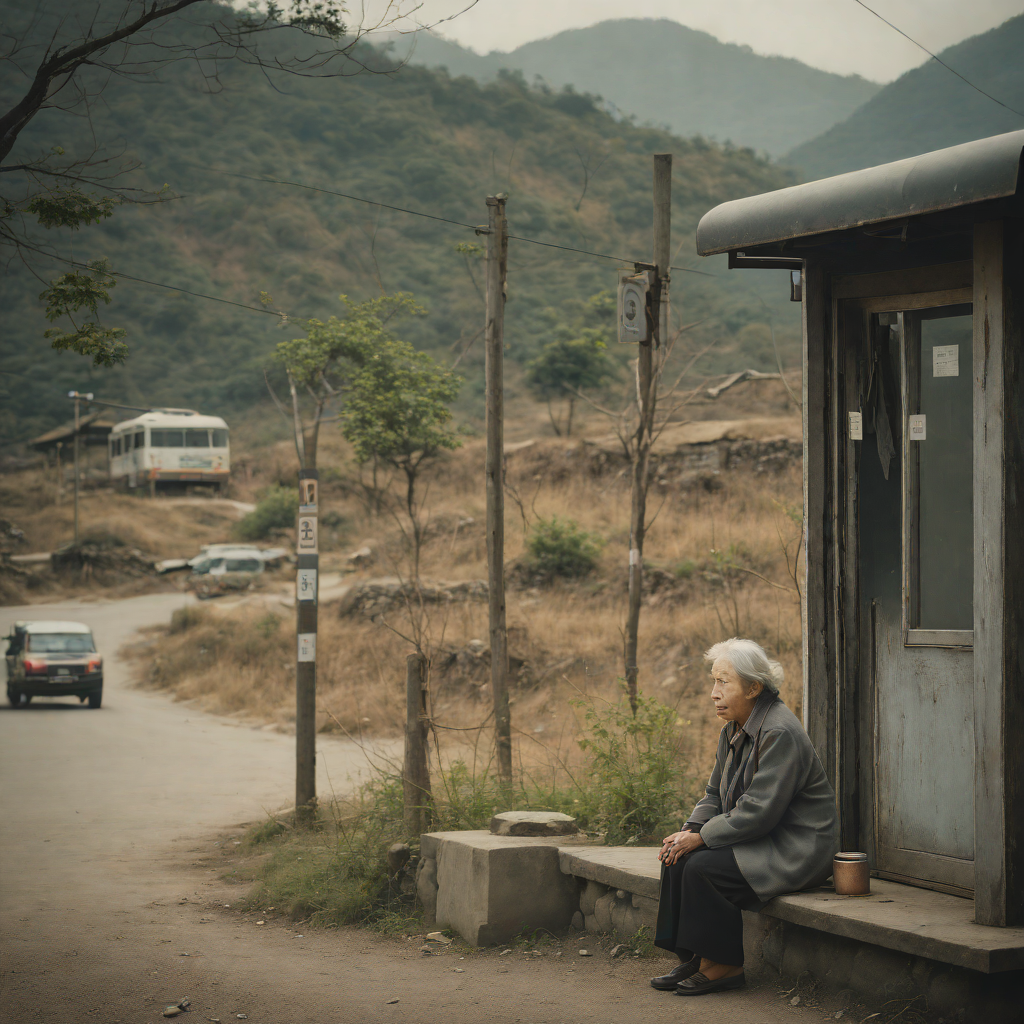
In the remote valleys of Gyeongnam province, roughly 200 miles southeast of Seoul, the concept of a "schedule" has become a relic of the past. For residents like Kim Soon-ja, an 81-year-old widow living in a hamlet of fewer than thirty people, the disappearance of the municipal bus wasn't a sudden cancellation; it was a slow, agonizing retreat. Ten years ago, the bus came three times a day. Five years ago, it was once in the morning and once at night. Today, the painted yellow lines of the bus stop are fading into the cracked asphalt, a ghostly reminder of a public infrastructure that can no longer justify its own existence on a ledger.
This is the silent crisis of the "Silver Tsunami." While global attention often fixates on the urban density of megacities like Tokyo or New York, the collapse of rural mobility represents a more immediate fiscal and humanitarian emergency. In South Korea, where the fertility rate has cratered to world-record lows, the demographic implosion has rendered traditional mass transit mathematically impossible. Running a 40-seat diesel bus for a single passenger isn't just inefficient; in the eyes of the fiscal hawks shaping the Trump 2.0 era of global austerity, it is indefensible waste.
A 2025 regional audit revealed that in Gyeongsangnam-do alone, regular bus service had effectively ceased for exactly 998 villages. These communities were deemed "transit deserts," cut off from the grid not by geography, but by the brutal economics of depopulation. The cost of maintaining a daily bus route to these areas exceeded the GDP produced by the villages themselves, creating a deadlock that left thousands stranded.
The Logistics of Dignity
Enter the "Bravo Taxi," a state-subsidized pivot that abandons the rigid inefficiency of mass transit for the fluidity of on-demand logistics. The model is deceptively simple but radically efficient: instead of funding an empty bus, the provincial government subsidizes local taxi drivers to fill the gap.
For the end user, the transaction is seamless. Residents do not pay the metered rate, which could easily exceed $20 for a round trip to the nearest hospital—a prohibitive sum for a pensioner on a fixed income. Instead, they pay a flat, nominal tariff. While earlier pilots experimented with fluctuating prices, the system has largely standardized around a fare of 1,250 South Korean won—roughly $0.90 USD. This price point is deliberate; it mirrors the cost of a standard city bus ticket, maintaining the psychological social contract that public transit is a right, even if the vehicle delivering it has changed from a municipal coach to a Hyundai Sonata.
The economics of this system are startlingly pragmatic. Critics initially argued that subsidizing private taxi rides would bleed provincial coffers dry. However, data from the Ministry of Land, Infrastructure and Transport suggests the inverse is true. The cost per passenger mile for the Bravo Taxi is significantly lower than the operating costs of a fixed-route bus service that runs at 5% capacity. By shifting from a supply-side model (running buses regardless of demand) to a demand-side model (deploying cars only when needed), Gyeongnam has inadvertently created a blueprint for the "lean state" often advocated by Western conservatives.
Cost Efficiency: Bus vs. Demand-Response Taxi (Per Passenger/km)
A Vital Link to Healthcare
The "Bravo Taxi" system functions less like a leisure service and more like a distributed medical logistics network. According to a 2025 analysis by the Gyeongnam Research Institute, over 63% of all Bravo Taxi trips originate or terminate at a healthcare facility. For these aging communities, the service is the difference between consistent chronic care and medical neglect.
For residents like Lee Jun-ho, a 72-year-old retired farmer living in a hamlet reachable only by a narrow, winding dirt road, this vehicle is his sole link to the outside world. When Lee steps out of the cab at the county hospital, he hands the driver 1,200 South Korean won. It is a token sum, yet the meter on the dashboard tells a different story: 18,500 won ($13.20). The difference is not a discount; it is a deficit funded entirely by the provincial government, effectively nationalizing the loss of rural mobility to prevent the greater cost of emergency medical intervention.
Primary Usage of Bravo Taxi Services (2025)
Lessons for the Rust Belt
Nearly 7,000 miles away, in the rolling hills outside Athens, Ohio, Martha Lewis faces a logistical mirror image. A 74-year-old widow with failing eyesight, she relies on a patchwork of favors to reach a dialysis center 35 miles away. Her reality reflects that of millions across the American Rust Belt, where the "medical desert" phenomenon is accelerating.
For American policymakers eyeing the fiscal cliffs of 2026, the Gyeongnam model offers a rare bipartisan entry point. In the current political climate, where the Trump administration is aggressively auditing federal inefficiencies, the "Bravo Taxi" presents a compelling case for deregulation and public-private partnership over bloated public works. It utilizes existing private assets—local taxi fleets—rather than demanding the purchase of new government vehicles.
However, transposing this model to the US faces distinct hurdles. While Gyeongnam successfully negotiated with taxi unions to allow this subsidized encroachment, the US landscape is fractured between gig-economy giants and traditional medallion owners. Furthermore, the sheer scale of the US Midwest makes the "last mile" problem often a "last fifty miles" problem. A ride subsidized by the Gyeongnam government averages a deficit of roughly $10 to $15 USD per trip. In rural Pennsylvania, where distances are vast, that subsidy gap could balloon to $50 or $80, challenging the definition of fiscal prudence.
Yet, the cost of inaction is quantifiable. When patients like Martha Lewis miss preventative appointments due to lack of transport, they often arrive later at the emergency room by ambulance—a ride that costs the healthcare system thousands, rather than the price of a subsidized cab. As rural hospitals continue to close at a record pace in 2026, the definition of infrastructure must shift from pouring concrete to ensuring access.

The Economics of Compassion
The "One-Dollar Taxi" is not just a ride; it is a test of whether technology can preserve the dignity of the rural elderly before the lights finally go out. It poses a critical question for policymakers in aging Western democracies: Is mobility a tradeable commodity subject to market forces, or is it a fundamental right that the state must underwrite, regardless of the direct return on investment?
As Gyeongnam's population curve bends further downward, the province is betting that maintaining social connectivity is worth the premium. The alternative—institutionalizing these seniors in state-funded nursing homes—would cost the taxpayer nearly five times the monthly subsidy of the taxi network. In this light, the orange taxi is not a welfare trap, but a firewall against a total collapse of the social contract.