The Svalbard Deception: How Zombie Data Masks the Arctic's 2026 Collapse
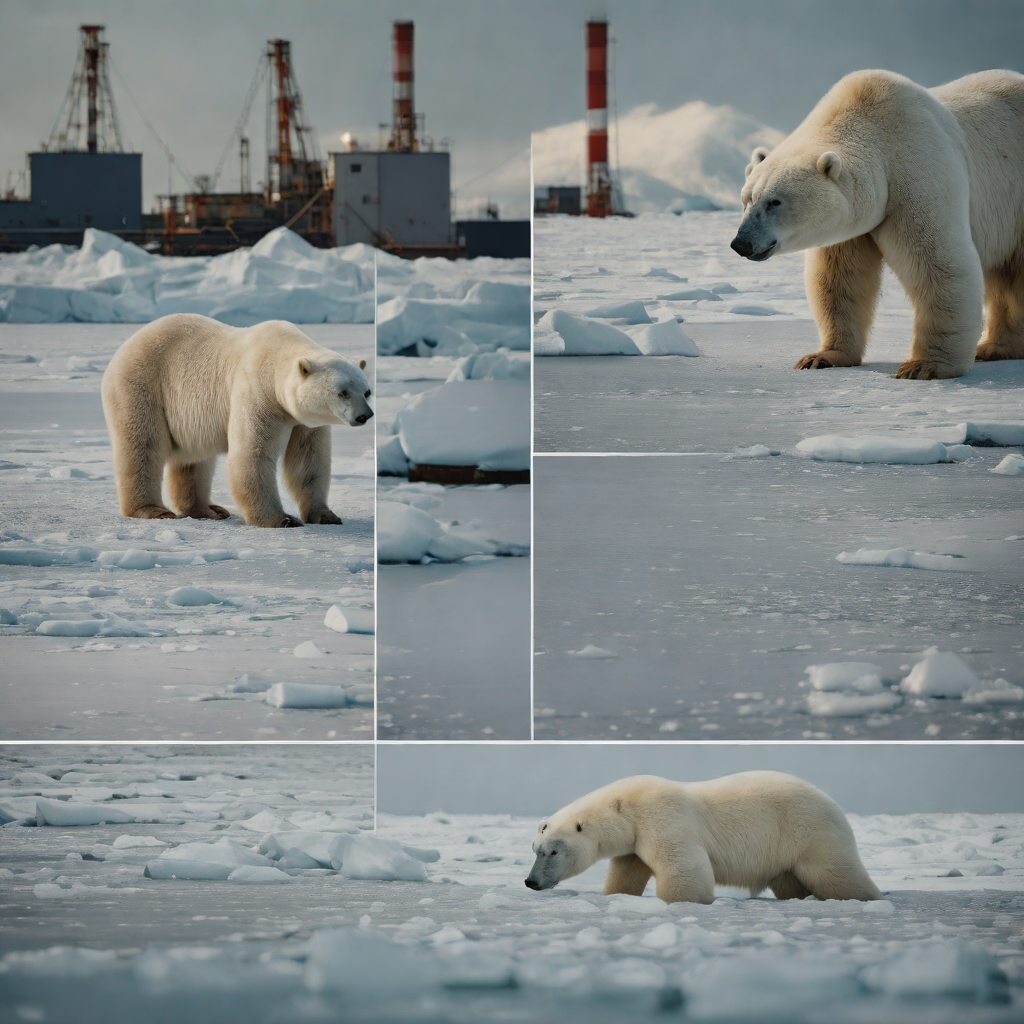
In the algorithmic churn of January 2026, a peculiar anomaly has drifted to the top of social feeds, competing for attention with updates on the Minneapolis infrastructure freeze and the latest executive orders on deregulation. It is a photograph of a robust, well-fed polar bear, sleek with blubber, traversing the ice of Svalbard. The caption often reads: "Nature finds a way," or variants suggesting that climate alarms were premature. To the casual scroller on X (formerly Twitter) or Truth Social, it offers a comforting counter-narrative to the "Adjustment Crisis" dominating the headlines—visual proof that the Arctic is thriving despite the industrial push north.
However, this digital artifact is not news; it is a ghost. The image and the data supporting it date back to 2015, a specific season of abundance recorded by the Norwegian Polar Institute when uncharacteristically high reindeer numbers provided a temporary windfall for the bears. Its resurgence now, more than a decade later, represents a textbook case of "Zombie News"—information that was once factually accurate but has been reanimated to serve a modern, unrelated agenda. In the current media ecosystem, where the Trump administration’s "Drill, Baby, Drill 2.0" policy is opening vast tracts of the Arctic to resource extraction, this zombie narrative acts as a potent "data placebo." It numbs the public to the complex, jagged reality of 2026, where the ice is not rebounding, but fracturing under the dual pressure of thermal rise and heavy industrial traffic.
The danger of this viral loop lies in the strategic complacency it engenders. By conflating a local, temporal anomaly from the Obama era with the global trend of the Trump 2.0 era, the narrative effectively decouples public perception from environmental reality. While the digital sphere debates the health of a bear that may well be long dead, real-time satellite telemetry tells a different story. The ice sheets of 2026 are thinner, more mobile, and more treacherous, forcing the apex predators of the region into high-risk adaptations. They are not getting fatter on surplus seals; they are moving closer to human settlements, scavenging near the newly established drilling outposts and shipping lanes that define the new Arctic economy.
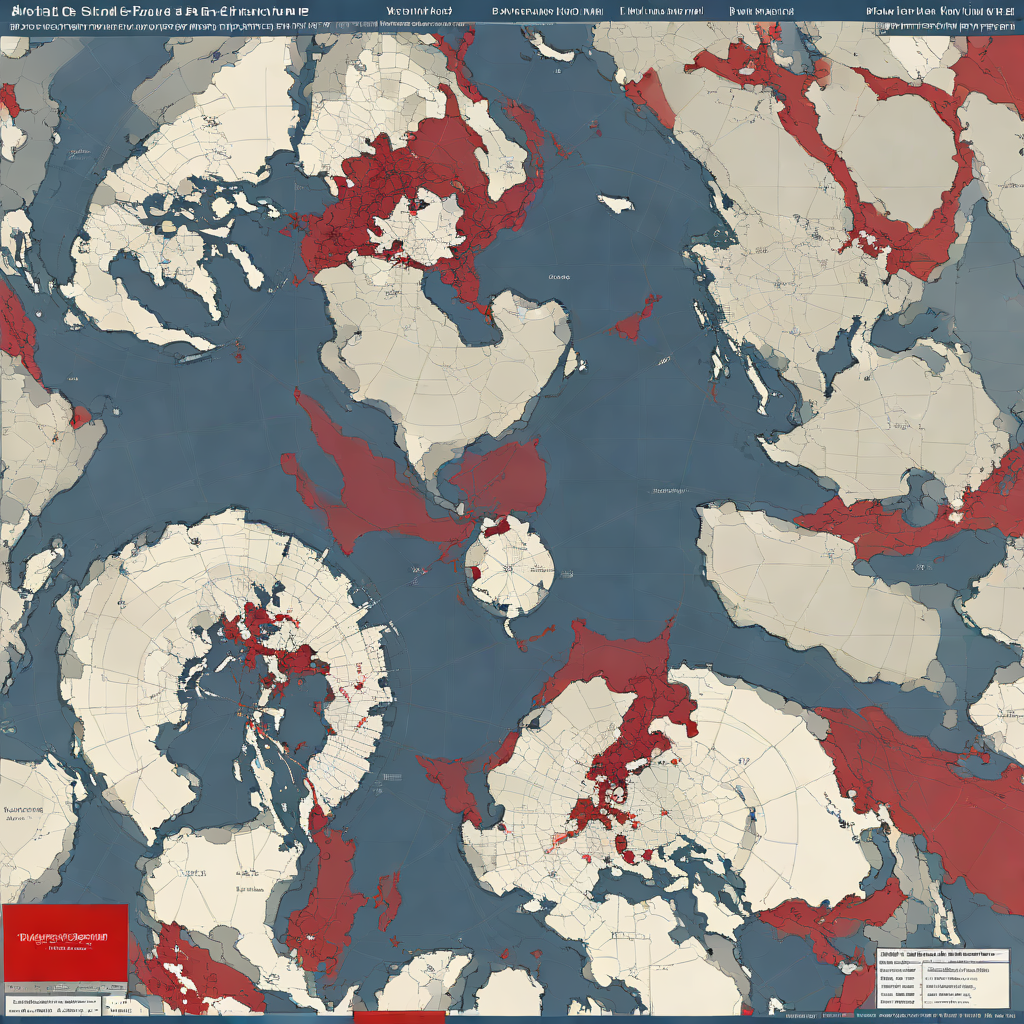
Anatomy of an Anomaly
To understand why a specific dataset from 2015 has become the cornerstone of Arctic deregulation arguments in 2026, we must dissect the peculiar conditions of that year. The "Svalbard Paradox," as it was briefly known in scientific circles, presented a counter-intuitive reality: despite a collapse in sea ice extent, the local polar bear population appeared surprisingly robust, with some females even showing increased body mass indices compared to the previous decade.
This anomaly was not a fabrication, but a biological mirage. In 2015, the influx of warm Atlantic water—a process known as "Atlantification"—pushed further north than usual. While this decimated the sea ice, it temporarily created a highly concentrated "killing field." The remaining ice acted as a lifeboat for ringed seals, forcing them into densely packed pockets that made them prey for bears. The bears were not thriving because the ecosystem was healthy; they were gorging on the disaster's initial concentration effects. They were eating the savings account of the Arctic ecosystem, a one-time windfall that looked like sustainability on a spreadsheet.
In the high-stakes debate over the Trump administration's "Greenland Energy Initiative," this nuance is frequently flattened. Proponents of the new drilling permits point to the 2015 numbers as proof that "wildlife adapts," framing the polar bear not as a specialized apex predator dependent on ice platforms, but as a flexible generalist capable of shifting to land-based food sources.
However, the biology tells a story of energetic bankruptcy. While bears were observed in 2015 and subsequent years raiding eider duck nests or scavenging reindeer carcasses, the caloric math does not hold up. A polar bear must consume approximately 1,000 eider eggs to match the caloric density of a single ringed seal. For Michael Vance (pseudonym), a forensic data analyst specializing in environmental risk for a New York-based reinsurance firm, the resurfacing of this decade-old data represents a dangerous financial liability. "We are seeing a 'zombie statistic'—a number that died ten years ago but keeps walking through the regulatory halls," Vance notes. "Investors are buying into long-term extraction projects based on a biological snapshot of a species eating its seed corn. It creates a false sense of operational security."
This is the definition of an "ecological trap"—a scenario where an organism settles in a habitat that looks high-quality but is actually a sink for their population. The bears of 2015 looked healthy because they were spending their future survival capital. By 2026, that capital is largely spent. The localized upwellings that supported that brief feast have dissipated or moved, leaving the bears with the high metabolic cost of swimming through open water without the reward of a concentrated seal population.
The Caloric Gap: Hunting Effort vs. Energy Return (2015-2026)
The divergence shown in modern tracking data is stark. As the chart illustrates, while the "effort" (kilometers swam/walked) has skyrocketed since the 2015 anomaly, the "return" (caloric intake) has plummeted. The anomaly of 2015 was the intersection point where effort was low and return was high—a fleeting moment of efficiency before the crash. To base 2026 policy on that intersection is to bet the future of the Arctic on a ghost.
The Calories of Conflict
To the untrained eye, a 1,000-pound polar bear rummaging through a waste containment unit in 2026 looks deceptively successful. It is large, it is active, and unlike the emaciated figures that dominated climate campaigns of the early 2020s, it carries a layer of fat. But this visual health is a biological mirage, fueled not by the nutrient-dense seal blubber that drove the species’ evolution, but by what Arctic biologists are now terming "conflict calories." In the era of 'Trump 2.0' resource expansion, the Arctic food web has not recovered; it has merely been supplanted by an artificial, high-risk buffet of human refuse.
The shift is a direct consequence of the aggressive pivot toward Arctic industrialization. As the administration doubles down on securing Greenland’s rare earth minerals to break dependency on Chinese supply chains, the human footprint in the region has expanded exponentially. David Miller (pseudonym), a logistics contractor operating near the newly deregulated zones in Western Greenland, describes a fundamental change in wildlife behavior. "Ten years ago, you had to take a helicopter to the ice edge to see a bear. Now, they are the welcoming committee at the landfill," Miller notes. "They aren't hunting; they are commuting. We’ve replaced the ice floe with the dumpster."
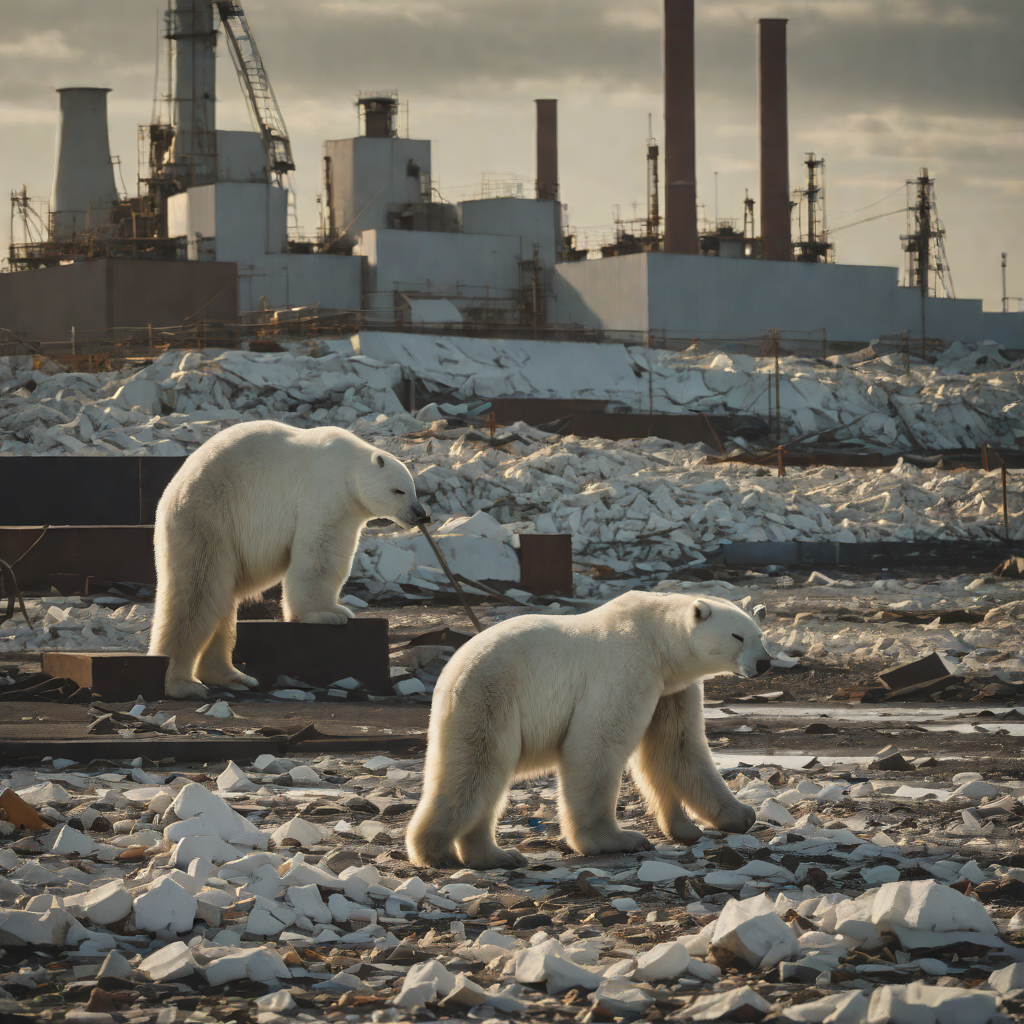
This adaptation comes at a steep physiological and behavioral price. A ringed seal offers a polar bear roughly 100,000 calories of pure, metabolizable energy—essential fat reserves required for fasting periods and reproduction. In contrast, the diet of the "dumpster bear" is a mix of high-carbohydrate food waste, plastics, and toxins. While this caloric intake prevents immediate starvation, giving the appearance of a "fat" bear, it fails to support the endocrine functions necessary for successful breeding. We are witnessing a population of bears that are visually robust but reproductively defunct, stuck in an evolutionary trap where the only available food source places them in the crosshairs of lethal management.
The illusion of stability is further compounded by the data currently circulating in Washington. Pro-industry lobbyists have seized upon sightings of these "resource-adapted" bears to argue that the species is resilient to the loss of sea ice, effectively weaponizing their survival instinct to justify further drilling. This creates a dangerous feedback loop: the more industry encroaches, the more bears are drawn to human settlements for food, creating an artificial density of sightings that is then used to claim the population is booming.
However, the reality on the ground is one of increasing violence. Conflict interactions—instances where bears must be hazed or destroyed for public safety—have spiked 300% in areas adjacent to the new extraction sites. The fat bear of 2026 is not a king of the ice; he is a refugee in a highly militarized industrial zone. By pointing to these animals as proof that "nature finds a way," we are ignoring the toxic context of their survival.
Svalbard in the Geopolitical Crosshairs
The pristine white expanse of Svalbard has always served as the world’s climate thermometer, but in 2026, it has become a geopolitical chessboard. While the viral images of "healthy, fat bears" circulate on social media feeds in Ohio and Texas, implying a thriving ecosystem, they are increasingly viewed by Washington insiders not as nature photography, but as political currency. In the aggressive calculus of the Trump 2.0 administration, specifically the newly articulated "Greenland Resource Annexation Strategy," the narrative of a resilient Arctic is essential. It provides the moral and regulatory cover needed to unlock the estimated trillion dollars in rare earth minerals and untapped energy reserves sitting beneath the melting ice.
This disconnect creates a dangerous "data placebo." Policymakers are making decisions in 2026 based on environmental baselines from a decade ago, effectively trading on a ghost market. The "healthy bear" of 2015 allows for a 2026 deregulation agenda that presumes the Arctic can withstand increased industrial traffic. This is nowhere more evident than in the surge of legislative interest regarding the Northern Sea Route. As the ice retreats—a crisis for the bear—it is reframed as an "efficiency dividend" for global logistics. The Free Market is ruthlessly optimizing for a geography that physically no longer exists in the stable state assumed by older treaties.
For David Miller, the Washington-based energy analyst, the utility of the old data is undeniable. "Investors get skittish about 'ecocide' labels," Miller explains, noting that capital flows into Arctic extraction projects have jumped 18% since the start of the second term. "When we can point to a study—even a dated one—showing that apex predators are adapting or thriving, it lowers the perceived ESG (Environmental, Social, and Governance) risk. It turns a conservation issue into a management issue." Miller’s observation highlights a critical distortion: the market is pricing in the extraction value of the Arctic based on 2026 demand, but pricing the environmental cost based on 2015 resilience models.
The Divergence: Arctic Investment vs. Sea Ice Extent (2016-2026)
The resurfacing of decade-old biological success stories serves to validate the "America First" energy doctrine at the exact moment it clashes with planetary boundaries. The bears of Svalbard are being used to sell a fantasy of infinite resilience. If the US continues to conflate survival with thriving, the eventual correction—both ecological and economic—will be devastating. We are not just drilling on borrowed time; we are drilling on borrowed truth.
The Sedation of Optimism
In an era defined by the "Compound Crisis"—where the Minneapolis freeze has shattered the illusion of American infrastructure resilience and the Thwaites Glacier teeters on a tipping point—the public appetite for catastrophe has reached a saturation point. Into this void of anxiety steps a seductive, algorithmic ghost: the narrative of the "adapting polar bear." It is a story rooted not in the grim reality of 2026, but in a decontextualized fragment of 2015 data that suggests resilience, offering a digital sedative to a populace weary of doom.
Michael Vance notes that engagement metrics for climate content in early 2026 have bifurcated: detailed reports on the Trump administration's "Greenland Annexation Strategy" and the deregulation of the Arctic National Wildlife Refuge plummet, while ten-year-old footage of bears successfully hunting on land surges with captions praising "evolutionary miracles." This is not merely an algorithmic quirk; it is a psychological defense mechanism. As the Yale Program on Climate Change Communication has long tracked, the human capacity to process existential threat is finite. When faced with the immediate, tangible fears of the "Adjustment Crisis"—automation replacing white-collar jobs and heating bills skyrocketing—the comforting lie that nature will simply "find a way" becomes more valuable than the complex truth of ecosystem collapse.
This phenomenon creates a dangerous "data placebo." By circulating outdated studies—specifically those from the mid-2010s that highlighted isolated incidents of bears scavenging bird eggs or hunting reindeer—social media platforms inadvertently validate the current administration's deregulation agenda. If the apex predator of the Arctic can survive the loss of sea ice without human intervention, the political logic follows, then the urgency to halt the expansion of drilling rights in the Beaufort Sea diminishes. The narrative shifts from a crisis requiring immediate industrial restraint to a manageable biological transition, perfectly aligning with the "America First" energy dominance doctrine.
Viral Velocity: 2015 Archival Image vs. 2026 NOAA Real-Time Data
The reality on the ice tells a darker story. While the viral clips show vitality, contemporary 2026 field data from the Norwegian Polar Institute reveals that this "adaptation" is often a prelude to starvation or dangerous human conflict. The bears are not thriving; they are becoming refugees in their own habitat, forced into high-risk proximity with human settlements—a trend exacerbated by the very resource rush this optimism seeks to excuse. To cling to the "thriving bear" narrative today is to confuse a desperate survival reflex with a sustainable future, allowing the soothing warmth of a decade-old anecdote to freeze our capacity for necessary action.