The 3% Rebellion: Cho Kuk Challenges South Korea's Political Cartel

The Gavel Falls on the Duopoly
On January 29, 2026, the Constitutional Court of Korea delivered a verdict that reverberated far beyond the ornate chambers of Seoul’s judicial district, striking a direct blow to the structural bedrock of the nation's political establishment. By ruling the three percent vote threshold for proportional representation seats unconstitutional, the court effectively dismantled the high wall that has long insulated the establishment parties—the conservative People Power Party (PPP) and the liberal Democratic Party (DP)—from insurgent challengers.
For international observers and legal scholars in Washington, the decision reads less like a procedural tweak and more like a judicial mandate for a multiparty marketplace of ideas, challenging the very logic of stability that often justifies exclusionary electoral systems.
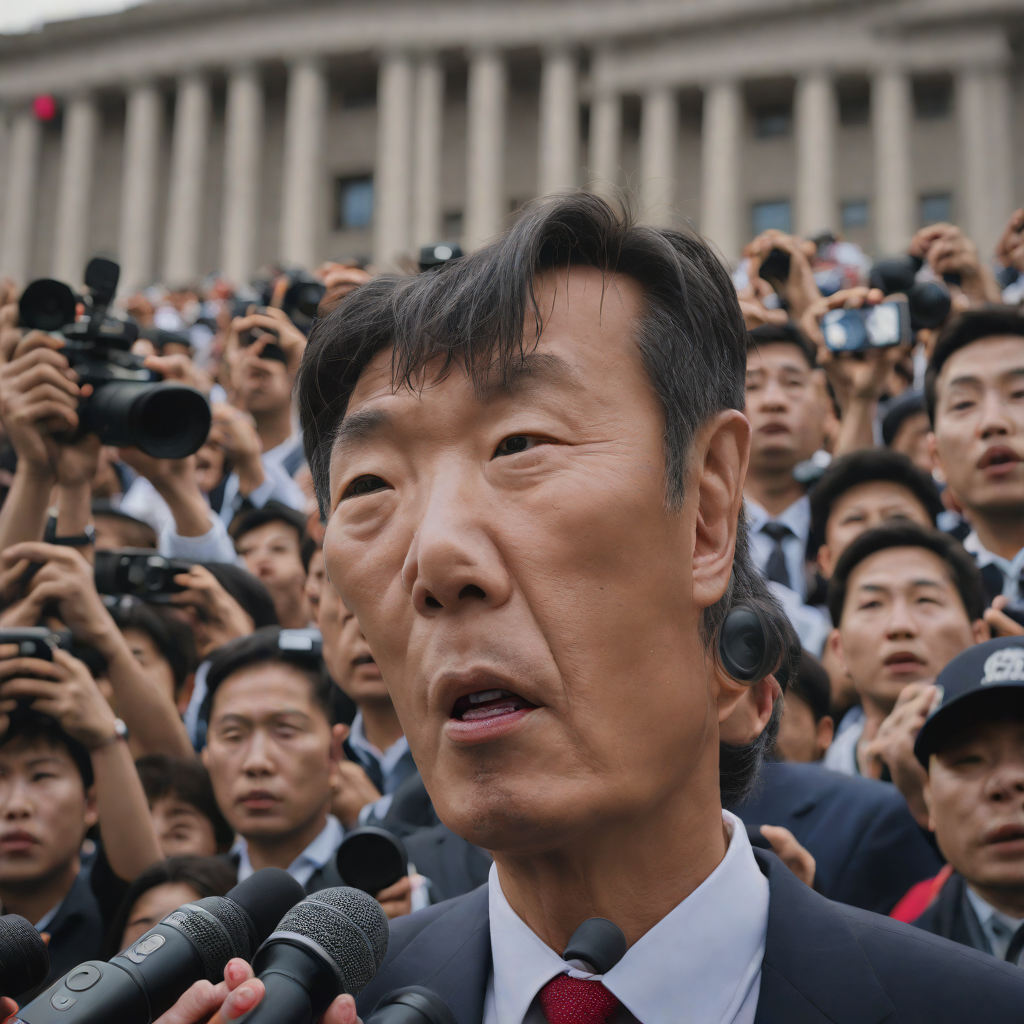
Cho Kuk, the leader of the Rebuilding Korea Party and a figure whose political resurrection has been as polarizing as it is undeniable, wasted no time in framing the ruling as a victory for "political diversity" over "cartel politics." Speaking from the steps of the National Assembly just hours after the gavel fell, Cho characterized the decision as a vindication of his long-standing argument that the current system artificially suppresses minority voices.
"The court has confirmed that the National Assembly is not the private property of two giants," Cho declared, effectively launching a new offensive to accelerate the revision of the Public Official Election Act. His rhetoric, sharp and populist, mirrors the anti-establishment currents seen in Western democracies, where voters are increasingly fatigued by binary choices that fail to capture the nuance of modern governance.
However, the path from judicial decree to legislative reality is fraught with friction. While the court has mandated a revision, the actual rewriting of the election law remains in the hands of the very legislators who benefit most from the status quo. Analysts note that while the PPP and DP are publicly respecting the court's decision, internal resistance is mounting. The three percent rule was not merely a barrier to entry; it was a mechanism of consolidation, preventing the fragmentation of the legislature into a chaotic mosaic of splinter parties—a scenario the establishment views as a recipe for gridlock.
For the United States, watching a key ally grapple with the mechanics of representation offers a compelling case study in the trade-offs between efficiency and equity. As Cho Kuk presses his advantage, threatening to turn the legislative revision into a referendum on the establishment's legitimacy, the question becomes whether the National Assembly will embrace this new era of fragmentation or attempt to reconstruct the walls by other means.
Seat Distribution vs. Vote Share (2024 Election Analysis)
Anatomy of a Wasted Vote
In any democracy, the sanctity of the ballot is paramount; the premise that every vote counts is the bedrock of legitimacy. Yet, in South Korea’s unicameral National Assembly, a structural firewall known as the "3% threshold" has long functioned as a graveyard for minority political expression. Much like the frustrations Americans face with the Electoral College—where millions of votes in "safe states" can feel mathematically irrelevant—South Korean voters supporting minor parties often see their political will evaporate the moment the polls close.
The mechanics are deceptively simple but brutal in their efficiency. Under the current Public Official Election Act, a party must secure at least 3% of the national party vote or five constituency seats to qualify for any proportional representation (PR) seats. In a vacuum, this rule is justified as a guardrail against parliamentary fragmentation. However, in practice, it has ossified a duopoly that mirrors the entrenched Republican-Democratic divide in the United States, but with even higher barriers to entry for third-party disruptors.
Consider the arithmetic of exclusion. In an electorate of roughly 44 million, a party garnering 2.9% of the vote—representing over a million diverse voices, comparable to the population of a mid-sized US state like Rhode Island—receives zero representation in the proportional tier. These ballots are effectively discarded, their value transferred by default to the hegemony of the two dominant forces: the conservative People Power Party (PPP) and the liberal Democratic Party of Korea (DPK).
Legal scholars and reformists argue that this threshold violates the constitutional principle of equal suffrage. This "winner-take-all" dynamic forces a strategic dilemma on voters, often referred to as "strategic voting," where citizens abandon their preferred ideologically distinct minor parties to vote for the "lesser of two evils" among the giants, simply to ensure their vote has some impact.
The High Cost of Entry: Effective Vote vs. Wasted Vote (2024-2026 Analysis)
This system has created a self-perpetuating cycle of dominance. Historically, whenever a third party gains traction, the threshold acts as a ceiling that forces them to either merge with a major party or wither into irrelevance. It is a market failure of the political variety: consumer demand for alternative policies exists, but the regulatory framework prevents new entrants from supplying it. Cho Kuk’s challenge, therefore, is not merely a legal maneuver; it is an attempt to apply antitrust logic to the political marketplace.
The Strategic Burden of the Ruling Party
Cho Kuk’s latest maneuver is a masterclass in political jujitsu, effectively turning the weight of the South Korean establishment against itself. By demanding that the ruling People Power Party (PPP) spearhead the legislative adjustments necessitated by the Constitutional Court’s scrutiny of the 3% threshold, the leader of the Rebuilding Korea Party has placed the conservative administration in a precarious bind. It is a strategy that resonates deeply with American observers familiar with the weaponization of procedural mandates: force an opponent to choose between their political survival and their fidelity to the rule of law.
For the ruling bloc, this is not merely a matter of administrative compliance; it is a potential suicide pact. By insisting that the government lead the charge on reform, Cho is daring the PPP to dismantle the very levees that secure their legislative dominance. If they refuse or delay, they hand Cho a potent narrative weapon—that the conservatives are "anti-constitutional" obstructionists. If they proceed, they risk fracturing the conservative vote by empowering fringe right-wing factions that have long clamored for representation.
Political analyst David Chen, a specialist in East Asian governance based in Washington, notes the calculated nature of this pressure. "It’s the equivalent of a US third-party candidate forcing the RNC or DNC to write the legislation that ends the winner-take-all system," Chen observes. "Cho isn't just asking for a seat at the table; he is demanding that the host carve up the turkey in a way that ensures they get less meat."

Beyond the Binary: Risks of Fragmentation
While the democratization of the ballot box appeals to American ideals of liberty, the practical mechanics of governance tell a more cautionary tale. The argument for lowering the 3% threshold is rooted in fairness, but the structural cost may be the very stability of the South Korean state. By effectively dismantling the guardrails that enforce a two-party consensus, Seoul risks sliding into a cycle of "Italianization": a fractured parliament defined by fragile coalitions, constant horse-trading, and executive paralysis.
In a geopolitical environment defined by the unpredictability of the Trump 2.0 administration, legislative agility is a survival metric. A National Assembly splintered into six or seven viable factions, each wielding veto power over coalition formation, loses that agility. We have seen this movie before in the Knesset and the Italian Parliament, where fringe interests often hold the national agenda hostage. For South Korea, a critical US ally currently navigating the economic shockwaves of President Trump’s renewed protectionist tariffs, a paralyzed legislature isn't just a domestic inconvenience; it is a national security risk.
The business community is already pricing in this uncertainty. Sarah Miller, an emerging markets strategist at a Manhattan-based investment firm, explains that the prospect of a fractured National Assembly changes the risk calculus for US capital. "If the electoral threshold drops and the legislature fractures, passing the kind of robust, long-term industrial subsidies needed to counter China becomes mathematically impossible," Miller notes. "You don't get 'Korea Inc.' efficiency with a parliament that looks like a debating society."
This is the paradox of Cho Kuk’s crusade. By championing the rights of minor parties, he may inadvertently empower the very obstructionism that prevents radical reform. If every budget bill requires the sign-off of the Rebuilding Korea Party, the Progressive Party, and potentially new splinter factions from the conservative right, the result is likely to be the lowest common denominator of policy—stagnation disguised as consensus.
Legislative Efficiency vs. Party Fragmentation (Projected)
Ultimately, the American observer must ask whether the "tyranny of the duopoly" is preferable to the "chaos of the many." The two-party system, for all its polarization, provides a clear mandate and accountability. When the voter enters the booth, they know who is in charge. In a hyper-fragmented system born of a lowered threshold, accountability dissolves into a mist of coalition agreements that no single voter ever endorsed. As the Constitutional Court weighs this decision, the question isn't just about who gets a seat at the table, but whether the table itself will remain standing.