The Lone Star Brake: The End of Unchecked Texas Expansion
The 391,000 Paradox
In the sprawling ledger of American demographics, the number 391,000 stands as a monolith. According to preliminary 2025 Census Bureau data finalized earlier this month, Texas added more residents in absolute terms than any other state—roughly the population of Arlington annexed in a single fiscal year. For Governor Abbott’s office, this figure is a shield, a quantifiable rebuttal to critics suggesting the "Texas Miracle" is running on fumes. However, underneath this headline-grabbing volume lies a far more unsettling metric: velocity. For the first time in a decade, Texas has slipped to fourth place in percentage growth, trailing the leaner, more agile expansions of South Carolina and Florida.
This divergence between volume and velocity creates what economists at the Federal Reserve Bank of Dallas are quietly calling "The 391,000 Paradox." It suggests that while the state’s gravitational pull remains immense, the friction required to enter and survive within its orbit has increased dramatically. The culprit is not a lack of demand, but a structural saturation exacerbated by the "Trump 2.0" administration's aggressive isolationist policies. The very border enforcement that was a centerpiece of the 2024 campaign has, by 2026, morphed into a labor supply shock that is strangling the state's ability to build the infrastructure necessary to house its new arrivals.
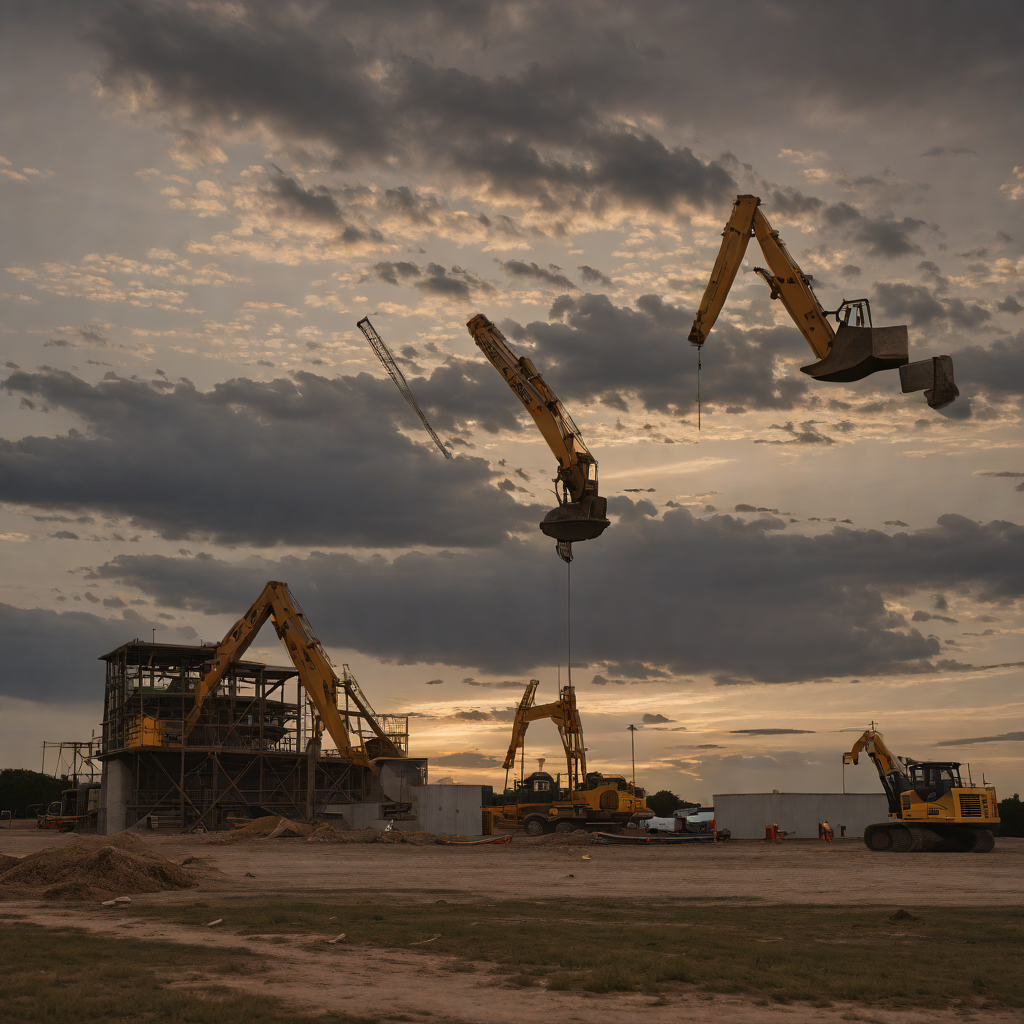
For David Miller (a pseudonym), a senior project manager for a mid-sized residential developer in the Austin-San Antonio corridor, this macroeconomic paradox is a daily logistical nightmare. "Three years ago, I could frame a fifty-home subdivision in four months," Miller explains, standing before a row of partially finished structures in Leander that have sat idle for weeks. "Today, the lumber is here, the permits are—eventually—approved, but the crews are gone."
Miller’s struggle illustrates the unintended consequence of the administration’s "Human Labor First" and strict border closure policies. By severing the artery of migrant labor that historically fueled the Texas construction sector, the cost of building has skyrocketed, not due to material inflation, but due to a scarcity of hands. The result is a housing market that cannot keep pace with the 391,000 new residents, driving up prices and eroding the affordability advantage that drove the migration in the first place.
Furthermore, the "Compound Crisis" currently paralyzing the Midwest has reignited local anxieties regarding Texas’s own infrastructure fragility. While Minneapolis battles a literal freeze, Texas is grappling with a freeze in capacity. The state's energy grid, ERCOT, despite promises of fortification after the 2021 disaster, faces renewed skepticism as demand from AI data centers and the new population creates a precarious load balance. A 2025 infrastructure report by the American Society of Civil Engineers flagged Texas water systems as "critically strained," a reality that turns every new housing permit into a potential political battle over resource allocation.
The paradox, therefore, serves as a warning light for the broader American experiment under the current protectionist regime. Texas is proving that absolute growth is sustainable only as long as the supporting systems—labor, power, and water—can scale at the same speed. When federal policy creates a bottleneck in one of those pillars, specifically labor, the engine doesn't stop, but it begins to grind. The 391,000 new Texans are not just consumers; they are a load test on a system that is rapidly losing its spare capacity.
Texas: The Divergence of Volume vs. Velocity (2022-2026)
The Border Policy Shockwave
For decades, the "Texas Miracle" was fueled by a simple, powerful formula: low taxes, cheap land, and an endless supply of labor flowing across the Rio Grande and through international terminals. But in 2026, the engine room of the American South has begun to sputter, not because the land has run out, but because the people have stopped coming. The slip of the Lone Star State to fourth place in national growth rankings is not merely a statistical blip; it is the direct economic casualty of the Trump administration’s most aggressive border enforcement campaign to date.
The silence is perhaps loudest on the framing crews of the Dallas-Fort Worth metroplex. For James Carter (a pseudonym), a project manager for a mid-sized residential developer in Frisco, the new reality is measured in delays. "Two years ago, I could staff three crews in a week," Carter says, pointing to a subdivision that is currently four months behind schedule. "Now, between the E-Verify mandates and the visa freezes, the workforce simply isn't there. We are paying 30% more for labor than we were in 2024, and we are still short-handed." This anecdotal stagnation is backed by federal labor data, which indicates a 15% contraction in the available construction workforce in Texas since the implementation of the "Secure & Sovereign Borders" executive orders signed early last year.
The policy architecture of "Trump 2.0" has fundamentally altered the demographic inputs of the Texas economy. While the administration argues that restricting low-skilled immigration protects domestic wages—a point validated by a modest uptick in hourly rates for native-born tradesmen—the macroeconomic effect has been a friction-heavy deceleration. The border, once a semi-permeable membrane that allowed for a flexible labor supply, has become a rigid wall. This rigidity has exposed the state’s over-reliance on external growth to mask internal inefficiencies. Without the subsidy of low-cost labor, the true cost of Texas's sprawling infrastructure development is finally hitting the balance sheet.
Texas Net International Migration vs. Construction Starts (2022-2026)
The impact extends beyond the construction site to the high-tech corridors of Austin, where the "Silicon Hills" are facing their own form of border shock. The administration's tightening of H-1B visas and the introduction of "ideological compliance" screenings for foreign STEM talent have severed the pipeline of engineers that companies like Tesla and Oracle relied upon. Sarah Miller (a pseudonym), a recruiter for a major Austin-based semiconductor firm, notes a stark shift in the talent pool. "We are seeing offers rejected not because of money, but because the visa uncertainty is too high," Miller explains. "Senior engineers from India and Eastern Europe are choosing Toronto or Berlin over Austin. The risk premium of working in the US has just become too high for them."
This "Fortress America" approach places Texas in a paradoxical bind. Politically, the state's leadership has championed the very federal policies that are now choking its economic arteries. Governor Abbott’s alignment with the White House on border security has delivered the promised reduction in crossings, but it has also delivered an unpromised recession in the housing and tech sectors. The state is now discovering the limits of an economic model built on the assumption of infinite expansion. As the flow of people restricts, the friction of growth increases, forcing a painful consolidation. The question for the Texas legislature is no longer how to manage a boom, but whether the state can innovate its way out of a labor drought of its own making.
Gridlock and the Cooling Domestic Front
The most visible symptom of this gridlock is, literally, gridlock. The I-35 corridor, once the artery of commerce connecting San Antonio to Dallas, has calcified into a parking lot of frustration. For logistics coordinator James Carter (a pseudonym) in Round Rock, the cost of doing business has shifted from fuel to time. "Five years ago, we could reliably turn a driver around from Dallas to San Antonio in a day," Carter notes. "Now, with the congestion and the constant construction delays, we're missing windows. The cheap gas doesn't matter if the truck isn't moving."
This logistical sclerosis is mirrored by a more existential threat: the fragility of the electric grid and water supply. While the catastrophic freeze of 2021 is fading into historical memory, the blisteringly hot summers of 2024 and 2025 exposed the limits of ERCOT’s capacity despite aggressive investment in renewables and battery storage. The "energy capital of the world" is increasingly asking its residents to conserve power during peak heat, a request that clashes with the state's ethos of unbridled liberty. Furthermore, water scarcity in the Hill Country has transformed from a conservation issue into a hard cap on development. Municipalities that once rubber-stamped subdivisions are now issuing moratoriums on water meters, effectively freezing new construction in high-demand exurbs.
However, the most potent brake on Texas's expansion comes not from Austin, but from Washington. The Trump administration's "American Labor First" executive orders, which have severely curtailed the flow of immigrant labor, have sent shockwaves through the Texas construction industry. For years, the state's housing affordability advantage was built on the back of a flexible, often immigrant, workforce. With that labor pool drying up under strict federal enforcement, construction timelines have stretched, and labor costs have spiked. The result is a median home price that is inching uncomfortably close to the national average, eroding the primary arbitrage opportunity for coastal refugees.
Texas Housing Construction Labor Shortage vs. Cost Index (2022-2026)
The psychological impact of this economic shift is palpable among recent transplants. Sarah Miller (a pseudonym), who moved her graphic design consultancy from Los Angeles to Frisco in 2023, represents the growing cohort of "regretful migrants." Drawn by the promise of a lower cost of living, Miller found that the savings on state income tax were quickly cannibalized by skyrocketing property taxes and insurance premiums, which have surged due to increased severe weather events. "I traded a state tax for a property tax bill that rivals my old mortgage," Miller says. "And when you add in the traffic and the fact that I can't water my lawn in August, the Texas value proposition gets a lot harder to justify."
The Rise of the New Magnets
For a decade, the "Texas Miracle" was the default narrative of the American demographic shift: a relentless, gravity-defying influx of corporate HQs and Californians seeking tax refuge. But as the dust settles on the 2025 Census estimates, a new reality has crystallized. Texas has not merely stumbled; it has been outpaced. For the first time in years, the Lone Star State has slipped to fourth place in percentage growth, ceded ground to a new triumvirate of "magnet states"—South Carolina, Idaho, and North Carolina—that now offer what Texas arguably no longer can: friction-free expansion.
This is not a story of Texas failing, but of Texas filling up. The state’s infrastructure, particularly in the "Texas Triangle" of Dallas-Houston-Austin, has begun to exhibit the very symptoms of saturation—congestion, rising housing costs, and grid instability—that formerly drove the exodus from coastal stalwarts. In contrast, the new leaders have positioned themselves as the agile beneficiaries of the Trump administration's "New Industrialism," leveraging aggressive deregulation without the heavy overhead of Texas-sized sprawl.
2025-2026 Population Growth Rates: The Shift Away from Giants
Leading the pack is South Carolina, which has effectively weaponized its port efficiency and manufacturing base to capitalize on the administration's tariff-heavy trade policy. While Texas struggles with a labor crunch exacerbated by the strict enforcement of the 2025 immigration freeze—a policy that hit the state’s construction sector with disproportionate severity—South Carolina has managed to attract a secondary wave of domestic migration. These are not just tech workers, but blue-collar families and mid-sized logistics firms priced out of the Dallas Metroplex.
(Pseudonym) Michael Vance, a logistics coordinator who relocated his family and small fleet operation from Fort Worth to Greenville, South Carolina, late last year, illustrates this shift. "In Texas, we were bleeding cash just sitting in traffic on I-35, and the property taxes were eating our margins," Vance says. "Here, the math still works. It feels like Texas did ten years ago—hungry for business and actually able to house the workers we need."
Meanwhile, Idaho and North Carolina represent the bifurcation of the remote and research economies. Idaho has absorbed the libertarian diaspora that found Texas’s cultural wars distracting or its suburban sprawl suffocating, positioning itself as the true "frontier" of the Trump era’s deregulation ethos. North Carolina, conversely, has maintained steady growth by offering stability. The Research Triangle has become a sanctuary for bio-tech and fintech firms that require a highly educated workforce but are wary of the volatility plaguing Texas’s energy-dependent economy.

The Stabilization Trade-off
For decades, the "Texas Miracle" was defined by a simple, relentless equation: cheap land plus loose regulation equals exponential growth. But as 2026 unfolds, that equation is being rewritten by the realities of physical saturation and the federal "America First" doctrine. The slipping of the Lone Star State to fourth place in national growth rankings—trailing behind states with more modest ambitions—is often framed by critics as a failure of the Abbott administration’s economic stewardship. However, a closer examination suggests this deceleration is not a collapse, but a necessary cooling mechanism for a state that was overheating to the point of structural fracture.
The most immediate brake has been the Trump administration’s rigorous enforcement of the 2025 Immigration and Labor Freeze. For the construction sector, which fueled the housing boom of the early 2020s, the impact was instantaneous. Michael Henderson (a pseudonym), a site manager for a mid-sized development firm in the Austin suburbs, notes that his project timelines have extended by 40% since late 2024. "We simply don't have the crews," Henderson explains, gesturing to a half-finished framing job that would have taken three days in 2023 but now takes ten. "But looking at the permit office, the backlog is gone. We aren't fighting for water hookups like we were two years ago. It’s slower, but it’s the first time in five years I haven't worried about the grid failing the moment we turn the AC on."
Henderson’s experience underscores the paradox of the "Stabilization Trade-off." The hyper-growth era brought Texas to the brink of infrastructure insolvency. The ERCOT grid, famously isolated and fragile, struggled to keep pace with the energy demands of crypto-miners and AI data centers that flocked to the state. The "Trump 2.0" energy policies, which favor traditional fossil fuel resilience over rapid renewable expansion, combined with the natural throttling of demand due to labor shortages, have arguably saved the grid from a catastrophic systemic failure this winter. By forcing a pause, the federal government has inadvertently granted Texas the breathing room to harden its existing assets rather than stretching them thinner.
Texas Housing Inventory vs. Median Price Stabilization (2023-2026)
This data reveals the hidden benefit of the slowdown. As inventory months (represented by the inventory index) have climbed back to healthy levels near 4.1 months, the runaway price inflation (price index) has effectively flatlined in the last year. For the middle class—the demographic essential for political stability and consumption—this pause is a reprieve.
The trade-off, however, is a loss of the dynamism that defined the Texas brand. The "Adjustment Crisis" of 2026 means that businesses can no longer rely on volume alone to drive profits; they must innovate or automate. The friction of growth is now a feature of the landscape. The question remains whether the state's leadership can pivot its narrative from "Growth at All Costs" to "Quality of Life," or if they will attempt to artificially re-stimulate the economy, risking the very stability this slowdown has provided.
Defining the Post-Boom Horizon
Economists at the Federal Reserve Bank of Dallas have long warned that extensive growth—growth by adding more inputs—would eventually yield to the need for intensive growth, or productivity gains. That transition is no longer theoretical; it is being forced upon the state. The "Post-Boom Horizon" for Texas does not look like a crash, but it looks significantly more expensive and exclusive than the era that preceded it. The state is transitioning from a frontier of endless expansion to a mature market of consolidation, where the winners will not be those who build the fastest, but those who can secure the power, water, and workforce to operate at all. As 2026 unfolds, the question is no longer how fast Texas can grow, but how much friction it can absorb before the "Miracle" becomes a memory.