The Force de Frappe: France’s Nuclear Shield and the New European Order
A Sovereign Shield for a Divided Continent
France's doctrine of strategic ambiguity shifted this week as President Emmanuel Macron announced a major expansion of the nation’s nuclear capabilities. France intends to increase its nuclear arsenal and deepen weapons cooperation with European allies, marking the most substantial change in its atomic posture since the Cold War. The move pivots the "Force de Frappe"—traditionally a national strike force—toward a continental shield. By extending deterrence to the European Union, France positions itself as the primary guarantor of regional security while traditional alliances fracture.
Defense analyst David Chen (Pseudonym) views this as a fundamental recalculation of the European balance of power. While France has historically guarded its nuclear autonomy, current geopolitical pressures make isolationism an unaffordable luxury. The plan increases warhead counts and revises doctrine to involve European allies directly in deterrence mechanisms. This "forward deterrence" strategy aims to fill a power vacuum, ensuring the European project remains viable even as external security pillars crumble.
This transition is an assertion of the "strategic autonomy" Macron has long championed. The plan creates a unified front against emerging threats, linking the security of EU members to France's nuclear umbrella. The shift effectively transforms the EU from an economic bloc into a nascent nuclear power, with Paris holding the keys.
Beyond the Atlantic Rift: The End of the US Security Guarantee
Widening fractures in the transatlantic relationship, driven by the "America First" policies of the second Trump administration, catalyzed France’s rearmament. As the United States adopts an isolationist stance, European leaders increasingly view the era of reliable U.S. security guarantees as over. The split between Washington and its allies is visible; European capitals have notably diverged from the White House approach to global trade and shared security obligations. This rift leaves Europe exposed, forcing a search for internal alternatives to NATO’s traditional structure.
White House rhetoric has heightened these anxieties. The administration has signaled that U.S. military engagement will be dictated strictly by national interest rather than legacy treaty obligations. This strategic unpredictability has forced European leaders to prepare for a geopolitical landscape where the American security umbrella is no longer a certainty, prioritizing internal continental stability over traditional Atlantic alliances.
This unpredictability has created a "security deficit" for the EU. Maria Rodriguez (Pseudonym), a policy consultant specializing in transatlantic relations, observes that the American focus on deregulation and protectionism has decoupled U.S. prosperity from European safety. When the U.S. State Department shifts focus toward bilateral trade leverage over collective defense, it signals to Brussels that Washington is preparing for a world of "managed chaos" rather than "enforced peace."
The Price of Protection: Rebuilding the Force de Frappe
Expanding a nuclear arsenal is a massive industrial undertaking with heavy economic and technical weight. Macron’s order to increase warhead production reverses the post-Cold War trend of disarmament. While specific production targets remain classified under a new policy of strategic opacity, the modernization effort involves every facet of France’s military-industrial complex, from manufacturing warheads to upgrading delivery systems.
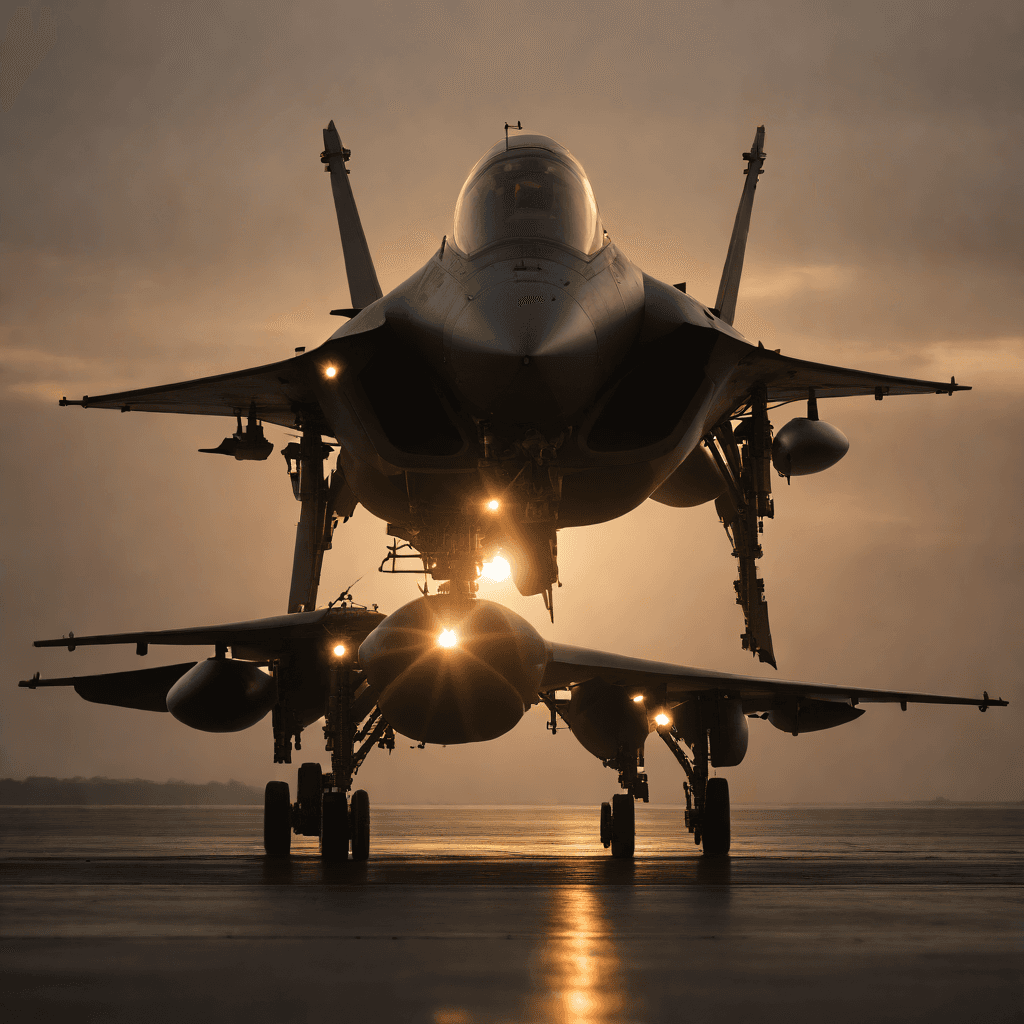
A key component is the "forward deterrence" plan, which involves lending nuclear-capable aircraft to allied nations. France will allow temporary deployment of nuclear-armed jets to allies, requiring specialized infrastructure and training across the continent. This infrastructure-heavy approach ensures French nuclear power is a tangible presence in European hangars. The "lending" model allows allies to participate in the deterrence mission without violating their non-nuclear status, creating a web of shared responsibility.
Shadows of Sovereignty: The Struggle for a Unified Command
The transition to shared nuclear doctrine triggers political tension as EU states grapple with relying on a French-led command structure. "Forward deterrence" requires military integration that challenges traditional national sovereignty. While nations like Germany once sought shelter under the American umbrella, a French alternative raises questions about strike authority. Involving European allies in French doctrine is a balancing act designed to foster cooperation without ceding total control to Paris.
Brussels-based security analyst Michael Johnson (Pseudonym) identifies the primary friction point as the "command and control" mechanism. Even if France deploys nuclear-armed jets to allied bases, the final decision to use them remains with the French President. This creates a "shadow of sovereignty" where allies provide platforms and political support but remain dependent on the strategic calculus of a single foreign leader. The dynamic has sparked debate across Europe, with some viewing it as a necessary evolution and others as French "nuclear hegemony."
The Geopolitical Friction of an Independent Deterrent
An autonomous European nuclear stance alters the multi-polar world order and creates friction with global powers. The United States, while encouraging Europe to pay for its own defense, views an independent nuclear pillar with skepticism. A Europe capable of its own deterrence is less susceptible to Washington’s influence, complicating the U.S. strategy of using security guarantees as trade leverage.
Ultimately, the Force de Frappe is a tool of continental diplomacy. Whether this shift stabilizes the multi-polar world or fragments it remains uncertain. The fundamental question is whether Europe can maintain its values of liberty while leaning on the ultimate instrument of destruction. The negotiation of this "nuclear peace" will define the late 2020s and determine the survival of the European project.
Sources & References
France to increase nuclear arsenal and European weapons cooperation, Macron says
The Guardian • Accessed 2026-03-03
France to increase nuclear arsenal and European weapons cooperation, Macron says
View OriginalMacron starts biggest European nuclear shift since Cold War
politico.eu • Accessed 2026-03-03
Live War in the Middle East: Starmer splits with Trump U.S. Defense Secretary Pete Hegseth declined to rule out deploying American ground forces in Iran. Most Americans oppose Trump’s war against Iran , according to several polls conducted since the U.S.-Israeli attacks began on Saturday. Conflict widens after Israel struck targets in Lebanon early Monday following Hezbollah rocket fire. U.S. Central Command confirmed that 3 American jets were mistakenly shot down by Kuwaiti air defenses.
View OriginalFrance to boost nuclear arsenal and extend deterrence to European allies
BBC • Accessed Mon, 02 Mar 2026 18:16:14 GMT
France to boost nuclear arsenal and extend deterrence to European allies
View OriginalFrance to boost nuclear arsenal, involve European allies in deterrence
Australian Broadcasting Corporation • Accessed Mon, 02 Mar 2026 22:51:24 GMT
ABC News Loading Top Stories All State Trending Israel launches further strikes on Lebanon Iran threatens to burn passing ships as drones hit military base used by Australian forces Play video. Has Video Duration: 58 seconds . Watch 58 s LIVE Topic: War Topic: Unrest, Conflict and War US embassy in Riyadh hit by two drones published 1m ago 1 minutes ago Tue 3 Mar 2026 at 12:43am Qatar, UAE report missile attacks published 30m ago 30 minutes ago Tue 3 Mar 2026 at 12:14am Fire reported at US'
View OriginalFrance to boost nuclear arsenal, could deploy to European allies
The New Arab • Accessed Mon, 02 Mar 2026 21:06:34 GMT
Home Page US-Israel war on Iran Trump: Iran war could last weeks; Israel strikes Tehran, Beirut 00:34 am US issues shelter in place warning to Americans in Saudi 00:26 am US embassy in Riyadh on fire after blast 00:19 am Qatar shoots down two ballistic missiles 00:08 am Israel strikes Beirut office of Hezbollah's Al-Manar TV Israeli strikes on Lebanon killed 31 after Hezbollah rocket fire, as US and Israeli attacks left 35 dead in Iran's Fars province.
View OriginalMacron to boost nuclear arsenal, involve European allies in doctrine change
The Straits Times • Accessed Mon, 02 Mar 2026 15:23:29 GMT
Live: Trump flags potential escalation in Iran assault He also said it was the “last, best chance” to hit US' arch-foe in first public comments since launching the operation. ‘Big wave’ yet to come: Trump warns US strikes on Iran could go much longer S’pore embassy exploring possibility of evacuating S’poreans in Bahrain to Riyadh via buses Singapore firms grapple with impact of escalating Middle East conflict on supply, trade routes News analysis All in on AI: PM Wong’s promise of ‘no jobl
View OriginalMacron to boost France’s nuclear arsenal, stop revealing stockpile; Europe allies join for joint deterrence
CNBC TV18 • Accessed Mon, 02 Mar 2026 17:06:09 GMT
World LIVE UPDATES Israel-Iran War News LIVE: US State Department urges Americans to leave more than a dozen Middle Eastern countries Mar 3, 2026 5:01 AM 2 Min Read
View OriginalFrance to increase nuclear warheads, lend nuclear aircraft to Europe allies
Al Jazeera • Accessed Mon, 02 Mar 2026 18:14:41 GMT
aj-logo This video may contain light patterns or images that could trigger seizures or cause discomfort for people with visual sensitivities. BREAKING BREAKING, Israel bombs Iran, Lebanon; Trump says war to last 4 weeks or longer blinking-dot Live updates Live updates, list 1 of 10 live-orange Published 3 minutes ago 3m ago ‘Iran does not seek war, but will not surrender sovereignty: Iran’s UN envoy list 2 of 10 live-orange Published 4 minutes ago 4m ago Saudi defence ministry says US embassy st
View OriginalMacron says France will allow temporary deployment of nuclear-armed jets to allied nations
NBC News • Accessed Mon, 02 Mar 2026 15:54:43 GMT
NBC News Logo Iran strikes Politics U.S. News World Business Sports Health Culture Local New York Los Angeles Chicago Dallas-Fort Worth Philadelphia Washington, D.C. Boston Bay Area South Florida San Diego Connecticut Shopping Tipline Science Subscribe Subscriber Hub Saved Newsletters Profile Subscription Preferences Search Search Sections U.S.
View OriginalFrance to boost nuclear arsenal for first time in decades: Macron | Daily Sabah
Daily Sabah • Accessed Mon, 02 Mar 2026 14:48:00 GMT
INDEX Value Change Change % BIST 100 13,346.43 - 371.38 - 2.78 % CAC 40 8,394.32 + 0.00 + 0.00 % DAX 24,672.40 + 0.00 + 0.00 % Dow Jones 48,904.78 + 0.00 + 0.00 % S&P 500 6,881.60 + 0.00 + 0.00 %
View OriginalMacron orders nuclear warhead increase and unveils 'forward deterrence' plan for Europe
Euronews.com • Accessed Mon, 02 Mar 2026 15:47:05 GMT
War in Ukraine Israel Iran conflict Iran US-Iran crisis Middle East Technology Iran's 'terrorist regime' was an 'intolerable threat,' Trump says Tehran has continued its attack against countries in the Middle East on Monday, striking Qatari and Saudi energy facilities and other targets, as Iran war entered its third day. Follow our live blog.
View OriginalFrance to increase nuclear arsenal as Macron announces shift in atomic doctrine
TRT World • Accessed Mon, 02 Mar 2026 19:25:07 GMT
WAR GETS BLOODIER WITH NEARLY 600 DEAD, MOST IN IRAN Several US jets crash in Kuwait, crew survives: defence ministry Iran state TV says a US F-15 jet in Kuwait was downed after Iranian air defence fire. Israel kills 31 in Lebanon as Hezbollah joins war US State Department urges Americans to depart most of Middle East Several US jets crash in Kuwait, crew survives: defence ministry Iran state TV says a US F-15 jet in Kuwait was downed after Iranian air defence fire.
View OriginalWhat do you think of this article?