The Silent Misfire: Why NATO and Washington Chose Restraint Over Retaliation
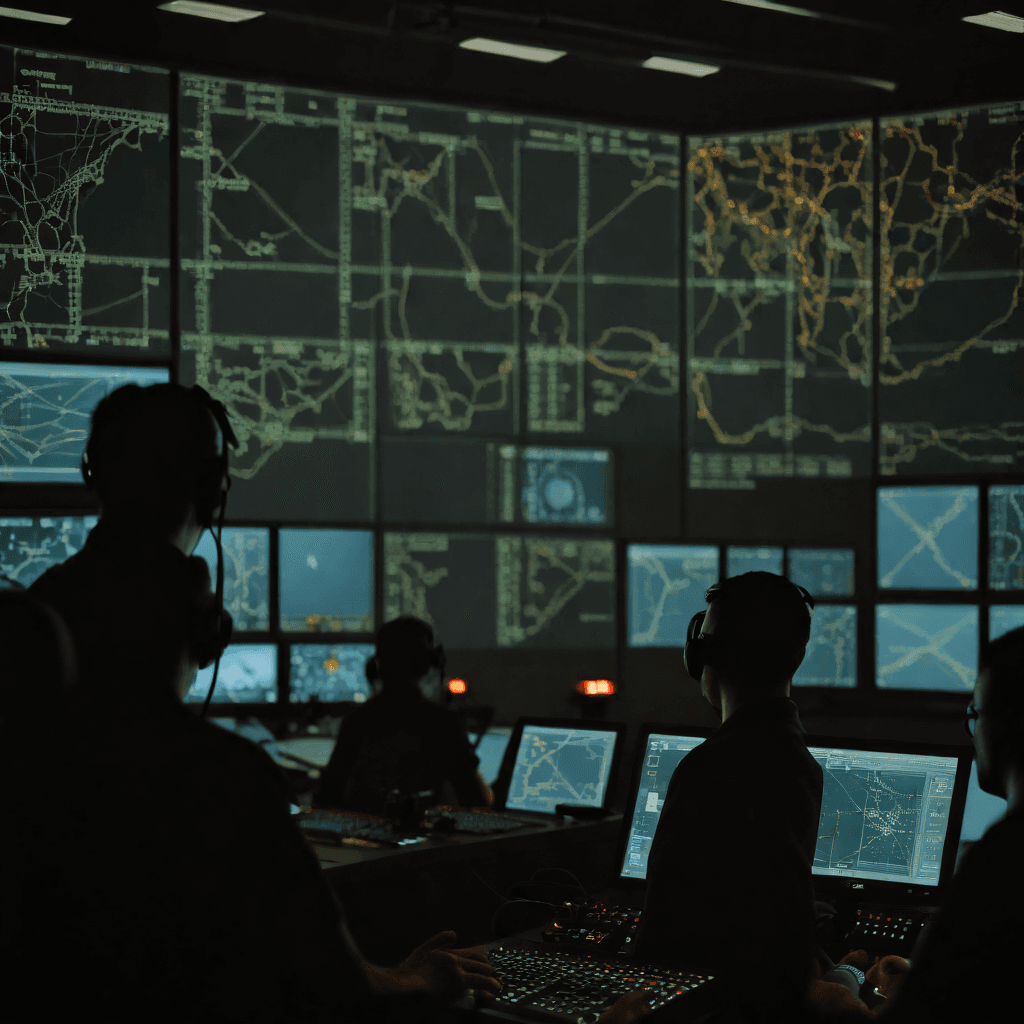
A Missile Off Course: The Night Diplomacy Held Its Breath
The Turkish border became the flashpoint for a potential global conflict when an Iranian missile veered from its trajectory and breached NATO airspace. As first reported by Yonhap News, NATO’s integrated air defense systems intercepted the projectile over Turkish territory, triggering immediate alerts in Ankara and Washington. In an era where the boundary between technical failure and deliberate provocation is increasingly thin, the incident forced an immediate test of regional escalation protocols.
Defense analysts tracking the telemetry in real-time viewed the interception as a victory for automated hardware and a warning of how quickly local skirmishes can spiral. The initial data confirmed a significant "orbit deviation"—the technical term for a guidance failure—which required NATO commanders to authorize a kinetic engagement within seconds. This intrusion represents the most direct challenge to the alliance’s southern flank in years, exposing the vulnerability of a region saturated with precision weaponry.
The immediate response followed a distinct pattern: silence from Tehran and frantic coordination within the Trump administration’s national security apparatus. While the defense systems functioned as designed, the political challenge remained: determining whether the breach was an act of aggression or an engineering catastrophe. This distinction is the pivot upon which Middle Eastern stability now balances.
Beyond Article 5: The Calculated Choice of Non-Invocation
NATO’s founding charter centers on Article 5—the principle that an attack against one member is an attack against all—yet the alliance chose to keep that mechanism dormant. According to the Hankyoreh, Turkish and U.S. officials moved to de-escalate, concluding that the misfire did not constitute a hostile act. This restraint reflects the 2026 geopolitical shift toward the Trump administration’s "America First" posture, which favors strategic isolationism over automatic military entanglement.
Legal experts focused on "intentionality," a difficult metric to verify in the age of autonomous guidance. Security researchers in Washington argue that treating the event as a technical mishap avoided an escalatory ladder that would have mandated a direct confrontation with Iran. By framing the intrusion as a malfunction, the alliance preserved its military options while exhausting diplomatic ones.
Critics, however, warn that failing to trigger collective defense after a clear airspace violation may erode the alliance's deterrent credibility. Congressional debates are now centering on whether the threshold for Article 5 has been raised so high that the clause has become a "paper tiger" against accidental provocations. As the alliance navigates this gray zone, the Trump administration has shifted toward a pragmatic, bilateral approach to crisis management that bypasses traditional multilateral bureaucracy.
The Ankara-Washington Axis: Orchestrating an Off-Ramp
Crisis stabilization was handled through a direct diplomatic channel between the Turkish Foreign Ministry and the U.S. State Department, largely ignoring the standard NATO committee structure. Emphasizing "peace through strength" and a public aversion to new foreign conflicts, the Trump administration worked with Ankara to control the narrative before Tehran could issue a formal response. This coordination prevented the "fear of expansion" from paralyzing global markets already sensitive to Middle Eastern tensions.
The diplomatic "off-ramp" relied on Iran acknowledging the technical nature of the error. This required back-channel signaling: the U.S. demonstrated its defensive resolve while providing the space for Iran to save face. Former diplomats suggest this incident proves that the current administration's personalist diplomacy can outpace institutional protocols, though it risks alienating European allies who feel sidelined by the direct Ankara-Washington axis.
While the immediate threat of war dissipated, the incident highlighted a schism within NATO regarding "gray zone" threats. The success of this de-escalation may have averted a conflict, but it has also rewritten the rules for how the U.S. manages its oldest alliances in a more transactional era.
Technical Failure or Tactical Probe: The Intelligence Gap
Investigators are now determining if the "orbit deviation" was a genuine mechanical failure or a tactical probe designed to test NATO’s radar sensitivity. While initial assessments suggest a guidance malfunction, the precision of the entry into Turkish airspace has raised questions. This ambiguity underscores the risks of modern precision-strike regimes, where the margin between a test and a strike is measured in seconds.
The economic fallout was severe. Global markets saw a staggering loss of value within 48 hours. In response, South Korean President Lee Jae-myung announced a 100 trillion won ($75 billion) market stabilization program to counter the volatility that wiped out nearly $800 billion in market capitalization. This intervention, reported by the Hankyoreh, highlights a 2026 reality: the first casualty of a missile malfunction is the global economy.
Whether a probe or a mistake, the event exposed a critical intelligence gap in verifying Iranian technical claims in real-time. Without a transparent verification mechanism, future launches will be viewed with extreme suspicion, further eroding regional trust. The technical autopsy of recovered debris will provide the final verdict on whether this was a failure of engineering or a success of clandestine testing.
Friction in the Gray Zone: The Erosion of Safety Buffers
The missile incident occurs as humanitarian crises and proxy conflicts in the Middle East converge toward a breaking point. Tensions are acute following the expiration of aid deadlines in Gaza and escalating friction between Israel and international medical organizations. The gray zone—the space between peace and open war—is becoming increasingly crowded with automated weapons and desperate actors.
This erosion of safety margins is exacerbated by domestic crises that alter the priorities of regional powers. While global attention is fixed on incoming warheads, internal issues—such as the collapse in marriage rates reported by JoongAng Ilbo—distract governments from maintaining the diplomatic infrastructure needed to prevent accidental wars. These "silent crises" hollow out the stability required for effective international relations.
For the United States, the challenge is maintaining a deterrent without being drawn into perpetual regional disputes. The "America First" strategy prioritizes vital national interests, but as the Turkish interception proves, even an isolationist power cannot ignore the trajectory of a neighbor’s mistake. The buffers protecting the global order are thinning.
The Precedent of Patience: Redefining Crisis Management
The de-escalation of the Turkish missile crisis sets a fragile precedent for handling accidental escalations in an automated age. By choosing strategic patience over kinetic retaliation, the U.S. and its allies demonstrated that the ultimate defense in 2026 is the ability to distinguish between technical error and political intent. This case study emphasizes the need for high-level hotlines and "face-saving" exits for adversaries.
However, this patience creates a new form of perpetual anxiety. Every radar blip now requires a high-stakes evaluation of an opponent's motives. The $75 billion stabilization program launched by South Korea underscores that even a bloodless resolution carries a heavy economic price. The precedent of patience requires a stable financial foundation that is increasingly under pressure from the automation adjustment crisis.
Ultimately, the "Silent Misfire" suggests that in an era of hyper-tension, the most important technology is not the interceptor, but the diplomatic architecture that allows for a pause. As the Trump administration continues to redefine America’s global role, bilateral pragmatism will remain the defining feature of U.S. foreign policy. This event appears to have established a critical precedent for 2026: while calculated restraint can avert kinetic escalation, the inherent volatility of the "gray zone" ensures that the price of such patience is a perpetual cycle of market shocks requiring massive stabilization. The world looked into the abyss and blinked; it remains to be seen how many more times a blink will suffice to hold together a global order that is increasingly defined by its proximity to systemic collapse.
Sources & References
*연합뉴스 (Yonhap News)
연합뉴스 • Accessed 2026-03-05
**전체 제목:** 튀르키예 영공 진입 이란 미사일, 나토 방공망에 격추 [URL unavailable]
*중앙일보 (JoongAng Ilbo)
중앙일보 • Accessed 2026-03-05
중앙일보 지면보기 서비스는 로그인 후 이용 가능합니다. 로그인 하러 가기 Close 최근 1개월 내 지면만 열람하실 수 있습니다. Close 중앙일보 지면보기 서비스는 로그인 후 이용 가능합니다. 로그인 하러 가기 Close 로그인 하시면 최신호의 전체 내용을 보실 수 있습니다. 로그인 하시겠습니까? 로그인 Close 더중앙플러스 회원이 되시면 창간호부터 전체 지면보기와 지면 다운로드가 가능합니다. 더중앙플러스 회원이 되시겠습니까? 더중앙플러스 시작하기 Close 사진 pxhere 최근 10년 새 혼인 건수가 40% 줄어든 것으로 나타났다. 혼인 건수가 감소함에 따라 출생아 수도 크게 줄었다. 3일 통계청의 '2023년 12월 인구동향'과 국가통계포털(KOSIS)에 따르면 지난해 혼인 건수(잠정치)는 19만3673건이었다. 10년 전인 2013년(32만2807건)보다 40.0% 감소한 수치다.
View Original“이란 미사일 궤도 이탈” “나토 헌장 발동 안 해”…튀르키예·미국 확전 진화 나서
한겨레 • Accessed Thu, 05 Mar 2026 02:16:00 GMT
이 대통령 “100조 시장안정 프로그램 집행… 휘발유값 잡겠다” 이재명 대통령이 5일 미-이란 전쟁 탓에 불안정해진 주식 시장과 환율에 관해 “100조원 규모의 시장안정 프로그램을 적절하고, 신속하게 집행 관리해달라”고 지시했다. 중동 정세 불안이 금융시장으로 번지는 것을 선제 차단하겠다는 취지다. 이 대통령은 이날 청와대에서 열린 임시국무회의에서 “중동 지역위기가 고조되면서 글로벌 경제 안보 환경이 많이 악화하고 이틀새 시총 1069조 증발…단기과열 증시에 ‘확전 공포’ 덮쳐 이 대통령 “휘발유 수급 차질 없는데 가격 폭등…상한제 시행해야”
View Original(검색 결과 기반)
한겨레 • Accessed 2026-03-05
본문 국제 국제일반 전직 자위대원이 유도복 입고 ‘용기있는 여성상’ 받은 이유는? 자위대 성폭력 고발한 전직 자위대원 “‘당신은 잘못하지 않았다’는 말에 치유” 홍석재 기자 수정 2024-03-05 22:42 등록 2024-03-05 21:48 일본 자위대의 성폭력을 고발한 전직 자위대원 고노이 리나(가운데)씨가 5일 ‘세계의 용기있는 여성상’을 받은 뒤, 질 바이든 미국 대통령 부인(왼쪽)과 토니 블링컨 미국 국무장관과 기념사진을 찍고 있다. EPA 연합뉴스 광고 “‘당신은 잘못하지 않았다’고 해준 말에 마음이 치유됐습니다.” 일본 자위대의 성폭력을 고발한 전직 자위대원 고노이 리나씨가 5일 미국 워싱턴 디시(D.C) 백악관에서 ‘세계의 용기 있는 여성상’을 받은 뒤 한 말이다. 고노이씨는 홋카이도에서 육상자위관으로 근무하면 2020년부터 같은 부대 남성 대원들로부터 성폭력 피해를 당했다.
View Original*뉴스1 (News1)
뉴스1 • Accessed 2026-03-05
곽규택·김인규·이영풍 3인 경선 실시 정영환 국민의힘 공천관리위원장이 지난 1일 서울 여의도 중앙당사에서 제22대 총선 공천 심사 결과를 발표를 하고 있는 모습. 2024.3.1/뉴스1 ⓒ News1 송원영 기자 관련 키워드 410총선 국민의힘 공천 컷오프 안병길
View OriginalWhat do you think of this article?