The Hormuz Ultimatum: Trump Reorders Global Security via Transactional Maritime Standards
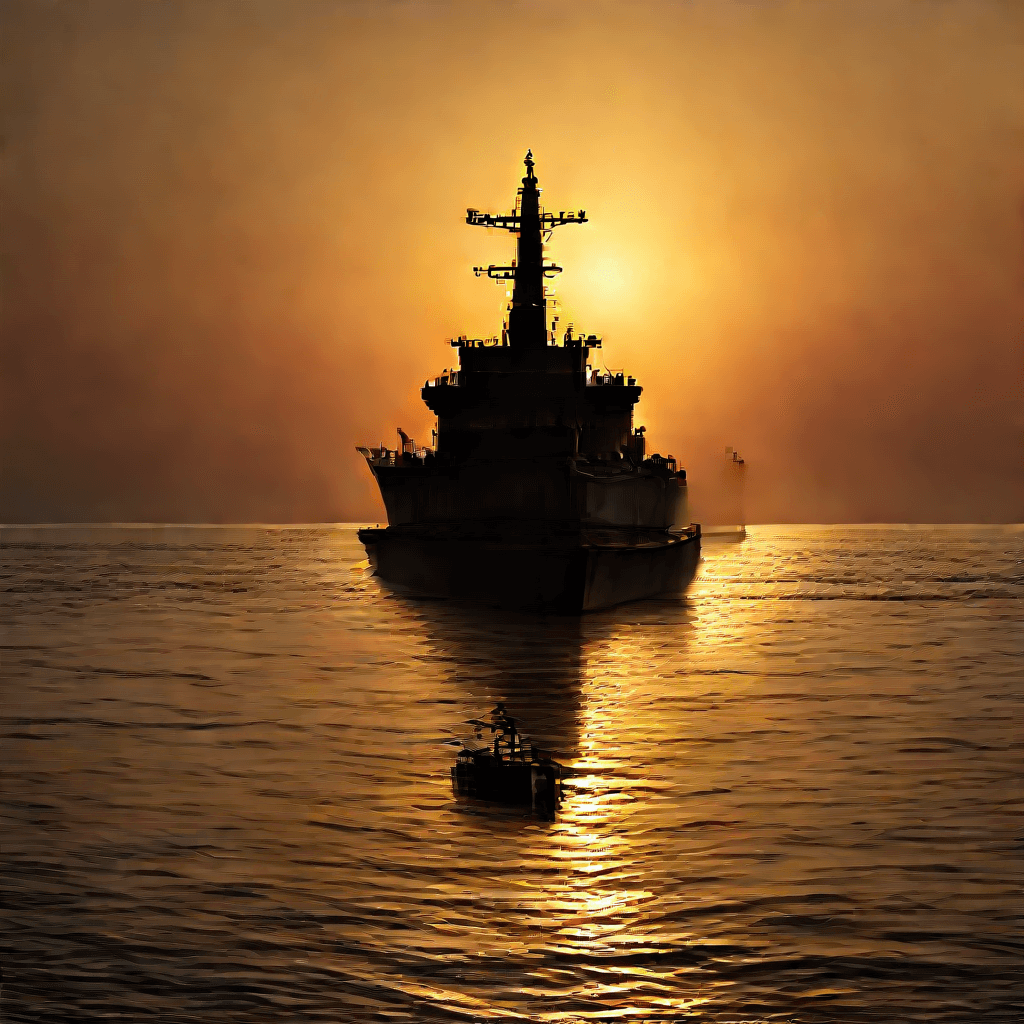
The Maritime Standard of the America First Era
The Trump administration's 2026 "maritime standard" redefines the security of international energy routes, shifting from a guaranteed American service to a conditional arrangement based on direct participation. Reports from Chosun Ilbo indicate that President Trump has specifically targeted nations relying on the Hormuz Strait for oil supplies, asserting that those who benefit from the passage must share the burden of its management. This policy terminates the U.S. Navy's role as the sole, unpaid guarantor of the global maritime commons.
By framing Gulf safety as a shared responsibility, the administration is forcing a recalculation in energy markets that long viewed American protection as a constant. This commodification of security marks the first phase of a broader reordering of global power dynamics. While this standard redefines bilateral expectations, its application to multilateral frameworks like NATO signals a fundamental pivot in treaty-based security.
Collective Defense vs. Individual Contribution
The North Atlantic alliance faces a structural bottleneck as the administration links Middle Eastern cooperation to NATO’s continued viability. As reported by Hankyoreh, President Trump recently warned that NATO has "no future" if member states fail to align with U.S. objectives in the Hormuz Strait. This stance challenges the traditional interpretation of Article 5, suggesting that collective defense obligations are now contingent upon specific, out-of-area contributions to American-led initiatives.
European allies now face a stark choice between their traditional security posture and a new "pay-to-play" model. This evolution from a treaty-based alliance to a contribution-based coalition redefines the meaning of partnership in the 21st century. This shift extends beyond established allies, impacting the delicate balance of U.S.-China relations.
Deterrence as a Diplomatic Commodity
High-level diplomacy between the world's two largest economies has become a tactical lever to compel maritime cooperation. According to Hankyoreh, the Trump administration suggested that the planned U.S.-China summit could be postponed if Beijing fails to demonstrate sufficient cooperation regarding the Hormuz crisis. By using a major diplomatic event as a bargaining chip, the administration is pressuring China to abandon its role as a passive consumer of Gulf energy.
This strategy treats international summits as rewards for geopolitical compliance rather than forums for dialogue. The potential postponement signals that, under the current administration, diplomatic engagement is a commodity traded for tangible security concessions. However, the friction generated by these maneuvers inevitably disrupts the global supply chain.
Economic Friction: From Geopolitics to the Factory Floor
Geopolitical tension in the Gulf translates into direct economic friction, impacting operational safety and logistical costs for domestic industries. According to the Wall Street Journal, cited by Chosun Ilbo, President Trump proceeded with military strikes in the region despite the acknowledged risk of a Hormuz Strait blockade. For industry veterans like James Carter (a pseudonym), who manages international logistics, this calculated risk introduces uncertainty that complicates every tier of the supply chain.
This volatility affects delivery timelines and insurance premiums alike. While the administration views this friction as a necessary leverage tool, the domestic consequence is a forced shift in how businesses prepare for sudden trade interruptions. This "cost transfer" ensures the risks of the Hormuz Ultimatum are felt throughout the economy, even as the criteria for these shifts remain undefined.
The Executive Trigger: Redefining Treaty Obligations
The mechanism for triggering a U.S. withdrawal from international commitments remains an opaque "executive black box" lacking transparent benchmarks. While the administration's demands are vocal, it has not defined the specific failure threshold that would lead to severing NATO ties or canceling major summits. This ambiguity serves as a deterrent, leaving allies to guess the exact level of "sufficient contribution" required to maintain American support.
As reported by Chosun Ilbo, the demand for South Korea to deploy warships to the Hormuz Strait illustrates a move toward hardware-based metrics for loyalty. Without public standards, the trigger for redefining treaty obligations rests solely on executive discretion. This lack of clarity forces a permanent shift in how the international community approaches maritime governance.
A New Paradigm for Maritime Governance
A new paradigm for maritime governance is emerging, requiring allies and adversaries to navigate a landscape defined by transactional security. President Trump's demand for warships from specific allies highlights a shift toward a world where security is a negotiated asset rather than a guaranteed right. To adapt, international trade partners must move beyond passive reliance on U.S. protection and develop measurable contributions to maritime stability.
This shift may lead to a more fragmented security environment, but it also forces an honest accounting of global trade costs. The era of "free-rider" security has been replaced by a rigorous, contribution-based order. As the global community adjusts, the underlying logic of these maneuvers reveals a systemic change in how power is projected.
Sources & References
트럼프 “호르무즈 협력 안 하면 나토 미래 없다…미중 정상회담 연기 가능”
한겨레 • Accessed Sun, 15 Mar 2026 23:49:00 GMT
‘케데헌’ 오스카 2관왕…디캐프리오·스필버그도 ‘응원봉 떼창’ 장편 애니메이션상 이어 ‘골든’ 주제가상 ‘케이팝 데몬 헌터스’(케데헌)의 ‘골든’이 오스카 주제가상을 수상했다. ‘케데헌’은 장편 애니메이션상에 이어 2관왕 수상이다. 16일 오전(한국시각) 미국 로스앤젤레스 돌비극장에서 열린 제98회 아카데미 시상식에서 ‘케데헌’의 ‘골든’이 ‘씨너스 ‘저처럼 생긴 사람들’에 오스카 바친 매기 강 “‘케데헌’ 너무 오래 걸려 미안” 그래미 거머쥔 케데헌 ‘골든’…K팝, 벽을 넘다
View Original한국 콕집은 트럼프… “호르무즈로 석유 받는 나라, 통로도 관리해야”
조선일보 • Accessed Sat, 14 Mar 2026 19:24:51 +0000
한국 콕집은 트럼프… “호르무즈로 석유 받는 나라, 통로도 관리해야”
View OriginalWSJ, “트럼프, 호르무즈 해협 봉쇄 위험 알고도 공격 결정”
조선일보 • Accessed Sat, 14 Mar 2026 18:47:33 +0000
WSJ, “트럼프, 호르무즈 해협 봉쇄 위험 알고도 공격 결정”
View Original트럼프 “한국도 군함 보내라”... 호르무즈 해협에 파견 요구
조선일보 • Accessed Sat, 14 Mar 2026 14:44:35 +0000
트럼프 “한국도 군함 보내라”... 호르무즈 해협에 파견 요구
View OriginalWhat do you think of this article?