Wildfire Breach: The Otsuchi Crisis and the Logic of Economic Containment
The Dissolution of the Wildland-Urban Perimeter
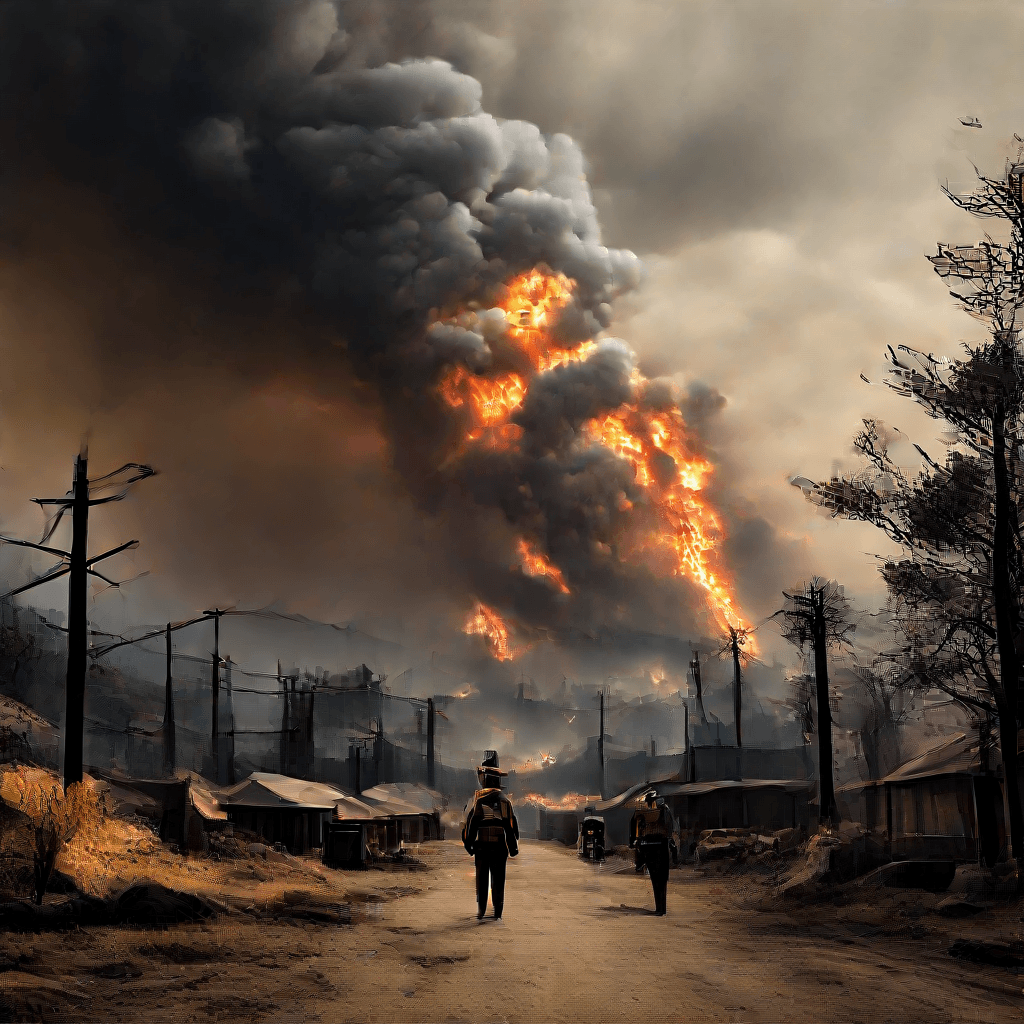
The geographic distinction between the Iwate highlands and the residential center of Otsuchi has collapsed. What originated as a localized plume in the mountains has transformed into an immediate urban emergency, overrunning established buffers and igniting structures within the town perimeter. The fire has moved beyond natural containment lines, rendering traditional defensive zones obsolete.
The transition from a wildland fire to an urban conflagration indicates a failure in the structural buffers designed to protect the community. This breach reflects the heightening volatility of regional climates, where historical containment models no longer guarantee the safety of the urban interface.
Logistical Strain and the Evacuation of 2,500 Residents
According to metrics released by the Iwate Prefectural Disaster Management Bureau, regional emergency infrastructure is currently managing the displacement of 2,588 residents. Local authorities prioritized human safety over property preservation after the fire’s velocity rendered standard response windows obsolete. This movement reflects a strategic pivot toward life-saving operations as the blaze grows increasingly unpredictable.
The logistics of supporting the displaced population remain the primary concern for disaster managers. Because the speed of the fire bypassed standard evacuation protocols, the focus has shifted toward long-term displacement management and the maintenance of temporary shelters.
The Barrier of Containment and the Challenge of the Night
Suppression efforts have transitioned to a 24-hour operational cycle as the fire resists standard tactical intervention. The rugged Iwate coastline and volatile wind patterns have shifted the objective from total containment to slowing the fire's momentum. Despite the continuous deployment of aerial and ground resources—estimated by local emergency services to involve approximately 120 personnel—there is currently no prospect for extinguishing the blaze in the immediate term.
As night falls, darkness restricts the use of aerial assets, forcing ground crews to monitor high-risk zones where embers frequently jump established lines. The absence of a clear timeline for control suggests the crisis is entering a phase of endurance. This physical limit of suppression has necessitated a shift in focus toward the underlying institutional stability of the region.
Financial Sovereignty and Central Bank Intervention
To mitigate systemic economic shock, the Bank of Japan has implemented special financial safeguards for Iwate Prefecture, as stipulated in the official notice "Financial Measures Regarding the 2026 Otsuchi Forest Fire." This intervention aims to stabilize the regional economy and preserve credit flow for residents facing total asset loss. By activating these emergency mechanisms, the central bank acknowledges the disaster as a threat to broader fiscal stability beyond the immediate impact zone.
These measures ensure that funds remain available for reconstruction, preventing a secondary financial crisis in the wake of the fire. Japan’s use of central bank power to buffer environmental disasters represents a model of regional economic sovereignty, decoupling physical destruction from a collapse of local market trust.
A New Paradigm in Disaster Resilience
The breach of Otsuchi’s residential perimeters necessitates a shift in governance from physical defense to institutional stabilization. The central bank's intervention reflects an evolving paradigm where economic resilience is integrated into public safety. When physical containment reaches its limit, financial intervention functions as a necessary system reset.
Analysis suggests that firefighting cycles have reached a ceiling in the face of current climate conditions. In such scenarios, the financial system functions as a line of defense, addressing the economic energy of the disaster while ground crews manage the physical flames. As structures built to protect life prove increasingly fragile, the systems designed to protect financial stability are taking a more active role in crisis management.
Sources & References
令和8年岩手県大槌町の林野火災に係る災害等に対する金融上の措置について(岩手県)
BOJ • Accessed 2026-04-23
令和8年岩手県大槌町の林野火災に係る災害等に対する金融上の措置について(岩手県)
View Original岩手・大槌の山林火災、住宅に迫る所も 鎮火の見通し立たず
Mainichi • Accessed 2026-04-23
岩手・大槌の山林火災、住宅に迫る所も 鎮火の見通し立たず
View Original岩手 大槌町の山林火災 延焼続く 夜を徹して消火活動や警戒へ
NHK • Accessed Thu, 23 Apr 2026 19:45:59 +0900
岩手 大槌町の山林火災 延焼続く 夜を徹して消火活動や警戒へ
View Original岩手・大槌町の山林火災、避難対象を2588人に拡大 延焼続く
Mainichi • Accessed 2026-04-23
岩手・大槌町の山林火災、避難対象を2588人に拡大 延焼続く
View OriginalWhat do you think of this article?