US Military Presence in Italy and Spain Subject to Strategic Review
Strategic Uncertainty as a Policy Tool
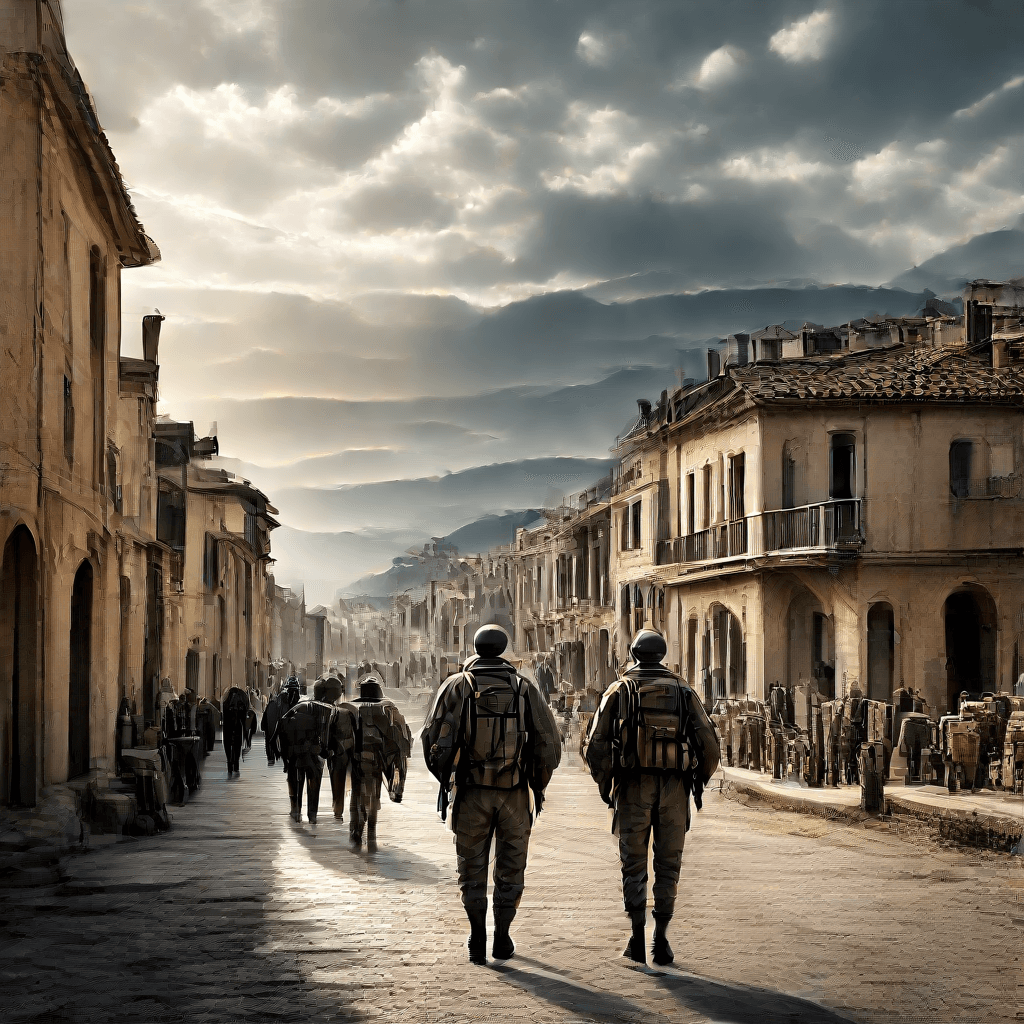
In Washington, strategic uncertainty has transitioned from a diplomatic byproduct to a primary policy tool. The refusal to guarantee permanent US troop levels in Italy and Spain signals a shift in the Mediterranean security architecture. This stance replaces the era of unconditional stationing—a pillar of the post-Cold War order—with a model of conditional presence. For European defense planners who long viewed American bases as permanent fixtures, this policy direction forces a foundational reassessment of regional stability.
Physical force is no longer treated as a static deterrent but as a variable in a broader geopolitical equation. Defense analysts observe that the shift moves planning from long-term stability toward short-term contingencies. By resetting expectations, official policy signals that installations are subject to review and deployments are open to renegotiation based on immediate political and military alignment.
Redefining Alliance as Utility
The criteria for a functional alliance are undergoing a redefinition, moving beyond NATO spending targets to focus on direct strategic utility. Official statements from the White House have expressed dissatisfaction with the current terms of bilateral military cooperation with Italy and Spain, describing host-nation assistance as insufficient relative to the cost of maintenance. This critique suggests that hosting bases is no longer categorized as an automatic guarantee of the American security umbrella; instead, the focus has shifted toward active alignment in combat support and logistics for American-led initiatives.
This framework explicitly links the continued presence of forces to cooperation during strategic conflicts. Historical data indicates that non-participation in active theaters is increasingly viewed as a metric for evaluating military partnerships. This represents a departure from the 20th-century consensus, treating military presence as a service rendered in exchange for specific diplomatic and military alignment. Allies who diverge from these standards have faced public critiques from the executive branch as the possibility of withdrawal is utilized to encourage higher participation in wartime operations.
Conditional Stationing and Resource Alignment
US military positioning is increasingly functioning as a corrective instrument rather than a collective shield. Proposals to reduce forces in Italy and Spain are framed not as neutral realignments of resources, but as responses to perceived gaps in host-nation support. This turns the stationing of troops into a point of leverage that can be adjusted if a host nation fails to align its foreign policy with specific objectives. This shift utilizes the security umbrella as a tool to ensure cohesion among diverging allies.
This framework transforms host-nation agreements into transactional arrangements. According to administration logic, if host-nation assistance is deemed inadequate, withdrawal is viewed as a legitimate resource reallocation. This places allies in a posture where defense decisions are influenced by the potential for reduced US commitment. The deterrent effect of US forces is no longer directed solely at foreign adversaries, but serves as a mechanism to encourage compliance among partners.
Pressure on Mediterranean Logistics Hubs
Italy and Spain have emerged as focus points due to their critical role in supporting operations across Africa and the Middle East. By maintaining uncertainty regarding troop levels, the administration applies pressure to logistically vital hubs. These nations house airbases and naval facilities essential for power projection, yet their geographic utility does not exempt them from the administration's strategic reviews. The policy is calculated to encourage a recalibration of foreign policies in favor of regional interests as defined by Washington.
Defense experts suggest this targeting serves as a signal to the broader alliance: members are increasingly subject to transactional demands. The uncertainty acts as a lever to extract cooperation, demonstrating a willingness to prioritize political leverage over the stability of established logistics networks. This tactical shift indicates that the ability to influence allies is being prioritized alongside operational convenience.
The Impact on Transatlantic Predictability
The introduction of conditional withdrawal into the transatlantic relationship alters the predictability that has underpinned Western security for decades. By making troop stationing dependent on specific support, the norm of collective defense—where protection is a constant—is being modified. In this environment, an ally's security is closely tied to its latest contribution to a conflict. This shifts the alliance toward a tiered system where protection is granted based on current strategic output rather than historical treaty obligations.
Military presence is now treated as a resource that can be reallocated if performance is considered unsatisfactory. Allies are presented with a choice between strict alignment with Washington or the potential reduction of the security umbrella. The long-term impact is a fragmented security landscape where defense decisions are increasingly motivated by the risk of abandonment, replacing previous stability with a model of immediate leverage.
AI Insight
The shift in US foreign policy represents a transition from a stable-state model of collective security to a dynamic reward-punishment system. Traditional metrics, such as treaty obligations and historical ties, are being weighted lower than immediate transactional yields. The use of ambiguity regarding troop levels is designed to maximize leverage; by keeping the cost of non-compliance high and the terms of compliance fluid, the administration forces allies into a state of constant recalibration.
This model introduces high volatility into the geopolitical system. By treating security as a variable rather than a foundation, the administration creates a feedback loop where allies must continuously demonstrate their value to avoid de-prioritization. This logic views every base and soldier as a resource to be optimized for political return, prioritizing tactical leverage over systemic stability. If security becomes a variable, the most basic constant of the international order is effectively removed.
Sources & References
*중앙일보 (JoongAng Ilbo)
중앙일보 • Accessed 2026-05-01
중앙일보 지면보기 서비스는 로그인 후 이용 가능합니다. 로그인 하러 가기 Close 최근 1개월 내 지면만 열람하실 수 있습니다. Close 중앙일보 지면보기 서비스는 로그인 후 이용 가능합니다. 로그인 하러 가기 Close 로그인 하시면 최신호의 전체 내용을 보실 수 있습니다. 로그인 하시겠습니까? 로그인 Close 더중앙플러스 회원이 되시면 창간호부터 전체 지면보기와 지면 다운로드가 가능합니다. 더중앙플러스 회원이 되시겠습니까? 더중앙플러스 시작하기 Close 국내 기업 최초로 지원 ‘삼성서울병원 완화의료팀’에 듣는 성과와 과제 시몬스 침대(대표 안정호)는 2020년 초 코로나19 확산으로 인한 의료 체계 붕괴 위기 속에서 소외될 수 있는 소아암 및 중증 희귀, 난치성 투병 환아들의 치료를 위해 삼성서울병원(원장 박승우)에 3억원을 기부했다. 이후 매년 선행을 이어가며 2024년 현재 누적 기부금 15억원을 달성했다.
View Original트럼프 “이탈리아·스페인 미군도 감축 가능”…전쟁 비협조에 보복
한겨레 • Accessed Thu, 30 Apr 2026 22:55:00 GMT
퇴근 2시간 전 “해고”…노동절에도 100일째 길 위에 선 노동자들 63년 만에 ‘노동절’이란 명칭을 되찾은 오늘도 거리에서는 노동자들의 투쟁이 이어지고 있다. 지난 1월 퇴근 2시간 전에 회사로부터 갑작스럽게 회사가 파산했다며 집단 해고 통보를 받은 자동차 부품 제조업체 우창코넥타 노동자들이 대표적이다. 이들은 고용승계를 요구하며 지난달 22일 회사가 있는 천안에서부터 국회와 청와대까지 도보 행진에 나섰고, 지난달 28일 63년 만에 제 이름 찾은 노동절…청와대서 첫 기념식 [만리재사진첩] 이 대통령 “소년공 대통령 사명감…노동 빠진 성장은 지속 불가능”
View Original트럼프 “伊-스페인, 美 안 도와줘 정말로 끔찍”…미군 축소 고려
동아일보 • Accessed Fri, 01 May 2026 12:02:00 +0900
트럼프 “伊-스페인, 美 안 도와줘 정말로 끔찍”…미군 축소 고려
View Original이탈리아·스페인 주둔 미군도 감축?... 트럼프 답변은 “아마도”
조선일보 • Accessed Fri, 01 May 2026 06:59:03 +0000
이탈리아·스페인 주둔 미군도 감축?... 트럼프 답변은 “아마도”
View OriginalWhat do you think of this article?