Fractured Resolve: Is the GOP Rethinking the Cost of Mass Deportations?
The Silent Alarm in the GOP
For decades, the alliance between the Republican Party’s populist base and its business-establishment donors has been a marriage of convenience, held together by a shared desire for deregulation and lower taxes. But as the administration’s intensified mass deportation initiative moves from campaign rhetoric to operational reality in early 2026, that marriage is fraying at the seams. The "silent alarm" is no longer silent; it is ringing in the boardrooms of agricultural conglomerates in Iowa, on the construction sites of booming Texas suburbs, and within the hushed corridors of the Capitol Hill Club. What was once a unified chant for "law and order" has morphed into a complex, fractured debate about economic survival, forcing GOP lawmakers to weigh the ideological purity of their platform against the solvency of their constituents’ businesses.
The friction is most palpable in the erratic heartbeat of America’s "breadbasket" and "sunbelt" economies—regions that are simultaneously the reddest on the electoral map and the most dependent on migrant labor. In private fundraisers and closed-door strategy sessions, a new narrative is emerging, one that views the Department of Homeland Security’s current operational tempo not as a victory for sovereignty, but as a direct threat to GDP. State-level Republican leaders, particularly in the Midwest and South, are finding themselves in an impossible bind. They cannot publicly oppose the enforcement measures without risking a primary challenge from the right, yet they cannot ignore the frantic calls from local Chambers of Commerce warning of crops rotting in fields and housing developments grinding to a halt due to sudden, catastrophic labor shortages.
This is not merely a question of profit margins; it is becoming a question of community viability. In rural districts where the local processing plant or dairy farm is the primary economic engine, an ICE raid is not viewed as a sterile bureaucratic action—it is a community-shaking event that empties school classrooms, shutters main street businesses, and leaves a vacuum in the local tax base. Conservative strategists are beginning to see alarming data in internal polling: while the abstract concept of deportation remains popular among the base, the tangible reality of rising local prices and stalled local services is beginning to erode support among independent conservatives and suburban voters. The "cost" is no longer theoretical; it is visible in the $5 gallon of milk and the six-month delay on kitchen renovations.
Furthermore, the "Silent Alarm" is being amplified by the looming 2026 midterms. GOP incumbents in swing districts are terrified that the economic fallout from aggressive enforcement will be the defining issue of the campaign season. They fear a "stagflationary" trap where the reduction in labor supply drives up wages and prices (inflation) while simultaneously stifling output (stagnation)—a toxic economic cocktail that historically dooms ruling parties. We are seeing a quiet but significant pivot in legislative language. Draft bills that once called for "zero tolerance" are being subtly red-lined to include provisions for "guest worker visas" and "agricultural exemptions," euphemisms that attempt to restore the labor flow without appearing to retreat on border security. This legislative gymnastics represents a desperate attempt to thread a needle that gets smaller with every raid.
The internal polling data suggests a widening chasm between the party's ideological goals and the economic realities on the ground. As enforcement actions ramp up, business confidence in traditional GOP strongholds is showing a rare and concerning inverse correlation. The establishment wing fears that by satisfying the populist demand for expulsion, they are inadvertently engineering a recession in the very counties that sent them to Washington.
Inverse Correlation: Enforcement vs. Business Confidence in Red Districts (2025-2026)
The divide is also generational. Younger Republican operatives, often more aligned with the "National Conservative" movement, argue that the economic pain is a necessary corrective to wean the American economy off "cheap foreign labor" and force investment in automation and domestic wages. However, the older guard—the Reaganites who still hold significant sway in the Senate—counter that such a transition takes a decade, while an election happens every two years. They argue that breaking the labor market overnight does not lead to a high-tech utopia; it leads to bankruptcy. This philosophical civil war is creating a paralysis in leadership, where the party is publicly cheering for policies that its own donors are privately begging to stop.
As we move deeper into 2026, look for these tensions to spill out into the open. The "Silent Alarm" will likely become a deafening siren if the spring harvest faces labor shortfalls of the magnitude projected by agricultural economists. The GOP is staring down a barrel of its own making: having successfully sold the electorate on the necessity of mass deportation, they must now govern through the wreckage of its implementation. The question is no longer if they will rethink the cost, but how they can pivot without looking like they are blinking in the face of their own promises. The resolve is there, but it is undoubtedly fractured, and the cracks are where the political battles of the next decade will be fought.
A History of Enforcement and Economics
To understand the seismic fractures currently widening within the Republican coalition, one must look beyond the immediate rhetoric of the campaign trail and examine the long, often contradictory history of American immigration enforcement intersecting with economic pragmatism. The tension between the ideological imperative of "law and order" and the economic necessity of a flexible labor supply has been a dormant fault line in conservative politics for decades, but rarely has the tremor been as violent as it is today. For much of the late 20th century, the GOP managed to straddle this divide through a tacit uncomfortable compromise: public support for strict border control combined with a legislative reluctance to dismantle the engines of industries dependent on migrant labor.
This precarious balance traces its lineage back to the Eisenhower administration and the infamous "Operation Wetback" of 1954. While often lionized by modern restrictionists as a model of efficiency, economic historians argue the operation occurred in a fundamentally different America—one with a burgeoning domestic youth population and a manufacturing base that did not rely on service-sector flexibility. Fast forward to the Reagan era, and the calculus had shifted. The Immigration Reform and Control Act of 1986 represented the high-water mark of the "three-legged stool" approach: stronger enforcement, employer sanctions, and amnesty. Ronald Reagan, the patriarch of modern conservatism, famously viewed immigrants not merely as a security concern but as a vital injection of vitality into the American free market. The business wing of the party—represented by the U.S. Chamber of Commerce and agricultural lobbies—held significant sway, arguing successfully that paralyzing the labor force in the name of purity would ultimately strangle American growth.
However, the post-9/11 era and the Great Recession fundamentally rewired this dynamic. As security became paramount and the 2008 crash tightened the labor market, the "business pragmatist" wing began losing ground to the "cultural sovereignty" wing. Yet, even during the strictest periods of enforcement in the 2010s, a quiet reality persisted in the American heartland. From the dairy farms of Wisconsin to the meatpacking plants of Nebraska—districts often represented by staunch Republicans—the economy quietly absorbed millions of undocumented workers to fill the "dirty, dangerous, and difficult" jobs that native-born workers increasingly shunned. The Wall Street Journal editorial board and local GOP donors often spoke a different language in private than the candidates did on the stump. They understood a critical data point: in sectors like agriculture and construction, the foreign-born workforce wasn't displacing American labor; it was keeping the industries solvent.
Today, that historical disconnect has crashed into a new economic reality: the post-pandemic labor shortage. Unlike 1954 or 2008, the U.S. economy in 2026 is grappling with a structural deficit of workers. The retirement of the Baby Boomer generation has left a void that native birth rates cannot fill. When hardliners propose the removal of millions of individuals, they are no longer talking about trimming the margins of the workforce; they are discussing the excision of the backbone of the supply chain. This is where the resolve fractures. A localized raid in a swing state is no longer just a headline; it is a direct hit to the P&L statement of a construction firm donor who finds their job site empty and their deadlines impossible.
The economic data paints a stark picture of dependency that ideology struggles to refute. We are seeing a divergence where the cost of enforcement is no longer abstract tax dollars spent on border agents, but tangible lost GDP and inflation in the cost of goods. As the chart below illustrates, the reliance of key "red state" industries on immigrant labor has not waned; it has intensified, creating a paradox where the political demand for deportation directly contradicts the economic demand for production.
Immigrant Share of Labor in Key US Sectors (2000-2025)
The friction we witness today in Washington is the sound of this historical compromise breaking. The "business establishment" can no longer quietly ignore the rhetoric of the "populist base" because the policy proposals have moved from performative to operative. When a farm in Iowa loses 40% of its workforce overnight, the abstraction of "rule of law" meets the concrete reality of unharvested crops and bankruptcy. This is not merely a debate about visas; it is a referendum on the GOP's identity. Is it the party of GDP growth and free enterprise, or is it the party of hermetic borders, even at the cost of recession? The history of enforcement suggests the party usually pivots to the economy when the pain becomes acute, but 2026 offers a unique variable: a populist movement that views economic pain as a necessary penance for cultural restoration.
The Donor Dilemma: Profits vs. Policy
For decades, the alliance between the Republican Party’s populist base and its corporate benefactors was held together by a fragile paradox: the base demanded sealed borders, while the business establishment quietly relied on the porous nature of those very same borders to fuel labor-intensive industries. In early 2026, as the reality of intensified interior enforcement and mass deportation raids begins to materialize, that paradox is violently unraveling. In the mahogany-paneled boardrooms of Manhattan and the sprawling ranch offices of the Midwest, a sense of quiet panic is taking hold. The "Donor Class"—the titans of industry who bankroll the GOP’s electoral machinery—is waking up to a stark realization: the populist policy they publicly tolerated is now threatening the profit margins they privately cherish.
The friction is most palpable in the sectors that have historically served as the engine room of the American economy: agriculture, construction, and hospitality. For years, major GOP donors in the agribusiness sector have navigated a delicate dance, supporting tough-on-crime rhetoric while utilizing H-2A visa programs and, tacitly, undocumented labor to keep grocery prices low and yields high. Now, with ICE operations expanding beyond border crossings into the heartland’s processing plants and fields, the disruption is no longer theoretical. Reports from the American Farm Bureau suggest that a sudden 20% reduction in the available migrant workforce could translate into billions in unharvested crops. This isn’t just a logistical headache; it is a supply-side shock that threatens to spike food inflation just as the party attempts to campaign on economic stability.
The Construction Crunch
Nowhere is the "profit vs. policy" schism more evident than in the construction industry. With the housing market desperate for inventory to cool soaring prices, developers—stalwart Republican contributors—are finding their job sites ghosted. The National Association of Home Builders has long warned that the domestic workforce is insufficient to meet demand. The deportation raids have exacerbated this chronic shortage, forcing project timelines to stretch and costs to balloon. A prominent Texas-based developer and major party donor, speaking on condition of anonymity, described the situation as a "self-inflicted recession" for the housing market. "We are effectively actively dismantling our own supply chain," they noted. "You cannot build homes without hands, and we are deporting the hands." The irony is bitter: the very voters the GOP hopes to court with promises of affordable housing are the ones who will pay the premium created by the labor vacuum.
Projected Operational Cost Increase by Sector (2026)
This economic anxiety is fueling a covert but aggressive lobbying campaign on K Street. While public statements from business groups remain cautious, wary of drawing the ire of the populist wing or the administration, private meetings tell a different story. The strategy emerging from these high-level summits is one of "quiet carve-outs." Donors are pressuring GOP leadership not necessarily to halt the deportations publicly—a political non-starter—but to dramatically expand guest worker programs and create bureaucratic safe harbors for essential industries. They are arguing that without a "safety valve" for the labor market, the party risks owning a stagflationary economy heading into the midterms.
Community Fallout in the Heartland
The mood at the monthly Chamber of Commerce breakfast in Grand Island, Nebraska, usually leans towards optimistic networking and polite discussion of municipal bond rates. But this Tuesday, the atmosphere was thick with tension, mirroring a growing unease spreading across the American Heartland. At the center of the storm is the very policy many in this room championed during the last election cycle: aggressive immigration enforcement. As Federal ICE units ramp up operations in rural counties—traditional strongholds of the Republican base—the abstract promise of "law and order" is colliding violently with the economic reality of "supply and demand."
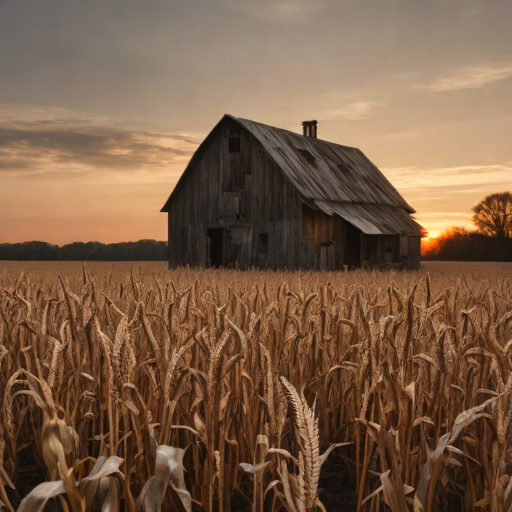
For decades, an uneasy truce existed in these communities. Rhetoric against illegal immigration rallied voters, while a pragmatic blind eye allowed industries like agriculture, meatpacking, and construction to function on the back of a workforce that, legally speaking, shouldn't have been there. That truce has shattered. The intensified raids launched under the new "Zero Tolerance" directive have not just targeted border crossings but have struck deep into the interior, executing workplace sweeps that have left production lines silent and fields unharvested.
The Economic Shockwave
The immediate fallout is being measured not in political points, but in lost revenue. In the heavy agricultural belts of Kansas, Iowa, and Nebraska, farmers are reporting a catastrophic tightening of the labor market. "We aren't talking about losing a few hands," says a third-generation cattle rancher in western Kansas who requested anonymity to speak freely about his party's leadership. "We are talking about a complete inability to staff the feedlots. My cattle don't care about border politics; they need to be fed at 4:00 AM. If I don't have the guys to do it, I go under. It’s that simple."
This sentiment is echoing through the supply chain. Local logistics companies, struggling to find drivers and loaders, are delaying shipments. Meat processing plants, already operating on thin margins, have slowed line speeds by up to 30% due to sudden staffing voids caused either by direct arrests or the subsequent fear that keeps workers at home. The economic data is painting a grim picture for 2026, forcing local GOP officials to make uncomfortable phone calls to Washington. They are warning that the party is cutting off the nose to spite the face of its most reliable donors: the agricultural and industrial business class.
Projected 2026 Output Decline by Sector (Midwest Region)
A Community in Hiding
Beyond the balance sheets, the social fabric of these small towns is fraying. The raids have instilled a profound fear that permeates daily life. School districts in rural Texas and Oklahoma have reported sharp drops in attendance—up to 15% in some counties—as parents keep children home to avoid potential separation. Local churches, often the bedrock of social integration for immigrant communities, are seeing pews empty out.
This humanitarian crisis is creating a unique political problem for the GOP. While the national base may cheer the enforcement numbers, the local reality is visceral and disturbing to the very neighbors who voted for the policy. "It's one thing to chant a slogan at a rally," notes Dr. Ellen Whitford, a sociologist at the University of Nebraska. "It is entirely another to watch the father of your son’s best friend, a man who coached Little League and fixed your roof, get detained in a dawn raid. That personal connection breaks the ideological seal. We are seeing deep fissures form in the conservative coalition here."
The Midterm Calculus
As the 2026 midterm election cycle accelerates, the Republican Party finds itself navigating a treacherous political tightrope, suspended between the ideological demands of its populist base and the economic realities alienating its business-class donors. For House leadership, the calculus is no longer just about turnout; it is about survival in suburban battlegrounds where the visual and financial toll of mass deportations is reshaping voter sentiment. Historically, the party out of power enjoys a structural advantage in midterms, but the GOP—currently holding a slim majority—faces a unique headwind of its own making: an economic disruption that is directly traceable to its signature policy achievement.
Strategists inside the Beltway are quietly sounding alarms over internal polling data emerging from "purple" districts in the Sun Belt and the Midwest. These reports suggest a significant decoupling of the traditional conservative coalition. While the "Make America Safe Again" rhetoric continues to energize rural strongholds and deep-red districts, it is aggressively repelling the moderate, college-educated suburbanites who were crucial to the party’s gains in the previous cycle. More alarmingly for the GOP establishment, the issue of immigration enforcement—once a silver bullet for voter mobilization—is being eclipsed by the "kitchen table" realities of inflation, which opponents are successfully framing as a direct consequence of the sudden labor contraction.
Voter Priorities in GOP-Held Swing Districts (Q1 2025 - Q1 2026)
The tension is most palpable in the agricultural heartlands, traditionally safe Republican territory. Here, representatives are facing a revolt not from the left, but from local Chambers of Commerce and agricultural associations. In states like Iowa, Kansas, and the Central Valley of California, the cost of labor has spiked by an estimated 15% to 20% in the last six months alone as the migrant workforce vanishes. This has forced a difficult binary choice on vulnerable incumbents: double down on the hardline rhetoric to ward off primary challenges from the right, or pivot to a more pragmatic stance to salvage general election viability and appease the donor class. The fear of a "primary from the right" remains the most potent disciplining force in the GOP conference, effectively freezing many members into a publicly hawkish posture even as they privately plead for administrative relief from the very policies they publicly champion.
Ultimately, the midterm calculus has mutated from a simple referendum on the opposition into a complex civil war over the GOP’s own identity. The party must decide whether its allegiance lies with the ideological purity of "zero tolerance" or the pragmatic necessity of economic stability. If the current trajectory holds, the Republican Party may achieve its long-sought demographic purification of the workforce, but the price tag may be the very majority that empowered them to do so.
Read Next
The Air Force One Illusion: Why Trump's Global Gambit Leaves the GOP Ground Game Exposed
Donald Trump's pivot to becoming a global power broker has created a 'strategic vertigo' for the Republican Party: while the leader looks outward, the down-ballot machinery is left without a coherent domestic economic narrative, exposing a dangerous vulnerability in the suburbs.
Beyond Dobbs: The March for Life's New Ultimatum to the GOP
Four years after overturning Roe, the pro-life movement returns to Washington not to celebrate, but to besiege a Republican establishment they believe is retreating from the fight.