Beyond Dobbs: The March for Life's New Ultimatum to the GOP
A Winter of Discontent on the National Mall
The frigid wind whipping across the National Mall this January carries a bite sharper than the typical Washington winter, mirroring the icy resolve settling over the pro-life movement in 2026. For decades, the March for Life was a gathering of hopeful exiles, a pilgrimage defined by the singular, aspirational goal of overturning Roe v. Wade. When that victory finally arrived in 2022, the subsequent marches felt like victory laps, jubilant and relieved. But today, the mood has shifted dramatically. The jubilation has evaporated, replaced by a palpable sense of betrayal and a steel-hardened impatience. This is no longer a celebration; it is a siege. The target isn't the Supreme Court or a Democratic administration, but the Republican establishment that many here believe has grown complacent, trading moral imperatives for electoral safety.
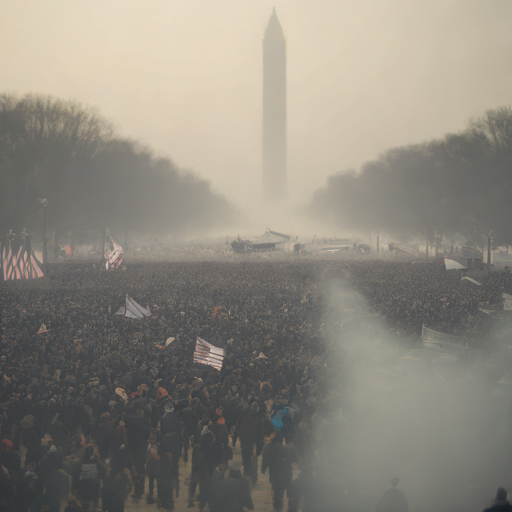
As thousands of activists stream past the Smithsonian museums toward the Capitol, the sea of signs tells the story of this fractured alliance. Gone are the generic "Love Them Both" slogans that dominated the pre-Dobbs era. In their place are pointed warnings directed at GOP leadership: "State's Rights is a Cop-Out," "Federal Ban or Stay Home," and "We Didn't Vote for a Patchwork." The message is unambiguous. The "new normal"—a fragmented map where abortion is banned in Idaho but protected in neighboring Oregon—is viewed by the movement’s abolitionist wing not as a compromise, but as a moral failure equivalent to the pre-Civil War status quo on slavery. The grassroots base, emboldened by their judicial victory, is now colliding head-on with a Republican party apparatus that has spent the last two election cycles reading terrifying polling data from the suburbs of Philadelphia, Atlanta, and Phoenix.
The friction is palpable in the corridors of the Capitol, where the movement’s legislative demands have stalled. The "Life at Conception Act," once a standard litmus test for conservative primary hopefuls, is now being treated like radioactive material by House leadership. Strategists privately concede that the "Dobbs Effect"—the mobilization of pro-choice voters and the alienation of moderate women—cost the party dearly in the 2024 cycle and continues to drag down performance in special elections. They argue that pushing for a federal ban is political suicide that would hand total control of Washington back to the Democrats, thereby endangering the very judicial appointments that made the end of Roe possible. But to the marchers shivering on the mall, this pragmatic calculus feels like thirty pieces of silver. They argue that the party is retreating from its core platform just when the real work has begun, choosing the path of least resistance rather than the path of righteousness.
The 'Dobbs Effect': GOP Underperformance in Key Swing Districts (2022-2025)
This disconnect creates a volatile dynamic for the upcoming midterm primaries. Activist groups are reportedly preparing to primary incumbent Republicans who hide behind the "states' rights" argument, threatening to fracture the conservative coalition. The "Ultimatum" mentioned in hushed tones at donor retreats is now being shouted through megaphones: pass federal restrictions, or lose the ground game that has been the engine of GOP turnout for forty years. The irony is bitter. The movement that delivered the GOP its greatest institutional victory is now threatening to become its greatest electoral liability. As the sun sets behind the Washington Monument, casting long, cold shadows over the crowd, the stalemate is clear. The GOP wants to move on. The March for Life is here to say that they cannot.
Interviews with younger attendees reveal an even deeper rift. Unlike the older generation of activists who spent decades fighting for incremental judicial chips, the Gen Z pro-life block, fueled by social media and a distinct sense of moral urgency, rejects the "incrementalism" of the past. They are less interested in the nuances of federalism and constitutional interpretation than in the immediate cessation of what they view as a human rights atrocity. "My parents marched for a court ruling," says Sarah Jenkins, a 21-year-old student from Liberty University, holding a banner that reads No Borders for Human Rights. "We are marching for legislation. If the Republican party thinks they can count on our vote just because they aren't Democrats, they are in for a rude awakening in November. We are not cheap dates anymore." This generational hardening of the stance suggests that the GOP's hope of the issue fading into the background of state legislatures is a fantasy. The winter of discontent is not just about the weather; it is about a political marriage that is rapidly freezing over.
The Road Since 2022: A Fragmented Victory
Four years after the Supreme Court’s watershed ruling in Dobbs v. Jackson Women’s Health Organization, the atmosphere on the National Mall is less one of triumphant jubilee than of restless, simmering impatience. When the gavel fell in June 2022, dismantling nearly half a century of federal abortion protections, it was hailed by the pro-life movement as the ultimate victory—the capstone to a multi-generational crusade. Yet, looking back from the vantage point of 2026, the victory appears not as a monolith, but as a fractured mosaic, sharp-edged and difficult to hold. The road since 2022 has been characterized by a stark geographic and political bifurcation that has left the movement’s most ardent foot soldiers feeling paradoxically stalled despite their historic win.
In the immediate aftermath of the ruling, trigger laws snapped into place across the South and Midwest, effectively banning or severely restricting abortion in over a dozen states within weeks. For a brief summer, the movement felt invincible. However, the subsequent electoral cycles offered a brutal corrective to the assumption that the American electorate would quietly acquiesce to a post-Roe reality. The 2022 midterms, anticipated to be a "Red Wave," crashed against the breakwall of abortion politics, with voters in swing states like Michigan and Pennsylvania turning out in record numbers to rebuke candidates perceived as too extreme on the issue. This pattern repeated in 2023 and 2024, notably in conservative strongholds like Ohio and Kansas, where direct ballot initiatives codified reproduction rights into state constitutions, defying the expectations of GOP strategists and pro-life lobbyists alike.
The Legislative Divergence: State Actions (2022-2025)
This electoral friction birthed the central tension defining the movement in 2026: the "State’s Rights" retreat. Following the electoral bruising, establishment Republicans—from Senate leadership to presidential hopefuls—began to visibly distance themselves from the concept of a federal ban. They adopted a strategy of containment, arguing that Dobbs merely returned the issue to the states and that the federal government should wash its hands of the matter. This pivot was designed to stop the bleeding in suburban districts, where the GOP’s margins have eroded significantly among independent women. For the party machinery, the victory was achieved in 2022; the goal now is political survival.
However, for the activists marching in the cold January air today, the "State’s Rights" argument is not a strategic compromise; it is a moral abdication. The "fragmented victory" has created a country of two distinct legal realities. In one America, abortion clinics have ceased to exist, and the pro-life movement focuses on funding crisis pregnancy centers and foster care initiatives. In the other America—often just a state border away—abortion access has actually expanded, with "sanctuary states" like California, New York, and Minnesota passing shield laws to protect providers and patients from out-of-state litigation. The grassroots base argues that if abortion is a human rights violation in Texas, it remains one in Massachusetts. To them, a patchwork map where millions of unborn children are not protected simply because of their zip code is not a victory—it is a failure of nerve.
The friction is palpable. Where once the movement and the Republican Party walked in lockstep, a chasm has opened. The GOP wants to talk about inflation, the border, and the debt ceiling. The March for Life wants to talk about a 15-week federal minimum standard, effectively forcing a national confrontation that party strategists are desperate to avoid. This "fragmentation" is the defining feature of the post-2022 landscape: a movement that won the legal war in the Supreme Court but finds itself fighting a grinding, inconclusive insurgency against public opinion and its own political vehicles. The easy days of uniting against Roe are over; the hard work of governing a divided nation has revealed that overturning a court case was the simple part. Building a consensus for a "Culture of Life" in a polarized America is proving to be a far more elusive prize.
The 'More From Trump' Mandate
The bitter wind sweeping down Constitution Avenue this January carries a chill that has nothing to do with the D.C. winter. It is the icy realization among the Republican establishment that the transaction—votes for judges—has expired. For decades, the symbiotic relationship between the GOP and the pro-life movement was defined by a patient, incremental strategy culminating in the overturning of Roe v. Wade. But as thousands of activists descend on the National Mall for the 2026 March for Life, the mood has shifted from celebratory gratitude to impatient demand. The "More From Trump" placards visible throughout the crowd are not merely a request; they are a warning shot fired across the bow of a party leadership that desperately wants to pivot to the economy and immigration ahead of the midterm elections.
The slogan "More From Trump" encapsulates a profound dissatisfaction with the post-Dobbs status quo. In the immediate aftermath of the 2022 decision, former President Donald Trump and key Republican strategists sought to reframe abortion as a states' rights issue, a tactical retreat designed to neutralize the Democratic advantage on the topic. For a time, the movement’s leadership acquiesced, focusing their energies on state legislatures in Tallahassee, Austin, and Bismarck. However, by 2026, that truce has shattered. The patchwork of state laws—where a procedure is banned in Idaho but protected in neighboring Oregon—is now viewed by the movement’s influential "abolitionist" wing not as a victory of federalism, but as a moral failure of the federal government. The demand has metastasized from judicial appointment to legislative enforcement: specifically, a federal ban that overrides blue-state protections.
This creates a perilous paradox for the GOP. While the party’s base has radicalized, demanding ideological purity and federal intervention, the general electorate has moved in the opposite direction, becoming increasingly wary of government overreach into healthcare decisions. Interviews with marchers reveal a stark disconnect from the political realities facing Republicans in swing districts. "We didn't elect him to leave the job half-finished," says Mark D’Amico, a chapter leader from Ohio, referring to the former President's recent comments about leaving abortion to the states. "He proved he could break the precedent. Now we expect him to break the stalemate." This sentiment is echoed by the growing influence of Gen Z pro-life groups, who eschew the cautious pragmatism of the old guard for a digital-first, uncompromising approach that treats any GOP hesitation as betrayal.
The Polarization Trap: GOP Base Intensity vs. Independent Support for Federal Ban (2022-2026)
The friction is palpable in the corridors of the Capitol. Republican incumbents, eyeing difficult reelection battles in suburban districts in Pennsylvania, Michigan, and Arizona, are finding themselves in an impossible vice. To appease the marchers and ward off primary challengers funded by deep-pocketed evangelical super PACs, they must embrace rhetoric that is toxic to the independent voters they need in November. Conversely, silence or moderation is swiftly punished by a base that views the 2026 midterms as a referendum on the party's soul. The "More From Trump" mandate is effectively asking the GOP to commit electoral suicide in the general election to survive the primary, a dilemma that Democratic strategists are watching with undisguised glee.
Furthermore, the movement's demands have expanded beyond the procedure itself to a broader, more expensive suite of family policies. The "New Pro-Life Agenda" circulating among think tanks and activist circles links the federal ban demand with massive expansions in child tax credits, paid family leave, and maternal healthcare subsidies—policies that run directly counter to the fiscal conservatism of the Freedom Caucus. This "whole life" approach attempts to soften the image of the bans, yet it introduces a new fissure within the coalition: the fiscal hawks versus the social crusaders. Trump, ever the populist weather vane, has oscillated, occasionally hinting at support for expanded safety nets while remaining noncommittal on the federal ban, a strategy of ambiguity that is rapidly losing its efficacy.
Impact on the American Electorate
The political calculus of the post-Roe era, once thought to be a temporary shockwave, has solidified into a permanent fault line reshaping the American electorate in 2026. For the Grand Old Party, the "New Ultimatum" delivered by the March for Life—demand a federal ban or face a primary challenge—has transformed what was once a unifying rallying cry into a complex electoral trap. The friction is no longer just theoretical; it is visible in the polling data emerging from critical swing states like Pennsylvania, Arizona, and Wisconsin, where the divergence between the Republican base and the general electorate has reached a historic chasm.
In the suburbs of Philadelphia and Atlanta, the "Dobbs Effect" has evolved. In 2022 and 2024, it was a mobilization tool for Democrats. In 2026, it has morphed into a litmus test for Republican viability. The suburban moderate voter, historically the kingmaker in American politics, has shown a profound resistance to federal intervention in reproductive healthcare. While the grassroots activists marching on the National Mall view a federal ban as the moral imperative of the 14th Amendment, the median voter in a purple district views it as federal overreach. This dissonance has created a "primary paradox" for GOP hopefuls: to win the nomination, they must pledge allegiance to a federal ban; to win the general election, they must pivot to a "states' rights" narrative that rings increasingly hollow to skeptical independents.
The financial implications of this ultimatum are equally stark. Major donor networks, particularly those aligned with the fiscal conservative wing of the party, are reportedly withholding capital from candidates who sign the March for Life's "15-Week Federal Pledge," fearing that such a stance renders them unelectable in November. Conversely, social conservative super PACs have adopted a "No Ban, No Bucks" policy, effectively starving moderate incumbents of the resources needed to defend their seats. This internal civil war is not happening in a vacuum; Democratic strategists are already weaponizing the ultimatum, running ads that simply quote the primary pledges of GOP candidates to general election audiences. The result is a shrinking map for the GOP, as formerly competitive districts in New York and California slide further out of reach, weighed down by the national party's enforced orthodoxy.
Voter Prioritization of Abortion Access (2022-2026)
Furthermore, the demographic shifts within the pro-life movement itself are complicating the electoral math. The younger generation of activists, Gen Z conservatives, are notably more absolutist than their predecessors, rejecting the incrementalism of the Reagan-era GOP. They are demanding immediate legislative action and are less swayed by arguments about "political feasibility." This fervor energizes the base but alienates the emerging block of "Barstool Conservatives"—young men who lean right on economic and cultural issues but hold libertarian views on social restrictions. By intertwining the GOP brand inextricably with a federal abortion ban, the party risks fracturing this nascent coalition before it can fully mature.
The data suggests a hardening of positions. According to recent projections by the Pew Research Center for 2026, the percentage of Independent voters citing abortion as a "deal-breaker issue" has climbed steadily since the overturn of Roe v. Wade. In 2022, roughly 28% of Independents classified it as a top-tier priority. By early 2026, that figure projects to nearly 40%, a statistical surge that correlates directly with the increasing aggressive rhetoric of the federal ban movement. For a GOP strategist looking at the map, these numbers are a flashing red light. They indicate that the "New Ultimatum" is not just a policy demand; it is an electoral ceiling, capping the party's potential growth in the very regions required to secure a congressional majority. The March for Life has drawn a line in the sand, but for the American electorate, that line looks increasingly like a precipice.
The Path Forward: Compromise or Schism?
The icy winds whipping down Constitution Avenue this January carry more than just the familiar chill of a Washington winter; they bear the unmistakable sound of a political coalition straining under the weight of its own victory. For nearly five decades, the Republican Party and the pro-life movement marched in lockstep, united by the singular goal of overturning Roe v. Wade. But in the post-Dobbs landscape of 2026, that unity is fracturing into a high-stakes standoff that threatens to derail the GOP’s ambitions for the midterm elections and beyond. The question haunting the halls of the RNC headquarters isn't just about policy—it is existential: Can the party survive a war between its ideological soul and its electoral viability?
At the heart of this schism lies a fundamental divergence in strategy. On one side stands the party establishment, chastened by the underwhelming performance in recent cycles where abortion bans proved to be a potent mobilizer for Democrats and a wedge issue that alienated suburban independent voters. For leadership in the House and Senate, the "path forward" is one of pragmatic federalism—leaving the issue to the states or coalescing around a "consensus" 15-week federal limit that polls suggest might be palpable to a broader electorate. They point to the electoral maps in swing states like Pennsylvania, Arizona, and Michigan, arguing that a hardline stance is tantamount to handing the gavel back to the Democrats.
On the other side stands a newly radicalized grassroots base, emboldened by their judicial victories and impatient with what they perceive as political cowardice. For the activists filling the National Mall, Dobbs was the starting line, not the finish. Groups that once mobilized for incremental restrictions are now issuing ultimatums: support a federal "Life at Conception" act or face a primary challenger. The "compromise" of a 15-week ban is viewed not as pragmatic strategy, but as a moral capitulation. This friction has moved beyond rhetoric; major pro-life Super PACs have reportedly frozen prospective donations to three key Senate incumbents who refused to publicly commit to a federal ban during the primary season, signaling a "donor strike" that could starve the GOP of crucial resources.
The friction is perhaps most visible in the polling data that strategists are pouring over behind closed doors. Internal projections suggest a inverse relationship that creates a strategic paradox for Republican candidates. Embracing the hardline stance demanded by the base guarantees high donor engagement and primary turnout but collapses support among the critical block of suburban women and independents who decide general elections. Conversely, the "States' Rights" approach, while politically safer in a general election, risks suppressing the evangelical turnout that remains the bedrock of the GOP coalition.
2026 Midterm Projection: The GOP's Electoral Paradox
The financial implications of this standoff are equally severe. Wall Street donors, typically reliable backers of the GOP for fiscal reasons, are increasingly signaling that they will close their checkbooks if the party platform pivots too sharply toward social extremism, fearing instability and consumer backlash. Conversely, the small-dollar donor machine—which has become the lifeblood of modern campaigning—is overwhelmingly driven by the culture war narratives pushed by the hardline activists. This bifurcation of the donor base forces candidates to choose between funding their ground game with institutional money or fueling their air war with grassroots cash, knowing that choosing one often alienates the other.
As the 2026 midterms loom, the "big tent" of the Republican party looks increasingly like a house divided. The March for Life has effectively drawn a line in the sand, transforming from a celebration of shared values into a demonstration of political leverage. If the GOP leadership attempts to thread the needle—offering rhetoric to the base while promising moderation to the suburbs—they risk being viewed as duplicitous by both. The schism is no longer hypothetical; it is the defining contest of the current election cycle. Whether this tension results in a forged compromise that redefines American conservatism or a fracture that leaves the party in the wilderness depends entirely on who blinks first: the pragmatists holding the purse strings or the purists holding the votes.
Read Next
Beyond Roe: The March for Life Turns Its Gaze Back to the White House
As the 53rd March for Life descends on a freezing Washington, the movement faces a fractured GOP and a new, internal battle for federal legislation that threatens to split the conservative coalition in 2026.
Fractured Resolve: Is the GOP Rethinking the Cost of Mass Deportations?
As the economic reality of mass deportations hits the American heartland, the Republican coalition faces a deepening rift between its populist base and its business establishment.
The Air Force One Illusion: Why Trump's Global Gambit Leaves the GOP Ground Game Exposed
Donald Trump's pivot to becoming a global power broker has created a 'strategic vertigo' for the Republican Party: while the leader looks outward, the down-ballot machinery is left without a coherent domestic economic narrative, exposing a dangerous vulnerability in the suburbs.