Beyond Roe: The March for Life Turns Its Gaze Back to the White House
A Cold Day in the Capital: The 2026 March
Under a steel-gray sky that threatened snow, the temperature on the National Mall hovered just above freezing this Friday, a fitting backdrop for a movement that finds itself out in the cold in ways few predicted four years ago. The 53rd annual March for Life, once a predictable ritual of hope centered on the Supreme Court, has transformed in 2026 into a complex demonstration of political leverage directed squarely at the White House.
While the crowds remain massive—organizers estimate turnout in the tens of thousands, a sea of red coats and wool hats stretching from 12th Street to the Capitol—the mood has shifted perceptibly from the jubilation of the immediate post-Dobbs era to a restless, demanding impatience. The victory lap is over; the battle for federal legislation has begun, and the marchers are finding their old allies in the GOP surprisingly hesitant to engage.
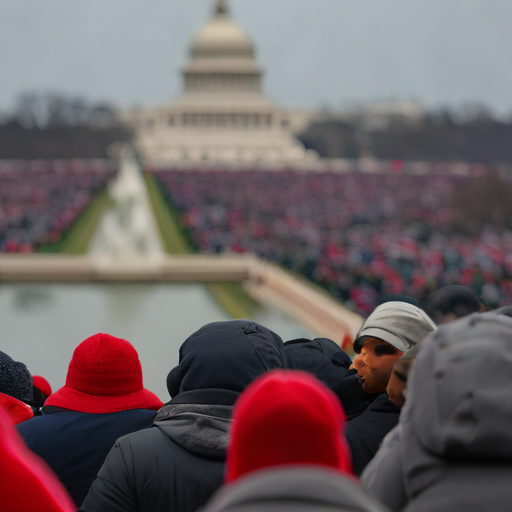
For decades, the March for Life was a singular, unified plea to the judiciary. Today, it is a fractured mandate delivered to the executive and legislative branches. The demographic composition of the crowd remains one of the movement's most striking features: a vast, energetic coalition dominated by youth. High school and college students, bused in from Catholic dioceses in Ohio, evangelical colleges in Virginia, and homeschooled networks across the Midwest, chanted slogans that have evolved from "Love Them Both" to "Make It Law."
Yet, beneath the drumlines and hymns, there is a palpable undercurrent of betrayal. The "pro-life generation," as they brand themselves, is grappling with a new political reality where the Republican party, led by the very architecture that dismantled Roe v. Wade, is actively deprioritizing a federal ban in favor of a "states' rights" compromise—a stance viewed by many on the Mall today as a moral abdication.
"We didn't march for fifty years just to have abortion moved from a federal right to a state-by-state marketplace," says Sarah Jenkins, 42, a coordinator from Pennsylvania who has attended every march since 2008. "President Trump gave us the judges, and we are grateful. But gratitude doesn't mean silence. When the party platform softens language on the sanctity of life to win suburban swing districts, they are trading principles for polling points. We are here to remind them that the base is watching."
Her sentiment echoes a growing schism between the movement's absolutist goals and the pragmatic calculus of Washington consultants, who view the post-2024 electoral landscape as treacherous ground for hardline social policies. This strategic rift is evident not just in the rhetoric on the ground, but in the glaring absence of certain high-profile GOP figures who, in previous years, would have clamored for a speaking slot on the main stage.
In 2026, the Republican leadership is walking a tightrope, offering verbal support for the "culture of life" while aggressively avoiding specific commitments to the 15-week or heartbeat bills demanded by the movement's vanguard. The marchers, however, are armed with their own data and resolve. They argue that the "pragmatism" of the political class is a misreading of history, believing that momentum is maintained only by pressing forward, not by consolidating gains.
To understand the hesitation from the GOP establishment, one must look at the shifting tides of public opinion that have calcified since the 2022 and 2024 cycles. The data suggests that while the base remains energized, the broader electorate's appetite for federal intervention has cooled, creating a "pragmatism gap" that the White House is desperate to navigate.
The Pragmatism Gap: GOP Base Intensity vs. Independent Voter Support for Federal Ban (2022-2026)
As the sun began to set behind the Washington Monument, casting long, cold shadows over the dispersing crowd, the message remained unresolved. The 2026 March for Life was less a celebration of past victories than a mobilization for a civil war within the conservative coalition itself. The marchers have turned their gaze back to the White House, not with a plea, but with a receipt for political capital spent and a demand for the next installment.
The Trump Paradox: Architect or Obstacle?
For the thousands of activists descending on the National Mall this January, Donald J. Trump remains a figure of profound complication—a man viewed simultaneously as the movement’s greatest champion and its most frustrating enigma. The narrative is no longer simple. In the heady days of 2016, the transaction was clear: the movement delivered the evangelical vote, and Trump delivered the judges. That contract was fulfilled in spectacular fashion with the appointments of Justices Gorsuch, Kavanaugh, and Barrett, culminating in the Dobbs decision that dismantled Roe v. Wade.
Yet, as the March for Life pivots its focus back to the executive branch in 2026, the "Most Pro-Life President in History" has seemingly engaged the parking brake on the very vehicle he helped build. This is the "Trump Paradox" that now defines the internal struggle of the Republican Party. To the rank-and-file activist shivering in the D.C. cold, the overturning of Roe was merely the starting gun for a new era of federal protections—a "Human Life Amendment" or, at the very least, a robust federal ban on abortion after 15 weeks. However, to the strategists inside the West Wing and the RNC headquarters, the post-Dobbs landscape has revealed a terrifying electoral reality: the maximalist position is a distinct liability in the suburbs that decide national elections.
Trump’s recent rhetoric has been a study in calculated ambiguity. While he continues to take credit for the judicial victories, he has noticeably softened his stance on legislative action, frequently deferring to the "states' rights" argument. This pivot is not born of a sudden constitutional epiphany, but of cold, hard polling data. In private fundraisers and public rallies alike, he has cast the strict abortion bans—particularly those without exceptions for rape, incest, or the life of the mother—as the primary culprit for the GOP’s underwhelming performances in recent midterm cycles. He views the issue through the lens of a dealmaker: the "deal" was Roe, and asking for more risks blowing up the coalition.
This pragmatic retreat has created a palpable fissure between the MAGA populist base and the institutional pro-life leadership. Organizations like Susan B. Anthony Pro-Life America have found themselves in the awkward position of having to gently, and sometimes not so gently, pressure their standard-bearer to commit to federal minimum standards. The fear among movement leaders is that without White House leadership, the patchwork of state laws will calcify into a permanent status quo where abortion remains widely accessible in blue and purple states, effectively nullifying the "national" victory they sought.
The Coalition Fracture: Support for Federal Abortion Ban (15-Week)
As the data illustrates, the coalition that Trump relies on for political survival is deeply divided on the very issue the March for Life is pushing. While the Evangelical base remains steadfast in its demand for federal action, the "MAGA Working Class"—a crucial block in Rust Belt swing states like Pennsylvania and Michigan—is nearly evenly split, with a significant libertarian streak emerging. Even more alarming for GOP strategists is the "Suburban Swing" voter. Support for a federal ban there plummets to the low 30s, confirming the fears of political operatives that a hardline stance acts as a potent repellent to moderate women and independent voters.
The Federal Ban: The New Litmus Test
In the post-Dobbs era, the clear moral clarity of "overturn Roe" has been replaced by a murkier, more contentious strategic question: What now? The answer—a federal ban on abortion—has emerged not just as a policy goal, but as the new, uncompromising litmus test for Republican hopefuls. To the movement's hardliners, the patchwork of state laws—where abortion is banned in Idaho but protected in neighboring Oregon—is not a victory, but a moral inconsistency that demands a federal resolution. They argue that if the unborn possess personhood, their rights cannot depend on a zip code.
This shift has transformed the 2026 midterm primaries into a gauntlet where candidates are squeezed between a base demanding a federal 15-week (or stricter) ban and a general electorate that has consistently punished the GOP for overreach on reproductive rights since 2022. The result is a dangerous game of chicken: activists threaten to withhold support from "squish" candidates who refuse to pledge support for federal legislation, while strategists warn that embracing such a pledge is political suicide in swing districts from Pennsylvania to Arizona.
The Strategy Gap: Support for Abortion Policies (2026 Projections)
This divergence is reshaping the legislative agenda. In the House, the push for a federal "minimum standard" has stalled due to a fractured GOP caucus. Moderates from purple districts are desperate to avoid a floor vote, while the Freedom Caucus faces immense pressure to force the issue. Furthermore, the "new litmus test" extends beyond the ban itself to the mechanisms of enforcement. Activists are scrutinizing judicial nominees and agency heads for their willingness to utilize the Comstock Act to restrict the mailing of abortion pills. This "backdoor ban" strategy appeals to those frustrated by legislative gridlock, but it presents a nightmare scenario for GOP strategists trying to present a moderate face to the public.
The Electoral Calculus: The Suburban Split
In the manicured cul-de-sacs of Chester County, Pennsylvania, and the sprawling developments of Maricopa County, Arizona, a quiet but seismic shift has redefined the American electoral map. This phenomenon, known as the "Suburban Split," represents the single greatest mathematical obstacle to the GOP's path back to the White House. While the Republican base remains energized by the prospect of a federal abortion ban, polling data from key battleground districts reveals that such a policy is toxic to the very independent and moderate suburban voters needed to tip the Electoral College.
In the 2022 midterms and subsequent special elections, Democrats successfully weaponized the threat of a national ban to drive turnout among suburban women. This disconnect has forced the Trump-led wing of the party into an uncomfortable posture of strategic ambiguity. However, the economic anxieties that typically drive voters toward the GOP—inflation, housing costs, and interest rates—are currently warring with social libertarianism in the suburbs. For many affluent suburban women who might otherwise lean Republican on fiscal issues, the prospect of federal overreach into medical privacy is a non-starter.
GOP Support Among Suburban Women in Swing States (Projected)
The prioritization of social issues over economic loyalty among this demographic has accelerated post-2022. Strategists within the beltway argue that the only way to heal this rift is for the anti-abortion movement to accept a "federalist compromise"—celebrating victories at the state level while abandoning the pursuit of a Washington-imposed ban. However, this pragmatic approach is viewed as a betrayal by the movement's core. As the 2026 midterms loom, the GOP finds itself caught in a pincer movement: squeezed by a base that demands moral clarity and a suburban electorate that demands the government stay out of the exam room.
The Road Ahead: A Fractured GOP?
The euphoria that washed over the National Mall in June 2022 has largely dissipated, replaced by a cold, hard political reality. The "Road Ahead" for the Republican Party is no longer a single, unified highway toward a culture of life; it has become a treacherous fork. While stalwarts in the House Freedom Caucus draft ambitious bills defining life at conception, Senate leadership advocates for a "consensus" approach that often translates to silence. This hesitation is not born of moral ambiguity but of raw arithmetic.
Former President Trump has arguably been the most disruptive force in this new dynamic. His pivot toward a "states' rights" framework has given cover to moderate Republicans looking for an exit ramp, but this stance is viewed as a betrayal by absolutists. The financial implications are also materializing, with large-scale institutional money increasingly flowing toward candidates who emphasize the economy over social issues. This poses a distinct danger: if the pro-life foot soldiers stay home because they feel abandoned by the GOP establishment, the party faces a catastrophic enthusiasm deficit.
Diverging GOP Priorities: Federal Ban vs. State Autonomy (2022-2026)
As the primary season for the 2026 midterms heats up, candidates are being forced to walk a razor's edge. The result is a party speaking in two distinct voices: one thundering from the pulpit about moral absolutes, and another whispering in the boardroom about electoral viability. Whether the GOP can bridge this divide remains the defining question of the post-Dobbs era.
Read Next
Beyond Dobbs: The March for Life's New Ultimatum to the GOP
Four years after overturning Roe, the pro-life movement returns to Washington not to celebrate, but to besiege a Republican establishment they believe is retreating from the fight.
Fractured Resolve: Is the GOP Rethinking the Cost of Mass Deportations?
As the economic reality of mass deportations hits the American heartland, the Republican coalition faces a deepening rift between its populist base and its business establishment.
The Air Force One Illusion: Why Trump's Global Gambit Leaves the GOP Ground Game Exposed
Donald Trump's pivot to becoming a global power broker has created a 'strategic vertigo' for the Republican Party: while the leader looks outward, the down-ballot machinery is left without a coherent domestic economic narrative, exposing a dangerous vulnerability in the suburbs.