Orbit for Sale: How America's New Space Barons Are Pricing the Final Frontier
The New Gold Rush in Low Earth Orbit
The roar that shakes the swamps of Cape Canaveral and the scrublands of Boca Chica, Texas, is no longer just the sound of national pride or scientific exploration—it is the thundering engine of the American economy’s newest frontier. For decades, Low Earth Orbit (LEO) was the exclusive playground of superpowers, a rarefied domain where the barrier to entry was measured in billions of tax dollars and political will. Today, that barrier is crumbling, dismantled by a relentless drive for efficiency and the deep pockets of America’s "New Space" titans. We are witnessing a fundamental shift in the physics of commerce: the commoditization of gravity itself.
For nearly half a century, the American narrative of space exploration was authored exclusively in federal buildings, funded by congressional appropriations, and directed by the geopolitical imperatives of the Cold War. The protagonist was always NASA, the motive was national prestige, and the cost was immaterial. Today, that script is being aggressively rewritten in the boardrooms of Hawthorne, California, and Kent, Washington. We are witnessing the most profound structural shift in aerospace history: the decoupling of spaceflight from the sovereign state. This is not merely a technological evolution; it is a radical economic restructuring that has transformed the vacuum of space from a scientific sanctuary into the next great American marketplace.
The Billionaire Math: Margins and Reusability
In the high-stakes ledger of the 21st-century space race, the most critical equation isn’t calculating orbital trajectories or delta-v; it is the ruthless arithmetic of cost per pound. For decades, the barrier to entry for Low Earth Orbit (LEO) was a wall of fire and money, maintained by a government monopoly that treated rockets as disposable artillery. Today, that paradigm has been shattered, not by diplomatic treaties, but by a silicon-valley ethos applied to aerospace engineering. The "Billionaire Math" driving this sector is predicated on a single, non-negotiable variable: rapid, reliable reusability.
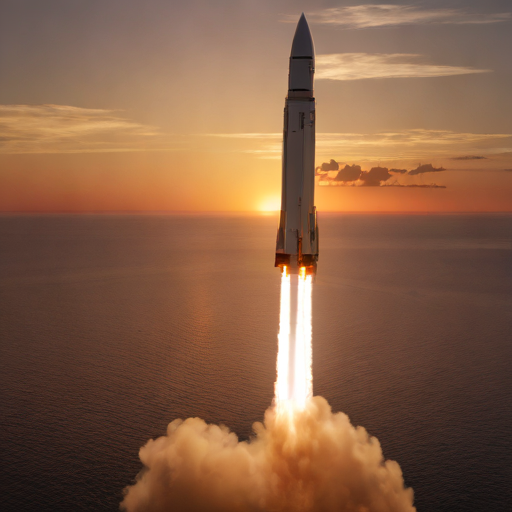
At the heart of this economic upheaval is the fundamental reimagining of the launch vehicle. To understand the scale of the disruption, one must look back at the Space Shuttle era. While a marvel of engineering, the Shuttle program was, financially speaking, a catastrophe of inefficiency. Launch costs hovered astronomically high—often cited around $60,000 per kilogram (in adjusted dollars). It was akin to building a Boeing 747, flying it from New York to London once, and then crashing it into the ocean. The new vanguard, led aggressively by SpaceX and chased by Blue Origin, asked the obvious yet elusive question: "Why not land it and fly again?"
The answer has reshaped the global aerospace market. By perfecting the propulsive landing of the Falcon 9 booster, SpaceX didn’t just lower the price; they decimated the competition’s margin for error. The cost to send a payload to LEO on a Falcon 9 has plummeted to approximately $2,600 per kilogram. With the introduction of the Falcon Heavy and the impending operational maturity of Starship, that figure is projected to collapse further, potentially dipping below $200 per kilogram. This is not a gradual decline; it is a cliff-edge drop that renders traditional expendable launch vehicles—the bread and butter of legacy defense contractors like Boeing and Lockheed Martin—economically obsolete for commercial cargo.
The Gravity Well: Launch Cost Reduction (USD/kg)
This dramatic deflation in launch costs has catalyzed a gold rush unlike any since 1849, but the pickaxes of this revolution are reusable rockets and the gold is data and connectivity. The immediate prize is the constellation economy. SpaceX’s Starlink and Amazon’s Project Kuiper are effectively wrapping the planet in a mesh of fiber-optic-speed connectivity, bypassing the trillions of dollars required to lay terrestrial cables. For the American consumer in rural Montana or the digital nomad in Joshua Tree, this means high-speed access is no longer tethered to geography. For the US economy, it represents a potential annual revenue stream estimated at over $30 billion by 2030, turning LEO into a critical layer of the global internet infrastructure.
Red Tape in the Stratosphere: The FAA's Challenge
The Federal Aviation Administration (FAA) finds itself at a historic inflection point, tasked with managing a collision course between 20th-century regulatory frameworks and 21st-century exponential innovation. For decades, the agency’s primary mandate was to ensure the safety of the National Airspace System (NAS) for civil aviation—a mature, predictable industry where distinct flight paths and established protocols ruled the skies. Today, however, the agency is the reluctant gatekeeper of the Final Frontier, struggling to oversee a commercial space sector that has shifted from a government-led occasional spectacle to a relentless, high-frequency industrial engine.
The friction is palpable: while Silicon Valley billionaires operate with the mantra of "move fast and break things," federal regulators are bound by a statutory obligation to ensure that what breaks doesn't fall on American suburbs or disrupt the densely packed commercial air corridors that form the arteries of the US economy. Every vertical launch from Cape Canaveral, Vandenberg, or Boca Chica requires the closure of vast swathes of airspace to commercial air traffic. As launches shift from monthly events to daily occurrences, the cumulative impact on US airlines has become a flashpoint. Major carriers like Delta and United are increasingly vocal about the costs associated with re-routing flights and the cascading delays caused by launch windows.
The Airspace Squeeze: Commercial Launch Cadence vs. Flight Delays (2022-2027)
Furthermore, the FAA is grappling with the nascent reality of human spaceflight safety standards for private citizens. Unlike NASA astronauts, who accept risks as part of service to the nation, the new wave of space tourists and private researchers falls into a regulatory gray zone. The moratorium on FAA regulation of occupant safety on commercial spacecraft—originally designed to give the industry a "learning period"—is nearing its sunset. Regulators are now facing the daunting task of drafting safety codes for vehicles that are still evolving. If they regulate too early or too strictly, they risk strangling an industry that promises to make America the hub of the orbital economy.
Main Street vs. Milky Way: The Societal Divide
As the sonic booms of re-entering boosters become the new heartbeat of the Texas coast and the Florida Space Coast, a starker sound is resonating across the American interior: the grumble of discontent from those firmly tethered to Earth. The narrative of the 20th century—space as a shared national destiny, funded by the taxpayer for the glory of the collective—has been fundamentally rewritten. In 2026, the final frontier is no longer a public park; it is fast becoming a gated community, and the entry fee is astronomical. While Silicon Valley and Wall Street celebrate the "trillion-dollar orbit," Main Street America is asking a pointed question: What is in it for us?
The societal divide is quantified most brutally in the price of admission. With Virgin Galactic and Blue Origin normalizing suborbital tourism, the "ticket to space" has become the ultimate status symbol of the ultra-wealthy. At a price point hovering around $450,000 per seat, a ninety-minute experience—offering perhaps five minutes of true weightlessness—costs more than the median sales price of an existing single-family home in the United States. For the average American household, the prospect of seeing the curvature of the Earth is not just a dream; it is a mathematical impossibility.
The Affordability Gap: Space Tourism vs. American Reality (2025)
Critics argue that the privatization of space represents the ultimate gentrification. Where NASA's Apollo program was a mobilization of national industrial might that spun off technologies like GPS, CAT scans, and memory foam—innovations that eventually democratized benefits—the current era is viewed through a lens of skepticism. The "Space Barons" are often perceived as escaping Earth's problems rather than solving them. In union halls in Michigan and community centers in Mississippi, the conversation isn't about Mars colonization; it's about the morality of spending billions on methane-fueled rockets while the climate crisis intensifies back home.
Beyond the Kármán Line: The 2030 Outlook
As we look toward the 2030 horizon, the trajectory of the American space industry suggests a fundamental decoupling from the exploration-first ethos of the 20th century, replaced swiftly by a ruthless, efficiency-driven commercialism. Wall Street analysts, once skeptical of the "billionaire space race," are now pricing in a reality where Low Earth Orbit is not just a destination, but a jurisdiction of economic inevitability. By the end of this decade, the global space economy is projected to surge past the $1.8 trillion mark, with U.S. firms capturing the lion's share of value, driven not by tourism tickets, but by the backbone infrastructure of orbital data and logistics.

This isn't merely about putting more satellites up; it's about putting factories up. We are witnessing the embryonic stages of an orbital manufacturing sector where unique environments—microgravity and hard vacuum—allow for the production of ZBLAN fiber optics, perfect protein crystals for pharmaceuticals, and high-strength alloys that are physically impossible to forge on Earth's surface. Venture capital firms in Silicon Valley and hedge funds in New York are already pivoting their portfolios, treating orbital real estate with the same speculative fervor as Manhattan penthouses or prime data center locations in Northern Virginia.
Projected US Space Economy Revenue by Sector (2025-2030)
Yet, this rapid privatization brings a stark societal question into focus: access. As the price of orbit drops for corporations, the "democratization" of space remains a paradoxical concept. While it is cheaper to launch a satellite, the capital requirements to compete effectively are astronomical, consolidating power into a pseudo-monopoly of two or three major players. This concentration of critical infrastructure—communications, navigation, and surveillance—in the hands of private entities rather than public institutions is creating a new geopolitical dynamic where the U.S. government is a customer rather than a commander. By 2030, NASA's role will have fully transitioned from operator to anchor tenant, leasing habitats on commercial space stations like Orbital Reef rather than building its own replacements for the ISS.
Read Next
Orbit for Sale: How America's New Space Race is Reshaping the Economy
From the launchpads of Texas to the boardrooms of Wall Street, the privatization of space is unlocking a trillion-dollar frontier. A deep dive into the billionaires, the tech, and the risks defining America's next industrial revolution.
The Next Manifest Destiny: Why America's Future is Written in Red Dust
From the Oregon Trail to the Hohmann Transfer Orbit, the American spirit of expansion is being reborn. As SpaceX and NASA chart a course for Mars, the definition of 'frontier' is shifting from territory to survival.
The 6G Frontier: Why the Next Wireless Revolution is America's Most Critical Race
Beyond speed, 6G represents a fundamental shift to an 'Internet of Senses.' As the race for terahertz dominance heats up, the outcome will define America's economic sovereignty for decades.