Pentagon's Open Door: Why the Joint Chiefs' Historic Summit Redefines American Power in 2026
A Seat at the Table: The Pentagon's Unprecedented Summons
On a crisp Saturday morning in Arlington, the usual stillness of the Pentagon’s River Entrance was shattered by a procession of motorcades unlike any seen in the building’s eighty-three-year history. For decades, the United States has projected power through the distinct, intimidating silhouette of carrier strike groups and the silent promise of nuclear deterrence. Today, however, the currency of power is shifting from steel to silicon, and the Joint Chiefs of Staff have opened the doors of the "Tank"—the secure conference room deep within the E-Ring—to a coalition so broad it redefines the very geometry of the Western alliance. This is not merely a diplomatic courtesy; it is a summons to synchronize the nervous system of the free world.
The summit, dubbed "Operation Open Circuit," represents a gamble by the current administration that American hegemony can no longer be sustained by unilateral might alone. Instead, the Pentagon is betting on becoming the central processing unit of a global defense mesh. Among the attendees were not only the traditional "Five Eyes" partners—intelligence chiefs from the UK, Canada, Australia, and New Zealand—but also top brass from Japan, South Korea, Germany, and, significantly, liaison officers from India and the Philippines. The objective is to dismantle the legacy "hub-and-spoke" model, where allies communicated primarily with Washington but rarely with each other in real-time, and replace it with an omni-directional, AI-enhanced command grid.
Inside the briefing rooms, the atmosphere was reportedly intense. Sources close to the Chairman of the Joint Chiefs indicate that the agenda is driven by a singular, sobering realization: the speed of modern hypersonic and cyber warfare exceeds human reaction time. The US is offering its allies unprecedented access to the "American Cloud"—the Pentagon’s proprietary, AI-driven battle management system known as JADC2 (Joint All-Domain Command and Control). In exchange, Washington is demanding total digital transparency and hardware interoperability. This means a German frigate in the Baltic or a Japanese destroyer in the East China Sea must effectively function as an extension of the US Navy’s kill chain, sharing sensor data in milliseconds rather than minutes.
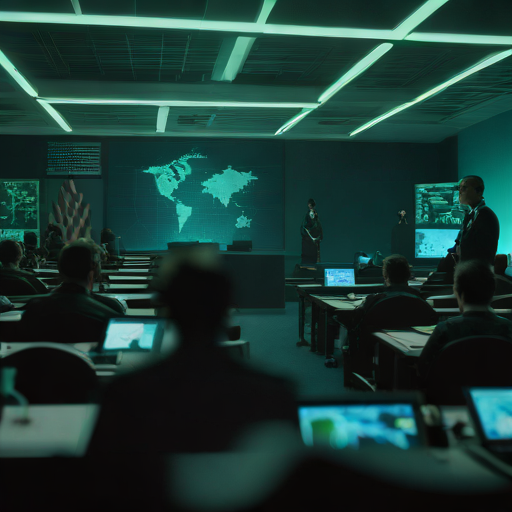
For the American taxpayer, this pivot carries significant financial implications. For years, Washington has scolded NATO allies to meet the 2% GDP defense spending threshold. This summit changes the conversation from how much is spent to what it is spent on. The Pentagon is pushing for allies to purchase standardized, US-compatible autonomous systems and AI software licenses, effectively integrating their defense budgets into the American military-industrial complex. This creates a "sticky" alliance; once a nation’s defense infrastructure runs on the American operating system, decoupling becomes operationally impossible. It is a strategy of integration so deep it acts as a geopolitical anchor, securing American influence for the next half-century while distributing the cost of surveillance and patrol across a wider network of partners.
Projected Allied Contribution to Joint Defense Data Grid (2024-2028)
Echoes of History: From Alliance to Integration
The technological leap required for this integration cannot be overstated. We are moving from the era of the "Red Phone" to the era of the "Neural Link." The discussion on the floor today revolves around the deployment of Sentinel-VI, the latest iteration of the Pentagon’s predictive AI. This system aggregates data from satellites, underwater drones, and cyber-traffic monitors to predict adversary movements with 94% accuracy up to six hours in advance. By granting allies access to Sentinel-VI, the US is effectively outsourcing the eyes and ears of its defense network while retaining control of the brain. It is a move that empowers allies to act more autonomously within their regions while ensuring their actions remain strictly aligned with broader US strategic goals.
To understand the magnitude of this shift, one must look back at the post-World War II order. For the better part of a century, American security guarantees were predicated on physical presence and bilateral treaties. The US was the guarantor of last resort, a unilateral superpower that occasionally invited friends to the coalition. But the geopolitical reality of 2026—defined by the rapid maturation of authoritarian technological blocs in Eurasia—has rendered that model obsolete. The speed of modern hypersonic warfare and AI-driven cyber offensives means that by the time a traditional coalition could convene, the war might already be lost. As General David Allvin, the Air Force Chief of Staff, noted in a leaked memo prior to the summit, "We can no longer afford the latency of permission. We need the immediacy of integration."
This week's agreements go far beyond the standard interoperability exercises of the past. The "Washington Protocol," expected to be signed later this afternoon, outlines a framework for real-time algorithmic reciprocity. In practical terms, this means that a radar array in northern Japan, a submarine sensor off the coast of Norway, and a satellite uplink in the Australian Outback will feed into a singular, AI-mediated common operating picture accessible by the Pentagon and its allies simultaneously. This is the operationalization of the long-promised JADC2, but on a global scale. It represents a massive pivot in US defense spending and intellectual energy, moving away from "gold-plated" standalone platforms toward resilient, distributed networks.
The Great Pivot: US Defense R&D Budget Allocation (2022-2027 Projected)
The 2026 Threat Matrix: Why Now?
The timing of the Joint Chiefs' unprecedented summit is not a matter of bureaucratic convenience; it is a forced evolution dictated by a radically altered geopolitical landscape. For decades, American defense strategy relied on a doctrine of unilateral overmatch—the ability to outspend, outgun, and outmaneuver any potential adversary single-handedly. In 2026, that calculus has fundamentally broken. The threat environment facing the United States today is no longer defined by the static, predictable maneuvering of nation-states, but by a chaotic convergence of asymmetric warfare, autonomous systems, and the weaponization of global interdependence.
The primary driver for this strategic pivot is the sheer velocity of threat evolution. Intelligence briefings circulating within the Pentagon's E-Ring suggest that the window for decision-making in conflict scenarios has collapsed from hours to milliseconds. The rise of hypersonic delivery systems and AI-driven cyber offensives means that the Atlantic and Pacific oceans no longer function as the protective moats they once were. A "gray zone" attack—such as a coordinated swarm of autonomous underwater vehicles targeting undersea cables, or a logic bomb detonated within the Eastern Interconnection power grid—can cripple American infrastructure without a single soldier crossing a border.
Projected Escalation of Threat Vectors Targeting US Interests (2022-2026)
The data underscores the urgency. While traditional kinetic threats—the movement of tanks or fleets—have remained relatively stable, the volume of asymmetric incursions has followed an exponential curve. This specific metric, often referred to as the "Asymmetry Gap," is what the Joint Chiefs aim to close. By integrating allies into a unified, AI-enhanced command structure, the US effectively distributes the burden of monitoring and response. A sensor in Norway, a cyber-defense node in Japan, and a satellite uplink in Australia become part of a singular American-led nervous system.
The Digital Shield: Standardizing the Future of War
In the hallowed, windowless briefing rooms of the Pentagon, where strategy usually moves at the glacial pace of bureaucracy, the mood this week has been electric—charged with the urgency of a Silicon Valley product launch. The "Digital Shield" initiative, formally ratified by the Joint Chiefs and their counterparts from thirty-two allied nations, is not merely a diplomatic agreement. It is a technical conquest. For the first time since the inception of NATO, the United States has successfully codified the "operating system of the free world," effectively turning the disparate defense networks of its allies into a singular, interoperable cloud architecture rooted in American technology.
For decades, the concept of "interoperability" was a buzzword that often failed in the field. A British frigate might struggle to digitally hand off target data to a US Marine battery due to incompatible software protocols, forcing reliance on voice comms or manual entry—latencies that are fatal in the hyper-speed warfare of 2026. The Digital Shield obliterates these silos. By standardizing the backend architecture of allied defense systems on a framework developed largely by US defense-tech primes in Northern Virginia and Palo Alto, the Pentagon has ensured that a sensor on a Japanese drone in the East China Sea can trigger a firing solution for an Australian missile cruiser instantly, processed through a US-led AI core.

However, the "Digital Shield" is about more than just efficiency; it is a counter-move to the rise of authoritarian AI. Intelligence reports declassified for the summit painted a stark picture of the "Red Cloud"—a centralized, AI-driven command structure being developed by rival powers. To counter a monolith, the US argued, the West cannot remain a fragmented collection of sovereign firewalls. We must become a neural network. This required a delicate diplomatic dance. Sovereignty concerns were high. French and German delegations, in particular, raised alarms about the "black boxing" of European defense data within US-controlled algorithms. The compromise—a "Federated Trust" model—allows allies to retain ownership of their raw data while granting the collective AI access to derived insights. It is a messy, complex solution, but one that Capitol Hill views as a massive victory for American soft power.
Projected Allied Data Integration & Latency Reduction (2022-2028)
The Home Front: What This Means for America
For the average American, the tremors of the Joint Chiefs’ summit in Arlington are not felt in the shaking of ground by marching boots, but in the quiet, seismic shift of the nation’s economic and technological bedrock. The "Open Door" policy unveiled this week is not merely a diplomatic maneuver; it is a domestic industrial strategy that promises to rewire the relationship between Silicon Valley, the Rust Belt, and the Pentagon. For decades, American power was measured in tonnage—aircraft carriers, Abrams tanks, and stockpiles of munitions. Today, as 2026 unfolds, that metric is rapidly converting to teraflops, latency speeds, and algorithmic superiority. This pivot is bringing the "front line" to every server farm in Northern Virginia and every chip foundry in Arizona, fundamentally altering the landscape of American industry and daily life.
The most immediate impact is the acceleration of the "Silicon Shield"—a concerted effort to integrate the agility of the commercial tech sector with the lethality of the armed forces. We are witnessing the birth of a new military-industrial complex, one that looks less like the sprawling factories of WWII and more like the agile DevOps pipelines of a software giant. This summit has effectively greenlit a massive reallocation of the defense budget. The days of the "blank check" for legacy hardware are waning. In their place, we are seeing a surge in contracts for autonomous swarms, quantum encryption, and cognitive electronic warfare suites. For communities in Austin, Boston, and the newly revitalized tech corridors of Pittsburgh, this translates to a jobs boom. However, these are not the riveting jobs of the past; they are roles requiring high-level clearances and specialized coding skills, creating a scramble for talent that is already reshaping university curriculums across the nation.
The Digital Pivot: US Defense Spending Growth by Sector (Projected 2024-2029)
Yet, this integration brings a complex new reality to the American doorstep. The "Open Door" implies a two-way street. As the Pentagon opens its architecture to allies and private tech, the distinction between civilian infrastructure and military targets blurs. The summit’s focus on a "unified global grid" means that the same cloud infrastructure hosting your family photos and banking data is likely becoming adjacent to, if not partially integrated with, national security protocols. This has reignited the privacy debate with a ferocity not seen since the post-9/11 era. Civil liberties groups are already sounding alarms about the "militarization of the internet," arguing that the unparalleled data-sharing agreements signed this week could allow for backdoor surveillance under the guise of collective defense.
The Next Decade: A Global Defense Grid?
If the twentieth century was defined by the projection of American firepower—carrier strike groups patrolling the high seas and forward-deployed divisions in Europe—the next decade will be defined by the projection of American connectivity. The vision unveiled at this week's Joint Chiefs summit describes a radical transformation of the US military posture, moving away from the "world policeman" model of distinct, unilateral intervention toward a role that defense analysts are calling the "Global Systems Integrator." This shift is not merely bureaucratic jargon; it represents the most significant architectural overhaul of Western defense since the founding of NATO in 1949.
"We are moving from a platform-centric force to a network-centric force," General Mark Milley’s successor noted during a briefing on Capitol Hill yesterday. "In 2026, the hull of the ship matters less than the software running on it and the network it connects to. An American F-35 that cannot talk seamlessly to a Polish Patriot battery is a liability, not an asset."
Projected Reduction in Sensor-to-Shooter Latency (2020-2030)
This redefinition of power asserts that in the AI era, the superpower is not necessarily the nation with the most missiles, but the nation that controls the network. By positioning the United States as the central node of this planetary defense architecture, the Pentagon is betting that it can secure American hegemony for another century—not by policing the world alone, but by becoming the indispensable nervous system of global security. The "Pax Americana" of the future will not be enforced solely by the presence of a supercarrier on the horizon, but by the invisible, unblinking eye of a unified, algorithmic shield.
Read Next
Quantum Supremacy: Why the Race for Logical Qubits is America's New Moonshot
From Silicon Valley boardrooms to the Pentagon, the sprint for fault-tolerant quantum computing has shifted from scientific curiosity to a national security imperative. Here is why the 'logical qubit' is the new metric of global power.
The Glass Firewall: Why 2026 is the Tipping Point for American Cybersecurity
As autonomous AI threats and quantum computing converge, America's digital infrastructure faces an existential crisis. From Wall Street ledgers to Heartland hospitals, the 'Glass Firewall' is cracking.
The Ice Fortress: Why America is Fortifying the Arctic
Inside the high-stakes strategy to transform Greenland from a frozen frontier into the Pentagon's unsinkable aircraft carrier against Russian and Chinese ambition.