The Ice Fortress: Why America is Fortifying the Arctic
The New Cold Front: Why Greenland Matters to America
To the casual observer, Greenland is a cartographic anomaly—a massive, ice-sheeted expanse dominating the upper right corner of the North American map, often distorted by the Mercator projection. But inside the Pentagon and the White House, it is viewed through a sharply different lens: as the world’s most valuable unsinkable aircraft carrier. The Trump administration’s renewed and intensified focus on this semi-autonomous Danish territory isn't a capricious real estate venture; it is a calculated response to a rapidly thawing geopolitical order where the Arctic is transforming from a frozen frontier into a hotbed of great-power competition.
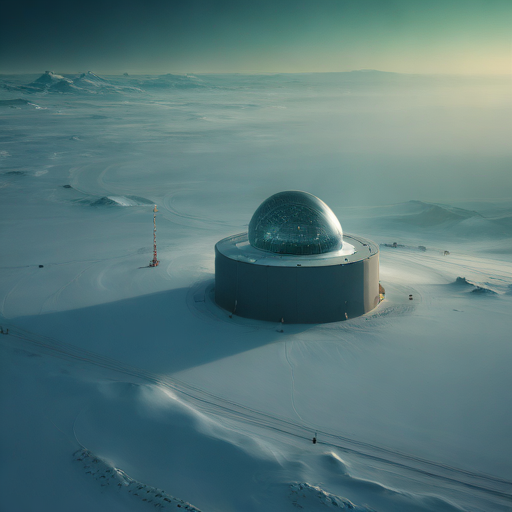
For decades, the cornerstone of American presence here has been the Pituffik Space Base (formerly Thule Air Base), our northernmost military installation. Situated just 947 miles from the North Pole, it is the unblinking eye of the US Space Force, hosting the massive AN/FPS-132 Upgraded Early Warning Radar. This sensor is the first line of defense against intercontinental ballistic missiles launched from the Eurasian landmass. However, the administration's "Ice Fortress" strategy argues that a single listening post is no longer sufficient. As climate change recedes the sea ice, it opens new maritime highways and exposes vast mineral wealth, turning the Arctic into a "Mediterranean of the North"—a critical corridor connecting the Atlantic and Pacific economies.
The strategic imperative is driven by a simple, unnerving calculus: our adversaries are already there. Russia has revitalized its Soviet-era "Arctic Trefoil" bases, creating an "Anti-Access/Area Denial" (A2/AD) bubble that threatens to lock NATO out of the High North. Meanwhile, China, calling itself a "Near-Arctic State," is aggressively pursuing its "Polar Silk Road," eyeing investments in dual-use infrastructure that could host research stations today and submarine hunters tomorrow. In this context, Greenland is not just land; it is the cork in the bottle of the North Atlantic. Control here secures the vital GIUK gap (Greenland-Iceland-United Kingdom)—the naval choke point through which Russian Northern Fleet submarines must pass to threaten American carrier strike groups in the Atlantic.
The economic dimension is equally critical to national security. Beneath Greenland’s retreating glaciers lies one of the world's largest undeveloped deposits of rare earth elements—neodymium, praseodymium, and terbium—metals essential for everything from F-35 fighter jets to electric vehicle batteries. Currently, the US remains dangerously dependent on Chinese supply chains for these critical minerals. Securing access to Greenland’s resources is therefore a move toward industrial sovereignty, decoupling American defense manufacturing from the whims of Beijing. The "Ice Fortress" strategy envisions a partnership that goes beyond security guarantees, integrating Greenland’s economy into the North American bloc through energy and mining pacts that would rival the Marshall Plan in their scope and ambition.
A History of Ambition: From Truman to Trump
To the casual observer, Donald Trump’s headline-grabbing suggestion to purchase Greenland in 2019 may have appeared as a sudden, idiosyncratic burst of transactional diplomacy—a real estate mogul’s attempt to acquire the ultimate trophy property. However, within the quiet corridors of the Pentagon and the State Department, the proposition was recognized not as a novelty, but as the loud, perhaps clumsy, articulation of a geopolitical obsession that has haunted Washington for nearly a century. The "Ice Fortress" strategy is not a new invention; it is a dusted-off blueprint from the atomic age, updated for an era of hypersonic missiles and rare earth competition. To understand why the US is doubling down on Greenland today, we must first recognize that Nuuk has effectively been in Washington's crosshairs since the dawn of the Cold War.
The story properly begins in 1946, a year defined by the settling dust of World War II and the gathering frost of the conflict to come. President Harry S. Truman, guided by the joint chiefs who saw the Arctic as the "fourth coast" of North America, secretly offered Denmark $100 million in gold bars for the island. In today’s currency, that offer would exceed $1.6 billion, a staggering sum for what was then largely perceived as a frozen wasteland. Truman’s Secretary of State, James Byrnes, drafted the proposal with a singular clarity: Greenland was the unsinkable aircraft carrier needed to check Soviet expansion. While Copenhagen politely declined the sale, the strategic logic remained irrefutable. The compromise was the 1951 Defense of Greenland Agreement, which paved the way for Thule Air Base (now Pituffik Space Base), the US military’s northernmost installation.
US Arctic Strategic Investment Index (1945-2030)
Construction of Thule was a Herculean feat of engineering, codenamed Project Blue Jay. It involved moving 120 shiploads of supplies and 12,000 men to the top of the world in secret, cementing the US footprint in the high north. For decades, Thule served as the eyes of the American nuclear shield, its massive radars scanning the polar route for incoming Soviet bombers and, later, ICBMs. Yet, as the Cold War thawed, Washington’s gaze drifted. The Arctic became an afterthought, a region for climate science rather than combat strategy. Bases shrank, and diplomatic engagement withered. This period of "Arctic Amnesia," lasting roughly from the fall of the Berlin Wall to the mid-2010s, created a vacuum that rivals were all too eager to fill.
The Lonely Outpost: What the US Has Now
To understand why the Trump administration—and indeed, strategic planners across the Pentagon—are looking at Greenland with renewed intensity, one must first look at the solitary, frozen sentinel currently guarding America's northern flank: Pituffik Space Base. Formerly known as Thule Air Base, this installation sits approximately 750 miles north of the Arctic Circle, a testament to Cold War engineering and a lingering reminder of a bygone era of strategic priorities. For decades, it has stood as the United States' northernmost military installation, a lonely outpost in a desert of ice, tasked with the gravest of responsibilities: watching the top of the world for the heat signatures of incoming intercontinental ballistic missiles.
But "lonely" is an understatement that borders on dangerous negligence in the current geopolitical climate. Pituffik is a singular node in a vast, increasingly contested theater. While it boasts the massive AN/FPS-132 Upgraded Early Warning Radar—a technological marvel capable of tracking objects deep into space and detecting missile launches from the Eurasian landmass—it is essentially an island of American power in a sea of vulnerability. The base is a logistical nightmare to maintain, accessible by sea only during a brief summer window when the North Star Bay thaws, and relied upon heavily for space surveillance and satellite control.
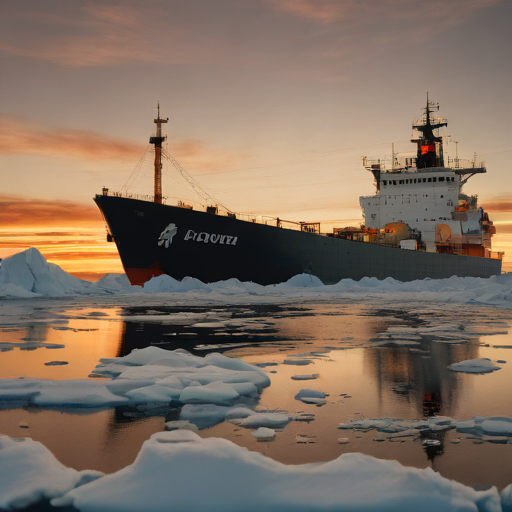
However, the strategic reality of 2026 renders this single-point posture insufficient. For years, defense analysts have warned of the "Arctic Gap." While Pituffik provides eyes on the sky, the United States lacks the boots on the ice—and crucially, the hulls in the water—to project power across the region's surface. The contrast with our primary strategic rival in the region, the Russian Federation, is stark and alarming. Russia has systematically refurbished dozens of Soviet-era Arctic bases, establishing a "Bastion" defense strategy that effectively creates an anti-access/area-denial (A2/AD) bubble over the Northern Sea Route. They have built new airfields, deployed S-400 missile systems, and, most visibly, maintained a fleet of nuclear-powered icebreakers that allow them to operate year-round.
The Polar Imbalance: Operational Icebreakers (2025 Estimates)
The United States, by comparison, relies on a terrifyingly fragile surface fleet. As the chart above illustrates, the disparity is not merely a gap; it is a chasm. The US Coast Guard's heavy icebreaker, the USCGC Polar Star, is a vessel commissioned in the 1970s, essentially held together by ingenuity and spare parts cannibalized from its decommissioned sister ship. While the Polar Security Cutter program promises relief, delays have left the US with limited capability to conduct surface patrols, support search and rescue, or assert sovereignty in the face of encroachments. If Pituffik is the eye of the American Arctic, we currently lack the hands to reach out and touch anything.
The Home Front: Security, Economy, and Taxpayers
To the average voter in Ohio or Florida, the vast, glaciated expanses of Greenland might feel as distant as the moon. However, the "Ice Fortress" strategy is being sold to the American public not merely as a geopolitical chess move, but as a direct investment in the homeland's safety and economic sovereignty. The administration's renewed focus on the Arctic aims to bridge the gap between abstract foreign policy and tangible domestic benefit, arguing that securing the northern flank is essential for preserving the American way of life in an increasingly volatile century.
The Shield Overhead: Homeland Defense 2.0
For decades, the Arctic has been the shortest path for ballistic missiles traveling between Eurasia and North America. Today, with the advent of hypersonic glide vehicles—weapons capable of maneuvering at five times the speed of sound—the timeline for detection and interception has shrunk from minutes to mere seconds. The strategic imperative here is stark: Greenland is the "keeper of the gate." By fortifying bases like Thule (Pituffik Space Base), the US is effectively upgrading the national alarm system.
Defense analysts argue that this isn't just about protecting military assets; it’s about shielding major population centers on the East Coast. The expansion of radar capabilities and the deployment of next-generation interceptors in Greenland push the defensive perimeter thousands of miles north, away from New York, Washington D.C., and Chicago. This "forward defense" doctrine posits that every dollar spent on Arctic concrete is a dollar spent on insulating the American homeland from the threat of a first strike. It transforms the Arctic from a passive buffer into an active shield, a concept that resonates with a populace increasingly wary of great power conflict.
Breaking the Chain: Resource Independence and the Economy
Beyond the military calculus lies a powerful economic argument that speaks directly to American industry and the consumer wallet. Greenland holds one of the world’s largest undeveloped deposits of rare earth elements (REEs)—neodymium, praseodymium, and dysprosium. These are the critical building blocks of the modern economy, essential for everything from the permanent magnets in electric vehicle motors to the guidance systems of the F-35 Lightning II, and even the vibration motor in your iPhone.
Currently, the United States relies heavily on foreign supply chains, predominantly controlled by China, for these materials. This dependency is a strategic choke point. The "Ice Fortress" strategy envisions Greenland as a secure, allied alternative source for these critical minerals. By underwriting mining operations and infrastructure development, the US aims to "onshore"—or "near-shore"—the supply chain. For the American manufacturing sector, particularly in the rust belt and emerging tech hubs, this promises a stable supply of raw materials immune to the whims of trade wars or embargoes in the Pacific. It is a play for resource sovereignty, ensuring that the components driving the US economy are dug from ground protected by the US military.
The Taxpayer's Ledger: Investment vs. Expense
Critics, however, point to the colossal price tag. Building deep-water ports, heated hangars, and ice-hardened logistics chains in one of the most inhospitable environments on Earth requires a financial commitment in the tens of billions. Fiscal conservatives question whether this expenditure will crowd out domestic infrastructure projects. Is a new runway in Nuuk worth more than repairing a bridge in Pittsburgh?
The administration's counter-argument is historical. They invoke the legacy of "Seward's Folly," the 1867 purchase of Alaska, which was initially ridiculed but ultimately yielded immeasurable strategic and economic returns. The narrative is that the Arctic investment is a down payment on future stability. Furthermore, the strategy includes provisions for private-public partnerships, encouraging US energy and mining giants to shoulder some of the infrastructure costs in exchange for access rights. This aims to soften the blow to the federal deficit while opening new frontiers for American capitalism.
Projected US Arctic Investment vs. Resource Value Secured (2026-2035)
Future Forecast: The Race for the Top of the World
As the Arctic ice sheet retreats at a rate that alarms climatologists but entices strategists, the region is rapidly transforming from a frozen scientific preserve into the world’s most precarious geopolitical chessboard. The "Race for the Top of the World" is no longer a rhetorical flourish; it is a quantified, funded, and militarized reality. By 2030, the Arctic Ocean is projected to be largely ice-free during summer months, effectively creating a new Mediterranean at the top of the globe—a critical maritime artery that slashes shipping times between Europe and Asia by up to 40%. For the United States, securing Greenland is not an isolated diplomatic maneuver; it is the keystone of a broader strategy to ensure this emerging frontier does not become the exclusive domain of adversarial powers.
The urgency in Washington is driven by a stark recognition of the current disparity in polar capabilities. Russia, with the world's longest Arctic coastline, has spent the last decade refurbishing Cold War-era bases and constructing new "Arctic Trefoil" military complexes. They have established a formidable Anti-Access/Area Denial (A2/AD) bubble that extends far into the North Atlantic, threatening NATO’s reinforcement lines. Meanwhile, China, declaring itself a "near-Arctic state," is pushing its "Polar Silk Road" initiative, eyeing Greenland’s vast deposits of rare earth minerals—neodymium, praseodymium, and dysprosium—which are essential for everything from F-35 fighter jets to electric vehicle batteries.
The U.S. response, centered on the "Ice Fortress" concept, envisions Greenland not just as a listening post, but as a logistics hub and a projection platform. The expansion of Pituffik Space Base (formerly Thule Air Base) is just the beginning. Defense analysts predict a significant uptick in dual-use infrastructure spending: deep-water ports capable of hosting Arleigh Burke-class destroyers and nuclear submarines, and extended runways for P-8 Poseidon maritime patrol aircraft to hunt adversarial subs lurking under the thinning ice. This pivot is expensive and logistically grueling, but the alternative—yielding control of the Northern Hemisphere's "high ground"—is viewed by the Pentagon as an unacceptable strategic failure.
Projected Arctic Icebreaker Fleet Strength (2025-2035)
Furthermore, the economic stakes are staggering. The U.S. Geological Survey estimates that the Arctic Circle holds roughly 13% of the world's undiscovered oil and 30% of its undiscovered natural gas. As technology makes extraction viable, the sovereignty of Greenland’s Exclusive Economic Zone (EEZ) becomes a matter of national economic security. The Trump administration's approach signals a shift from passive observation to active assertion. We are likely to see a push for a "North American Arctic Energy Alliance," leveraging American capital and Greenlandic resources to undercut Russian energy dominance in Europe.