The Arctic Chessboard: Why Denmark's Greenland Visit Signals a Shift for Washington
Beyond the Ice: A Visit with Global Stakes
Prime Minister Mette Frederiksen’s recent touchdown in Nuuk is being read in Washington not merely as a domestic affair of the Kingdom of Denmark, but as a critical geopolitical maneuver on the world’s most frigid frontline. While the visuals were of diplomatic handshakes and cultural engagement, the subtext—loudly deciphered by Pentagon strategists and State Department analysts alike—was one of Arctic sovereignty and NATO unity. For the United States, this visit serves as a reassuring signal that Copenhagen remains committed to stabilizing the High North against the encroaching shadows of Russian militarization and Chinese economic ambition.
To understand why a visit by a Danish Prime Minister to her own autonomous territory ripples through the corridors of power in D.C., one must look at the map from the top down. Greenland is not just an island; it is the cork in the bottle of the North Atlantic, commanding the GIUK gap (Greenland-Iceland-United Kingdom) through which Russia’s Northern Fleet must pass to access the open ocean. Frederiksen’s presence reinforces the political stability required for the U.S. to operate its critical assets in the region, assuring Washington that despite internal calls for independence in Nuuk, the security architecture remains intact.
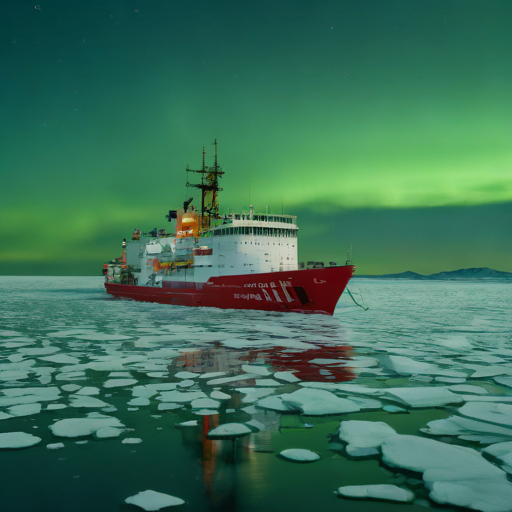
The urgency of this alignment is underscored by the widening gap in Arctic capabilities. While the U.S. and its NATO allies are scrambling to modernize their presence, Russia has spent the last decade refurbishing Cold War-era bases and building a formidable fleet of nuclear-powered icebreakers. This disparity creates a "gray zone" where commercial and military interests blur, making firm political alliances the first line of defense. Frederiksen’s trip confirms that while the ice may be melting, the resolve of the trans-Atlantic alliance to hold the line in the High North remains frozen solid.
Echoes of 2019: From 'For Sale' to Strategic Partner
The diplomatically frigid winds that blew between Washington and Copenhagen in August 2019 have long since thawed, replaced by a climate of urgent, high-stakes cooperation. When then-President Donald Trump floated the idea of the United States purchasing Greenland—a notion Prime Minister Mette Frederiksen famously dismissed as "absurd"—it triggered a brief but intense diplomatic row. Yet, viewed through the lens of history, that clumsy overture inadvertently underscored a geopolitical truth that the Pentagon had known for decades: Greenland is the unsinkable aircraft carrier of the North Atlantic, and the United States cannot afford to lose its footing there.
Today, the conversation has shifted dramatically from acquisition to strategic integration. Washington has learned that while it cannot buy the island, it must heavily invest in the partnership. The "purchase" narrative of 2019 has evolved into a robust framework of defense agreements, economic aid packages, and scientific collaboration. This pivot acknowledges that the road to Arctic security runs through Nuuk and Copenhagen, not around them.
The transformation of this relationship is quantifiable. In the years following the "purchase" controversy, U.S. financial commitments to Arctic security and Greenlandic development have ramped up significantly. We are moving from a passive reliance on historical treaties to active, funded engagement. The Biden-Harris administration and subsequent leadership have prioritized the Arctic in a way that aligns domestic economic interests with foreign policy goals.
US Arctic Security & Development Funding (2019-2026 Proj.)
This graph illustrates the sharp upward trajectory in U.S. focus. Note the exponential growth in "Economic Aid" relative to the baseline in 2019; this represents the "soft power" offensive intended to win the hearts and minds of the Greenlandic people, ensuring that when they look for partners, they look West.
The Northern Flank: NATO's Frontline Defense
To the casual observer, a diplomatic visit to Nuuk might seem like a niche affair. But for Pentagon strategists, Prime Minister Frederiksen’s recent maneuvers are being watched with the intensity usually reserved for carrier strike group deployments. We are witnessing the solidification of the Northern Flank, a theater of operations that has swiftly transitioned from a zone of "Arctic Exceptionalism" to the world’s newest frontline.
At the heart of this relationship lies Pituffik Space Base (formerly Thule Air Base). Located 750 miles north of the Arctic Circle, it is not merely a relic of the Cold War; it is the eyes and ears of the American homeland defense system today. The base houses the 12th Space Warning Squadron and its massive AN/FPS-132 Upgraded Early Warning Radar, responsible for detecting and tracking intercontinental ballistic missiles (ICBMs). Without Danish cooperation and Greenlandic hospitality, the U.S. loses roughly 240 degrees of radar coverage over the pole—a blind spot that modern hypersonic technology would exploit in minutes.
However, the urgency in Washington stems from a glaring disparity in capability. Russia has revitalized its Nagurskoye airbase—now capable of hosting nuclear-capable bombers—and operates the world’s largest fleet of icebreakers. China, describing itself as a "Near-Arctic State," is building heavy icebreakers to pave its "Polar Silk Road." In stark contrast, the U.S. Coast Guard’s high-latitude capacity has been dangerously thin.
Operational Polar Icebreaker Fleets (2025 Estimates)
The accession of Finland and Sweden into NATO has transformed the Baltic Sea into a "NATO Lake," pushing Russian strategic interest further north and west—directly toward Greenland’s Exclusive Economic Zone. The U.S. Navy has responded by re-establishing the Second Fleet, specifically to handle North Atlantic operations. The "Northern Flank" is no longer a peripheral concern; it is a primary theater.
The Rare Earth Race: America's Supply Chain Lifeline
Beneath the glaciated peaks and fjords of Greenland lies a treasure trove that has kept Pentagon strategists awake at night: the world’s largest undeveloped deposits of rare earth elements. For the United States, Greenland represents more than just a strategic military buffer zone; it is potentially the most viable "exit strategy" from a precarious over-reliance on Chinese mineral processing.
While being the global leader in advanced technology—from Tomahawk missiles to the permanent magnets driving the Ford F-150 Lightning—the U.S. relies on raw materials overwhelmingly controlled by a strategic rival. China currently dominates the global supply chain, processing nearly 85% of the world's rare earth oxides. The Kvanefjeld and Tanbreez deposits in southern Greenland are estimated to hold enough neodymium, praseodymium, dysprosium, and terbium to satisfy global demand for decades.

The logistics of extracting these resources are formidable, yet the cost of inaction is higher. As the U.S. accelerates its transition to a green economy, the demand for these minerals is projected to skyrocket. The Biden-Harris administration’s focus on "friend-shoring" places Denmark, and by extension Greenland’s Home Rule government, at the absolute center of this economic map.
Projected US Rare Earth Sourcing Shift (2024-2030)
Frederiksen’s visit serves as a critical signaling mechanism to investors on Wall Street. It reassures American stakeholders that despite the complex political landscape, the path to extraction will remain open to Western interests rather than state-backed Chinese enterprises. The unspoken agenda is to formalize a framework where American capital can develop these mines, satisfying Greenland’s desire for economic independence while securing America’s industrial base.
Climate and Coastlines: The Direct Impact on the US
While geopolitical maneuvering dominates the headlines, the most tangible consequence of the Arctic’s transformation for the United States lies in the physics of melting ice. Prime Minister Mette Frederiksen’s visit highlights a critical reality: what happens in Greenland does not stay in Greenland. As the Greenland Ice Sheet sheds mass, it acts as a primary driver for sea-level rise along the American Eastern Seaboard, threatening everything from real estate markets in Miami to critical naval infrastructure in Virginia.
This connection is a logistical nightmare for the Department of Defense (DoD). Naval Station Norfolk, the world's largest naval base, is already battling "sunny day flooding" caused by rising tides. The US Army Corps of Engineers is currently drafting coastal resilience studies with price tags in the hundreds of billions of dollars. The insurance industry is already pricing in this Arctic instability; premiums in coastal Florida and the Carolinas have surged as actuarial tables adjust to the new baseline.
Projected High-Tide Flooding Days (2025-2050)
When American policymakers look North, they are no longer just seeing a remote expanse of white; they are seeing the source code for the future of the American coastline. The stabilization of the Arctic environment is, in effect, a domestic infrastructure policy for the United States.