Sacred Ground: The Deepening Fracture Between Trump and America's Veterans
The Latest Firestorm: Why 'Apologize' is Trending
The political tremor started not in the halls of Congress, but on the typically stoic timelines of military social media, quickly erupting into a nationwide movement that has forced the Republican establishment into a defensive crouch. The catalyst was a seemingly off-the-cuff remark made during a campaign rally in North Carolina last Tuesday, where former President Donald Trump disparaged the significance of the Purple Heart, comparing the "sacrifice" of his legal battles favorably against those wounded in combat. While the former President has survived—and often thrived on—controversy involving military service in the past, from the late Senator John McCain to the Gold Star Khan family, this latest episode appears to have struck a different, more volatile nerve in 2026. The hashtag #Apologize did not merely trend; it dominated the discourse, driven not by partisan operatives, but by non-commissioned officers, veterans of foreign wars, and active-duty families who view the sacred covenant between the Commander-in-Chief and the troops as inviolable, regardless of party affiliation.
This isn't just about a single soundbite; it is the accumulation of what many in the veteran community describe as a "pattern of disrespect" that has finally breached the levy of loyalty. For decades, the military vote has been a reliable bulwark for the GOP, a demographic assumed to be locked in by shared values of patriotism and strong defense. However, the sheer velocity of the backlash indicates a profound fracturing of this alliance. Within hours of the rally, the Veterans of Foreign Wars (VFW) and the American Legion—organizations that typically tread carefully around partisan politics—issued blistering statements demanding an immediate retraction. The sentiment on the ground is even hotter. Interviews with voters in key swing state military hubs, such as Norfolk, Virginia, and Fayetteville, North Carolina, reveal a shifting tide. Veterans who once saw Trump as a disruptor of a broken system now increasingly view his rhetoric as an affront to the very code of honor they swore to uphold. The demand for an apology is less about political correctness and more about a demand for the basic dignity owed to those who have bled for the nation.
The digital footprint of this outrage offers a quantitative look at the severity of the crisis for the Trump campaign. Unlike previous controversies that faded within a news cycle, the #Apologize movement has shown sustained momentum, recruiting support from demographic groups that rarely intersect with military issues. Analysts point to a "permission structure" emerging, where lifelong Republican veterans feel emboldened to publicly criticize the party leader, creating a permission loop for others to follow suit. This is a battle over the soul of American patriotism, and for the first time in years, the former President finds himself without the automatic shield of the rank and file.
Social Media Velocity: #Apologize Trend vs. General Campaign Mentions (Last 7 Days)
Furthermore, the silence from prominent GOP lawmakers has only amplified the anger. In private, Republican strategists are ringing alarm bells, noting that a dip of even 3-5% in veteran support could prove fatal in tight races in Arizona and Georgia. The "Apologize" narrative has successfully framed the issue not as "Left vs. Right," but as "Civilian arrogance vs. Military sacrifice." This framing is particularly dangerous for the Trump campaign because it strips away the usual defenses of "fake news" or "liberal bias." When the criticism comes from a Marine with a Purple Heart on his profile picture, the attack lands with a credibility that no cable news pundit can match.
The durability of this firestorm suggests that the cultural gap between the MAGA movement and the traditional military ethos is widening. The military is an institution built on accountability—leaders eat last, they take responsibility for failure, and they uphold standards. The former President's refusal to apologize, viewed by his base as strength, is being interpreted by this specific constituency as a fundamental failure of leadership character. As the days pass without contrition, the demand for an apology is morphing into something far more politically damaging: a declaration of independence by a voting bloc the GOP can no longer take for granted.
Echoes of the Past: A Pattern of Friction
The current firestorm engulfing the former President regarding his interactions with the military community is not a sudden thunderclap from a clear sky; rather, it is the latest, and perhaps most volatile, tremor along a fault line that has been grinding for over a decade. To understand the depth of the current fracture, one must trace the seismic activity back to its epicenter. This is not merely about a single breach of protocol at Arlington National Cemetery or a specific rhetorical slight; it is about a persistent, cumulative erosion of the unspoken covenant between the Commander-in-Chief and those who serve.
For generations, the Republican Party was the presumptive political home for the American military. It was a relationship built on a perceived shared language of patriotism, funding hawkishness, and reverence for tradition. However, the bedrock of this alliance began to show visible stress fractures as early as July 2015. When Donald Trump declared of Senator John McCain, a man who endured five and a half years of torture in the Hanoi Hilton, "He’s not a war hero. He was a war hero because he was captured. I like people who weren't captured," the political establishment braced for a collapse that never came. While the base remained largely loyal, a quiet dissonance began to hum within the officer corps and among veterans who viewed the POW experience as the ultimate testament to the Code of Conduct. That comment didn't end a candidacy, but it planted a seed of doubt: Is nothing sacred?
That seed was watered by a steady rain of subsequent controversies that seemed to fundamentally misunderstand the military ethos. The feud with the Gold Star Khan family in 2016 broke a cardinal rule of American politics: the families of the fallen are off-limits. Then came the reports from The Atlantic in 2020, alleging that the President had referred to fallen soldiers at the Aisne-Marne American Cemetery in France as "suckers" and "losers." While vehemently denied by the former President and his allies, the allegations resonated because they fit a perceived pattern of transactionalism—a worldview where sacrifice without tangible gain is unintelligible. For the enlisted soldier who serves for a paycheck that barely covers the rent, or the Marine who holds the line for the brother to his left, the idea that their service could be viewed as a bad business deal was a stinging indictment.
The friction moved from rhetoric to institutional crisis during the tenure of the "Generals"—Mattis, Kelly, and McMaster. Initially viewed as the "adults in the room," their eventual departures were marked not by the usual polite letters of resignation, but by stunning public rebukes. General James Mattis, a figure of near-mythological status in the Marine Corps, wrote in 2020, "Donald Trump is the first president in my lifetime who does not try to unite the American people—does not even pretend to try. Instead, he tries to divide us." For a retired four-star general to speak so candidly against a sitting President was historically unprecedented in the modern era. It signaled to the rank-and-file that the friction was not just political, but moral.
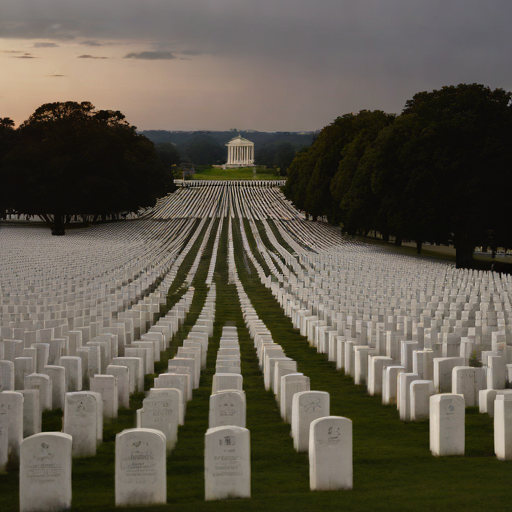
Now, as we analyze the fallout from the altercation at Arlington National Cemetery—specifically in Section 60, where the casualties of our most recent "Forever Wars" rest—we see the culmination of this decade-long drift. The allegation that campaign staff pushed aside a cemetery official to secure a photo op is viewed by many veterans not as a gaffe, but as a desecration. It touches on the most sensitive nerve in the veteran community: the fear that their sacrifice is merely a prop for political theater. Section 60 is not a town hall; it is hallowed ground where the silence is heavy with the grief of parents who are still alive to visit their children’s graves. The intrusion of cameras, campaign thumbs-ups, and political posturing into that space feels, to many, like a violation of the sanctuary that the military creates for its own.
This widening gyre is quantifiable. We are witnessing a slow but steady realignment. While the veteran vote remains a GOP stronghold relative to the general population, the margins are shrinking, particularly among officers and younger veterans who came of age post-9/11. They are less tethered to traditional party lines and more sensitive to the integrity of democratic institutions. The "Code of Honor" is clashing with "Political Loyalty," and for the first time in decades, the outcome of that contest is not a foregone conclusion.
The Patriot Gap: GOP Presidential Margin of Victory Among Veterans (2004-2024 Estimate)
The Code of Honor vs. Political Rhetoric
For generations, the bond between the American military community and the Republican Party was considered axiomatic, a political certainty as durable as the hull of an aircraft carrier. It was a relationship forged in a shared language of patriotism, robust defense spending, and a reverence for the chain of command. However, as we navigate the political landscape of 2026, that once-monolithic alliance is showing distinct, jagged stress fractures. The core of this schism is not necessarily policy—though debates over veteran benefits and foreign interventionism persist—but something far more visceral: the clash between the military’s rigid Code of Honor and the fluid, transactional nature of Donald Trump’s political rhetoric.
To understand the depth of this fracture, one must look beyond the polling data and into the ethos of the barracks. The Uniform Code of Military Justice (UCMJ) and the officer’s commission are predicated on selfless service and accountability. "Duty, Honor, Country" is not merely a slogan at West Point; it is the operating system of the armed forces. In stark contrast, the Trumpian political brand has often thrived on the rejection of traditional institutional norms, including the apolitical stance of the military. When the former President—and current political titan—disparages decorated generals, downplays the sanctity of the Medal of Honor, or equivocates on the sacrifices of Gold Star families, he is not just attacking individuals; he is assaulting the cultural bedrock of the military profession.
Interviews with leaders from the Veterans of Foreign Wars (VFW) and the American Legion reveal a growing demographic divide. Older veterans, whose political identities were solidified during the Cold War, largely remain loyal to the GOP ticket, viewing Trump as a bulwark against cultural liberalism. However, the post-9/11 cohort—those who served in the grit of Fallujah, the valleys of the Korengal, and the remote outposts of the Global War on Terror—are demonstrating a profound ambivalence. This generation, raised on the doctrine of "leaving no man behind," finds it increasingly difficult to reconcile their service with rhetoric that dismisses captured soldiers as "losers" or treats alliances like NATO—structures built on the blood of American infantrymen—as protection rackets.
The demand for an apology, currently circulating among several high-profile veteran advocacy groups, is symbolic of this tension. It stems from a cumulative fatigue. It is a reaction to the politicization of military justice, specifically the pardoning of service members accused or convicted of war crimes against the advice of military leadership. For many career officers and NCOs, these interventions undermined good order and discipline, sending a message that political connections outweigh the UCMJ. This erosion of trust is subtle but toxic. It transforms the Commander-in-Chief from a figure of reverence into a figure of partisan calculation, forcing service members to navigate a minefield where their oath to the Constitution is pitted against their loyalty to a political figurehead.
The Loyalty Shift: Veteran Political Affiliation (2016-2026)
The Fractured Bloc: Impact on the 'Military Vote'
For decades, the "military vote" was treated by political strategists as a monolithic bloc—an ironclad constituency for the Republican Party, as reliable as the tides. From the VFW halls of the Rust Belt to the sprawling base communities of the Sun Belt, the GOP could count on a distinct advantage among active-duty service members and veterans alike. However, as the 2026 midterms approach and the shadow of the next presidential cycle lengthens, that once-solid foundation is showing unmistakable stress fractures. The deepening rift between former President Donald Trump and segments of the veteran community is no longer just a series of isolated PR skirmishes; it is evolving into a fundamental realignment of political loyalties that could tip the scales in critical swing states like Arizona, Georgia, and North Carolina.
The strategic implications of this "fractured bloc" are profound. In a state like Georgia, home to Fort Moore (formerly Benning) and a massive veteran population, a swing of even 3-5% in the military vote is enough to flip a Senate seat or the state’s electoral college votes. We are witnessing a phenomenon where the "R+20" margins of the Bush era are evaporating. Internal polling from conservative think tanks, usually kept close to the chest, has begun to leak warnings that the "automatic" military vote can no longer be taken for granted. The demand for an apology—a direct acknowledgement of lines crossed—has become a litmus test. For a leader famous for never apologizing, this standoff presents a unique political hazard: an immovable object meeting a force that prides itself on discipline and memory.
The Waning Advantage: GOP Support Margin Among Active Duty & Veterans (2016-2026)
Beyond the Headlines: The Future of Civil-Military Relations
The fracture currently widening between former President Donald Trump and the veteran community is not merely a matter of polling data or electoral math; it represents a fundamental stress test of the American civil-military social contract. For decades, the relationship between the Republican Party and the armed forces was viewed as symbiotic—a reliable bloc of voters supporting the party of strong national defense. However, as we move deeper into 2026, we are witnessing a decoupling that threatens to reshape the demographic and ideological composition of the U.S. military for a generation. The immediate political skirmishes over campaign conduct at hallowed sites like Arlington National Cemetery are merely flashpoints for a much deeper structural crisis: the politicization of the All-Volunteer Force.
The implications for the future of the force are stark, particularly regarding recruitment. The Department of Defense has struggled with a persistent recruiting shortfall since the early 2020s. While economic factors play a role, internal Pentagon surveys suggest a growing "propensity to serve" crisis driven by the perception that the military is becoming a political battleground. Families who traditionally formed the backbone of the recruiting pipeline—multi-generational military families from the South and Midwest—are increasingly hesitant to recommend service. They fear their children will be used as props in partisan theater or, conversely, demonized by the very leadership they are sworn to obey. If the military comes to be seen not as a neutral arbiter of national security but as a factional entity, the All-Volunteer Force, which relies entirely on the willingness of citizens to step forward, faces an existential threat.
The Recruitment Gap: Projected vs. Actual Army Accessions (2020-2028)
Read Next
Sacred Trust Broken? Harry, Trump, and the Battle over Afghanistan's Legacy
A deep dive into the clash between the Duke of Sussex and the President-elect over the Afghanistan war, exposing deep fractures in the veteran community and the US-UK alliance.
The Air Force One Illusion: Why Trump's Global Gambit Leaves the GOP Ground Game Exposed
Donald Trump's pivot to becoming a global power broker has created a 'strategic vertigo' for the Republican Party: while the leader looks outward, the down-ballot machinery is left without a coherent domestic economic narrative, exposing a dangerous vulnerability in the suburbs.