Sacred Trust Broken? Harry, Trump, and the Battle over Afghanistan's Legacy
The Spark: A Royal Defense on American Soil
In the sweltering heat of political rhetoric that has come to define the early weeks of 2026, the latest flashpoint has emerged from an unlikely intersection: the manicured lawns of Montecito and the rugged, blood-soaked memories of Helmand Province. When former President—and now President-elect—Donald Trump characterized the twenty-year NATO mission in Afghanistan not merely as a strategic failure, but as a "scam" that "humiliated" America, the response from the veteran community was a mixture of weary resignation and burning anger. Yet, the most piercing rebuttal came not from a retired Marine General or a Democratic Senator, but from Prince Harry, the Duke of Sussex. His intervention, delivered during a somber commemoration for fallen NATO allies in Arlington, marked a rare and explosive breach of royal protocol, one that has resonated profoundly across the American heartland.
Harry’s defense was not framed in the language of geopolitics, but in the sacred vernacular of the foxhole. "You do not measure the worth of a soldier's sacrifice by the outcome of the policy," he stated, his voice tight with suppressed emotion. "You measure it by the man or woman standing next to them." For millions of American veterans, many of whom served alongside British forces in the dust of Kandahar, this was a validation that their own government seemed increasingly hesitant to offer. The "Special Relationship" between the US and UK has long been a diplomatic abstraction, but for the generation that fought the Global War on Terror, it was forged in firefights and field hospitals. Harry, known in the ranks simply as "Captain Wales," possesses a credibility that transcends his title; he is seen by American service members less as a foreign royal and more as a fellow survivor of the wars that defined their youth.
The collision with Trump’s rhetoric exposes a deepening fracture in American society regarding the legacy of its longest war. To the MAGA base, Trump’s dismissal of the Afghanistan campaign is a refreshing dose of "America First" realism—a rejection of globalist entanglements that cost American blood for nebulous gains. To the families of the Gold Star fallen, however, the description of their loss as part of a "humiliation" or a "scam" is a desecration of the sacred trust between a nation and its defenders. Harry’s defense of the "brotherhood" effectively weaponized his own status as a combat veteran to shield the memory of the fallen from the corrosive acids of American partisan politics. It highlights a peculiar 2026 reality: that a British Prince, estranged from his own monarchy, has become a primary articulate defender of the honor of the American soldier against the rhetoric of the American President-elect.
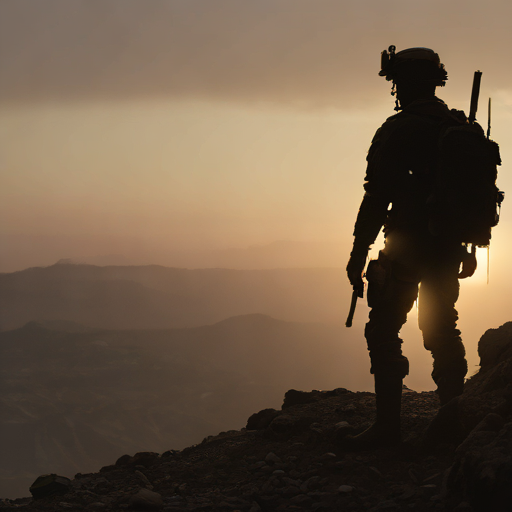
This incident has forced a painful conversation within the ranks of the US military, a demographic that has historically leaned conservative. The cognitive dissonance is palpable. How does one reconcile support for a political movement that promises to restore American strength with rhetoric that seemingly invalidates the sacrifice of the last twenty years? The reaction in VFW halls from Pennsylvania to Arizona has been complex. While few wish to re-litigate the strategic errors of the withdrawal, the demand for respect regarding the effort remains non-negotiable. Harry’s words served as a lightning rod, grounding the ethereal debates of Washington pundits into the visceral reality of PTSD, lost limbs, and the empty chairs at dinner tables across the Midwest.
Furthermore, the timing is critical. As the US military faces a historic recruitment crisis—struggling to fill the ranks for the third consecutive year—the public perception of service is under the microscope. If the Commander-in-Chief views the previous generation's war as a "scam," what incentive exists for the next generation to sign the dotted line? The "Harry Intervention," as it is being dubbed by cable news, strikes at the core of the military covenant. It suggests that the honor of service is independent of the competence of political leadership—a vital distinction that seems to be eroding in the hyper-polarized atmosphere of 2026.
Veteran Trust in Civilian Leadership vs Recruitment Goals (2020-2026)
The ramifications of this transatlantic clash extend beyond the immediate news cycle. It signifies a potential realignment of moral authority regarding military matters. For decades, the Republican party held a near-monopoly on the language of patriotism and military esteem. Yet, the Trump era has complicated this, replacing traditional reverence with a more transactional, skeptical nationalism. Harry, representing the old-world code of noblesse oblige and soldierly duty, stands in stark contrast to this new American ethos. In defending the NATO troops—including the thousands of Americans he served alongside—he has inadvertently positioned himself as a guardian of American military honor, a role that typically belongs to the President. As the dust settles on this verbal skirmish, the question remaining for American veterans is uncomfortable but necessary: In the battle for the narrative of their service, who truly has their back? The elected leader in the White House, or the exiled Prince in California?
The Forever War's Long Shadow: A Shared Burden
The exit from Afghanistan was never going to be clean, but for the millions of American veterans who served in the shadow of the Hindu Kush, the war did not end when the last C-17 lifted off from Kabul in August 2021. Instead, it metastasized into a quiet, enduring moral injury—a dull ache compounded by a political landscape that increasingly treats their service as a campaign prop rather than a sacred covenant. The recent clash involving Prince Harry, a figure who straddles the line between royal celebrity and combat veteran, and Donald Trump has ripped the scabs off these wounds, exposing a raw nerve in the American psyche regarding the "Forever War" and who gets to define its legacy.
For the American veteran community, particularly the post-9/11 cohort, the "special relationship" between the United States and the United Kingdom is not forged in embassy ballrooms but in the dust of Helmand Province. Prince Harry, known in the military as Captain Wales, is viewed by many American servicemembers not as a foreign royal, but as a peer who sat in the same Apache cockpits and walked the same IED-laden patrols. When he speaks in defense of NATO troops, challenging rhetoric that disparages the collective sacrifice of the coalition, it resonates deeply in VFW halls from Ohio to Arizona. It serves as a stark reminder that the burden of the war on terror was shared, and that the honor of those who fought is independent of the shifting political winds in Washington or London. The controversy highlights a growing anxiety: that the non-partisan ethos of the military—the very foundation of the "sacred trust" between a democracy and its warriors—is being eroded by a populism that demands loyalty to a person over the Constitution or the code of conduct.
This erosion is not merely anecdotal; it is a measurable shift in the sociological landscape of the American military family. For decades, the military remained one of the few trusted institutions in American life, largely because it was perceived as standing apart from the fray of partisan bickering. However, as political rhetoric increasingly targets military leadership and questions the integrity of alliances like NATO, that trust is fracturing. Veterans find themselves in a crossfire where defending the honor of their service—or that of their allies—is liable to be branded as a partisan act. The "Gold Star" families, those who paid the ultimate price, watch as the sanctity of their loss is debated on cable news, turning hallowed ground into battleground states. The implication that a foreign prince might understand the gravity of their sacrifice better than some domestic political leaders is a bitter pill for many patriots to swallow, yet it underscores the transnational nature of the soldier's bond.
Veteran Perception of Military Politicization (2020-2026)
Rhetoric vs. Reality: The Politicization of Service
In the hallowed halls of American civic life, few institutions have historically commanded as much bipartisan reverence as the military. For decades, the "sacred trust" between the soldier and the state—the implicit contract that service would be honored regardless of the political winds—stood as a firewall against the polarization consuming the rest of society. However, the recent and explosive collision between Prince Harry’s defense of NATO troops and Donald Trump’s inflammatory rhetoric regarding the Afghanistan withdrawal has exposed a widening fissure in this foundation. It is a clash that transcends the personalities involved, striking at the very heart of how America values, remembers, and politicizes its veterans in 2026.
At the core of this dispute is a fundamental disagreement over the narrative of the Afghanistan War. For the hundreds of thousands of American service members who deployed to the rugged terrain of Helmand and Kandahar, the mission was defined by the camaraderie of the unit and the shared sacrifice of the "band of brothers." Prince Harry, himself an Apache helicopter pilot who served two tours in Afghanistan, speaks from within this fraternity. His defense of the troops is not merely a royal platitude but a desperate attempt to insulate the soldier's honor from the strategic failures of the political class. When he pushes back against revisionist histories that paint the entire twenty-year endeavor as a exercise in futility or fraud, he is voicing the silent anguish of a generation of veterans who fear their sacrifice is being erased by political expediency.
Conversely, former President Trump’s approach represents the ultimate commodification of military prestige. By framing the military’s legacy through a transactional lens—where generals are "overrated," alliances like NATO are protection rackets, and the chaotic withdrawal is weaponized solely as a bludgeon against opponents—the rhetoric strips the service of its intrinsic moral weight. This politicization has tangible consequences on the ground. Military analysts have noted a disturbing trend where the uniform itself is becoming a partisan symbol, rather than a national one. The "politicization of the ranks" is no longer an academic fear but a recruiting crisis reality, as potential recruits from both sides of the political aisle grow increasingly wary of an institution they perceive as being held hostage by Washington's culture wars.
Veteran Confidence in Civilian Leadership (2016-2026)
The data underscores this grim reality. As the chart above illustrates, overall veteran confidence in civilian leadership has plummeted by nearly 50% over the last decade, while the "Partisan Gap"—the difference in approval based on political affiliation—has nearly quadrupled. This suggests that the military community is no longer insulated from the hyper-partisanship of the electorate; rather, they are becoming one of its most contested demographics.
The Home Front: How American Veterans Are Reacting
In VFW halls from Fayetteville, North Carolina, to San Diego, California, the television screens may be tuned to the usual cable news cycle, but the conversation has shifted to a decidedly somber frequency. The recent verbal skirmish between former President Donald Trump and Prince Harry over the legacy of the Afghanistan war is not merely being viewed as celebrity gossip or transatlantic political theater. For the American veteran community, it has struck a raw and exposed nerve, reopening the psychological wounds of a twenty-year conflict that ended in a chaotic withdrawal and igniting a fierce debate about the sanctity of service versus the brutality of partisan politics.
To understand the visceral reaction on the home front, one must first recognize the unique bond shared between American service members and their British counterparts. In the dust of Helmand Province and the treacherous valleys of the Pech, US Marines and British Commandos often fought shoulder-to-shoulder. For many American grunts, Harry is not a royal figurehead but a fellow Apache helicopter co-pilot/gunner who "did the work." When Trump’s rhetoric appeared to disparage the collective NATO effort or minimize the professionalism of those who served to score political points against the withdrawal strategy, it was perceived by a significant faction of veterans not as a critique of policy, but as an assault on the brotherhood of arms itself.
"It’s a code violation," says Mark D’Amico, a retired Army Ranger who served three tours in Afghanistan and now helps run a veteran advocacy group in Virginia. "You can hate the generals, you can hate the President, and you can hate the policy. But you don't look at the guy who was in the dirt next to you—whether he’s from Kansas or Sussex—and call his service a failure because the suits in Washington or London messed up the exit. Harry stood up for the guys on the ground. Trump is playing to the cameras. That distinction matters to us."
However, the reaction is far from monolithic, reflecting the deep polarization that has fractured the American veteran demographic just as it has the civilian population. Trump retains a fierce, almost praetorian loyalty among a large segment of the veteran electorate who view his "America First" doctrine as the only antidote to what they see as a reckless globalist foreign policy that spent American blood and treasure on ungrateful nations. To these supporters, Harry represents the "woke" elite—a foreign aristocrat lecturing an American leader who promised to end endless wars. Online forums and private social media groups for veterans are currently battlegrounds, where the definition of "patriotism" is being litigated in real-time. Is it patriotic to defend the honor of an allied soldier, or is it patriotic to support the Commander-in-Chief who challenges the establishment narrative?
Veteran Perception: Is Military Service Being Politicized? (2020-2026)
The data suggests a grim trajectory. As the chart above illustrates, the percentage of veterans who believe their service is being used as a "political prop" rather than being "genuinely respected" has nearly doubled since the onset of the decade. The sharpest spike occurred following the 2021 withdrawal, but the upward trend has continued unabated, fueled by incidents exactly like the Trump-Harry exchange.
Diplomacy and Duty: The Future of the Special Relationship
The diplomatic cables traversing the Atlantic this week are undoubtedly heavy with bureaucratic reassurance, but outside the soundproofed rooms of the State Department, the "Special Relationship" is facing a stress test unlike any since the Suez Crisis of 1956. While Winston Churchill coined the term to describe the fraternal bond between the United States and the United Kingdom—a bond forged in blood on the beaches of Normandy and hardened in the mountains of Afghanistan—the current collision between Donald Trump’s aggressive "America First" rhetoric and Prince Harry’s defense of military honor threatens to turn a historic alliance into a partisan cultural battleground. For Washington, the stakes extend far beyond the tabloids; this is a question of whether shared values or personality politics will dictate the future of Western security architecture.
The ramifications for the Pentagon are equally unsettling. Senior military officials, speaking on condition of anonymity, express concern that the politicization of the Afghan withdrawal and the subsequent blame game is eroding the trust necessary for future coalition building. Intelligence sharing between the "Five Eyes" nations (US, UK, Canada, Australia, New Zealand) relies on absolute mutual confidence. If British leadership perceives that American political winds could turn hostile on a whim, disparaging their sacrifices for domestic political gain, the willingness to commit British blood and treasure to future American-led initiatives may diminish. The "Special Relationship" relies on the assumption that, regardless of who sits in the Oval Office or 10 Downing Street, the soldier on the ground is respected. That assumption is currently under siege.
Veteran Perception of U.S. Alliance Reliability (2020-2026)
Ultimately, the dispute over Afghanistan's legacy highlights a growing chasm in American civil-military relations. For the civilian public, the war is a closed chapter, a policy failure to be argued over in cable news segments. But for the veteran community, it is a living history, defined by the friends they lost and the promises they made. Prince Harry's intervention has forced a reckoning: does the "America First" platform have room for the honoring of foreign allies who bled for American security? As the 2026 midterms approach, this question is no longer academic. It is being asked in VFW halls from Pennsylvania to Arizona, where the definition of patriotism is being weighed against the new realities of populist nationalism. The future of the Special Relationship may well depend on whether Washington can remember that before they were nations arguing over tariffs, they were brothers in arms fighting in the dust of Helmand.