The Arctic Gambit: Why Denmark's PM Visit to Greenland Redefines American Security
The Cold Front of Geopolitics
The recent arrival of Denmark’s Prime Minister in Nuuk, flanked by high-ranking defense officials and diplomatic attaches, represents far more than a routine check-in on a semi-autonomous territory. For the United States, this visit is a flashing neon sign on the geopolitical dashboard, signaling that the "frozen" status of the Arctic has officially thawed into a high-stakes arena of competition. As the Danish delegation tours the windswept landscape of the world’s largest island, the view from Washington is one of intense strategic focus. Greenland is no longer merely a Danish possession or a picturesque expanse of ice; it has emerged as the geopolitical linchpin of North American security, the "unsinkable aircraft carrier" of the 21st century that protects the roof of the Western Hemisphere.
This shift in perspective is a direct echo of the strategic—if famously clumsy—intent behind the 2019 proposal to purchase the island. While that overture was met with diplomatic indignation in Copenhagen and late-night satire in New York, the underlying logic was sound: the United States cannot afford a security vacuum in the High North. Today, as the Danish PM navigates the delicate balance between Greenlandic autonomy and European sovereignty, the Pentagon is watching with the realization that the "Greenland Gap" is the new front line of homeland defense. The island sits at the crossroads of the Atlantic and the Arctic, a vital choke point through which Russian submarines must pass to reach the open ocean and where Chinese "Polar Silk Road" ambitions are increasingly visible.
Projected Arctic Strategic Infrastructure Spending (Billions USD)
The security implications are bolstered by a resource reality that strikes at the heart of the American industrial base. Greenland is a resource battleground of unprecedented scale. Beneath its retreating glaciers lie some of the planet's most significant deposits of rare earth elements—the neodymium and dysprosium essential for everything from the F-35 fighter jet's guidance systems to the battery of your neighbor’s electric truck. For the American consumer, the stakes are clear: securing access to these minerals is a matter of breaking the stranglehold that adversaries currently hold over the high-tech supply chain. The Danish PM’s visit is, in many ways, an opening move in a massive negotiation over who will control the "green" energy revolution's raw materials.
Furthermore, the military dimension has transitioned from theoretical to tactical. Pituffik Space Base (formerly Thule Air Base) remains the crown jewel of the American missile defense architecture, situated 750 miles north of the Arctic Circle. From this vantage point, US sensors scan the horizon for the arching trajectories of hypersonic threats. The Danish visit serves to reaffirm the cooperative framework that allows this installation to function, but it also highlights the growing pressure on Copenhagen to militarize its own presence in the region. For the average American taxpayer, the investment in Greenland is not a foreign aid project; it is a down payment on a "Glass Firewall" that monitors every acoustic and electronic signature in the freezing waters of the North Atlantic.
Ultimately, the Arctic Gambit is about denial and dominance. It is about denying adversaries the ability to project power over the North Pole while ensuring that the United States maintains its own freedom of movement in the emerging maritime lanes of the North. As the ice melts, the geographical barriers that once protected the American homeland are disappearing. The Danish PM’s presence in Nuuk is a reminder that the "Far North" is now our "Near North," and the decisions made in the shadow of Greenland's fjords will dictate the security of the American heartland for the next century. This isn't just a trip to the suburbs of the Arctic; it is a high-level summit at the very center of the 21st-century global power map.
Historical Context: From Colony to Strategic Pivot
The evolution of Greenland from a remote Danish colony to the linchpin of North American defense is not merely a footnote in history; it is a recurring theme in the American quest for continental security. To understand why the Danish Prime Minister’s current visit to Nuuk resonates so deeply in Washington, one must look back to the immediate aftermath of World War II. In 1946, the Truman administration, recognizing the island’s role as a natural aircraft carrier for the nascent Cold War, made a quiet but firm offer to Denmark: $100 million in gold for the entire territory. While Copenhagen declined, the strategic seed was planted, leading to the 1951 Defense Treaty that established Thule Air Base—recently renamed Pituffik Space Base—positioned halfway between Washington and Moscow. For the Pentagon, this 836,000-square-mile territory represents the front line of the North American Aerospace Defense Command (NORAD), housing the Upgraded Early Warning Radar systems critical for detecting intercontinental ballistic missiles (ICBMs) over the North Pole.
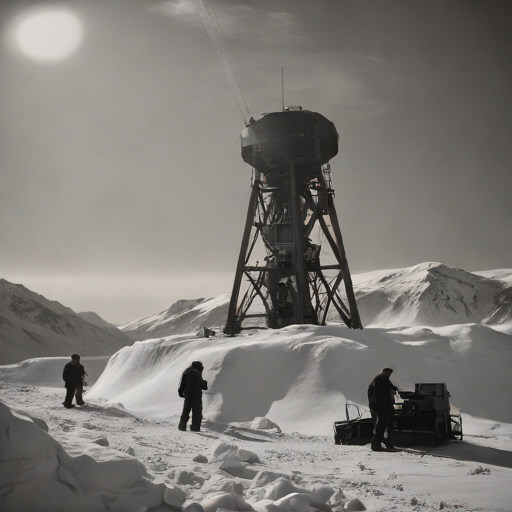
During the height of the Cold War, the United States treated Greenland as a "permanent aircraft carrier." The island became the site of some of the most ambitious, and at times harrowing, military experiments in history. Project Iceworm, a top-secret plan to build a network of mobile nuclear missile launch sites under the Greenland ice sheet, epitomized the length to which the Pentagon would go to secure the Arctic frontier. Although the project was eventually abandoned due to shifting ice conditions, it underscored a fundamental truth that remains today: whoever controls Greenland controls the high ground of the North Atlantic. For Americans, this isn't just about geography; it's about the GIUK Gap—the maritime choke point between Greenland, Iceland, and the United Kingdom—which serves as the primary gateway for Russian naval forces entering the Atlantic. A breach in this line would place the US East Coast directly within the reach of hostile submarine activity.
The resurfacing of the "purchase" idea in 2019, while dismissed by some as a diplomatic faux pas, signaled a bipartisan realization that the Arctic is no longer a frozen wasteland but a contested theater of great power competition. The American interest in Greenland has shifted from purely kinetic military defense to a broader "integrated deterrence" model that includes economic security. Greenland holds some of the world’s largest deposits of Rare Earth Elements (REEs), essential for everything from F-35 fighter jets and Patriot missile batteries to the high-capacity batteries in electric vehicles. Currently, China controls over 80% of the global REE supply chain, making Greenland’s potential as an alternative source a matter of urgent national security for the United States. If American manufacturers are to decouple from Chinese supply chains, the road to mineral independence literally runs through the Greenlandic tundra.
US Arctic Strategic Investment & Resource Valuation (Projected $ Billions)
Furthermore, the melting of the polar ice caps is transforming the Northwest Passage from a mythical route into a viable commercial reality. For US commercial interests, this represents a tectonic shift in global logistics, potentially shaving weeks off transit times between the East Coast and Asian markets. However, this accessibility also opens the door to Russian and Chinese "near-Arctic" ambitions. The US State Department’s reopening of its consulate in Nuuk in 2020 was a clear signal that Washington is no longer content to manage Greenland from afar. This engagement is characterized by a sophisticated blend of infrastructure development, educational exchanges, and environmental research, all designed to bind the island’s future more closely to the North American orbit than to its European colonial past. In many ways, we are witnessing a 21st-century version of Manifest Destiny, one that looks North rather than West.
The Strategic Arctic: NATO's Northern Flank
To the untrained eye, the Prime Minister of Denmark’s visit to Nuuk might appear as a standard diplomatic exercise—a reaffirmation of the complex, often prickly unity between the Danish metropole and its autonomous constituent country. However, for defense analysts at the Pentagon and strategists in Washington, D.C., this diplomatic maneuver is being watched with the intensity usually reserved for a crisis hotline. Greenland is no longer just a remote island of ice and rock; it has rapidly evolved into the veritable "aircraft carrier" of the High North, the indispensable linchpin in the North American security architecture. When we look at the globe not from the equator, but from the top down—the "polar view" favored by ballistic missile planners—Greenland sits squarely between the nuclear silos of the Russian Federation and the population centers of the United States.
The strategic reality of the 21st century has revived a Cold War anxiety, but with new, more complex variables. For decades, the primary concern was the GIUK gap (Greenland-Iceland-United Kingdom), the naval choke point essential for containing the Soviet Northern Fleet. Today, the threat matrix has expanded vertically and economically. At the heart of this security equation lies the Pituffik Space Base (formerly Thule Air Base). Located less than 1,000 miles from the North Pole, this U.S. Space Force installation is the United States' northernmost sentinel. It houses the AN/FPS-132 Upgraded Early Warning Radar, a critical eye in the sky that provides the earliest possible warning of a ballistic missile attack against the North American continent. Without the cooperation of Nuuk and Copenhagen, the U.S. missile defense shield loses vital minutes of reaction time—minutes that define the difference between interception and impact.
But the American interest in Greenland extends far beyond radar sweeps. The rapid retreat of the Arctic sea ice has transformed the geography of defense. What was once an impenetrable ice fortress protecting America’s northern border is fast becoming a navigable ocean—a "fourth coast" that requires defending. The U.S. Navy, which has not prioritized ice-hardened surface combatants in decades, is now playing catch-up against a Russian military that has aggressively refurbished Soviet-era Arctic bases and fielded a fleet of nuclear-powered icebreakers. Furthermore, the entry of China—a self-proclaimed "near-Arctic state"—into the region has raised alarm bells in Washington. Beijing’s "Polar Silk Road" initiative seeks to integrate Arctic shipping routes into its Belt and Road Initiative, aiming for dual-use infrastructure investments in Greenland that could theoretically host scientific, and eventually military, assets.
This geopolitical pressure cooker explains the clumsy but strategically grounded logic behind former President Trump’s 2019 inquiry into purchasing the island. While the transaction itself was diplomatically uncouth, the underlying anxiety was sound: in a world of great power competition, allowing a strategic competitor to gain a foothold on the North American tectonic plate is a non-starter for U.S. national security doctrine. It echoes the rationale that led Secretary of State William Seward to purchase Alaska in 1867 and the U.S. purchase of the Virgin Islands from Denmark in 1917. The current administration, while abandoning the transactional approach, has doubled down on the "partnership" model, effectively treating Greenland as a de facto NATO ally with its own agency, necessitating direct engagement with Nuuk, bypassing Copenhagen when necessary.
Projected Arctic Strategic Investment & Infrastructure (2025-2030)
As the ice recedes, the "High North" is becoming an arena of "High Tension." The United States is rapidly pivoting resources northward, re-establishing the Second Fleet and appointing an Ambassador-at-Large for the Arctic Region. The Danish Prime Minister's presence is a signal to both allies and adversaries: the Kingdom of Denmark remains the gatekeeper, but the United States is the primary tenant of the Arctic security architecture. For the average American, the cost of this security will be measured not just in defense appropriations, but in the realization that their northern border is no longer a quiet frontier of snow, but a dynamic, contested theater where the next chapter of global supremacy may well be written.
The Resource Rush: Rare Earths and American Tech
Beneath the stark, blinding white of the Greenlandic ice sheet lies a treasure trove that has fundamentally altered the calculus of American national security. For decades, the Arctic was viewed primarily through the lens of defense—a frozen rampart against Soviet, and later Russian, ballistic trajectories. Today, however, the strategic gaze of Washington has shifted from the ice above to the rock below. We are witnessing the opening moves of a high-stakes resource rush, where the prize is not gold or oil, but the seventeen obscure elements known as Rare Earth Elements (REEs) that power the modern American economy. From the haptic feedback engines in our iPhones to the guidance systems of the F-35 Lightning II, and the permanent magnets driving the electric vehicle revolution in Detroit, our technological way of life is tethered to a supply chain that is currently disturbingly fragile.
The uncomfortable truth dominating closed-door briefings in the Pentagon and Silicon Valley boardrooms is that the United States has allowed itself to become dangerously dependent on a single geopolitical rival for these critical building blocks. China currently controls approximately 85% to 90% of the global processing capacity for rare earths. This monopoly grants Beijing a "kill switch" on the American tech sector, a leverage point that could stifle the production of everything from wind turbines to advanced radar systems. The Danish Prime Minister’s visit to Nuuk is not merely a diplomatic courtesy; it is a tacit acknowledgment that Greenland represents the most viable "fire escape" for the West. The Kvanefjeld site alone, located in southern Greenland, is estimated to hold one of the largest undeveloped deposits of rare earths and uranium in the world. Accessing these reserves is no longer just a commercial opportunity; it is a strategic imperative for the North Atlantic Treaty Organization.
Projected US Critical Mineral Demand vs. Secured Supply (2024-2030)
This reality reframes the somewhat clumsy diplomatic overtures made by the previous American administration. The suggestion to "purchase" Greenland, while widely mocked for its transactional bluntness and lack of cultural sensitivity, was rooted in a cold, hard geopolitical logic that persists today. Washington understands that whoever unlocks Greenland's mineral wealth holds the keys to the next century of technological dominance. The challenge, however, is not simply extraction but doing so within the rigorous environmental and social frameworks demanded by both Copenhagen and the Greenlandic government (Naalakkersuisut). Unlike the unregulated mining rushes of the 19th century, this excavation must account for the fragile Arctic ecosystem and the sovereignty of the Inuit people.
For American tech giants, the stakes could not be higher. As companies like Apple, Tesla, and Google push toward carbon-neutral supply chains, "dirty" rare earths processed under lax environmental standards become a liability. Greenland offers the tantalizing prospect of "ethical" rare earths—mined and processed under Western labor and environmental laws. This branding potential adds a layer of commercial urgency to the strategic one. We are already seeing quiet lobbying efforts in D.C. to subsidize American mining partnerships in the region, positioning Greenlandic ore as the premium, secure alternative to Chinese exports.
Climate Stakes: Melting Ice, Rising Tides
To the casual observer, the Greenland Ice Sheet is a stark, white void—a frozen relic of the last Ice Age that dominates the top of the globe. But to the Pentagon, climatologists at NOAA, and the urban planners of Miami and Norfolk, it is a ticking hydraulic bomb. The visit by Denmark’s Prime Minister isn’t just a diplomatic courtesy; it is a reconnaissance mission to ground zero of a planetary shift that is rewriting the physical and strategic geography of the United States. We are past the point of discussing abstract temperature targets. The reality on the ground—or rather, on the ice—is one of accelerating collapse that directly threatens the American coastline and the security architecture that protects it.
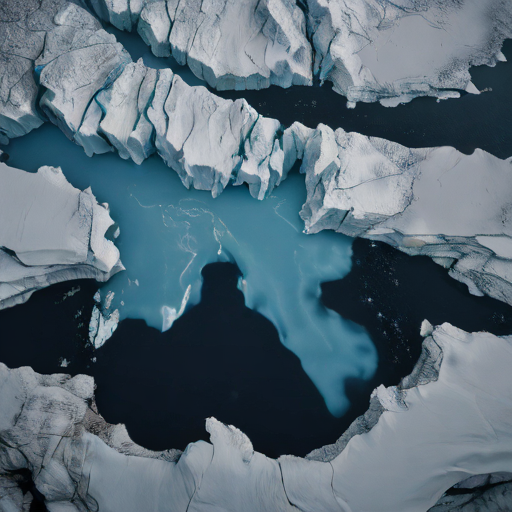
For decades, the Arctic served as a frozen fortress for North America, a "white wall" that was impassable to surface fleets and hostile incursions. That wall is coming down. The rate of melt is not linear; it is exponential. We are witnessing the transformation of the Arctic Ocean from a solid shield into a navigable sea, a "new Mediterranean" at the top of the world. This creates a dual crisis for Washington: the immediate physical threat of rising seas and the long-term strategic nightmare of defending a fourth coast that was never supposed to exist.
Greenland Ice Sheet Mass Loss (Gigatons per Year)
The numbers are difficult to comprehend without domestic context. When we talk about gigatons of ice vanishing, we are talking about enough water to cover the entire state of Florida in several inches of water, annually. This is not a distant problem for future generations; it is an engineering crisis for today's infrastructure. The meltwater from Greenland is the single largest driver of global sea-level rise, a phenomenon that is already forcing the U.S. Navy to spend billions retrofitting Naval Station Norfolk in Virginia. The world’s largest naval base is sinking as the water rises, a direct consequence of the hydrological changes originating in the fjords Danish officials are touring this week. A destabilized Greenland is a destabilized Eastern Seaboard.
Finally, we must address the opening of the Northwest Passage. For centuries, explorers died trying to find this shortcut between the Atlantic and Pacific. Within a decade, it could be a commercially viable shipping lane for part of the year, slashing transit times between Europe and Asia by up to 40% compared to the Panama Canal. While this offers economic efficiency, it creates a massive security void. The United States Coast Guard has roughly two operational polar icebreakers compared to Russia's fleet of over 40. As the ice recedes, Russian and Chinese vessels are eyeing these waters not just for transit, but for dominance. The Danish Prime Minister's visit underscores a frantic realization in NATO capitals: we are unprepared for an open Arctic. The melting ice doesn't just raise the tides; it raises the curtains on a new theater of great power conflict, one where the U.S. is currently outgunned and outmaneuvered on the ice.
Projected Navigable Days in Northwest Passage (High Emission Scenario)
The Independence Question: A New North American Neighbor?
For Washington policymakers, the question of Greenlandic independence has long been viewed through a paradoxical lens: a democratic ideal to be publicly supported, yet a geopolitical variable to be quietly managed. As Danish Prime Minister Mette Frederiksen touches down in Nuuk, the conversation in the Pentagon and the State Department is shifting from "if" to "how soon"—and more critically, "who pays for it?" The drive for severance from the Kingdom of Denmark is no longer a fringe sentiment; it is the dominant political gravity of the island. However, for the United States, a sovereign Greenland presents a complex scenario: a potential new North American ally that is strategically invaluable but economically vulnerable, creating a vacuum that adversaries like Beijing have already attempted to fill.
The mechanics of this separation are governed by the 2009 Act on Greenland Self-Government, which recognizes the Greenlandic people's right to self-determination. But the path to the exit is paved with gold—specifically, the roughly $600 million (USD) annual block grant provided by Copenhagen. This subsidy covers nearly half of the island’s public budget and significantly more of its GDP. For the pro-independence coalition in the Inatsisartut (Parliament), the challenge is finding a revenue stream to replace this lifeline without selling off their birthright to state-owned enterprises controlled by foreign adversaries. This is where the Arctic "Gambit" truly lies. It is a race between the development of a sustainable, Western-aligned resource economy and the looming temptation of predatory capital from the East.
Projected Revenue Shift: The Path to Fiscal Independence (2026-2040)
Furthermore, the "Independence Question" is reshaping the psychological map of the region. We are witnessing the gradual integration of Greenland into a "North American Arctic" identity. The reopening of the US Consulate in Nuuk in 2020 and the subsequent $12.1 million aid package were not merely diplomatic niceties; they were down payments on a future alliance. State Department officials have quietly floated models of "Free Association"—similar to the Compacts the US holds with Palau, Micronesia, and the Marshall Islands—as a potential future framework. Under such an arrangement, a sovereign Greenland would manage its domestic affairs while delegating defense and security competence to the United States, effectively swapping Copenhagen for Washington.