The Arctic Gambit: Why Trump's Push for Greenland Bases Redefines American Power
The New Northern Front
For decades, the Arctic was viewed by Washington primarily as a frozen scientific laboratory or a pristine wilderness to be preserved. It was a strategic afterthought, protected by an impassable shield of perennial ice that guaranteed the safety of America’s northern flank. But in 2026, that shield is fracturing—both climatologically and geopolitically. The "New Northern Front" is no longer a theoretical scenario in a Pentagon war game; it is the active theater of a three-way superpower struggle that rivals the intensity of the Indo-Pacific.
As the ice recedes at a rate of nearly 13% per decade, it reveals not just open water, but a vacuum of power that Russia and China have been eager to fill. The Trump administration’s renewed, aggressive focus on Greenland is not merely a reprise of the 2019 "purchase" headline that baffled diplomats; it is a calculated, if blunt, recognition that the United States is dangerously behind in the race for the High North. The Arctic Ocean is transforming into a navigable Mediterranean of the 21st century, cutting shipping times between Europe and Asia by up to 40%. Whoever controls these straits controls the future of global commerce, but more immediately, they control the firing lines for hypersonic missiles.
Russia has long understood this reality. While the U.S. allowed its Arctic capabilities to atrophy post-Cold War, Moscow has systematically revitalized its "Arctic Trefoil" bases, refurbished Soviet-era airfields, and deployed the S-400 air defense systems deep within the polar circle. They have effectively militarized the Northern Sea Route, claiming it as internal waters and demanding pilotage fees for transit.
China, describing itself as a "near-Arctic state"—despite its northernmost point being 900 miles from the Arctic Circle—has integrated the region into its Belt and Road Initiative. Beijing’s interest is dual-pronged: securing access to the vast untapped reserves of rare earth minerals exposed by melting ice, and establishing a "Polar Silk Road." Their investments in Greenlandic mining infrastructure and research stations have raised alarm bells in Washington, forcing a realization that economic investment in Nuuk is now a matter of national security.
The disparity in hard power capabilities in the region is perhaps best illustrated by the "Icebreaker Gap." These vessels are the prerequisites for projecting power in the region; without them, navies are effectively landlocked by winter ice.
The Icebreaker Gap: Operational Polar Fleets (2026 Estimates)
The stark reality of these numbers drives the current administration's strategy. The United States Coast Guard’s Polar Security Cutter program has faced delays, leaving the U.S. reliant on a handful of aging vessels to police a coastline that is technically America's fourth coast. This weakness makes the strategic geography of Greenland indispensable. Pituffik Space Base (formerly Thule Air Base) is already the cornerstone of America’s ballistic missile early warning system, watching for threats over the North Pole. However, the push for new bases or expanded leasing rights suggests a shift from passive surveillance to active deterrence.
Strategic planners argue that relying solely on Pituffik is a single-point-of-failure risk in an era of hyper-warfare. Expanding the American footprint to eastern Greenland would close the "GIUK Gap" (Greenland-Iceland-UK)—the critical naval chokepoint that Russian submarines must traverse to access the Atlantic Ocean. By prepositioning assets on the world's largest island, the U.S. aims to deny adversaries the ability to operate freely in the North Atlantic.
Yet, this militarization brings complex challenges. It requires navigating the delicate sovereignty of the Kingdom of Denmark and the distinct autonomy of the Greenlandic government (Naalakkersuisut). The local population, while eager for economic development, is wary of becoming a garrison state for a superpower conflict. The administration’s transactional approach—offering massive infrastructure investment packages in exchange for basing rights—is designed to outbid Beijing’s checkbook diplomacy.
Counting the Outposts: What We Have Now
To understand the magnitude of the "Arctic Gambit," one must first look at the cornerstone of America’s northern defense: Pituffik Space Base, formerly known as Thule Air Base. Located 750 miles north of the Arctic Circle, it remains the Department of Defense’s northernmost installation and its most significant asset in the high north. Since the early days of the Cold War, Pituffik has served as the sentinel of the North American continent, housing the Upgraded Early Warning Radar (UEWR) that scans the polar skies for incoming ballistic missiles. For decades, this lone outpost was considered sufficient—a "tripwire" in a frozen wasteland. However, as the permafrost thaws and the Arctic Ocean becomes a navigable waterway, the strategic calculus in Washington has shifted from maintaining a sentinel to building a fortress.
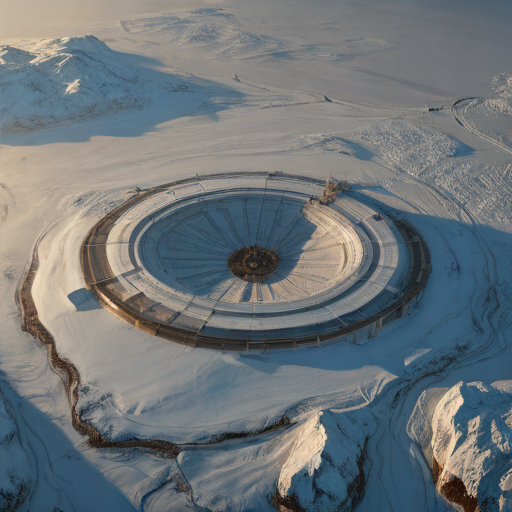
Currently, the US footprint in Greenland is heavily concentrated in this single, massive facility. Pituffik is a feat of engineering, featuring a 10,000-foot runway and a deep-water port that is only accessible for a few weeks each summer during the "Pacer Goose" sustainment mission. Yet, from a tactical perspective, it represents a single point of failure in an increasingly contested region. The US Air Force and Space Force maintain roughly 600 personnel here, supported by Danish and Greenlandic contractors. The annual cost of keeping this base operational in one of the world's harshest environments is estimated in the hundreds of millions of dollars, factoring in the specialized logistics required to operate equipment in temperatures that routinely plunge to -60 degrees Fahrenheit.
Beyond Pituffik, the US military presence is largely transient or collaborative. The North Warning System, a joint venture with Canada, consists of a string of automated radar stations stretching across the high north, but these are eyes, not fists. They lack the logistical capacity to support sustained air or naval operations. This "strategic gap" is what the current administration seeks to close. While Russia has spent the last decade refurbishing over a dozen Cold War-era Arctic bases and deploying specialized S-400 missile systems to its "Arctic Trefoil" outposts, the US has largely relied on rotational deployments and a Coast Guard icebreaker fleet that is aging and dangerously small in number.
Arctic Military Installations: US vs. Russia (2026 Projection)
Echoes of Iceworm: A History of Ambition
To understand the gravity of the current moment—where Washington views the ice sheet not merely as a climate barometer but as the world's most valuable aircraft carrier—one must excavate the frozen ambitions of the past. The 2026 push for expanded military infrastructure in Greenland is not a sudden geopolitical caprice; it is the resurrection of a strategy that has haunted the Pentagon’s war rooms for nearly a century. We are witnessing the thawing of a Cold War dream, one that was literally buried under the ice, only to reemerge as the definitive frontline of the 21st century.
The story of American ambition in Greenland is often reduced to headlines about purchase offers, but its spine is built on steel, secrecy, and nuclear capability. In the late 1950s, as the specter of Soviet ICBMs loomed over the American psyche, the US Army Corps of Engineers embarked on one of the most audacious engineering feats in military history: Project Iceworm. The public face of the operation was Camp Century, a "city under the ice" powered by the world’s first mobile nuclear reactor, PM-2A. Ostensibly a research station to study polar construction techniques, Camp Century was a masterclass in deception.
Beneath the scientific veneer lay the true objective: a vast, subterranean network of 2,500 miles of tunnels intended to house 600 "Iceman" nuclear missiles. These missiles, constantly shuttling on rail cars beneath the glacial shield, would have given the United States a practically invulnerable second-strike capability, capable of striking targets deep within the Soviet Union with reduced warning times. It was Manifest Destiny projected northward, a belief that American ingenuity could conquer even the most hostile environment on Earth to secure the homeland.
US Arctic Strategic Investment Index (1945-2026)
The sheer scale of Project Iceworm was staggering. It required excavating trenches through millennia-old ice, covering them with arched steel roofs, and burying them again under snow. The base boasted dormitories, a hospital, a theater, and a chapel, all powered by the atom. Yet, the project failed not because of enemy action or political pressure, but because of the ice itself. Planners had underestimated the viscosity of the Greenland Ice Sheet. The glacier moved faster and more violently than anticipated, warping the tunnels and crushing the steel skeletons of the base. By 1966, the nuclear reactor was removed, and the city was abandoned to the crushing dark, a monument to the limits of American power against nature.
The Strategic Gap: Hypersonics and Rare Earths
The Arctic has long been romanticized in the American imagination as a frontier of silent, frozen majesty—a place for explorers, not armies. But in the strategic calculus of the Pentagon, that silence has been shattered by the roar of scramjet engines and the quiet, pervasive hum of mining drills. The "Strategic Gap" driving the Trump administration’s renewed, and noticeably sharper, interest in Greenland is twofold: it is a race against time, measured in Mach numbers, and a race for resources, weighed in metric tons of critical minerals.
For decades, North American Aerospace Defense Command (NORAD) relied on a buffer of distance and ice. That buffer is obsolete. The immediate driver of this shift is the proliferation of hypersonic glide vehicles (HGVs) developed by Russia and China. Unlike traditional Intercontinental Ballistic Missiles (ICBMs), which follow a predictable parabolic arc detectable by legacy radar systems like those currently at Thule Air Base, HGVs stay low, skipping across the upper atmosphere at speeds exceeding Mach 5. They are maneuverable, capable of changing trajectory to evade interception. The shortest path for these weapons from the Eurasian launch sites to Washington, D.C., or New York is not across the Atlantic or Pacific, but directly over the North Pole.
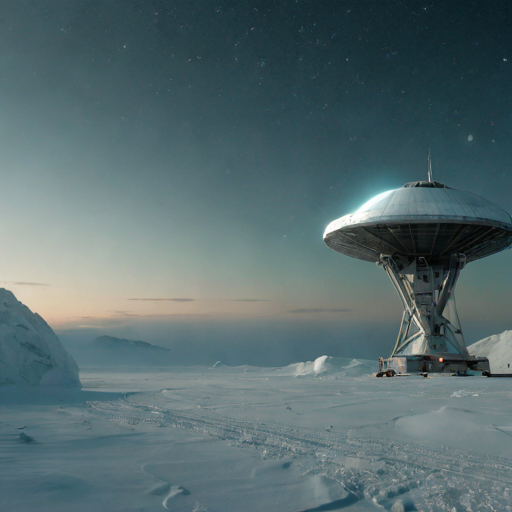
Current US early-warning architectures have a "blind spot" in the lower Arctic atmosphere—a gap that forward-deployed radar and interceptor batteries on Greenland's northern coast are specifically designed to close. Military analysts estimate that a sensor array in Greenland could add critical minutes to the decision-making window for the President—minutes that are the difference between interception and impact.
However, the missile threat is only the kinetic tip of the spear. The deeper, more insidious gap lies in the periodic table itself. Modern warfare and the digital economy run on rare earth elements (REEs). From the guidance systems of the Tomahawk cruise missile to the permanent magnet motors of the F-35 Lightning II, and even the battery capability of the Ford F-150 Lightning electric truck, American power is built on seventeen obscure elements like neodymium, dysprosium, and terbium. Currently, the United States is dangerously exposed. Despite efforts to diversify supply chains, China continues to dominate the processing and refining of these minerals, controlling an estimated 85% to 90% of the global market.
Global Rare Earth Processing Control (2025 Estimate)
Greenland represents the most viable "exit strategy" from this dependency. The island holds an estimated 38.5 million tonnes of rare earth oxides, posing a direct threat to Beijing's monopoly. The Kvanefjeld and Tanbreez deposits in southern Greenland are considered some of the largest undeveloped REE projects in the world. For years, Chinese state-backed entities have attempted to secure mining rights in these areas, characterizing themselves as a "Near-Arctic State"—a label the US State Department has aggressively rejected. The push for expanded bases is not merely about housing troops; it is about establishing a de facto security umbrella over these strategic assets, ensuring that American and allied mining interests can operate without coercion.
The Price of Polar Power
Washington is waking up to a cold, hard reality: securing the High North requires a line item in the federal budget that rivals the GDP of some small nations. As the White House pivots its gaze toward the Arctic Circle, the conversation has shifted from vague strategic interests to concrete, multi-billion dollar appropriations. The "Arctic First" doctrine, spearheaded by the Trump administration, is not merely a diplomatic maneuver; it is a massive logistical and financial undertaking that effectively seeks to purchase strategic exclusivity over the Western Hemisphere’s northern approach. The price of polar power, it turns out, is paid in both diplomatic capital and an exorbitant amount of taxpayer dollars, with initial estimates for the proposed expansion at Pituffik Space Base (formerly Thule) and the reactivation of Narsarsuaq surpassing $4.5 billion over the next five years.
To understand the magnitude of this investment, one must look beyond the sticker price of F-35 hangars and heated runways. The true cost lies in the "Greenland Premium"—the exponential increase in logistics expenses required to build and sustain military operations in one of the most inhospitable environments on Earth. Unlike bases in Germany or Japan, or even Alaska, Greenland lacks a connecting road network between its settlements. Every beam of steel, every bag of cement, and every gallon of jet fuel must be shipped in by sea during the shrinking window of ice-free navigation or flown in at great expense. Pentagon logistics experts estimate that construction costs in Greenland are roughly 3.4 times higher than in the continental United States.
The economic implications extend into the diplomatic sphere, creating a transactional relationship that critics argue looks less like an alliance and more like a lease agreement. To secure the consent of both Copenhagen and the increasingly autonomous government in Nuuk, the administration has bundled the military expansion with a massive economic aid package. Dubbed the "North Atlantic Economic Partnership," this initiative promises $750 million annually in direct infrastructure investment for Greenland’s civilian sectors—mining, tourism, and telecommunications. While marketed as a goodwill gesture to boost local employment, geopolitical analysts view it as the "rent" America must pay to keep Beijing’s "Polar Silk Road" investors at bay. It is a bidding war for sovereignty, where the United States is effectively outspending Chinese state-owned enterprises to ensure that Greenland’s airports and deep-water ports remain firmly within the NATO sphere of influence.
Projected US Arctic Defense Spending vs. Strategic Rivals (2024-2030)
Ultimately, the "price" is also measured in the shifting geopolitical gravity of the North Atlantic. By turning Greenland into a forward operating base, the US is fundamentally altering the island's identity and its relationship with Europe. European allies are watching warily as Washington negotiates directly with Nuuk, bypassing traditional diplomatic protocols in Copenhagen. This aggressive posture secures the flank, but it also signals a new era of American unilateralism in the Arctic—one where security is a commodity purchased with overwhelming financial force, and where the silence of the ice is replaced by the roar of jet engines and the hum of server farms, all carrying a price tag that future generations will be paying off for decades.
Read Next
The Arctic Chessboard: Why Denmark's Greenland Visit Signals a Shift for Washington
Prime Minister Mette Frederiksen’s visit to Nuuk is more than a diplomatic formality—it is a strategic ratification of the US-Denmark alliance, securing NATO's northern flank and critical mineral supply chains against Russian and Chinese ambition.
Arctic Art of the Deal: Why Trump’s Greenland Ambitions Are a Double-Edged Sword for Putin
An in-depth analysis of the geopolitical, economic, and military implications of a potential US purchase of Greenland, and why it represents a paradoxical threat to Russian interests.