The Flicker Before the Dark: Why America's Power Grid Is Losing the Battle Against Modern Storms
The New Normal of Extreme Weather
In the meteorological annals of the United States, the phrase "once-in-a-century" has lost its statistical significance, replaced by a terrifying cadence of recurrence that our infrastructure was never built to withstand. For decades, the American power grid—a patchwork quilt of aging transmission lines, substations, and transformers largely constructed during the post-World War II economic boom—operated on the assumption of a stable, predictable climate. That assumption has been violently upended. The "New Normal" is not merely a shift in average temperatures; it is a fundamental restructuring of the risk profile facing the nation's energy backbone, defined by volatility, intensity, and compounding disasters that strike with less warning and greater fury.
From the sun-scorched deserts of the Southwest to the freeze-prone plains of Texas, the weather patterns battering the contiguous United States have shifted from manageable variables to existential threats. The sheer physics of these modern storms overwhelm mid-20th-century engineering standards. We are witnessing "heat domes" that linger over the Pacific Northwest for weeks, pushing ambient temperatures—and electricity demand for air conditioning—to heights that literally melt high-voltage cables and cause transformers to explode. Conversely, we see polar vortex disruptions sending Arctic blasts deep into the Deep South, freezing natural gas pipelines and turning uninsulated wind turbines into ice sculptures, as tragically demonstrated during the ERCOT grid failure in 2021.
This is not a localized problem; it is a continental crisis. The National Oceanic and Atmospheric Administration (NOAA) has documented a stark increase in billion-dollar weather disasters, but the untold story is the correlation with grid instability. The frequency of weather-related power outages has roughly doubled since the early 2000s. We are no longer dealing with simple downed lines from a passing thunderstorm. We are facing "derechos"—inland hurricanes—that flatten hundreds of miles of transmission towers in Iowa, and atmospheric rivers in California that saturate the soil to the point where heavy trees uproot and crash into key distribution arteries, sparking wildfires that necessitate preemptive "public safety power shutoffs."
The financial and human toll of this new atmospheric reality is staggering. When the grid fails during extreme weather, it is rarely a mere inconvenience; it is a life-safety emergency. In Phoenix, a grid failure during a heatwave is a mass casualty event waiting to happen. In Buffalo, a blizzard blackout turns homes into freezers. The economic impact is equally severe, with the Department of Energy estimating that power outages cost the U.S. economy upwards of $150 billion annually—a figure that is climbing in lockstep with global temperatures.
The architectural fragility of our grid is exacerbated by the fact that extreme weather events are now often simultaneous or sequential. A hurricane hitting the Gulf Coast might disrupt refinery operations, spiking fuel prices just as a heatwave in the Northeast drives up demand for natural gas generation. This interconnectivity of disaster means that a weather event in one region can destabilize the energy security of another, creating a cascading failure effect that standard contingency planning struggles to model. The modern storm does not just test local infrastructure; it stress-tests the entire logic of our national energy distribution system.
Rise in Major US Grid Disturbances (Weather-Related)
Furthermore, the "New Normal" challenges the very physics of transmission. High-voltage lines are rated for specific thermal limits. As ambient air temperatures rise, the capacity of these lines to carry power decreases—right when that power is needed most. Under extreme heat, lines sag, potentially contacting vegetation and grounding out, triggering systemic trips. We are trying to run a digital economy on an analog machine that is overheating. The relentless assault of wind, water, and fire is degrading the physical assets of the grid faster than utilities can repair or replace them, creating a "maintenance debt" that is becoming impossible to pay off without a radical rethinking of grid resilience. We have entered an era where the weather report is no longer just about whether to carry an umbrella; it is a daily forecast of our nation's economic and operational viability.
Lessons Unlearned: A History of Grid Failures
To understand why the lights are flickering in 2026, we must look at the darkness of our recent past. The history of the American power grid is not a unified narrative of progress, but rather a fragmented chronicle of disregarded warnings and deferred maintenance. We are operating a mid-20th-century machine in a mid-21st-century climate, and the gears are beginning to grind to a halt. The narrative of grid failure in the United States is punctuated by specific, catastrophic events that served as wake-up calls—alarms that were largely hit with a collective snooze button by regulators, utilities, and legislators alike.
The first modern tremor of existential dread regarding our electrical infrastructure arrived on a humid afternoon in August 2003. The Northeast Blackout of 2003 was a cascading failure of epic proportions, triggered not by a foreign cyberattack or a massive hurricane, but by a sagging high-voltage power line brushing against an overgrown tree limb in Ohio. That single point of contact, exacerbated by a software bug in the alarm system of FirstEnergy Corporation, plunged 50 million people across eight U.S. states and Ontario, Canada, into darkness. Commuters were trapped in sweltering New York City subways; the Detroit water supply was compromised; and an estimated $6 billion evaporated from the economy in just two days. The post-mortem was clear: our grid was too interconnected to be so fragile, and voluntary reliability standards were insufficient. The Energy Policy Act of 2005 gave the Federal Energy Regulatory Commission (FERC) more teeth, but while software and standards improved, the physical hardware—the steel and copper—continued to rust.
Fast forward nearly two decades to February 2021, and the failure shifted from connectivity to resilience. Winter Storm Uri descended upon Texas, a state that prides itself on its energy independence, operating its own grid (ERCOT) separate from the Eastern and Western Interconnections. The result was a humanitarian disaster. As temperatures plummeted, un-winterized natural gas wellheads froze, and power plants tripped offline exactly when demand for heating spiked. The grid came within minutes of a total, catastrophic collapse that could have taken weeks to repair. More than 4.5 million homes and businesses were left without power in freezing conditions, and officially, 246 people died—though independent analyses suggest the toll was significantly higher. The Texas crisis exposed a fatal flaw in the American energy philosophy: the prioritization of short-term cost savings over long-term reliability. The refusal to invest in weatherization packages for generation infrastructure, dismissed as unnecessary expenses for a "warm" state, cost billions in damages and an incalculable human price.
These are not isolated incidents; they are data points in a terrifying trend. From the wildfire-induced shutoffs in California, where PG&E equipment has sparked deadly blazes leading to preemptive "public safety power shutoffs," to the destruction of the Puerto Rican grid by Hurricane Maria, the pattern is undeniable. We are witnessing the collision of an aging infrastructure with an increasingly volatile climate. The average age of large power transformers in the United States is over 40 years, approaching or exceeding their design life. Transmission lines built to withstand the weather patterns of the 1960s are now buckling under the "100-year storms" that arrive every few years.
Rising Frequency of Weather-Related Major Power Outages (US: 2000-2025)
The economic implications of this inertia are staggering. Department of Energy estimates suggest that power outages cost the U.S. economy upwards of $150 billion annually, a figure that is poised to rise as our reliance on digital infrastructure deepens. Every flickering light is a disruption to the digital economy, a halt in manufacturing, and a risk to vulnerable populations relying on medical equipment. As we look at the data, the trajectory is clear: weather-related outages are becoming more frequent and more severe, yet our investment in "hardening" the grid lags woefully behind. We are trying to run the internet economy on an infrastructure designed for the incandescent bulb.
The lessons from 2003, 2021, and countless localized disasters are etched into the public record, yet they remain largely unlearned. The fragmentation of the grid—split into three major interconnections with limited ability to share power during regional crises—remains a strategic vulnerability. The regulatory patchwork, where authority is split between federal oversight and state public utility commissions, creates a bureaucratic paralysis that stifles large-scale modernization projects like high-voltage direct current (HVDC) transmission lines that could move renewable energy from the windy plains to the populous coasts. Until we treat the grid not as a commodity market but as the essential life support system of the nation, these historical failures will not be remembered as anomalies, but as the opening chapters of a dark new normal.
Rust and Resilience: The Anatomy of a Crumbling Grid
To the casual observer, the American power grid is a static backdrop to modern life—a silent network of cables and towers that we only notice when the lights go out. But to engineers and infrastructure experts, the grid is a vast, heaving machine that is slowly tearing itself apart. We are attempting to power a 21st-century digital economy, hungry for consistent, high-quality electricity, using a delivery system designed for the lightbulbs and radios of the mid-20th century. The uncomfortable reality is that the physical skeleton of American power—the 600,000 miles of transmission lines and 5.5 million miles of local distribution lines—is suffering from a terminal case of old age.
The American Society of Civil Engineers (ASCE) has consistently flagged the nation’s energy infrastructure as a critical vulnerability, often grading it near failure. The core of the problem lies in the sheer antiquity of the hardware. The majority of the nation's transmission lines and power transformers were installed during the post-war boom of the 1950s and 1960s. They were engineered with a life expectancy of 50 years. Today, vast swathes of this equipment are operating on borrowed time, pushed decades past their retirement dates. We are effectively running the backbone of the world's largest economy on the engineering equivalent of a classic car—beautiful in its day, but utterly ill-equipped for the demands of a daily highway commute, let alone the extreme weather "road rage" of the modern climate.
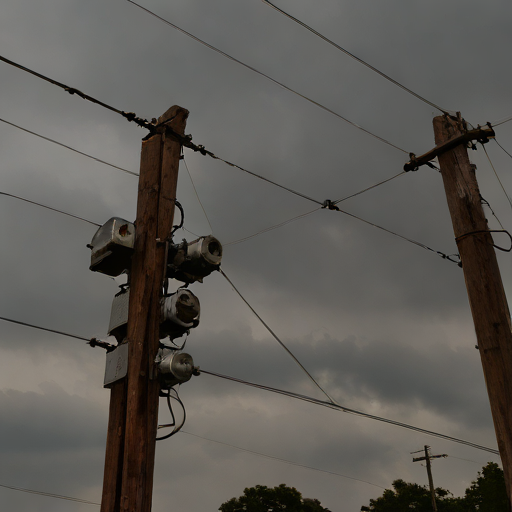
At the heart of this fragility lies the Large Power Transformer (LPT). These massive, custom-built units are the nodes that step down high-voltage electricity for distribution to cities and factories. They are the unsung heroes of the grid, yet they represent a terrifying bottleneck. The Department of Energy estimates that 70% of U.S. transformers are 25 years or older, with many exceeding the 40-year mark. Replacing them is not a matter of a quick trip to the hardware store; these are multi-million dollar components, often weighing hundreds of tons, with lead times for manufacturing that can stretch from 12 to 24 months. As we saw during recent supply chain crunches, the U.S. is heavily reliant on foreign imports for the specialized steel and copper components needed to build them. A systematic failure of these aging LPTs during a "black sky" event—such as a massive geomagnetic storm or a coordinated cyber-physical attack—could leave millions of Americans in the dark not for days, but for months.
Aging Infrastructure: Actual Age vs. Design Lifespan of Large Power Transformers
Furthermore, the grid's design philosophy is fundamentally at odds with the new climate reality. When these towers were erected, "100-year storms" were statistically rare anomalies. Today, they are practically annual events. The infrastructure was built for a stable climate baseline that no longer exists. Standard wooden utility poles are snapping like toothpicks under the increased wind loads of stronger hurricanes and derechos. Overhead lines in the West, uninsulated and sagging in record heat, have become inadvertent arsonists, sparking some of the deadliest wildfires in California's history. In the South, infrastructure built to shed heat is freezing solid during polar vortex incursions, as Texas learned tragically in 2021. The grid is rigid and centralized in an era that demands flexibility and decentralization.
The Billion-Dollar Spark: Economic Consequences
When the lights go out on Main Street, the immediate inconvenience is visceral: dark storefronts, spoiling food, and the silent hum of idle machinery. However, the true cost of America’s fraying electrical grid is not measured in hours of darkness, but in billions of dollars of lost economic potential. As the United States pivots aggressively toward a digital, electrified future—driven by electric vehicles, AI data centers, and heat pumps—the underlying infrastructure is proving to be a catastrophic bottleneck. We are building a Ferrari engine on a Model T chassis, and the economic friction is beginning to smoke.
The Department of Energy has long estimated that power outages cost the U.S. economy approximately $150 billion annually, but recent independent analyses suggest this figure is a conservative relic of a pre-digital era. In 2026, with the integration of remote work forces and cloud-dependent supply chains, the "intermittency tax" levied by an unstable grid is projected to exceed $380 billion. This isn't just about the catastrophic, headline-grabbing failures like the Texas freeze of 2021, which inflicted an estimated $130 billion in economic damage in a matter of days. It is about the cumulative, silent erosion of productivity caused by momentary voltage sags and "micro-outages" that reset production lines, corrupt data, and fry sensitive electronics. For a semiconductor fabrication plant in Arizona or an automated logistics hub in Ohio, a flicker lasting less than a second can cascade into millions of dollars in wasted materials and weeks of recalibration.
Projected Annual Economic Loss from Grid Instability (2020-2030)
The manufacturing sector, often touted as the engine of America's renewed economic nationalism, is particularly vulnerable. As factories become "smarter," they paradoxically become more fragile. A textile mill in the 1970s could resume operations the moment power was restored. Today’s precision manufacturing facilities, reliant on robotics and real-time connectivity, face lengthy reboot sequences. Insurance premiums for these facilities are skyrocketing, with underwriters increasingly viewing consistent power access not as a utility guarantee, but as a risk variable akin to flood or fire. In some high-risk wildfire zones in California and the Pacific Northwest, businesses are facing uninsurability, forcing them to self-insure or relocate—a trend that threatens to hollow out regional economies.
Lives in the Dark: The Human Cost
In the quiet suburbs of Phoenix, Arizona, the silence that follows a grid failure is not peaceful—it is a countdown. For 78-year-old residents like Martha Higgins, whose breath is tethered to an electric oxygen concentrator, the flicker of a dying lightbulb signals the start of a terrifying calculus: how much battery life remains versus how long until the ambulance arrives. This is the visceral, terrified face of America’s energy crisis, a reality far removed from the boardrooms of utility companies or the legislative chambers of Washington, D.C. While economists measure the cost of blackouts in billions of dollars, families across the United States are measuring it in spoiled insulin, heatstroke, and the sheer psychological exhaustion of living in a first-world nation with third-world reliability.
The human toll of our crumbling infrastructure is becoming increasingly difficult to ignore. As extreme weather events transform from generational anomalies into seasonal certainties, the "medically vulnerable" registry lists maintained by utility companies have swelled. In 2025 alone, reports indicate that emergency calls related to power-dependent medical equipment failures spiked by 22% during major storm events compared to the previous five-year average. This is not merely an inconvenience; it is a public health crisis disguised as an infrastructure problem. When the grid fails during a "wet bulb" heat event in the South or a polar vortex in the Midwest, homes effectively turn into thermal traps. The architectural reliance on HVAC systems—a hallmark of modern American housing—becomes a liability the moment the current stops flowing.
Vulnerability Rising: US Households with Electricity-Dependent Medical Needs (Projected)
Beyond the immediate physical danger, there lies a profound economic fragility that exacerbates the human suffering. For the millions of Americans living paycheck to paycheck, a 48-hour blackout is a financial catastrophe. The loss of a refrigerator full of groceries—now costing upwards of $400 for a family of four due to inflation—can mean the difference between solvency and debt. In the gig economy, where "no power" means "no work," the digital tether to income is severed. We have created a society that requires electricity for every facet of survival—from accessing banking apps to charging the vehicle needed to evacuate—yet we feed this insatiable digital demand with an analog grid built for 1950s appliances.
Rewiring for Resilience: The Path Forward
The sheer scale of the undertaking required to modernize America’s power grid is nothing short of a second industrial revolution. For decades, the strategy was simple: build larger power plants and string more wires. That centralized model, while efficient in the 20th century, has become a liability in an era of hyper-localized climate extremities and cyber threats. The path forward, therefore, is not merely about reinforcement—it is about a fundamental architectural reimagining. We are moving from a passive, one-way delivery system to a dynamic, bi-directional network that resembles the internet more than it does the utility monopolies of the 1950s.
At the heart of this transformation is the "Smart Grid"—a digitized ecosystem where sensors and artificial intelligence monitor energy flow in real-time. Unlike the current electromechanical switches that can take minutes or hours to reroute power during an outage, a digitized grid can "self-heal," isolating faults automatically to prevent cascading failures like the 2003 Northeast blackout. This digital layer is crucial for integrating the intermittent nature of renewables. As we retire baseload coal plants and bring online gigawatts of solar and wind, the grid must instantaneously balance supply and demand. Without this digital nervous system, the transition to clean energy is technically impossible. The Department of Energy estimates that advanced metering infrastructure and grid automation could reduce outage costs by up to $50 billion annually, a figure that becomes increasingly relevant as storm intensity grows.
Projected Grid Modernization Investment Needs (2026-2035)
However, digitization alone is insufficient without physical decentralization. The concept of the "microgrid"—a localized energy network that can disconnect from the main grid and operate autonomously—is moving from military bases and university campuses to residential suburbs. In outcomes seen from Florida to California, communities equipped with solar-plus-storage microgrids kept the lights on while their neighbors sat in the dark. This resilience is reshaping the real estate market, with "energy independence" becoming as coveted a feature as a renovated kitchen. Yet, the regulatory framework remains a patchwork of state-level policies that often disincentivize utility companies from supporting these independent islands of power. To truly rewire for resilience, the Federal Energy Regulatory Commission (FERC) must accelerate reforms that allow distributed energy resources to compete fairly in wholesale markets, turning every home with a Tesla Powerwall or a Ford F-150 Lightning into a grid asset.
The financial implication of this overhaul is staggering. Industry estimates suggest that upgrading transmission lines, burying vulnerable distribution wires, and deploying grid-scale storage will require over $2.5 trillion in investment by 2035. While the Bipartisan Infrastructure Law provided a down payment, private capital must bridge the gap. This raises the uncomfortable question of who foots the bill: the ratepayer or the taxpayer? Utilities argue that rate increases are inevitable to fund these capital projects, a bitter pill for consumers already grappling with inflation. Conversely, consumer advocates argue that shifting the cost burden entirely to households is regressive. The solution likely lies in innovative financing models, such as "green bonds" and public-private partnerships, which can leverage government guarantees to attract institutional investors looking for stable, long-term yields.
Cost of Inaction: Annual Climate-Related Grid Failure Costs vs. Modernization Investment
Ultimately, the technology exists today to build a grid that is impervious to all but the most catastrophic events. We have the high-voltage direct current (HVDC) cables to transport wind energy from the Great Plains to the coasts; we have the sodium-ion battery technology to store it; and we have the software to manage it. The failure is not one of engineering, but of political will and regulatory agility. "NIMBYism" (Not In My Back Yard) continues to derail critical transmission projects that cross state lines, creating bottlenecks that strangle reliability. Resolving these siting disputes is perhaps the most critical, unglamorous work required to secure America's energy future. If we cannot build the wires, the power stays trapped, and the lights go out. The choice facing policymakers is stark: pay for the upgrade now, or pay exponentially more in disaster recovery later. In a world where electricity is the lifeblood of everything from our heating systems to our transportation, a fragile grid is not just an inconvenience; it is a national security crisis waiting to unfold.
Read Next
The Green Cloud: Can America's Tech Giants Balance AI Supremacy with Climate Responsibility?
As the AI arms race accelerates, America's power grid faces an unprecedented crisis. From nuclear deals in Pennsylvania to water wars in Arizona, we investigate the high stakes of the 'Green Cloud' and the physical cost of digital dominance.
The Sentient Skyline: How America is Retrofitting its Concrete Jungle for a Digital Age
As 2026 unfolds, the US moves from 'shovel-ready' to 'sensor-ready,' retrofitting aging infrastructure with a digital nervous system. This deep dive explores the economic, social, and ethical implications of the smart city revolution.
The Lights Go Out: Can America's Aging Grid Survive the New Age of Superstorms?
As climate chaos meets crumbling 20th-century infrastructure, the US power grid faces a reckoning. A deep dive into the physics, economics, and human cost of a nation on the brink of darkness.