The Lights Go Out: Can America's Aging Grid Survive the New Age of Superstorms?
The Perfect Storm: A Nation on the Brink
The rhythmic hum of the American electrical grid is the often-unheard heartbeat of modern life, a 450,000-mile network of high-voltage lines that powers everything from the critical care ventilators in Houston to the sprawling server farms of Northern Virginia. Yet, this massive engineering marvel, once the envy of the industrialized world, is showing its age at a moment when the environment is becoming increasingly hostile. As we move further into 2026, the United States finds itself at a precarious crossroads: a nation attempting to build a high-tech, electrified future on top of a 20th-century foundation that was never designed to withstand the "New Normal" of atmospheric rivers, polar vortexes, and Category 5 hurricanes.
According to data from the U.S. Department of Energy, a staggering 70% of transmission lines and power transformers are now at least 25 years old. In many parts of the Northeast and the Midwest, infrastructure components dating back to the post-war boom of the 1950s and 60s are still in active service, having long outlived their projected 30-to-40-year lifespans. This is not merely a matter of mechanical fatigue; it is a fundamental mismatch between design and reality. These systems were engineered for a climate that no longer exists. They were built for predictable seasonal variations and historical averages, not the erratic and violent energy of a warming atmosphere that can drop feet of snow on a semi-tropical Texas grid or bake the Pacific Northwest in record-shattering 115-degree Fahrenheit heat.
The economic toll of this fragility is becoming impossible to ignore. Analysis of recent utility filings suggests that weather-related power outages now cost the U.S. economy between $20 billion and $55 billion annually in lost productivity, spoiled inventory, and physical damage. This isn't just a corporate problem; it's a deeply human one. When Winter Storm Uri crippled the ERCOT grid in 2021, it wasn't just the lights that went out; the entire machinery of modern civilization—water treatment, heating, and emergency services—ground to a halt, resulting in hundreds of preventable deaths.
Estimated Annual Cost of Weather-Related Outages (USD Billions)
The challenge is compounded by the "electrification of everything." As the U.S. pushes toward a decarbonized economy, the demand on the grid is projected to increase significantly. We are asking an aging, brittle system to carry the load of millions of electric vehicles (EVs), the massive cooling requirements of AI-driven data centers, and a residential sector that is rapidly swapping gas furnaces for electric heat pumps. This creates a dangerous feedback loop of vulnerability: the more we rely on electricity for our daily survival—from transportation to home heating—the more catastrophic a single failure point becomes during a disaster.
In the coastal South and the Atlantic seaboard, the threat is even more acute. The "superstorm" is no longer a once-in-a-century anomaly but an annual expectation. Hurricane Ian's path of destruction across Florida demonstrated that even with modern "hardening" efforts, the sheer force of 150-mph winds and massive storm surges can decouple entire regions from the national fabric for weeks. As we look toward the current hurricane season, meteorologists and engineers alike are warning that the "buffer" we once enjoyed is gone. Every major weather event now tests the grid to its absolute breaking point, leaving millions of Americans just one transformer failure away from a prolonged and dangerous dark age.
The federal government’s recent investment through the Bipartisan Infrastructure Law—allocating roughly $65 billion for grid modernization—is a significant down payment, but many experts argue it is a drop in the bucket. The American Society of Civil Engineers has consistently given the nation's energy infrastructure a "C-" grade, noting that the investment gap to truly "future-proof" the grid is likely in the trillions. Without a radical acceleration in regional transmission planning and the deployment of long-duration storage, the U.S. remains a nation on the brink, waiting for the next storm to prove that our greatest vulnerability isn't a foreign adversary, but our own neglected wires.
Built for a Different Era: The History of the Grid
To understand why the lights go out when the wind blows in 2026, we must first look back at when the lights first turned on. The United States electric grid is often described by engineers as "the largest machine ever built," a sprawling, pulsating web of millions of miles of wire, thousands of generating plants, and innumerable transformers that span the continent. But to call it a single "machine" implies a unity of design that simply never existed. The grid was not so much designed as it was accreted—built piece by piece, decade by decade, often with little thought given to how a substation in Ohio might one day affect a factory in Texas. It is a patchwork quilt of engineering stitched together over a century, and the threads are beginning to fray.
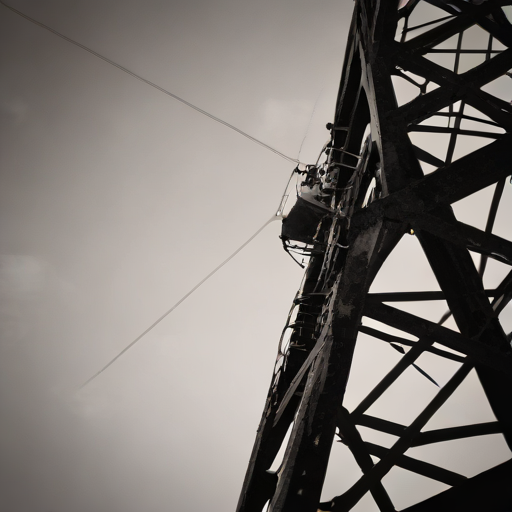
The story begins in earnest on Pearl Street in Manhattan in 1882, where Thomas Edison flipped the switch on the world's first central power plant. It served a mere 82 customers. In those nascent days, electricity was a luxury, a local affair confined to city blocks. The "War of Currents" between Edison’s direct current (DC) and Nikola Tesla’s alternating current (AC) eventually settled in Tesla’s favor, allowing power to be transmitted over vast distances. This victory laid the architectural foundation for the modern grid: massive, centralized power plants burning coal or damming rivers, sending electrons hundreds of miles to passive consumers.
U.S. Electricity Generation by Source (Historical & Projected Share)
The true boom, the era that defined the grid’s current physical reality, arrived in the post-World War II era. Fueled by the insatiable energy appetite of a booming middle class—buying their first air conditioners, televisions, and electric ranges—utilities embarked on a massive construction spree. The majority of the transmission lines and large power transformers that hum largely unnoticed in the background of American life today were commissioned during this period, between the 1950s and the 1970s. They were marvels of mid-century engineering, over-built with steel and copper, designed to last 40 or perhaps 50 years.
Here lies the crux of the crisis: we are now 50, 60, even 70 years past that construction boom.
A staggering portion of the U.S. grid has outlived its life expectancy. The American Society of Civil Engineers (ASCE) has repeatedly sounded the alarm, noting that 70% of the grid’s transmission lines and power transformers are now over 25 years old, with the average age of large power transformers—critical components that step down high-voltage electricity for local use—hovering around 40 years. These massive machines, often weighing hundreds of tons, are not like fine wine; they do not improve with age. Insulation degrades, metal fatigues, and tolerance for heat diminishes. When they were installed, the concept of a "superstorm" fueled by a rapidly warming climate was the stuff of science fiction. They were engineered for a stable climate, assuming historical weather patterns that simply no longer exist.
Furthermore, the grid was architected for a one-way flow of power: from the big plant to the consumer. It was a centralized monarchy of electrons. Today, however, we are forcing this geriatric infrastructure to handle a chaotic, democratic revolution. We have rooftop solar panels pushing power back into the grid; we have intermittent wind farms in remote areas needing to transport energy to distant cities; and we have the sudden, massive load shocks of Electric Vehicle (EV) charging fleets and the insatiable power demands of AI data centers.
The result is a system that is brittle. In the 1960s, a failure was an inconvenience. Today, with our economy completely digitized and reliant on "always-on" connectivity, a failure is a catastrophe. We are effectively trying to run the internet on a telegraph system. The physical hardware—the pylons, the wires, the substations—is rusting, while the demands we place on it are accelerating into the quantum age. We have built a digital society on top of an analog, corroding foundation, and as the skies darken with the storms of the new century, the cracks in that foundation are becoming impossible to ignore.
Anatomy of a Breakdown: Physics Meets Policy
To understand why the lights are going out with alarming frequency from Texas to Maine, one must first dismantle the popular imagination of the American power grid. It is not a monolithic, stainless-steel fortress of modern engineering. Rather, it is a patchwork quilt of three major interconnected systems—the Eastern, Western, and Texas interconnects—stitched together by over 450,000 miles of high-voltage transmission lines and millions of miles of local distribution wires. Much of this "world's largest machine" was designed and built during the Eisenhower and Kennedy administrations, intended for a climate and a consumer base that effectively ceased to exist decades ago.
The fundamental friction lies where the brutal physics of a warming planet meets the inertia of 20th-century public policy. Physically, the grid is brittle. The American Society of Civil Engineers consistently grades the nation's energy infrastructure in the 'C' to 'D' range. The average age of large power transformers—the critical nodes that step down high voltage for safe use—is now over 40 years, uncomfortably close to their typical design life of 50 years. When these aging components are subjected to the new thermal realities of the 2020s, the physics of electrical resistance takes over. Extreme heat, now a summer staple across the Sun Belt, causes transmission lines to expand and sag, leading to short circuits when they contact vegetation. Simultaneously, that same heat drives peak demand as millions of air conditioning units kick into overdrive, pushing the hardware past its operational thermal limits just as its capacity to transmit power degrades.
Average Age vs. Design Life of Critical US Grid Components
However, the "breakdown" is not merely a story of rusting metal and rotting wood; it is a failure of regulatory foresight. The policy framework governing this infrastructure is a Byzantine maze of jurisdictional overlap involving the Federal Energy Regulatory Commission (FERC), the North American Electric Reliability Corporation (NERC), and fifty separate state Public Utility Commissions (PUCs). This fragmentation has created a "tragedy of the commons" scenario for long-distance transmission. While physics dictates that the most efficient way to mitigate extreme weather is to move electrons across vast distances—shipping wind power from a breezy Great Plains to a sweltering Midwest, for example—policy makes building the necessary interstate high-voltage direct current (HVDC) lines nearly impossible.
Permitting processes for new transmission lines in the United States average over a decade. A proposed line crossing three states requires approvals from dozens of federal, state, and local agencies, each with the power to veto or delay. This regulatory sclerosis means that while we can technologically foresee a "superstorm" and understand the engineering requirements to withstand it, we lack the political velocity to harden the grid before the clouds gather. The current incentive structures for investor-owned utilities often favor building new, local capital assets (like power plants) on which they can earn a guaranteed rate of return, rather than investing in efficiency measures or inter-regional connectivity that might offer better resilience but lower shareholder profits.
Furthermore, the risk models used by insurers and regulators are often looking in the rear-view mirror. Utilities have historically planned for "1-in-100-year" events based on weather data from 1950 to 2000. But in an era where "century storms" hit the Gulf Coast or the Eastern Seaboard every three to five years, these actuarial tables are rendered dangerous fiction. The freeze that crippled the Texas grid (ERCOT) in 2021 was not a failure of technology specifically, but a failure to imagine—and regulate for—a tail-risk event. The equipment was not winterized because the policy did not mandate it, viewing such preparation as an unnecessary cost for a warm-weather state. That decision, born in a boardroom, met the physics of a polar vortex, resulting in hundreds of lives lost and roughly $130 billion in economic damage.
Economic Cost of Major US Power Outages (Inflation Adjusted)
The intersection of these forces creates a precarious new normal. We are asking a grid built for the incandescent lightbulb and the radio to power an economy of data centers, EVs, and heat pumps, all while weathering storms of biblical proportions. Until the policy architecture is updated to match the urgency of the physical threat—prioritizing inter-regional resilience, rapid permitting, and forward-looking climate modeling—the anatomy of the next breakdown is already written; we are simply waiting for the weather to sign the autopsy report.
The Human Cost: When the Lights Stay Off
In the affluent suburbs of Westchester or Palo Alto, a power outage is often a temporary inconvenience, quickly mitigated by the hum of automatic whole-home standby generators and the comfort of well-stocked pantries. But for millions of Americans living on the margins, the flickering of the lights signals the beginning of a desperate struggle for survival. As the grid falters under the dual pressures of climate chaos and infrastructural decay, the human toll is no longer measured merely in hours of downtime, but in lives disrupted, health compromised, and financial stability shattered.
The most immediate and visceral threat is the loss of climate control. In a country where extreme weather is becoming the norm, the home—typically a sanctuary—can rapidly turn into a death trap. We saw this with brutal clarity during the Texas freeze of 2021, and again in the sweltering heat domes that have settled over the Pacific Northwest and the Sun Belt in recent summers. When the HVAC systems fail, the thermal inertia of older, poorly insulated housing stock offers little protection. For the elderly and the very young, the body’s ability to regulate temperature collapses within hours. In Phoenix, where summer temperatures now routinely breach 110°F, a sustained grid failure isn't just uncomfortable; it is a mass casualty event waiting to happen. Emergency rooms flood with cases of heatstroke and hypothermia, overwhelming a healthcare system that is itself struggling to maintain power and connectivity.
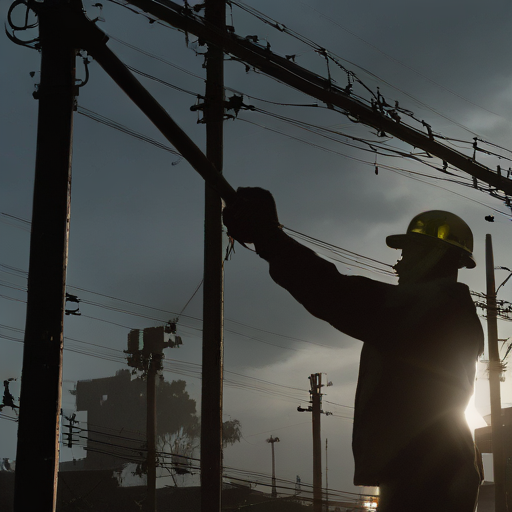
Beyond the elements, the modern home is increasingly a medical facility. The shift towards "aging in place" and home-based healthcare means that millions of Americans rely on the grid to breathe, eat, and stay alive. Oxygen concentrators, CPAP machines, home dialysis units, and refrigerated insulin all require a steady current. When the power cuts, the clock starts ticking on battery backups that often last less than 12 hours. Utility companies maintain "medical baseline" lists, supposedly prioritizing these vulnerable customers, but in a catastrophic failure or a Public Safety Power Shutoff (PSPS) to prevent wildfires, electrons do not discriminate. The panic of a mother watching a child's nebulizer sputter out, or a senior citizen realizing their life-saving medication is warming in a dark refrigerator, is a trauma that lingers long after the lights return.
Then there is the crushing economic weight of the blackout. For the 60% of Americans living paycheck to paycheck, the loss of a refrigerator full of groceries—valued at $200 to $400—is not a deductible expense; it is a financial disaster that forces choices between food, rent, or medication for the coming month. Small business owners, the backbone of the US economy, face ruinous losses from spoiled inventory and lost operating hours, often finding that their insurance policies contain "utility service interruption" exclusions that leave them high and dry. The disparity in resilience is stark: those with means retreat to hotels or powered second homes, while the working class is left to endure in the dark, often losing hourly wages because their workplaces are also shuttered.
The psychological toll is equally profound. A pervasive sense of insecurity takes root when the most basic infrastructure fails. In 2026, where connectivity is synonymous with safety, the loss of Wi-Fi and cellular service (as towers lose backup power) isolates individuals from emergency services and loved ones. The "anxiety of the flick," where a simple dip in voltage triggers a panic response in residents traumatized by previous outages, is becoming a recognized stressor in disaster-prone regions like Louisiana and California. We are witnessing the erosion of trust in the fundamental promise of American modernity: that when you flip the switch, the light comes on.
Projected Economic Impact of Power Outages on US Households (2020-2030)
As we look toward a future where "superstorms" are statistically inevitable, the conversation must shift from restoration to adaptation. The current approach of treating each blackout as an anomaly is unsustainable. Until the grid is reinforced not just with steel and smart meters, but with a social safety net that acknowledges the disproportionate impact on the vulnerable, the true cost of our aging infrastructure will continue to be paid in human suffering. The darkness is no longer just an absence of light; it is a spotlight on the deepening fractures in our society.
Hardening the Artery: The Path to Resilience
The term "hardening" often conjures images of concrete bunkers and steel reinforcements, but for the United States' electrical grid—a sprawling, delicate web of over 450,000 miles of high-voltage transmission lines—resilience is as much about digital agility as it is about physical armor. As 2026 unfolds, the national conversation has shifted from "if" the grid will fail to "how" we can enable it to fail safely and recover instantly. The path to resilience requires a fundamental reimagining of the American energy architecture, moving away from the rigid, centralized "hub-and-spoke" models of the 20th century toward a dynamic, decentralized mesh that mimics the internet itself.
The immediate priority for utilities across the Sun Belt and the Eastern Seaboard has been the physical fortification of assets against the new baseline of climatic violence. In Florida and Texas, following the devastating lessons of the early 2020s, billions of dollars are finally flowing into "undergrounding"—burying local distribution lines to protect them from wind and debris. While effective, this solution is prohibitively expensive, costing nearly $3 million per mile in urban environments, a price tag that inevitably trickles down to rate-payers. However, physical hardening is a blunt instrument. The true revolution lies in the "Smart Grid," a concept that has transitioned from industry buzzword to operational necessity.
At the heart of this transformation is the integration of high-fidelity sensors and Artificial Intelligence. Legacy grids were largely blind; operators often didn't know a line was down until customers called to complain. Today, Phasor Measurement Units (PMUs) sample voltage and current thousands of times per second, offering a high-resolution, real-time MRI of the grid's health. This visibility allows automated systems to reroute power milliseconds after a fault occurs, isolating damaged sections—a process known as "self-healing." For residents in California's wildfire-prone corridors, this technology means the difference between a neighborhood blackout and a statewide cascading failure.
Furthermore, resilience is increasingly being defined by the rise of the "microgrid." These self-contained energy islands, capable of disconnecting from the main grid and operating independently, are becoming standard features for critical infrastructure like hospitals, military bases, and increasingly, planned communities. Powered by local solar arrays and backed by industrial-scale lithium-ion battery storage, microgrids offer a fail-safe against the domino effect of regional collapses. Federal incentives introduced in 2024 have accelerated this trend, pushing the capacity of US microgrids to record highs. This decentralization does not just protect the few; it unburdens the main grid during peak stress events, reducing the likelihood of rolling brownouts during heat domes or polar vortexes.
However, the technological roadmap faces a daunting financial reality. The American Society of Civil Engineers estimates that the investment gap—the difference between funded projects and actual infrastructure needs—is widening. While the Infrastructure Investment and Jobs Act provided a historic down payment, the escalating frequency of "hundred-year storms" demands a sustained capital injection that far outstrips current public and private spending. We are effectively racing to rebuild the airplane while flying it through a hurricane. The cost of inaction, however, is far higher: the Federal Emergency Management Agency (FEMA) projects that without significant grid modernization, weather-related outages could cost the US economy upwards of $2 trillion over the next decade.
The Resilience Gap: Projected US Grid Investment vs. Needs (2026-2030)
The political dimension of this transition is equally complex. Building High Voltage Direct Current (HVDC) lines—superhighways for electricity that can transport wind energy from the Great Plains to population centers in the East with minimal loss—requires navigating a labyrinth of local, state, and federal permits. "NIMBYism" (Not In My Back Yard) remains a formidable obstacle, stalling critical transmission projects for years. To achieve true resilience, regulatory reform must accompany technological innovation. The Federal Energy Regulatory Commission (FERC) has begun to flex its muscle, streamlining the approval process for interstate transmission corridors deemed vital for national security, but the friction between local autonomy and national necessity remains a flashpoint.
Ultimately, hardening the artery of American power is not a singular project but a continuous adaptation. It involves a shift in philosophy from purely preventing failures to ensuring rapid survivability. As we integrate more variable renewable energy sources, the grid must become more flexible, not just stronger. It is a massive undertaking, comparable to the construction of the Interstate Highway System, but the stakes are existential. In an era where electricity underpins everything from our currency to our communication, a resilient grid is the prerequisite for a functioning modern society.
Read Next
The Flicker Before the Dark: Why America's Power Grid Is Losing the Battle Against Modern Storms
A deep dive into the crumbling state of the US power grid, the economic devastation of weather-related outages, and the urgent race to rewire the nation for a volatile climate.
The Green Cloud: Can America's Tech Giants Balance AI Supremacy with Climate Responsibility?
As the AI arms race accelerates, America's power grid faces an unprecedented crisis. From nuclear deals in Pennsylvania to water wars in Arizona, we investigate the high stakes of the 'Green Cloud' and the physical cost of digital dominance.
The Sentient Skyline: How America is Retrofitting its Concrete Jungle for a Digital Age
As 2026 unfolds, the US moves from 'shovel-ready' to 'sensor-ready,' retrofitting aging infrastructure with a digital nervous system. This deep dive explores the economic, social, and ethical implications of the smart city revolution.