The Great Rewiring: Can America Build a Supply Chain That Never Breaks?
The End of the 'Everything Store' Era
For decades, the American consumer economy operated on a single, invisible promise: click a button, and it appears. This was the era of the "Everything Store," a period defined by the relentless optimization of global logistics where efficiency was the only god worth worshipping. Squeezing every cent out of the supply chain meant eliminating redundancy, reducing warehousing costs, and relying on a synchronized dance of container ships arriving from Asia exactly moments before their cargo was needed. It worked beautifully, driving down prices at Walmart and keeping Amazon Prime packages flowing, until the music abruptly stopped in 2020. The silence that followed—echoing through the empty aisles of Target and the stalled assembly lines of Detroit—shattered the illusion of the frictionless economy.
Today, we are witnessing the definitive end of that era. The pendulum of American commerce is swinging violently from the fragility of "Just-in-Time" efficiency to the fortified resilience of "Just-in-Case" security. This isn't merely a logistical adjustment; it is a fundamental rewriting of the social contract between American business and the American consumer. The transition is messy, expensive, and undeniable. Corporate boardrooms from Seattle to Charlotte are no longer rewarding executives solely for leanness; they are demanding redundancy. The new mandate is clear: having stock on hand is worth the premium of warehousing it, because the cost of a lost sale—and a lost customer—is infinitely higher.
This shift is visible in the physical landscape of the United States. Drive along the I-10 corridor outside of Phoenix or the expanding industrial parks of the Inland Empire in California, and you will see the concrete evidence of this pivot: massive new distribution centers and "safety stock" warehouses. These aren't just transit points; they are strategic reserves. American companies are hoarding key components—semiconductors, raw pharmaceutical ingredients, specialized alloys—like squirrels preparing for a perennial winter. This behavior, once derided by Wall Street analysts as "bloated balance sheets," is now praised as "strategic resilience." The "Everything Store" model assumed a frictionless world; the new model assumes a world on fire, beset by geopolitical tensions, climate disasters, and trade wars.
The economic implications for the average American household are profound. The "efficiency dividend"—the deflationary pressure that kept cheap goods cheap for thirty years—is evaporating. Building resilience costs money. Manufacturing in Ohio or assembling in Mexico is more expensive than sourcing from a single mega-factory in Shenzhen. Redundant suppliers mean split contracts and lost economies of scale. Who pays for this insurance policy against shortages? Ultimately, it is the consumer. We are entering an age of structurally higher prices, a "resilience tax" that we pay at the checkout counter in exchange for the assurance that the shelves won't be empty when the next crisis hits.
Furthermore, this decoupling is reshaping the labor market. The demand for logistics experts, supply chain risk analysts, and domestic manufacturing technicians is skyrocketing. We are seeing a renaissance not just in making things, but in managing the movement of things within our own borders. The reliance on a single trans-Pacific pipeline is being replaced by a complex web of regional hubs. It is a more robust system, certainly, but it is also a far more complex beast to tame. The era of effortless abundance is over; the era of strategic availability has begun.
US Business Inventory-to-Sales Ratio (2019-2026 Projection)
The data underscores this deliberate accumulation. Following the perilous dip in inventory levels during the height of the pandemic supply shocks, US businesses have aggressively overcorrected. The steady climb in the inventory-to-sales ratio through 2025 and into 2026 indicates a structural willingness to hold more capital in goods. This is not accidental overstocking; it is the new insurance policy of American capitalism.
From Rust Belt to Chip Belt: A Historical Pivot
For decades, the American narrative regarding manufacturing was one of inevitable decline—a melancholic story etched into the shuttered storefronts of the Midwest and the silent blast furnaces of Pennsylvania. The "Rust Belt" became a pejorative shorthand for industrial obsolescence, a region hollowed out by globalization and the relentless pursuit of the lowest possible labor costs. Corporate boardrooms in New York and Chicago championed the doctrine of efficiency above all, perfecting the "Just-in-Time" supply chain model that shaved pennies off margins but left the nation’s economic arteries dangerously brittle.

However, as we navigate through 2026, a profound historical pivot is underway, rewriting the economic geography of the United States. We are witnessing the metamorphosis of the Rust Belt into the "Chip Belt," a transformation driven not by market forces alone, but by a bipartisan recognition that industrial capacity is a matter of national survival.
The catalyst for this shift was arguably the supply chain shocks of the early 2020s, which exposed the fragility of relying on single-source suppliers across the Pacific for critical components. Suddenly, the lack of a fifty-cent semiconductor could halt the production of a fifty-thousand-dollar pickup truck in Detroit. This realization birthed a new economic doctrine: "Just-in-Case." This philosophy prioritizes resilience over raw efficiency, redundancy over leanness, and domestic control over global integration. The legislative engines of this change—the CHIPS and Science Act and the Inflation Reduction Act—have unleashed a torrent of capital investment not seen since the mobilization for the Second World War.
Nowhere is this more visible than in Central Ohio and Upstate New York. In Licking County, Ohio, just outside Columbus, Intel's sprawling "mega-site" is no longer just a blueprint; it is a humming hive of construction activity, poised to become the largest silicon manufacturing complex on the planet. Similarly, Micron Technology’s massive investment in Clay, New York, is breathing new life into a region that had long resigned itself to post-industrial stagnation. These are not merely factories; they are fortresses of the modern economy, designed to churn out the logic chips and memory that power everything from our smartphones to our hypersonic missiles. The scale of this build-out is staggering. According to the Census Bureau, spending on manufacturing construction in the computer, electronic, and electrical sectors has skyrocketed, decoupling completely from historical trends.
US Manufacturing Construction Spending: The Great Divergence (Billions USD)
This spending boom represents a re-industrialization of the American heartland, but with a distinct 21st-century character. The jobs returning to these regions are not the labor-intensive assembly line roles of the 20th century. They are highly technical positions requiring specialized training in mechatronics, cleanroom protocols, and process engineering. Community colleges in Arizona, Ohio, and Texas are rushing to adapt their curriculums, pivoting from general education to specialized "semiconductor tracks" to feed the insatiable demand for talent. This is the human infrastructure required to sustain the physical infrastructure being poured in concrete and steel.
However, this pivot is not without its skeptics and significant hurdles. Critics argue that "reshoring" is an inflationary endeavor, swapping cheap global goods for expensive domestic ones. They point to the "tsunami of subsidies" required to lure TSMC to Phoenix and Samsung to Taylor, Texas, questioning whether these facilities can ever operate profitably without perpetual government support. Furthermore, the sheer complexity of the semiconductor supply chain—which relies on Dutch lithography machines, Japanese photoresists, and raw materials mined in Africa and refined in China—means that true independence is a myth. The goal, policymakers clarify, is not total autarky, but strategic autonomy: ensuring that the US cannot be held hostage by a blockade or a natural disaster on the other side of the world.
The transition from "Rust Belt" to "Chip Belt" also signifies a cultural shift in how America views its own capabilities. For a generation, the prevailing wisdom was that the US should focus on "innovation" (designing the iPhone) while letting others handle the "grunt work" (assembling it). 2026 marks the definitive end of that era. There is a renewed understanding that manufacturing is innovation. You cannot maintain leadership in material science, robotics, or quantum computing if you have forgotten how to make things. As steel skeletons rise over the cornfields of the Midwest, they stand as monuments to a nation attempting to hot-wire its own industrial engine, betting hundreds of billions of dollars that the future can, and must, be Made in America.
Friend-shoring and the New Geography of Trade
For decades, the map of American commerce was drawn with a single, thick indelible marker line connecting Long Beach, California, to the coastal manufacturing hubs of Shenzhen and Shanghai. It was the "Just-in-Time" superhighway, a marvel of efficiency that kept Walmart shelves stocked and inflation historically low. But the geopolitical tremors of the mid-2020s have shattered that unipolar model, replacing it with a complex, fragmented web of alliances that Treasury Secretary Janet Yellen famously dubbed "friend-shoring." Today, we are witnessing the most significant redrawing of the global trade map since the end of the Cold War, a shift that prioritizes trusted partners over lowest-cost bidders and places resilience above raw efficiency.
This isn't merely a rhetorical pivot from Washington; it is a capital-intensive reality unfolding on the ground. The most visible beneficiary of this "New Geography of Trade" is our neighbor to the south. Mexico has officially overtaken China as America’s top trading partner, a title change that signifies a fundamental realignment of the North American economy. The bustling interplay at the World Trade Bridge in Laredo, Texas—now arguably the most critical artery in the US supply chain—tells the story better than any spreadsheet. Here, thousands of trucks cross daily, carrying everything from Ford automotive components to essential medical devices, cementing a "near-shoring" integration that reduces shipping times from weeks across the Pacific to mere days across the Rio Grande. The proximity offers a buffer against the kind of oceanic bottlenecks that paralyzed US ports during the pandemic, but it comes with its own price tag: higher labor costs compared to the Asian lows of the 2010s, costs that are slowly permeating through to the American consumer.
Shifting Alliances: Share of US Goods Imports (2020-2026)
Beyond the immediate border, the "friend-shoring" doctrine has accelerated the rise of the "Alt-Asia" manufacturing bloc. Vietnam and India have emerged as the primary beneficiaries of the "China Plus One" strategy adopted by corporate giants like Apple and Nike. In Ho Chi Minh City and Chennai, industrial parks are expanding at a breakneck pace to accommodate assembly lines relocating from the People's Republic. This isn't a total decoupling—China remains a manufacturing titan—but it is a decisive "de-risking." American corporations are actively diversifying their portfolios, accepting the friction of managing multiple supplier bases in exchange for insurance against geopolitical coercion. The Biden-Harris administration’s aggressive pursuit of the Indo-Pacific Economic Framework for Prosperity (IPEF) underscores this intent, attempting to knit these nations into a trade architecture that adheres to higher labor and environmental standards, theoretically leveling the playing field for American workers, though skeptics argue enforcement remains porous.
However, the "friend-shoring" narrative faces its stiffest test in the realm of critical minerals. The transition to a green economy—powered by EVs and renewable grids—is hungry for lithium, cobalt, and nickel. While final assembly lines can move to Ohio or Monterrey with relative ease, the mines and processing facilities for these raw materials remain stubbornly concentrated. The US is frantically negotiating bilateral deals with "friendly" resource-rich nations like Australia and Canada, and even courting more complex relationships with countries in Sub-Saharan Africa, to break the existing chokehold. This scramble highlights the paradox of the new trade geography: you can choose your friends, but you cannot choose geology. As we rewire the global circuit board to bypass adversaries, we are discovering that building a supply chain that "never breaks" requires not just diplomatic handshakes, but a tolerance for higher prices and a sustained, generational investment in infrastructure that the US has not summoned since the Eisenhower era. The era of cheap, frictionless, borderless trade is over; the era of strategic, fortified, and expensive trade has begun.
The Cost of Resilience: Impact on the American Wallet
For decades, the American consumer enjoyed a hidden subsidy: the deflationary dividend of hyper-globalization. The relentless pursuit of "Just-in-Time" efficiency, pioneered by Toyota and perfected by Silicon Valley and Wall Street, shaved pennies off every component and seconds off every route. This optimized machine delivered flat-screen TVs for the price of a grocery run and made fast fashion cheaper than a latte. But as the geopolitical tectonic plates shift and the United States pivots aggressively toward "Just-in-Case" security, the bill for this newfound resilience is coming due. The era of friction-free commerce is ending, and the cost of the Great Rewiring is beginning to manifest in the American wallet as a structural, long-term "resilience tax."
The most immediate driver of this cost shift is the demise of lean inventory. For thirty years, American corporate strategy viewed inventory as waste—dead capital sitting on a balance sheet. Today, in the wake of pandemic shortages and trade choke points, inventory is viewed as insurance. Major retailers and manufacturers from Detroit to Bentonville are deliberately carrying bloat, shifting from weeks of supply to months. But "Just-in-Case" is expensive. It requires massive capital expenditure on warehousing—sparking a construction boom in logistics hubs like the Inland Empire and the Lehigh Valley—and incurs higher holding costs, exacerbated by interest rates that, while stabilizing, remain far above the near-zero baseline of the 2010s. These costs do not vanish in the boardroom; they bleed into the sticker price. When a company pays to store a semiconductor or a lithium-ion battery for six months instead of six days, that carrying cost becomes a permanent line item in the Cost of Goods Sold (COGS), eventually passed to the consumer at the checkout counter.
Projected Household Cost Impact of Supply Chain Resilience (2024-2030)
Furthermore, the physical act of "friend-shoring" and "near-shoring" production introduces a labor arbitrage reality check. Returning manufacturing to the North American bloc—whether it's battery plants in Georgia, chip fabs in Arizona, or assembly lines in Mexico—means exchanging the rock-bottom labor costs of Southeast Asia for the higher wages and stricter regulatory environments of the West. While automation and robotics are mitigating some of this disparity, they cannot eliminate it entirely. A semiconductor manufactured in Phoenix, compliant with US environmental standards and built by American union labor, inherently costs more to produce than one churned out in Shenzhen. This "Made in America" premium is the price of sovereignty. The Federal Reserve and economists are debating whether this constitutes a one-time step-change in prices or a persistent inflationary pressure. Early data suggests the latter: as supply chains duplicate rather than consolidate, global efficiency drops, and the unit cost of everything from EVs to HVAC systems creeps upward.
The consumer psychology surrounding this shift is perhaps the most volatile variable. While polls consistently show Americans favor domestic manufacturing in the abstract, their purchasing behavior has historically been ruthlessly price-sensitive. The Great Rewiring challenges this dichotomy. We are entering a period where the "Amazon Prime effect"—the expectation of infinite availability at rock-bottom prices—is colliding with the reality of strategic decoupling. The average US household may face an annual "resilience premium" estimated between $1,500 and $2,500 by 2028, hidden within the rising costs of durable goods. This is not classic monetary inflation caused by printing money; it is security inflation. We are effectively buying an insurance policy against the next global catastrophe, paying a premium today to ensure that when the next pandemic hits or the next geopolitical crisis erupts, the pharmacy shelves aren't empty and the assembly lines don't stop. The question remains: will the American voter accept higher prices as a patriotic duty, or will the sticker shock threaten the political will required to finish the job?
Automation on American Soil: The Future Warehouse
In the sprawling logistics hubs of the Inland Empire, California, and the reinvigorated industrial parks of Memphis, Tennessee, the sound of American commerce is changing. The cacophony of shouting foremen and the heavy clank of manual forklifts is being replaced by the electric whir of servos and the silent, coordinated dance of Autonomous Mobile Robots (AMRs). As the United States pivots aggressively from a brittle 'Just-in-Time' supply chain model to a robust 'Just-in-Case' architecture, the warehouse floor has become the frontline of a technological revolution. This is not merely an upgrade; it is a fundamental reimagining of how goods move through the American economy, driven by a convergence of labor shortages, reshoring mandates, and the imperative for resilience.
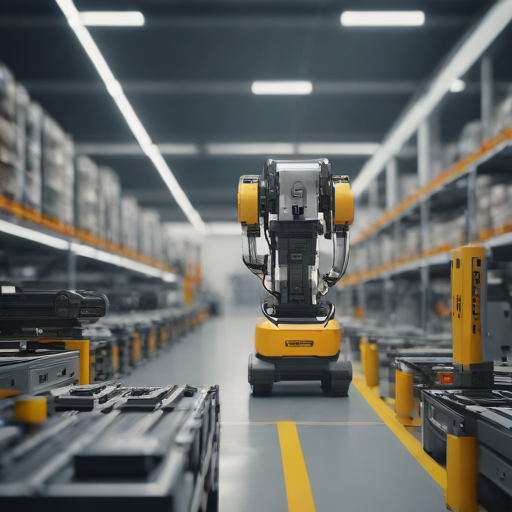
The "Future Warehouse" is no longer a concept confined to trade show demos in Chicago; it is a concrete reality being poured into foundations across the Midwest and Southeast. Major players like Amazon, Walmart, and FedEx are heavily investing in what industry insiders call "micro-fulfillment centers" and "dark warehouses"—facilities designed primarily for machines, with minimal human intervention. This shift is necessitated by the "Silver Tsunami" of retiring Baby Boomers and a persistent gap in the manual labor workforce. The Department of Labor statistics have long signaled a tightening labor market in logistics, but the post-pandemic era has accelerated the adoption of robotics from a "nice-to-have" efficiency booster to a "must-have" survival mechanism.
At the heart of this transformation is the rise of collaborative robotics, or "cobots." Unlike the caged industrial arms of Detroit's automotive past, these new machines are equipped with advanced LIDAR and computer vision, allowing them to work safely alongside human counterparts. In a facility outside of Pittsburgh—a city reclaiming its title as a hub of innovation—AI-driven robotic arms now handle the complex task of "picking" individual items from mixed bins, a dexterity challenge that stumped engineers for decades. This capability is critical for the e-commerce boom, where the unit of trade is the individual package rather than the pallet.
However, the automation wave is not just about replacing hands; it is about rewriting the logic of storage. The shift to 'Just-in-Case' inventory means warehouses must hold significantly more stock to buffer against geopolitical shocks or another pandemic-scale disruption. High-density automated storage and retrieval systems (AS/RS) are allowing companies to build up rather than out, utilizing vertical space in ways human-operated forklifts never could. This density is crucial as industrial real estate prices in prime US locations continue to climb. The modern American warehouse is becoming a high-tech data center for physical goods, where every SKU is tracked, optimized, and retrieved by algorithms that predict demand before a consumer even clicks "buy."
The economic implications of this "Robot Belt" emerging across the heartland are profound. While alarmists point to the potential displacement of blue-collar jobs, the reality on the ground is a shift in skill requirements. The forklift driver of 2020 is becoming the "robot fleet manager" of 2026. Community colleges in states like Ohio and Kentucky are rushing to update curricula to train a new workforce capable of maintaining, programming, and supervising these complex systems. The capital expenditure required for this transition is immense, yet the cost of inaction—of being left vulnerable to the next supply chain fracture—is viewed as far higher by American CEOs.
As we look toward the end of the decade, the trajectory is clear. The US warehouse automation market is poised for explosive growth, outpacing global averages as American firms repatriate manufacturing and distribution. This "Great Rewiring" relies on a digital backbone as much as steel and concrete. It is a bet that American ingenuity can build a supply chain that is not only efficient but unbreakable—a fortress of logistics manned by silicon and steel.
Projected US Warehouse Automation Investment (2024-2030)
Critics argue that this rapid automation risks creating a "bifurcated workforce," widening the gap between technical roles and remaining manual tasks. Yet, proponents see it as the only viable path to re-industrialization. If America is to manufacture and distribute its own essential goods—from semiconductors to pharmaceuticals—it cannot rely on the labor arbitrage of the past. It must out-innovate. The warehouse of the future, humming with the quiet efficiency of American-made robotics, is the bedrock of this new economic sovereignty.
Read Next
The Iron Collar Revolution: How Robotics is Rebuilding American Manufacturing
In 2026, the Rust Belt is reborn as the "Tech Belt." We explore the "Iron Collar" workforce driving America's manufacturing renaissance, from AI-driven cobots to lights-out factories, and what it means for the future of human labor.
The Flicker Before the Dark: Why America's Power Grid Is Losing the Battle Against Modern Storms
A deep dive into the crumbling state of the US power grid, the economic devastation of weather-related outages, and the urgent race to rewire the nation for a volatile climate.