The Arctic Firewall: Why One Woman's 'No' to Trump Protects the Future of Global Mobility

When Nations Become Real Estate: A Glitch in the Matrix
For the modern digital nomad, the passport is not just a travel document; it is the ultimate diversified asset. We build our lives on "Flag Theory"—residency in Portugal, banking in Singapore, citizenship in the US—trusting that these jurisdictions are fixed stars in a stable geopolitical sky. But the notification that flashed across terminals in August 2019, and echoed with renewed force in early 2026, wasn't just a diplomatic faux pas; it was a stress test for this entire operating system.
When President Trump reportedly inquired about acquiring Greenland—a self-governing territory of the Kingdom of Denmark—the reaction in Washington think tanks ranged from bemusement to outrage. But for the growing class of "sovereign individuals," the proposition signaled a terrifying potential pivot. If a nation can be purchased like a distressed asset, the legal bedrock upon which the global mobility lifestyle rests begins to crumble.
Consider the implications through the lens of a "Golden Visa" investor. Currently, wealthy Americans hedge against domestic instability by purchasing residency in places like Malta or New Zealand. A 2023 report by Henley & Partners noted a 447% increase in inquiries from Americans, specifically citing "political risk" as a primary driver. These individuals view citizenship as a diversified portfolio. But this portfolio strategy relies on the Westphalian assumption that states are permanent, sovereign entities with fixed borders. The "Greenland Gambit" challenges this assumption, suggesting that sovereignty could become transactional.
If Denmark had entertained the offer, what would have happened to the EU residency rights of the 56,000 people living in Nuuk and Sisimiut? Overnight, their "subscription" to the European social contract would have been cancelled, replaced by a new Terms of Service agreement dictated by Washington. This isn't hypothetical science fiction; it is the logical endpoint of the "Startup City" movement, where governance blurs with corporate management. For the digital nomad, Mette Frederiksen’s curt "absurd" wasn't just a defense of Danish territory. It was a defense of the predictable geopolitical order that makes the nomadic lifestyle possible. If nations become real estate, then citizenship stops being a right and starts becoming a revocable license.
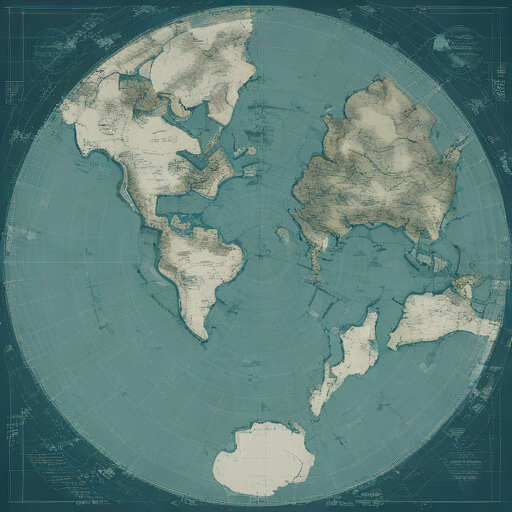
The Guardian of the North: Mette Frederiksen's Stand
The air in the Folketing was thin on that Tuesday in January 2026, the kind of silence that usually precedes a declaration of war. But when Danish Prime Minister Mette Frederiksen stepped to the podium, she wasn’t there to capitulate. She was there to draw a line in the ice.
For weeks, rumors had circulated in Washington and Brussels of a renewed, sweeter offer from the White House, packaged as a "Sovereign Lease Partnership." The numbers were staggering: a multi-billion dollar endowment for Greenland and direct passport rights. It was the ultimate geopolitical transaction. Frederiksen’s response was characteristically blunt, earning her the moniker "The Ice Queen" among frustrated diplomats. "Greenland is not Danish. Greenland is Greenlandic," she stated, adding a sharp coda for 2026: "And sovereignty is not a subscription service to be upgraded or cancelled by the highest bidder."
For the average American, this might look like European stubbornness. But for the "global citizen"—the software engineer in Bali or the crypto-trader in El Salvador—Frederiksen is fighting their battle. If a nation’s territory is merely real estate, then citizenship is merely a lease. Dr. Elena Vasquez, a senior fellow at SIPRI, warns that the precedent set by a "Greenland Deal" would shatter the legal frameworks protecting expatriates. "If the US can effectively buy sovereignty over Greenland, what stops China from purchasing 'exclusive administrative zones' in the Pacific? The passport you hold becomes less a guarantee of rights and more a ticket to a theme park that can change owners overnight."
Frederiksen understands that the liberal international order is the operating system that allows open societies to function. By refusing to engage with the "Art of the Deal," she acts as a firewall against a world where geopolitics looks increasingly like a hostile corporate takeover. While Danish companies report "unexplained delays" at US ports, her approval ratings in Copenhagen have solidified. She has managed to frame the defense of Greenland not as colonial paternalism, but as a defense of the rule of law itself.
Public Trust in International Norms (2020-2026)
Greenland: The Ultimate 'Deep Work' Destination or Strategic Asset?
Moving from high-level geopolitics to the ground level, the pristine silence of Nuuk offers a deceptive calm. Standing on the edge of the Colonial Harbour, the air is crisp, and the invisible airwaves hum with frantic energy. For the growing cadre of "Deep Work" devotees, Greenland was supposed to be the final frontier—a place where a Slack notification feels as distant as a tropical storm. But as Frederiksen stood firm, a starker reality emerged for the laptop class: you cannot be a digital nomad in a war zone.
The allure is undeniable. As climate change pushes habitable zones northward, Nuuk has appeared on the radar of those who gentrified Lisbon. "It’s the new Aspen, but with better ping," says Sarah Jenkins, a remote-working fintech consultant. Thanks to submarine cables like 'Greenland Connect' and Starlink dishes, connectivity rivals San Francisco. But this connectivity wasn't built for Zoom calls; it was built for NATO. The infrastructure that makes Nuuk a viable remote-work hub is the same infrastructure that makes it the "GIUK Gap’s" most valuable listening post.
The cost of living tells the story of this dual identity. A cappuccino in Nuuk rivals Manhattan prices, signaling an economy distorted by extreme import reliance. Unlike Lisbon, where nomads spiked rents, Nuuk’s housing crunch is driven by defense contractors. The "Greenland Card" remains a fantasy; immigration policy here is security policy. For the American digital nomad, this is a chilling lesson in "Passport Portfolio" management. We have treated citizenship as a subscription service, assuming access is merely a matter of fees. But as the Arctic ice melts, revealing shipping lanes and resources, the stability required for that lifestyle is fracturing.

The Slippery Slope of Sovereign Sales
This friction between lifestyle and security highlights a deeper structural risk. For the modern digital nomad, the Schengen Area is less a political agreement and more a fundamental utility. But the proposition of purchasing Greenland introduces a jagged tear in this canvas. If Nuuk were to transition to a U.S. possession, it wouldn't just be a change of flag; it would be an immediate excision from the European common travel area.
Imagine a remote worker on the "Arctic Circuit," flying from Reykjavik to Nuuk. Under a purchase scenario, that domestic hop becomes a hard international border. As detailed in the Schengen Border Code, any territory exiting the EU's sphere must enforce external border controls. We saw a preview of this during the post-Brexit transition, where British citizens found their "right to remain" capped, turning lifestyle migration into an immigration violation. A 2024 CSIS analysis highlighted that "sovereignty transactions" inevitably trigger reciprocal visa restrictions. If the U.S. effectively annexes a piece of the Nordic block, the EU is unlikely to maintain the current visa-waiver status quo.
Ultimately, if nations become tradable assets, citizenship becomes merely a subscription tier to a specific landlord. For the American digital nomad holding a U.S. passport—historically the ultimate "skeleton key"—this shift implies a future where your ability to travel isn't defined by diplomacy, but by which superpower holds the deed to the ground you stand on.
Climate Havens and the Race for the Cool
The urgency of this geopolitical standoff is amplified by the climate crisis. When the thermometer in Austin, Texas, hit 108°F for the twentieth consecutive day last July, Sarah Jenkins didn't just move to a cheaper state; she moved to a cooler latitude. She joined the "Equatorial Exodus," a demographic shift identifying climate havens as the new prime real estate. But the race for the cool is hitting a geopolitical wall.
When Mette Frederiksen cancelled President Trump's visit, the message for digital nomads was clear: the Arctic is not an open frontier. We have long treated sovereignty as a backdrop, assuming a visa guarantees access. Yet, as the Arctic Council’s 2025 assessment warns, the "High North" is transitioning to a zone of military strategic denial. Nations are realizing that cool air and stable grids are strategic assets. Nuuk saw a 400% spike in long-term rental inquiries from US IP addresses in 2025, but the Danish government is tightening residency requirements. They are hoarding the livable zones.
When Frederiksen draws a line in the ice, she isn't just protecting Danish territory; she is signaling the end of the era where the entire map was available for the right price. In a warming world, a US passport might get you out of the heat, but it might not get you into the cool. The freedom to roam is entirely dependent on the maps staying exactly the way they are.
Read Next
The Arctic Chessboard: Why Denmark's Greenland Visit Signals a Shift for Washington
Prime Minister Mette Frederiksen’s visit to Nuuk is more than a diplomatic formality—it is a strategic ratification of the US-Denmark alliance, securing NATO's northern flank and critical mineral supply chains against Russian and Chinese ambition.
Arctic Art of the Deal: Why Trump’s Greenland Ambitions Are a Double-Edged Sword for Putin
An in-depth analysis of the geopolitical, economic, and military implications of a potential US purchase of Greenland, and why it represents a paradoxical threat to Russian interests.