The February Ultimatum: Doctors Without Borders and the Death of Neutrality
Twenty-Six Days Left
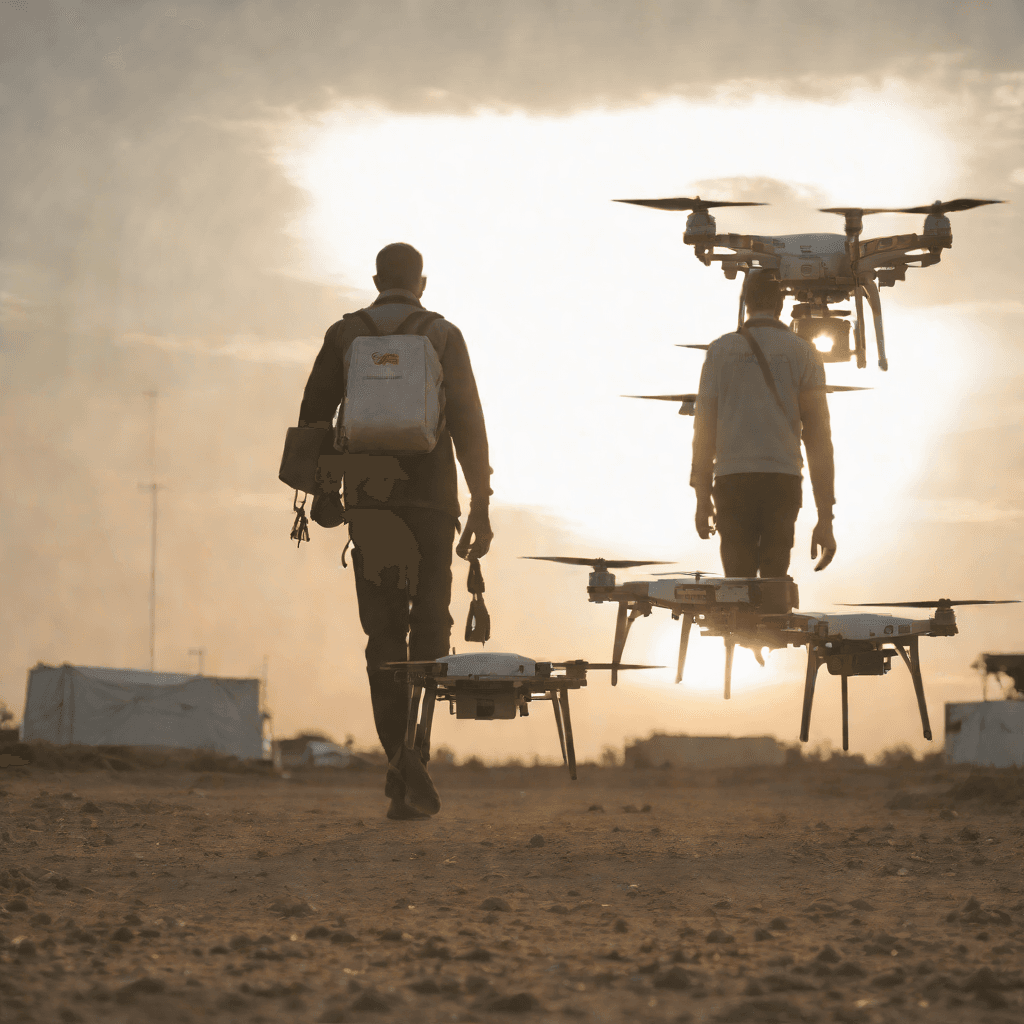
The clock ticking down to February 28, 2026, is not merely a logistical deadline; it is the expiration date for a sixty-year consensus on medical neutrality in conflict zones. With exactly twenty-six days remaining, the directive issued by Israeli officials has crystallized into a rigid ultimatum: Doctors Without Borders (MSF) must surrender comprehensive personnel rosters—including unredacted biometric data of local Palestinian staff—or face the immediate revocation of their operating licensure in the Gaza Strip. This administrative guillotine, framed as a necessary counter-terrorism measure to prevent aid diversion, has effectively converted a bureaucratic dispute into a countdown for the region’s remaining trauma infrastructure.
The core of this standoff lies in the incompatibility of twenty-first-century surveillance demands with twentieth-century humanitarian ethics. The trigger for this crisis was not a singular security incident, but a quiet refusal earlier this month by MSF administrators to comply with new, stringent protocols requiring real-time data sharing of all employees operating within military exclusion zones. For the organization, handing over these lists represents a breach of the "do no harm" principle, potentially exposing local staff and their families to targeted scrutiny based on algorithmic associations rather than proven conduct.
This stalemate has resulted in an immediate, pre-deadline operational freeze. Visas for incoming surgeons are currently in limbo, and shipping containers filled with dialysis filters are stalled at the Kerem Shalom crossing, awaiting a clearance that is contingent on data compliance. The impact of this administrative gridlock is already visible in the supply warehouses that serve as the lifeline for Deir al-Balah’s remaining field hospitals.
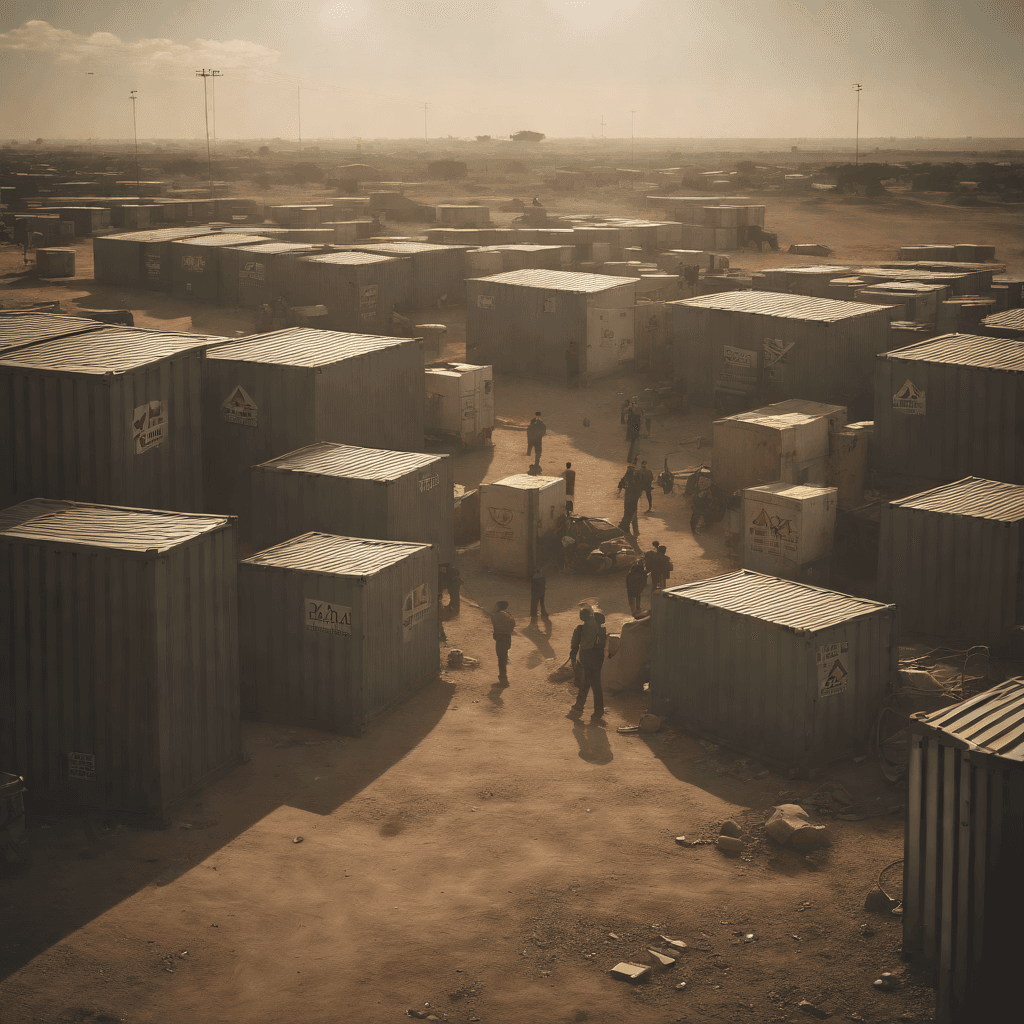
For David Chen (pseudonym), a logistics coordinator from Chicago currently managing inventory near the border, the freeze is a mathematical certainty of preventable death. "We aren't just counting boxes of saline anymore; we are counting the hours until the generators run dry because the fuel permits are tied to the same suspended license," Chen notes. His team now spends days negotiating for single trucks, a process that used to take hours, illustrating how the weaponization of bureaucracy can be as effective as a blockade.
This erosion of humanitarian leverage is exacerbated by a distinct shift in diplomatic signaling from Washington. Unlike previous years where the State Department might have publicly mediated such a rift to preserve the "humanitarian space," the Trump administration’s retrenched "America First" foreign policy has largely treated this as a sovereign domestic issue for Israel. Analysts suggest that the White House is prioritizing the stability of its new regional security architecture over the operational autonomy of international NGOs, signaling a broader global trend where the rights of aid organizations are increasingly subordinate to national security data requirements.
The Security Imperative
The Israeli government’s rationale for the expulsion centers on a fundamental shift in the doctrine of "extreme vetting" that has come to define the Trump 2.0 era of Middle East security policy. National security advisors in Jerusalem argue that the traditional, trust-based model of humanitarian neutrality is an anachronism in a theater where digital metadata has become as lethal as kinetic munitions. According to recent security assessments, the Defense Ministry maintains that any organization refusing to integrate into a centralized, biometric clearinghouse creates a tactical "blind spot" that can be exploited by insurgent forces for logistical camouflage.
This security-first stance reflects a broader administration-backed pivot toward technological isolationism, where the right to operate in a conflict zone is contingent upon total data transparency. By framing the expulsion as a necessary measure to prevent the "dual-use" of humanitarian corridors, the state effectively shifts the burden of proof from the regulator to the aid worker. Security officials contend that the opacity of international NGOs often serves as an inadvertent shield for hostile actors in high-density urban warfare.
David Chen, also a consultant for a Washington-based security firm, notes that the flow of medical supplies often shares the same bandwidth as civilian communication networks susceptible to infiltration. He observes that without strict, real-time data-sharing agreements, aid shipments can inadvertently provide cover for illicit movements. From Israel’s perspective, the ultimatum is an attempt to standardize a digital infrastructure where every local staff member’s history is cross-referenced with regional intelligence databases.
However, this logic assumes that transparency is a neutral act. It ignores the reality that such data sharing would turn humanitarian organizations into de facto informants, stripping them of the perceived impartiality required to treat patients on all sides of a frontline. The economic and human cost of this regulatory wall is felt most acutely by those attempting to maintain stability in a region defined by isolationism. Maria Rodriguez (pseudonym), a program officer at a development agency, highlights that when medical NGOs are forced to withdraw, the resulting medical collapse creates a vacuum that increases the risk of regional contagion and uncontrolled migration.
A History of Targets
The erosion of humanitarian neutrality has reached a terminal velocity where the traditional "shield" of the Red Cross or MSF emblem no longer functions as a deterrent, but increasingly as a data point in algorithmic targeting. For MSF, the decision to resist the February ultimatum is a desperate attempt to preserve the "humanitarian space" that has been systematically liquidated. MSF leadership argues that in the current theater of asymmetric warfare, providing coordinates is no longer a safety protocol; it is an act of surrendering staff to a digital panopticon that has already overseen the deaths of hundreds of aid workers.
The statistics reflect a grim evolution in how modern conflicts treat non-combatants. Since the escalation began, the death toll of humanitarian personnel has reached historic highs. MSF specifically points to instances where "deconfliction" coordinates—GPS data shared in good faith—appeared to precede "precision" hits on medical convoys. In this environment, the organization views data transparency as a lethal liability, suggesting that the very mechanisms intended to protect them have been weaponized by intelligence-gathering systems favoring tactical elimination.
For those on the ground, the choice between digital transparency and physical withdrawal is a binary with no virtuous outcome. Michael Johnson (pseudonym), a veteran logistics coordinator who recently returned to the US, describes a landscape where every radio transmission feels like a beacon for loitering munitions. He notes that the "February Ultimatum" essentially asks MSF to become an auxiliary of the surveillance state. This internal tension has paralyzed operations, as staff weigh their commitment to the wounded against the reality that their presence may now draw fire.
The Widening Net
The expulsion of Doctors Without Borders is not an isolated administrative error; it is the first verifiable enforcement of a broader policy shift that has effectively redefined the terms of humanitarian engagement. Diplomatic cables suggest this is the opening salvo of a campaign linking aid corridor access to "enhanced digital transparency." This approach explicitly requires sharing staff geolocation data and patient intake demographics with host military authorities—a condition neutral bodies describe as an existential violation of their charter.
Intelligence reports indicate that dozens of other aid organizations are currently under a probationary review status similar to the one that preceded the MSF expulsion. These organizations face a deadline that forces a choice: capitulate to data demands that compromise neutrality, or face license revocation. As noted by legal scholars, this moves the red line of humanitarian aid from "physical access" to "informational sovereignty," treating medical care as a conditional privilege rather than a protected right.
For those working on the ground, this bureaucratic tightening feels like a closing vice. David Miller (pseudonym), a logistics coordinator for a European NGO, describes the new compliance forms as intelligence gathering tools. "We are being asked to provide real-time coordinates for clinics that, under the Geneva Convention, should simply be protected because they exist," Miller explains. His experience illustrates the operational paralysis gripping the sector, with aid workers spending as much time on legal compliance as on food drops.
Washington’s Calculated Silence
The silence from the West Wing regarding the expulsion is a feature of the 'America First' doctrine in its mature 2026 form. While Brussels and Paris have condemned the removal of impartial observers, the US State Department’s response has been carefully calibrated to avoid threatening tangible consequences. This underscores a shift in American foreign policy: a move away from the role of global humanitarian guarantor toward a strictly transactional model of sovereignty.
This calculated detachment has immediate costs for aid organizations that have historically relied on the US diplomatic umbrella. Humanitarian corridors, once negotiated with American leverage, are now subject to the whims of local military actors who sense Washington’s indifference. Internal discussions among major NGOs suggest that security risks for aid workers have risen significantly since the administration signaled it would no longer automatically penalize nations for restricting NGO access.
Michael Johnson notes that the silence is deafening. "In 2024, I could call a contact at State and get a strongly worded statement that would open a checkpoint within hours," he explains. "Today, those calls go to voicemail." Defenders of the administration argue that this restraint prevents the US from being dragged into "forever wars." However, critics warn that by allowing the erosion of the "neutral humanitarian space," the US is conceding the information war, leaving American policymakers blind to the realities of a volatile region.
The Void After February
The imminent expiration of MSF's operating licenses threatens to create a vacuum that local infrastructure is statistically incapable of filling. International medical NGOs have effectively functioned as a surrogate health system, absorbing a significant percentage of complex surgical cases. If MSF is forced to exit, this capacity vanishes, leaving remaining local hospitals to manage a trauma load that would overwhelm even advanced Western centers.
The ripple effects will be felt in the collapse of chronic care supply chains. Without MSF’s logistical backbone, shipments of insulin and dialysis fluids are being rerouted or canceled due to liability risks. This logistical breakdown highlights a critical vulnerability: when the primary guarantor of neutrality is removed, the entire market for essential medicines in a conflict zone freezes.
Beyond the immediate medical crisis, the expulsion results in a severe degradation of independent intelligence. Aid workers have served as neutral witnesses capable of verifying casualty figures. Independent analysis emphasizes that without medical NGOs, the reliability of verifiable data on civilian welfare degrades significantly, forcing policymakers to rely on partisan narratives.
The Algorithm of Access
The modern humanitarian crisis in 2026 is no longer defined solely by the physical blockade of corridors, but by the digital gatekeeping of information. As the Trump administration reinforces its "America First" posture, international aid is filtered through a lens of extreme vetting. This shift has transformed the traditional "neutral ground" of humanitarian work into a high-stakes data exchange. For MSF, the price of entry now requires surrendering the confidentiality that protects their staff and patients.
In this new era, field workers function as involuntary data nodes. The requirement to provide real-time GPS tracking and comprehensive personnel lists is marketed as a security necessity, but it creates a profound ethical schism. When an aid worker’s location is a live data point on a military server, the line between humanitarian assistance and tactical intelligence blurs.
The departure of international medical teams marks the death of the "Invisible Doctor," the neutral actor who could move between lines of fire without becoming part of the conflict's data-stream. As we move deeper into 2026, the Gaza expulsion serves as a warning that the humanitarian space is being paved over by digital infrastructure that values data integrity over human life. We are witnessing the birth of a world where the right to receive aid is contingent upon the willingness to be tracked, analyzed, and filed away.
What do you think of this article?