The Rust Shield: Russia's Zombie Army Masks a Hypersonic Threat
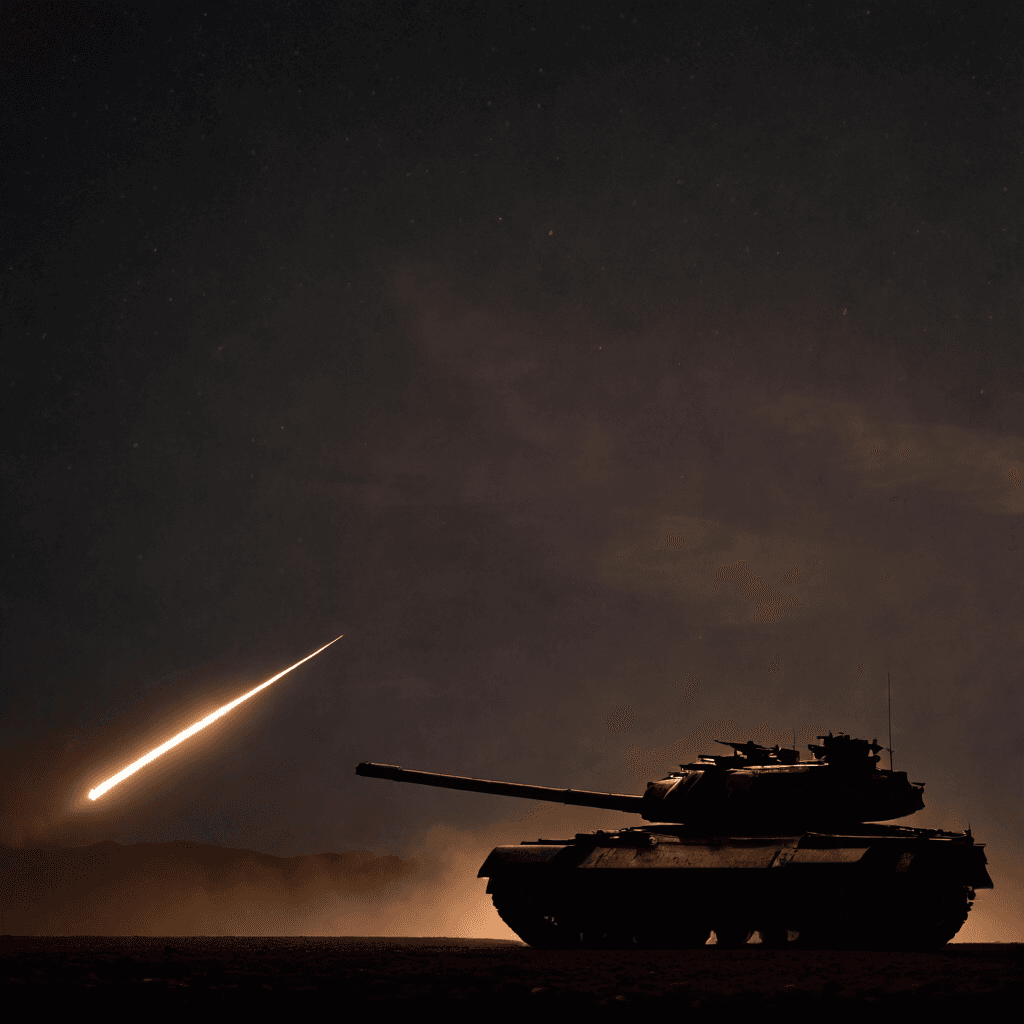
Ghosts of the Cold War on the Frontline
On the frozen steppes of the Donbas, a peculiar silhouette has become the defining image of the 2026 battlefield: the hulking, rusted frame of a T-55 tank. A relic first produced when Dwight D. Eisenhower sat in the Oval Office, it is now fitted with a terrifyingly modern array of Chinese-made drone jammers and commercially available thermal optics. To the casual observer scrolling through social media in Washington, these museum pieces appear to be evidence of a collapsing state—a desperate "scraping of the barrel" by a military that has lost over 11,000 tanks since the invasion began.
However, defense analysts warn that this dismissal ignores a lethal mutation in Russian strategy. These are not tanks attempting to duel with Western Abrams or Leopards; they are mobile, disposable artillery batteries, lobbing high-explosive shells from miles away. Protected by an electronic warfare bubble that renders expensive Western precision munitions increasingly erratic, they represent a shift from maneuver warfare to industrial-scale attrition.
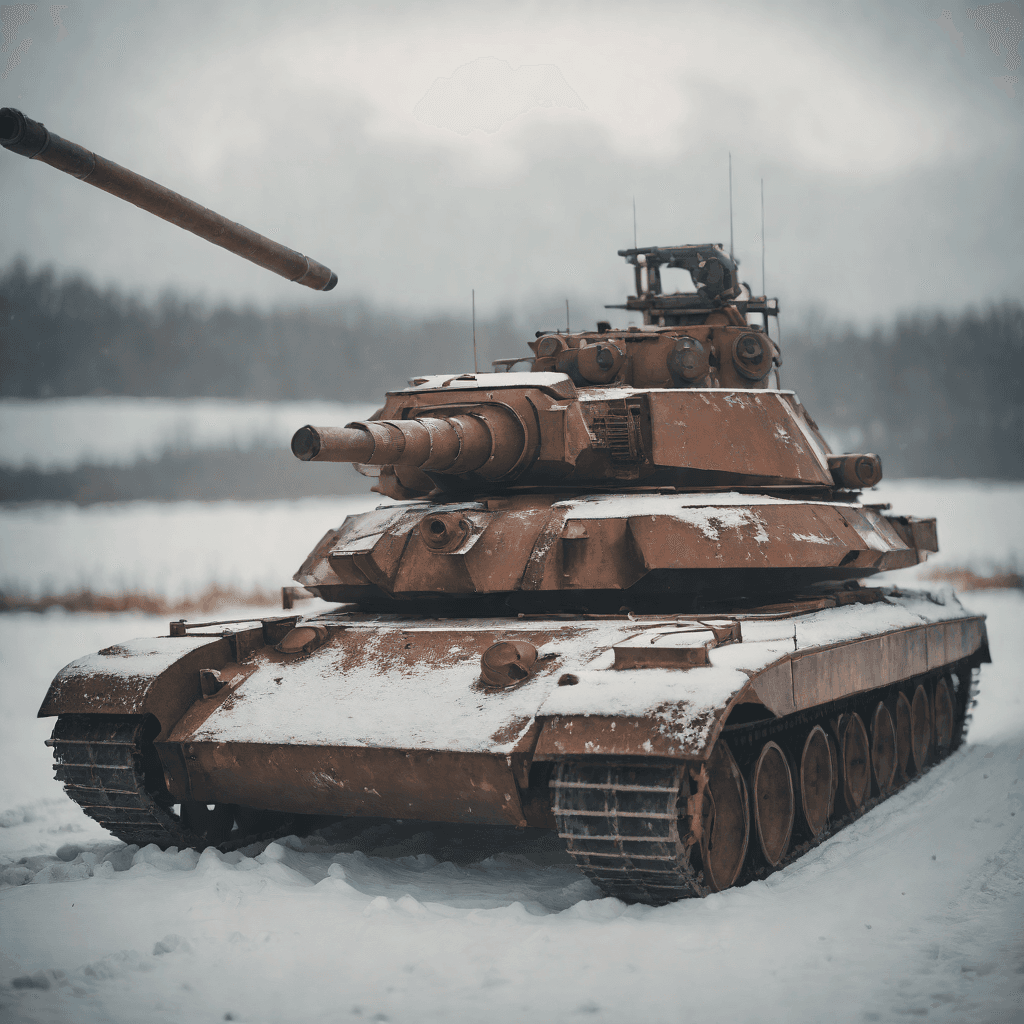
The sheer scale of this industrial attrition defies modern Western military planning. According to January 2026 data from the General Staff of the Armed Forces of Ukraine, Russia has sustained a staggering 11,596 tank losses, a figure that would have totally demilitarized most NATO members ten times over. Yet, the offensive grinds forward. The International Institute for Strategic Studies (IISS) notes that while Russia lost approximately 1,400 Main Battle Tanks in 2024 alone, its ability to refurbish thousands of stored Soviet hulls has allowed it to maintain a suffocating pressure on the front lines.
The Arithmetic of Attrition
This reliance on mass over sophistication has fundamentally altered Russia's geopolitical standing. Seth G. Jones, Senior Vice President at the Center for Strategic and International Studies (CSIS), describes Moscow as having devolved into a "second- or third-rate economic power." In a recent analysis, Jones argues that the Kremlin is now entirely dependent on the refurbishment of Soviet-era stocks and the economic lifeline provided by partners like China, Iran, and North Korea. Russia has effectively traded its future economic viability for current military volume.
While the advance rate is agonizingly slow—averaged by CSIS at just 15 to 70 meters per day in major offensive sectors—the cumulative effect is a relentless grinding down of Ukrainian defenses. This "meat grinder" approach is driven by a tolerance for casualties that includes an estimated 1.2 million killed or wounded personnel. For American policymakers, the implications of this "devolution" are paradoxically more alarming than a peer-competitor threat. NATO's defense architecture is built on quality, precision, and quick decisive victories—doctrines that struggle against an adversary that absorbs massive losses for tiny gains without political collapse.
This exhaustion of materiel has forced a fundamental mutation in the Kremlin's war machine. Consequently, the battlefield is now populated by ghosts of the Cold War; T-62s and T-55s are being pulled from deep storage, modernized with crude commercial tech, and sent to the front not as breakthrough vehicles, but as expendable assault guns. This regression suggests that while Russia retains the capacity for violence, it has lost the capacity for complex, armored maneuver warfare on a strategic scale.

The Hypersonic Shield Behind the Rust
The narrative currently dominating Washington think tanks—that Russia’s military has devolved into a "museum army"—is seductively simple, but potentially fatal. By flooding the frontline with refurbished Soviet-era stocks, Moscow is essentially trading low-value metal for high-value time, allowing its military-industrial complex to bypass the intermediate generation of warfare and leapfrog directly into an era of hypersonic asymmetry.
This "hollowing out" of conventional forces serves as a massive distraction from the lethal modernization occurring behind the lines. While Western observers mock the deployment of T-62s, these archaic platforms are successfully freezing the front lines, absorbing sophisticated Western munitions at a fraction of the cost. This attrition strategy has allowed Russian engineers to focus scarce high-tech components not on rebuilding a 20th-century tank fleet, but on perfecting the Zircon hypersonic cruise missile and scaling the production of Geran-5 loitering munitions.
For defense planners in the Pentagon, the implication is a haunting operational paradox: Russia is losing the war it started in 2022, but preparing to win a war NATO isn't fighting yet. The IISS Military Balance Assessment for 2025-2026 indicates that the degradation of conventional forces has forced this mutation in doctrine. Instead of armored spearheads, the threat profile has shifted to long-range, unstoppable kinetic strikes. A T-90 tank can be destroyed by a $175,000 Javelin; a Zircon missile, travelling at Mach 9, renders traditional air defense mathematics obsolete. The rust on the front lines is effectively shielding the budget and supply chains for these next-generation assets.
NATO's Technological Trap
The critical question for the White House and Pentagon is not whether Russia is struggling, but when this specific mode of warfare reaches its terminal velocity. Intelligence analysts at IISS warn that Russia may not possess enough main battle tanks to sustain effective offensive operations beyond early 2026, a deadline that is now upon us. If the burn rate of 2024 and 2025 continues, the "tank war" phase of this conflict is mathematically ending.
However, this does not signal peace; it signals a shift toward total reliance on external partners and a potential pivot to purely asymmetrical threats. As the heavy armor runs out, the "second-rate power" described by Jones will likely become more volatile, not less. The challenge for the Trump administration and its NATO allies is no longer just countering advanced Russian technology, but producing enough munitions to destroy a seemingly endless stream of low-value targets without bankrupting their own arsenals.
What do you think of this article?