One Against Twenty-One: Hind Kabawat and the 'Window Dressing' Paradox in New Syria
The Solitary Figure in Damascus
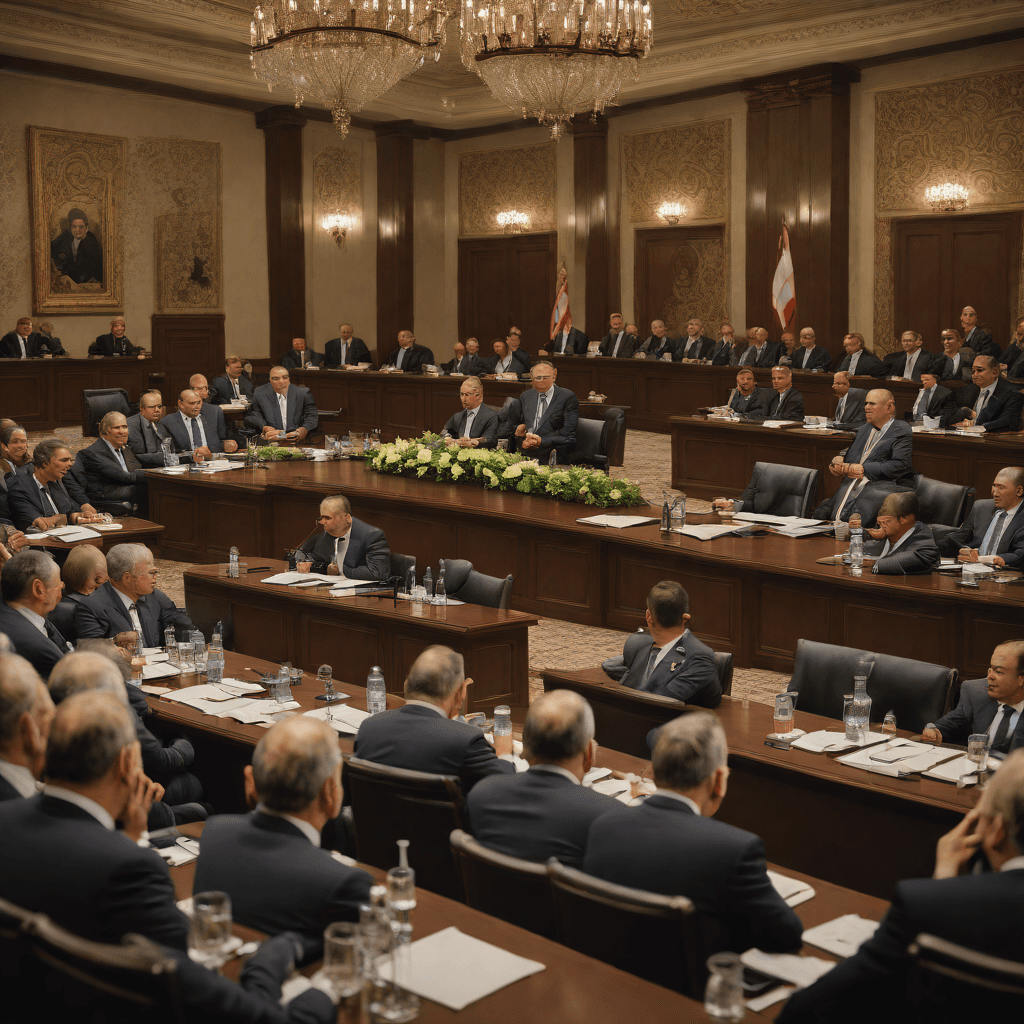
In the cavernous halls of the presidential palace in Damascus, the visual reality of the new Syrian Transitional Government offers a stark counter-narrative to its reformist rhetoric. At the heavy mahogany table where the nation's reconstruction strategy is debated, twenty-one men—representing a complex mosaic of military factions, technocrats, and regional power brokers—dominate the room. Sitting among them is a single woman: Hind Kabawat. As the Minister of Social Affairs and Labor, she occupies the only seat allocated to a female representative in the 22-member cabinet. This 4.5% representation rate has turned her ministry into a lightning rod for international criticism regarding the legitimacy of the post-Assad order.
Critics immediately branded her appointment as a diplomatic calculation—a concession designed to appease Western donors without ceding actual political leverage. Kabawat, however, has steadfastly refused to play the role of a silent observer. While she famously rejected the "window dressing" label as early as 2014 during the Geneva talks, the stakes in 2026 are infinitely higher. "We have a country to rebuild, and women are the backbone of that reconstruction," she reportedly emphasized to aides, reprising her long-standing battle against tokenism. "If I am the only one, I will shout the loudest."
Her challenge frames the central conflict of the transition: whether her presence is a genuine foothold for gender equity or a solitary containment zone for it. Nearly a year into her tenure, the question remains whether a single voice can dismantle decades of systemic exclusion without the voting block to enforce it.
The Economic Reality of Exclusion
The political optics of Kabawat’s isolation are mirrored by a devastating economic reality. Regional labor assessments suggest that female labor force participation in Syria has collapsed to approximately 13.3%. This statistic places Syria among the lowest globally in gender economic integration and represents a near-total collapse of the social safety net Kabawat is charged with rebuilding.
With youth unemployment among women estimated to exceed 40%, the country is effectively attempting to reconstruct its shattered infrastructure with half its workforce sidelined. Kabawat has argued that her ministry is the "backbone" of recovery, but without broad inter-agency support, her capacity to implement labor reforms is severely limited. The structural inertia of a male-dominated cabinet threatens to render her portfolio purely symbolic, treating inclusivity as a conditional import rather than a domestic necessity.
Constitutional Paradoxes and Legal Gaps
This disconnect is codified in the very legal framework of the transition. The transitional constitutional framework, which serves as the supreme law for the five-year interim period, contains a paradox in its fourth article. While it broadly guarantees "cultural diversity and equal rights," legal analysts note a critical absence of specific enforcement mechanisms for gender parity that are present for other sectarian balances.
Consequently, Kabawat’s ministry has become the sole institutional engine for women’s rights, operating without a constitutional mandate for quotas or guaranteed representation in the legislative body. Without statutory quotas or binding language, Article 4 risks becoming what Kabawat fears most—a decorative clause in a document designed to satisfy international observers rather than empower Syrian citizens. As the government approaches its first anniversary, the legislative gauntlet remains controlled by the twenty-one men leading the defense, finance, and interior ministries.

The View from Washington: Actions, Not Words
The internal gridlock has direct external consequences, particularly regarding the sanctions regime that continues to strangle the Syrian economy. The Trump administration, pursuing an "America First" foreign policy that generally eschews nation-building, views the composition of the interim government through a lens of pragmatic scrutiny. Diplomatic channels suggest that Washington's conditions for sanction relief are tied strictly to stability and the verifiable renunciation of past authoritarian practices.
American diplomats have privately signaled that a government unable to integrate half its population is inherently unstable. The U.S. position emphasizes that legitimacy is earned through results, not just the exclusion of bad actors. While Washington has focused heavily on the exclusion of terrorists from official roles, the benchmark for gender equity is becoming a proxy for broader modernization and economic viability.
If Kabawat remains an isolated figurehead, unable to push substantive labor reforms, the administration in D.C. will likely interpret the entire transitional body as a facade. This would confirm fears that the "New Syria" is merely a reshuffling of the old guard, keeping the crippling sanctions regime firmly in place.
2026: The Year of Consequence
One against twenty-one. That is the raw arithmetic defining Hind Kabawat’s daily reality within the Syrian Transitional Government. The challenge facing Kabawat in 2026 is no longer about proving her personal competence, but about preventing her ministry from becoming a permanent monument to tokenism.
For international investors and observers, the "Kabawat Test" has become a primary risk indicator. The Minister’s ability to move beyond the vague promises of the Constitutional Declaration and implement enforceable gender parity will determine if Syria is open for business or merely open for continued conflict. If the Transitional Government cannot integrate its female population into the workforce, it cannot stabilize its currency or its streets. As the year unfolds, Kabawat’s battle is not just for the soul of Syrian feminism, but for the hard currency required to keep the lights on in Damascus.
What do you think of this article?