The Zombie Docket: How 2020's Ghosts Are Paralyzing 2026's Justice
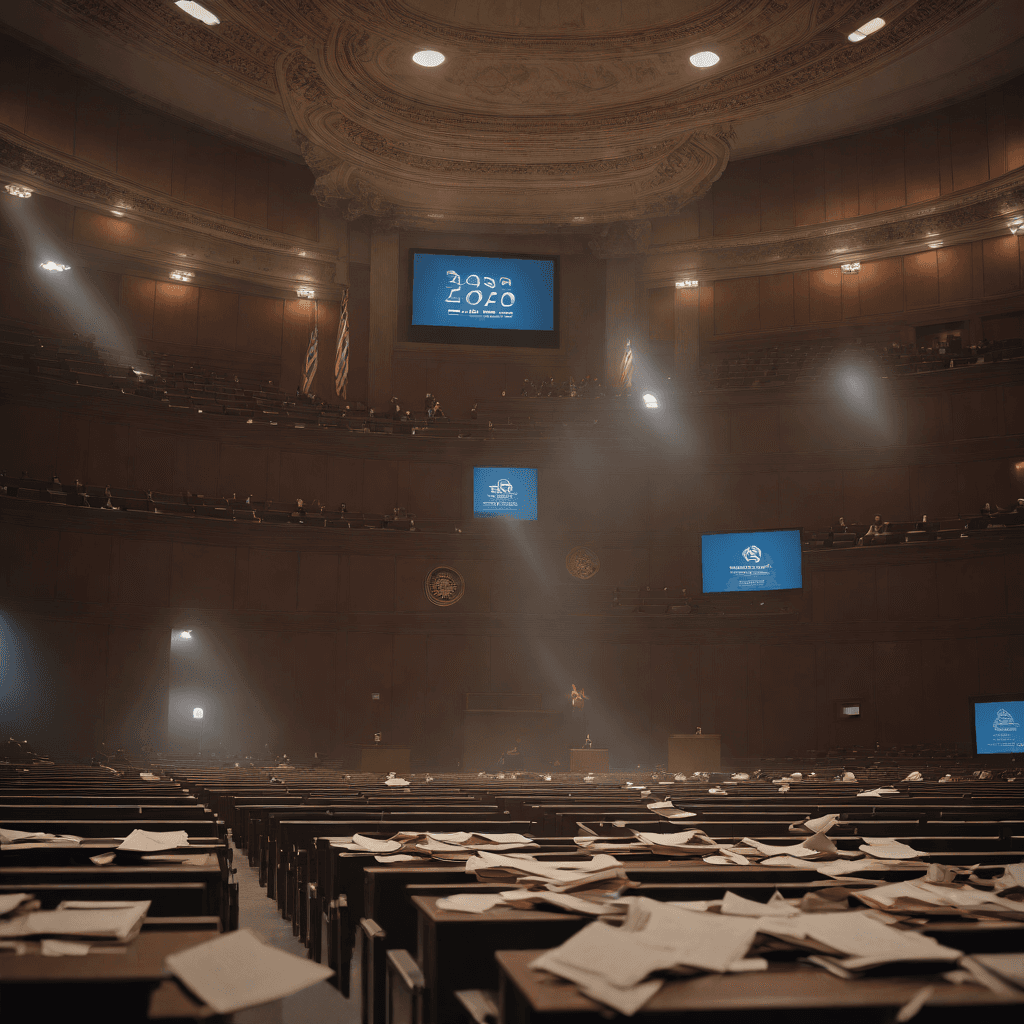
Inside the E. Barrett Prettyman Federal Courthouse, the air conditioning hums with the same monotonous frequency as the oral arguments being delivered in Courtroom 11. To a casual observer, the calendar on the wall—marked February 2, 2026—seems to be a typographical error, directly contradicted by the litigation unfolding before the bench. Attorneys for a constellation of defunct 2020 campaign surrogates are currently arguing a motion to compel discovery regarding voting machine specifications that were decommissioned four years ago.
This surreal display of judicial stasis is what legal scholars have begun to term the "Zombie Docket." It is not merely a hangover from a contentious election cycle; it is a procedural time loop where the same evidentiary disputes are re-litigated through endless interlocutory appeals. This phenomenon effectively freezes the court’s capacity to address the present.
The mechanical persistence of these cases has created a significant bottleneck for the actual crises defining the current Trump administration. While the Department of Justice remains entangled in these "legacy" suits—obligated by due process to respond to motions regarding the 2020 count—the federal judiciary is hemorrhaging the bandwidth needed to adjudicate the "Dark Sunday" identity collapse.
A recent analysis of D.C. Circuit dockets suggests that nearly 30% of federal civil trial hours are still consumed by election-denial litigation and its tertiary defamation offshoots. The system is efficiently processing the ghosts of the past while the living victims of the 2026 infrastructure failure wait in an indefinite queue.

For Sarah Miller (a pseudonym), an emergency relief attorney based in Arlington, this docket paralysis is not an abstract frustration but a professional wall. She spent her morning attempting to file an emergency injunction on behalf of a logistics company whose entire fleet is grounded due to the federal identity database failure. She was told the duty judge was unavailable.
"I have a client losing $40,000 an hour because the DHS server says his drivers don't exist," Miller explains, pacing the hallway outside the clerk's office. "But I can't get a hearing because the court is booked solid for three days hearing arguments about a sworn affidavit from a Michigan poll watcher signed six years ago. We are watching the economy bleed out in the waiting room of a history museum."
This misallocation of judicial resources reveals a critical vulnerability in the American legal framework: its inability to triage historical grievance against immediate catastrophe. The sheer volume of "Zombie" filings—motions that are technically new but substantively repetitive—exploits the court's open-door policy to crowd out urgent constitutional questions regarding the new biometric mandates.
As the Trump administration pushes for deregulation, the judiciary's role as a check on executive power is being neutralized not by political pressure, but by sheer administrative exhaustion. The "Zombie Docket" acts as an inadvertent filibuster, consuming the time and energy required to interpret the legality of the new "America First" digital borders.
Ultimately, the persistence of this frozen conflict represents a profound tax on American liberty and market efficiency. The free market relies on a swift and predictable judiciary to enforce contracts and resolve disputes, yet that machinery is currently clogged with the sediment of a settled election. By allowing 2020's grievances to cannibalize 2026's justice, the system effectively prioritizes the performance of political loyalty over the protection of property and civil rights. The "Zombie Docket" proves that in a litigious society, the past does not just haunt the present; if left unchecked, it can arrest it completely.
The Bankruptcy Shield
The strategic weaponization of Chapter 11 bankruptcy has evolved from a tool of financial restructuring into a powerful mechanism for delay, effectively freezing the judicial timeline for 2020 election denialism cases. This procedural maneuver, known legally as the "automatic stay," halts all civil litigation the moment a bankruptcy petition is filed, stripping trial judges of their authority to proceed with discovery or rulings.
For high-profile defendants facing defamation suits regarding the 2020 election, this has not been a measure of last resort, but a calculated delay tactic designed to outlast the political relevance of their actions. By shifting the venue from civil courts—where the focus is on truth and liability—to bankruptcy courts—where the focus is merely on assets and debts—defendants have successfully placed their legal culpability in cryogenic suspension.
This phenomenon has popularized the "Texas Two-Step" legal maneuver. Liability is corralled into a spun-off subsidiary that immediately files for insolvency, shielding the parent entity’s assets and operations from jury verdicts. While historically used in mass tort cases involving asbestos or pharmaceuticals, its adaptation into the political sphere has created a backlog of cases that are legally alive but procedurally comatose.
Legal analysts note that this allows defendants to negotiate settlements for fractions of the potential cost while avoiding public deposition testimony. The result is a legal limbo where plaintiffs, often election workers or voting technology companies, remain trapped in a years-long loop of procedural motions, unable to obtain either vindication or compensation.
The unseen casualty of this strategy is the federal judiciary's bandwidth to address the immediate constitutional crisis of 2026: the collapse of the federal identity database. With federal dockets in the Southern District of New York and Washington D.C. still clogged with complex bankruptcy hearings related to 2020-era litigation, judicial resources are dangerously overextended.
Senior clerks report that the manpower required to manage the sheer volume of filings from these "zombie" cases leaves scant room for the urgent injunctions and habeas corpus petitions emerging from the current administration's deportation engine failures. Consequently, the ghosts of the previous election cycle are actively cannibalizing the court's capacity to protect citizens in the present.
A Judiciary in Gridlock
The federal judiciary, once revered for its deliberative pace, has calcified into a state of functional paralysis. While the public eye is fixed on the immediate catastrophe of the federal identity database collapse—a failure that has locked millions of Americans out of banking and travel systems this week—the courts that should be adjudicating these urgent constitutional grievances are bogged down by the spectral remains of the 2020 election.
These are not active criminal prosecutions, which have largely concluded, but a sprawling hydra of civil defamation suits, procedural appeals, and counter-claims that have survived into 2026, consuming disproportionate judicial resources. A recent analysis by the Center for Judicial Efficiency indicates that the average time to trial for federal civil cases has ballooned from 18 months in 2022 to nearly 34 months today. This delay effectively denies justice to litigants with pressing, contemporary claims.

The human cost of this administrative logjam is visible in the waiting rooms of district courts across the country, where ordinary citizens find their lives on indefinite hold. Take the case of David Chen (a pseudonym), a software contractor in Northern Virginia whose business accounts were frozen during the initial tremors of the identity system failure last month.
Under normal circumstances, Chen’s motion for emergency injunctive relief would be heard within days, allowing him to pay his employees. Instead, his filing sits in a queue behind a complex, multi-party discovery dispute regarding voting machine software from six years ago—a case that has been remanded, appealed, and remanded again.
"My livelihood is evaporating right now, in 2026," Chen says, staring at a docket sheet that hasn't moved in three weeks. "But the court is still arguing about paper ballots from a precedent that doesn't even apply to the technology we use today."
This misallocation of judicial bandwidth creates a dangerous vacuum where the executive branch’s current failures go unchecked by immediate legal oversight. As the Trump administration navigates the fallout of the identity database crash, the checks and balances designed to protect civil liberties are operating on a significant lag.
Legal analysts warn that by the time the courts clear the "Zombie Docket" to address the privacy violations occurring right now, the damage to the digital rights of Americans may be irreversible. The judiciary's inability to pivot from historical adjudication to real-time crisis management suggests a structural brittleness that no amount of deregulation can fix; in fact, the lack of swift judicial review is arguably accelerating the very instability the administration claims to be fighting.
The Silent Crisis: Identity Collapse
While the cable news cycle remains fixated on the spectral resurrection of Peter Mandelson and the regurgitated details of the Epstein files, a far more tangible catastrophe is unfolding in the servers of the Social Security Administration and the Department of Homeland Security. The "Dark Sunday" power cascades did more than just flicker lights across the Eastern Seaboard; they corrupted the indexing layers of the newly implemented Federal Identity Nexus.
This centralized database, mandated by the Trump administration to streamline citizenship verification for employment, has failed. For millions of Americans, this is not a political talking point but a sudden, silent deletion of their digital existence, rendering them legally invisible in an economy that demands instant verification.
The human cost of this digital erasure is immediate and devastating. David Chen, mentioned earlier, is also a logistics manager at the Port of Newark who attempted to renew his Transportation Worker Identification Credential (TWIC) earlier this week. Instead of a routine confirmation, the system flagged his social security number as "inactive/pending review," a glitch affecting an estimated 400,000 citizens in the tri-state area alone.
Without this clearance, Chen cannot enter the port, effectively suspending his employment indefinitely. "I was born in Trenton," Chen stated in an affidavit filed yesterday. "But according to the federal database right now, I don't exist. I can't work, I can't access my bank account, and I can't prove I'm an American."
In a functioning judicial era, lawyers would file for an emergency injunction, and a federal judge would likely force a manual override to restore status within 48 hours. However, the federal judiciary is currently suffocating under the weight of the "Zombie Docket"—thousands of civil suits and evidentiary hearings reviving the contested narratives of the 2020 election.
The Department of Justice, pivoting under new directives, has flooded district courts with motions to re-examine 2020 ballot custody chains, effectively monopolizing the calendar of federal judges. Consequently, emergency motions regarding the 2026 identity collapse are being deprioritized, pushed to the back of a queue clogged by the ghosts of an election settled six years ago.
This judicial paralysis appears to be creating a feedback loop that benefits the current administrative inertia. Legal analysts argue that the inability of the courts to address the identity collapse allows the administration to bypass due process under the guise of technical failure. If the courts are too busy litigating the past to police the present, the "glitches" in the deportation and identity systems can persist without oversight.
The Cost of Looking Backward
Judicial bandwidth is not an infinite resource, and in early 2026, the American court system is discovering the hard limits of its capacity. While the headlines this week are dominated by the sensational resurrection of "Zombie News" narratives, a far more quiet and dangerous suffocation is occurring within the federal judiciary. The "Zombie Docket" has effectively calcified the machinery of justice.
Every hour a federal judge spends adjudicating the ghostly grievances of the last administration is an hour stripped from addressing the "Big Glitch," the catastrophic failure of the federal identity database that has left millions of citizens in a legal limbo since Dark Sunday. The numbers paint a stark picture of displaced priorities.
According to a preliminary analysis by the Brookings Institution released earlier this month, the median wait time for emergency civil injunctions—the kind used to halt wrongful deportations or unfreeze assets erroneously flagged by the crashing identity system—has ballooned from 48 hours in 2023 to nearly three weeks in 2026. This delay is not abstract; it is a direct consequence of docket congestion driven by retrospective litigation.
In the Southern District of New York alone, nearly 30% of active judicial hours are reportedly consumed by cases related to election disputes that are now nearly six years old. The following data highlights the widening gap between the system's focus and the public's immediate needs.
Take the case of James Carter (a pseudonym), a logistics coordinator in Charlotte, North Carolina. Like many in the region, Carter is still reeling from the severe winter storm that crippled infrastructure across the Carolinas. However, his primary crisis is not the weather, but the digital erasure of his commercial driver's license from the federal registry—a casualty of the recent database collapse.
"I can't drive, which means I can't work," Carter explains, noting that his application for an emergency writ of mandamus to force the Department of Transportation to acknowledge his credentials has been stalled for twelve days. His lawyer was informed that the presiding judge is currently occupied with a week-long hearing regarding a discovery dispute over 2020 voting machine logs.
The irony of this trade-off is that the pursuit of historical accountability is actively undermining present-day stability. Proponents of these lingering election lawsuits argue that litigating the "Big Lie" is essential to prevent history from repeating itself. There is merit to the argument that unchecked falsehoods corrode democracy. However, legal scholars are increasingly questioning the utility of fighting a cultural war in a courtroom when the physical and digital infrastructure of the nation is fraying.
Ultimately, the "Zombie Docket" represents a failure of triage. The Trump administration's "America First" agenda emphasizes deregulation and speed, yet the judicial branch—often the only check on executive overreach—is bogged down by the slow-motion car crash of the previous era's politics. As the federal identity crisis deepens, leaving citizens like Carter invisible to the state, the courts must decide whether they are arbiters of history or guardians of the living.
Exorcising the Docket
In the quiet corridors of the E. Barrett Prettyman United States Courthouse, a distinct and troubling paralysis has set in. It is visible not in the grandstanding of televised hearings, but in the mundane despair of the docket scheduling office. The federal judiciary, designed to be the agile arbiter of immediate constitutional crises, currently resembles a hoarding situation, packed floor-to-ceiling with the litigation detritus of the 2020 election cycle.
David Chen (a pseudonym), a case manager at a federal district court in Northern Virginia, describes the conflict as a daily arithmetic of failure. Chen notes that for every hour a judge spends reviewing a motion to quash a deposition related to a 2021 podcast transcript, an emergency injunction filed by a citizen erased from the Social Security mainframe sits unread. The juxtaposition is stark: the judicial system is obsessively litigating the narrative of a past administration while the infrastructure of the current one crumbles.
The data underscores this inversion of priorities. The sheer volume of "Zombie" litigation has not dissipated over time but has paradoxically expanded due to the fractal nature of modern lawfare. According to a recent report by the Brennan Center for Justice, the average time to resolution for federal civil cases has lengthened by 40% since 2022, largely driven by discovery disputes in politically charged legacy cases.
Resolving this deadlock requires a "judicial exorcism" that is politically unpalatable but procedurally necessary: the aggressive dismissal of cases that, while legally valid, have become functionally moot in the face of state failure. Sarah Miller, a constitutional law professor often cited in Federalist Society debates, argues that judges must rediscover the doctrine of "laches"—the idea that legal rights can be lost if they are not enforced in a timely manner—or risk total institutional irrelevance.
Miller suggests that the judiciary must brutally prioritize: does the court exist to create a perfect historical record of the 2020 chaos, or does it exist to ensure a citizen in 2026 can access their bank account? Ultimately, the persistence of the Zombie Docket is a choice to value the performance of justice over its practice. The path forward demands a ruthless pragmatism: the legal system must close the book on the ghosts of the past, not because the work is finished, but because the house is currently on fire.
What do you think of this article?