Zombie News: How a Dead 2017 Military Scandal is Paralyzing 2026 Intelligence
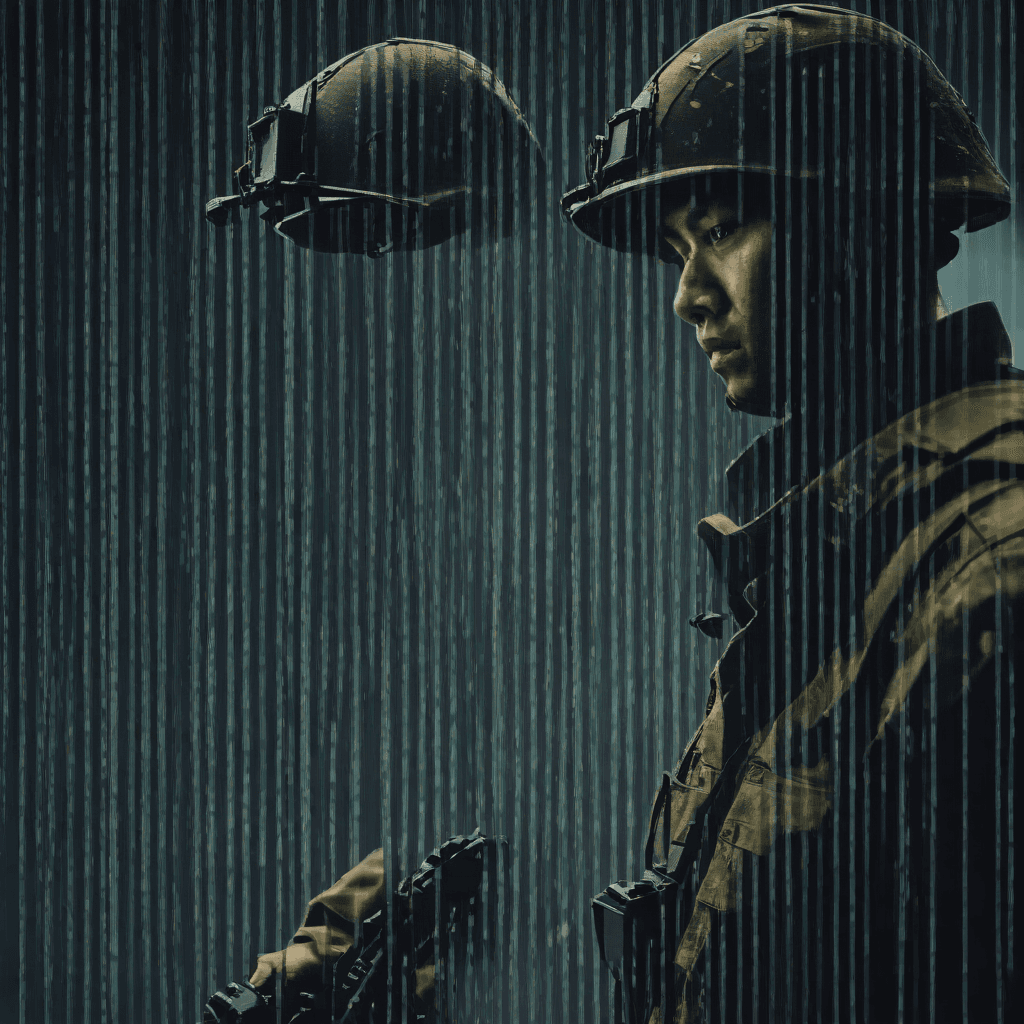
The Ghost in the Feed
A fierce debate has erupted this week across the digital corridors of the Pentagon and the scrolling screens of K-Street lobbyists regarding a specific, heated protocol in the ROK-US alliance. Op-eds are circulating with high velocity, arguing passionately about whether the South Korean President is showing appropriate military deference at the annual Joint Commissioning Ceremony, citing "disrespect" and "breaking tradition" as evidence of a weakening coalition.
To the uninitiated observer, this looks like a fresh diplomatic rift deepening under the pressure of the Trump administration's aggressive demand for increased defense cost-sharing tariffs. However, a single, immutable fact renders the entire outrage obsolete: the controversy in question was settled nearly a decade ago, and the ceremony hasn't existed in that contentious form since 2017.
This phenomenon is the quintessential definition of "Zombie News"—the algorithmic resurrection of dead controversies to cannibalize current attention spans. Digital forensics reveal that the initial spark for this week's outrage was not a new policy leak, but a reposted blog entry from the Moon Jae-in era that had been stripped of its original publication date, triggering the "recency bias" filters of major aggregation platforms.
For (Pseudonym) David Chen, a legislative aide on Capitol Hill focusing on Indo-Pacific affairs, this distortion had tangible consequences. "I spent six hours drafting a briefing memo on 'presidential attendance protocols' before a senior analyst pointed out we were analyzing a ghost," Chen noted, highlighting how easily institutional memory fails against the sheer velocity of viral outrage.
The tactical success of this zombie narrative lies not in its content, but in what it successfully conceals from the public eye. While pundits and algorithms dissected the etiquette of a defunct ceremony, critical real-time data released yesterday by the Korea Institute for Defense Analyses (KIDA) regarding the 2026 demographic cliff went largely unnoticed in Western media.
The actual crisis facing the alliance is not ceremonial protocol, but the physical lack of conscripts to fill the ranks—a mathematical certainty that is forcing a quiet, desperate pivot toward AI-integrated warfare systems. By focusing the electorate's anger on the optics of the past, the digital ecosystem is effectively blinding the defense community to the existential logistical threats of the present.
Anatomy of a Failed Experiment
The genesis of the "jointness" experiment lay not in administrative efficiency, but in the existential shock of the 2010 shelling of Yeonpyeong Island. In 2011, the South Korean Ministry of National Defense launched the consolidated commissioning ceremony at Gyeryongdae, the tri-service headquarters, with the explicit aim of fostering a unified identity among the Army, Navy, and Air Force. The logic was sound on paper: in a theater defined by minutes-to-midnight nuclear warnings, inter-service rivalry was a luxury the Republic of Korea (ROK) could not afford.
The "One Military" initiative was intended to be a visual and operational rebuke to North Korean aggression, signaling that the disparate branches were fused into a single steel wedge. However, this top-down imposition of unity immediately collided with the friction of reality, creating a fissure between command intent and logistical capability that would widen over the next six years.
The operational reality of the ceremonies quickly devolved into what military planners termed a "sustainment failure." By centralizing the commissioning of over 5,000 officers from separate academies—including the Korea Military Academy, Naval Academy, and Air Force Academy—into a single day at a single venue, the Ministry inadvertently created a localized infrastructure collapse.
(Pseudonym) Park Min-su, a former logistics officer who coordinated the 2015 event, recalls the logistical paralysis where families would spend up to six hours in gridlocked traffic on the approach to Gyeryong, often missing the ceremony entirely. The sheer density of personnel overwhelmed local accommodations and transit networks, transforming a celebration of national defense into an annual stress test that the local municipality consistently failed. This friction was not merely an inconvenience; it became a potent symbol of bureaucratic overreach, where the symbol of "jointness" was achieved at the cost of the basic dignity of the participants and their families.
Consequently, in 2017, the Ministry of National Defense formally abolished the joint ceremony, returning the rights of commissioning to the individual service chiefs—a decision heralded at the time as a victory for pragmatism over performative optics. The resurrection of this settled administrative failure in the 2026 information environment represents a sophisticated weaponization of nostalgia against current geopolitical realities.
Algorithmic Necromancy
The digital ecosystem of 2026 has developed a haunting defect: it can no longer distinguish between the living news cycle and the dead. For the past 48 hours, social media feeds across Washington and Seoul have been inundated with viral clips of South Korean soldiers performing menial ceremonial duties—footage that dates back to 2017. This phenomenon, which media theorists are calling "Algorithmic Necromancy," represents a critical failure in the information architecture of the post-truth era.
It is not merely a glitch where metadata is stripped from context; it is a systemic incentivization of outrage where a resolved, nine-year-old debate regarding military servitude generates more engagement revenue than the complex, unsexy reality of the current demographic crisis. The mechanics driving this resurrection are rooted in the "timelessness" of engagement optimization.
Modern content algorithms, optimized under the deregulation waves of the second Trump administration, prioritize high-arousal emotions—indignation, shock, and mockery—over chronological relevance. A video of a soldier peeling fruit for a visiting general triggers a visceral, immediate reaction that transcends the specific date of the event. Because the debate was "settled" years ago, the content is safe for platforms to promote; it lacks the content moderation flags attached to active war zones or current election integrity disputes.
For professionals attempting to navigate the current geopolitical volatility, this noise is more than a nuisance; it is an intelligence hazard. (Pseudonym) Michael Johnson, a defense supply chain analyst based in Northern Virginia, describes the practical paralysis caused by this information debris.
"I am trying to assess the impact of the 'Carolina Freeze' on semiconductor logistics or get reliable data on the new US-ROK automated border initiatives," Johnson explains, pointing to a dashboard cluttered with decade-old commentary. "Instead, my open-source intelligence feeds are clogged with hot takes on a Korean general's wife from the last decade. It’s like trying to drive a car while the windshield is plastered with old newspapers."
The Real Crisis: Demographics, Not Ceremony
While social media algorithms in the United States and South Korea feverishly dissect the resurrected 2017 debate over "excessive protocol" for generals, defense planners in Washington and Seoul are staring at a much quieter, yet infinitely more lethal, reality. The viral clips of dress uniforms and ceremonial swords are a classic case of "Zombie News," a digital phantom that consumes public attention while the actual body of the Republic of Korea (ROK) Armed Forces is rapidly shrinking.
The demographic data presents a cliff edge that military pageantry cannot camouflage. According to recent projections analyzed by the Center for Strategic and International Studies (CSIS), the pool of eligible South Korean conscripts has contracted sharply, a delayed aftershock of the country's record-low fertility rates from two decades prior.
In 2026, the ROK military faces a deficit of nearly 30,000 personnel annually needed to maintain its standing force levels—a shortage equivalent to nearly two full infantry divisions vanishing from the Order of Battle every year. While netizens argue over whether a 4-star general should receive a 19-gun salute, the barracks in frontline Gangwon province are increasingly hollow, forcing commanders to consolidate units and abandon remote guard posts that were once manned 24/7.
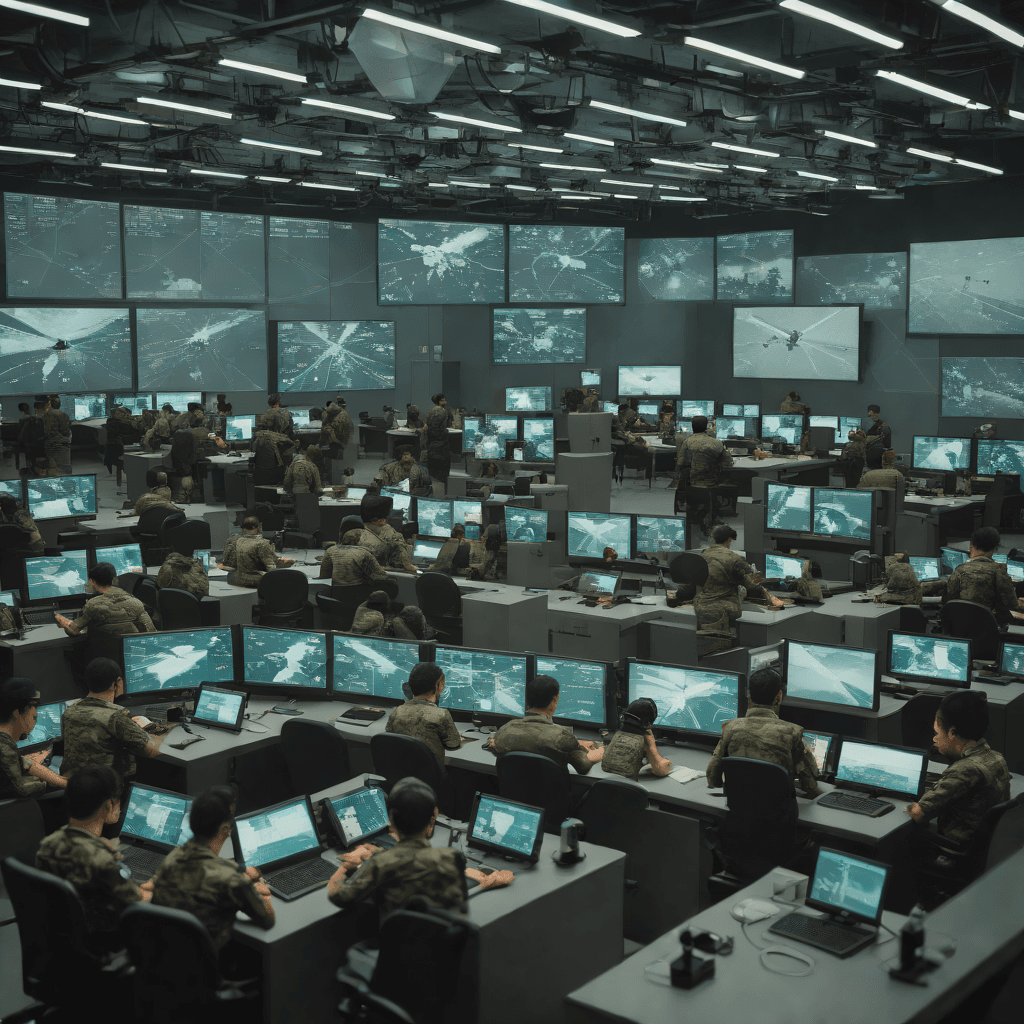
This manpower vacuum is accelerating an urgent, somewhat desperate, pivot toward automation and artificial intelligence, a shift that carries its own risks for the US-ROK alliance. The danger isn't that a general gets too much pomp; it's that we are replacing human judgment with algorithms in one of the most tense standoff zones on Earth because there simply aren't enough human eyes left to watch the fence.
Nostalgia as a Blinding Agent
The comfort of a resurrected argument often lies in its simplicity, offering a binary choice—tradition versus modernization—that feels solvable in a world where true crises are increasingly intractable. The sudden viral dominance of a 2017 debate regarding South Korean military ceremonial dress codes is not an algorithmic accident, but a psychological retreat.
In 2026, as the "Trump 2.0" administration pushes for a transactional approach to global alliances, demanding partners like Seoul do more with less, the public discourse in Korea has paradoxically turned inward, fixating on the aesthetics of the past. This phenomenon acts as a "blinding agent," flooding social feeds with passionate arguments about sash colors and sword placements, effectively crowding out the far more terrifying reality that the soldiers meant to wear these uniforms are statistically disappearing.
This retreat into the past has tangible security implications for the United States, which relies on a modernized, forward-looking ROK military to counterbalance regional threats. If the political capital of our allies is spent adjudicating the cultural aesthetics of 2017, there is little bandwidth left to address the "Adjustment Crisis" of 2026—specifically, how to integrate lethal autonomous weapons systems without destabilizing civil society. By keeping the public gaze fixed on the rearview mirror of ceremonial tradition, the "Zombie News" phenomenon prevents a necessary confrontation with a future where the pageantry of human unity must be replaced by the cold efficiency of algorithmic warfare.
Silence the Undead News
The cost of "Zombie News" is not measured merely in clicks or outrage, but in the terrifying opportunity cost of lost attention. In an information ecosystem where engagement metrics prioritize emotional volatility over temporal relevance, the viral resurgence of a settled 2017 debate regarding South Korean military ceremonies acts as a digital smoke grenade.
It obscures the grim, unglamorous reality of 2026: a demographic cliff that is rapidly emptying barracks and an accelerated transition to AI-integrated warfare that renders traditional ceremonial disputes strategically obsolete. While algorithms feed users the comfort of familiar historical grievances, the urgent, complex questions regarding the interoperability of US-ROK autonomous defense systems languish in the back pages of defense journals, unseen and undebated.
The remedy for this digital necro-politics requires a shift from passive consumption to active "information hygiene." Just as financial auditors distinguish between current assets and bad debt, policymakers and citizens alike must learn to identify and quarantine zombie narratives before they infect the decision-making process. This goes beyond simple fact-checking; it demands a "timestamp audit" of our outrage.
We must ask: Is this debate solving a 2026 problem, or is it merely satisfying a 2017 emotional itch? If we cannot distinguish between the two, we risk sleepwalking into a conflict prepared for a world that no longer exists, armed only with the slogans of a battlespace we have already left behind.
What do you think of this article?