The 70 Million Mirage: Japan's Labor Record Masks a Hollow Legion

The Paper Tiger of Demographics
Tokyo’s bureaucratic machinery celebrated a hollow victory this week. On January 30, the Ministry of Internal Affairs and Communications announced that Japan’s labor force had officially breached the 70 million mark for the first time in history, averaging 70.04 million throughout 2025. For a nation grappling with the world’s most acute demographic collapse, this figure—a year-over-year increase of 470,000—should have been a signal of resilience. Instead, it serves as a grim accounting trick that masks a deeper structural rot. While spreadsheets in Kasumigaseki show record employment, the physical reality on the ground tells a different story: a "hollow legion" of workers that looks robust in data tables but lacks the physical vitality to maintain the nation’s crumbling bones.
The composition of this workforce reveals why the sheer numbers are failing to translate into economic security. The surge to 70 million was not driven by a revitalization of the core industrial workforce, but by the desperate mobilization of the margins: the elderly and those seeking supplementary income to combat inflation. According to the 2025 Labour Force Survey, the primary drivers of this expansion were women and seniors, with female participation already exceeding US levels at nearly 78%. While this social shift is notable, it creates a mismatch between available labor and critical needs. Japan is fielding a record number of clerks, care assistants, and light-service workers, while the heavy industries essential for disaster response—construction, logistics, and infrastructure maintenance—are starved of young, able-bodied personnel.

The Niigata Stress Test
This disparity between "headcount" and "muscle" has been laid bare by the ongoing crisis in Niigata. As heavy snows paralyzed the prefecture this week, the breakdown wasn't just mechanical; it was human. Municipalities reported that while their employment rosters were technically full, the workforce was too old to operate heavy machinery for extended shifts or physically shovel snow from frozen railways. The Bank of Japan’s latest Tankan Survey corroborates this paradox, reporting the most severe labor shortages in three decades despite the record-breaking employment figures. The economy is effectively full of workers, yet empty of the specific capacity required to keep the lights on and the roads clear.
The human cost of this statistical mirage is visible in the daily struggles of local business owners. Consider the case of Hiroshi Yamamoto (pseudonym), a logistics manager in the Kanto region. While his roster is fully staffed on paper, his reality is a daily triage. "I have twenty drivers, but fifteen of them are over the age of 65," Yamamoto explains, noting that safety regulations and physical stamina limits prevent them from taking the long-haul, heavy-cargo routes that the supply chain desperately needs. His situation reflects the national macro-trend: a workforce that is numerically sufficient but functionally fragile. The 70 million figure is not a sign of a roaring engine, but of an engine redlining just to maintain idle speed.
Reaching the Demographic Limit
Economists warn that this strategy of "scraping the barrel" has reached its mathematical limit. Takahide Kiuchi, an Executive Economist at the Nomura Research Institute, notes that the expansion of the labor force is "nearing its limit" because the participation rates of women and the elderly have already been maximized. The government has effectively played its last demographic card. There are no more reserves to call up.
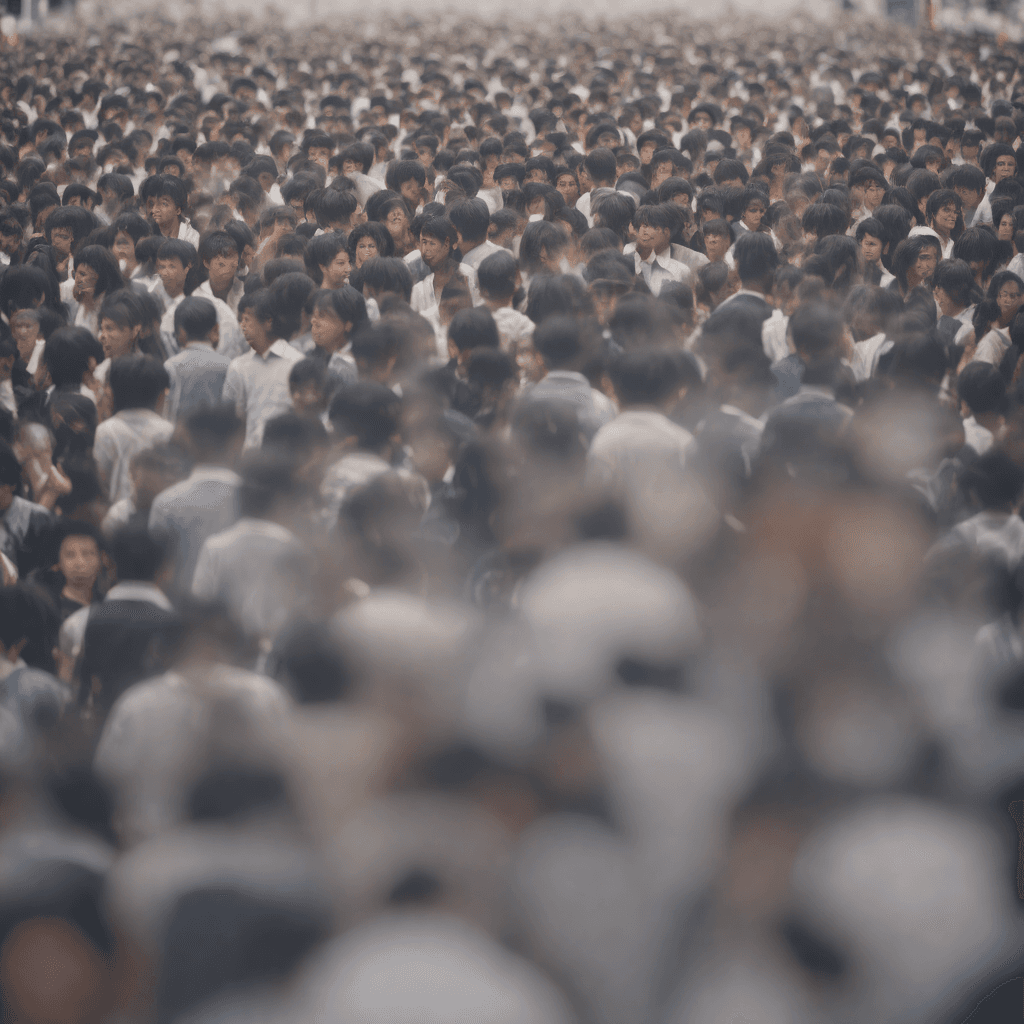
As Adam Posen of the Peterson Institute for International Economics (PIIE) observed, the high female participation rate raises fundamental questions about "reasonable expectations" for a workforce. Japan has engineered a statistic that looks like growth, but it is actually a measure of maximum extraction from a shrinking population. The headline number is undeniable, yet deeply deceptive: 70.04 million. Inside Japan, this statistic represents a desperate mobilization rather than organic growth. The "new" workforce is not a wave of fresh graduates entering the digital economy, but a legion of the re-employed elderly and part-time laborers drafted to plug leaking dikes in the national infrastructure.
The Foreign Worker Illusion
To compensate for the graying of its domestic workforce, Japan has quietly integrated a record number of foreign nationals, who now constitute a structural pillar of the economy rather than a temporary fix. The Ministry of Health, Labour and Welfare reported in October 2025 that the foreign worker population reached approximately 3.5 million. While political rhetoric in the West, particularly under the current Trump administration, often frames foreign labor as a challenge to domestic wages, in Japan, it is the only variable preventing immediate operational collapse in sectors like agriculture and elder care.
Yet, even this influx is insufficient. The core of this "hollow legion" lies in the structural design of the visa categories driving the growth. Unlike the immigration systems of the United States, which often prioritize permanent residency for skilled professionals to drive innovation, Japan’s expansion relies heavily on the Technical Intern Training Program and the Specified Skilled Worker visas. These are effectively designed as temporary rotations—typically spanning three to five years—creating a perpetual churn of entry-level labor. The current system imports headcount, but it fails to import the accumulated wisdom required to replace the retiring generation of shokunin (master craftsmen).
America's Warning
For the United States, currently navigating its own "America First" debates regarding labor and border control, Japan serves as a stark counter-indicator: an open door without a competitive economic engine or a pathway to integration creates a labor force that is present, but not invested. Japan is showing the US that it is entirely possible to have everyone working and still see the mechanisms of the state slowly grind to a halt.
Ultimately, the 70 million figure is a vanity metric that masks the crumbling of physical and social infrastructure. With heavy snows in Niigata recently exposing the lack of able-bodied personnel to clear roads despite "record employment," the disconnect between statistical full employment and physical reality is dangerous. Unless productivity per worker skyrockets through genuine technological integration—not just hiring more seniors to wave traffic batons—wage stagnation will persist even as labor scarcity bites.
What do you think of this article?