The Imperial Gambit: Japan's Strategic Pivot in the Himalayas
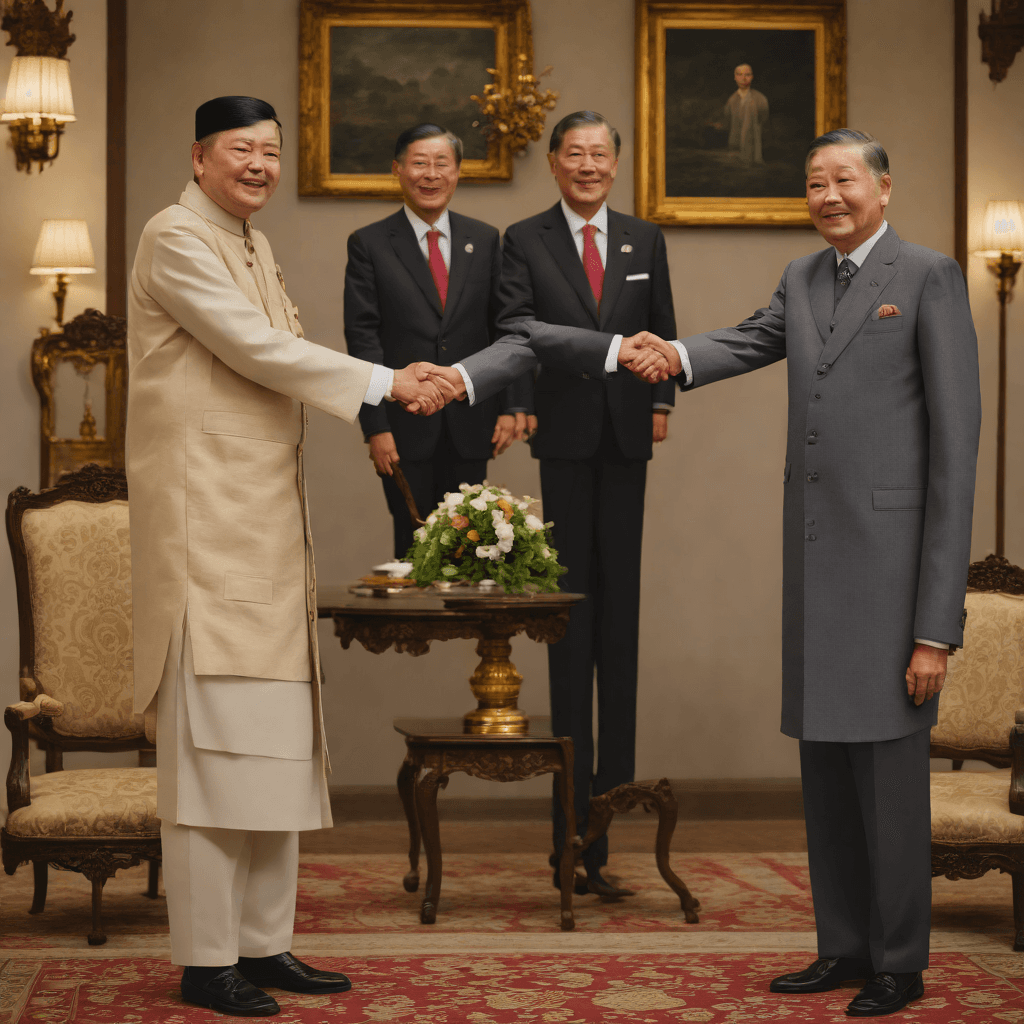
A Rare Audience at the Imperial Palace
On February 3, 2026, amidst a week defined by the global liquidity tremors of the 'Warsh Shock' and the unfolding domestic infrastructure crisis in Niigata, the Imperial Palace in Tokyo offered a tableau of calculated serenity. President Ram Chandra Paudel of Nepal was received by Emperor Naruhito, a ceremonial apex to a four-day Official Working Visit marking the 70th anniversary of diplomatic relations. While the visual language was one of traditional court diplomacy—quiet exchanges within the Pine Hall rather than the shouting matches of parliamentary debates—the timing betrays a deeper urgency in Tokyo’s calculus.
In an era where the Trump administration’s renewed isolationism has left traditional alliances porous, Japan is deploying its most potent soft power asset—the Imperial family—to secure partnerships that hard currency alone can no longer guarantee. For Japan, this visit is far removed from mere pageantry; it is a strategic maneuver to secure its demographic and geopolitical flanks.
Nepal sits at a critical junction between rival powers India and China, but for Tokyo, the immediate value is human capital. As Japan's domestic workforce shrinks—a vulnerability laid bare by the current struggle to mobilize repair crews for the infrastructure failures in the snow-heavy north—securing stable labor migration corridors from South Asia has shifted from economic preference to national security necessity. The Imperial audience grants a level of dignity to the bilateral relationship that neither Beijing's Belt and Road loans nor New Delhi's proximity can replicate, effectively signaling to Kathmandu that they are viewed as a sovereign partner, not a satellite state.
The Third Option in South Asia
For Washington, the strategic significance of this state visit lies not in the ceremonial exchange of accolades, but in Japan's quiet positioning as a geopolitical counterweight. Kathmandu has long sought to balance New Delhi's immediate dominance against Beijing's deep-pocketed Belt and Road Initiative (BRI). Japan, under Prime Minister Shigeru Ishiba’s foreign policy continuity, offers a sophisticated alternative defined by "quality infrastructure" and debt sustainability—a brand of aid that avoids the "debt trap" narratives often associated with Chinese loans.
This dynamic creates a vital escape valve for Nepal. India, while culturally and geographically proximate, often wields its influence with a heavy hand, leading to periodic friction. Japan, by contrast, operates with a soft-power precision that disarms sovereignty concerns. The meeting between President Paudel and Emperor Naruhito serves as the cultural capstone to this relationship, legitimizing the partnership through the non-political prestige of the Chrysanthemum Throne—a diplomatic asset neither China nor India can replicate.
Ultimately, the United States views Japan’s deepening footprint in Nepal as a force multiplier for the Free and Open Indo-Pacific strategy. With the Trump administration prioritizing "America First" and skepticism regarding direct intervention in peripheral theaters, relying on allies like Japan to shoulder the burden of development diplomacy is a key tactical shift. If Tokyo can successfully cement its status as Nepal’s preferred development partner, it will effectively deny Beijing a monopoly over the Himalayan frontier without Washington expending political capital.
The Demographic Lifeline
Beneath the gilded quiet of the Imperial Palace, a far grittier exchange is taking place. While official communiques focus on shared heritage, the Ishiba administration is leveraging this visit for a more urgent domestic priority: economic survival. The ceremonial politeia masks a stark demographic reality—Japan is shrinking, and the Himalayan nation has become an indispensable reservoir of youth for an aging archipelago.

The visibility of this demographic shift has moved from the periphery to the core of Japanese daily life. In regional logistics hubs across Saitama and manufacturing plants in Gunma, Nepali nationals have become the fastest-growing segment of foreign workers, increasingly occupying critical supervisory roles rather than just entry-level positions. This anecdotal shift is backed by Ministry of Health, Labor, and Welfare data indicating a surge in the "tokutei ginou" (specified skilled worker) visa category.
Prime Minister Ishiba, facing a paradox of regional revitalization versus a shrinking workforce, is quietly streamlining these pathways. Unlike the previous administration's tentative steps, Ishiba’s cabinet is positioning Japan not just as a donor of aid, but as a competitive destination for talent—a direct counter to the labor-hungry markets of the Middle East and South Korea. This "migration diplomacy" attempts to engineer a "dignified migration" model: while China offers infrastructure and India offers geography, Japan offers a structured, high-status integration into a developed economy.
Protocol as Policy
The distinction between the two tracks of diplomacy—Imperial and Executive—highlights a sophistication often overlooked in Asian geopolitics. While the Emperor provides the unwavering face of the state, the granular negotiations of aid packages and labor agreements fall to the Prime Minister. Ishiba, currently navigating a fragile coalition and the domestic headwinds of the "Shiga Shock," utilizes these high-level state visits to stabilize Japan's external standing.
By decoupling the emotional resonance of the relationship (handled by the Throne) from the transactional friction of visa quotas (handled by the Kantei), Tokyo effectively insulates its strategic partnerships from its own parliamentary instability. The pageantry effectively masks the urgency of Japan’s economic needs, presenting the intake of Nepali workers not as a desperate economic necessity for an aging Japan, but as a mutual exchange between honored friends.
As President Paudel concludes his itinerary, the message sent back to the Himalayas is clear: in an era of polarized superpowers, Japan intends to remain the "safe harbor" for Nepalese sovereignty. For American observers, the lesson is equally sharp: allies like Japan are autonomously constructing their own networks of resilience, using culture and history to cement alliances that treaties alone can no longer hold.
What do you think of this article?