Japan’s Zombie Election: Political Theater Ignores Physical Collapse
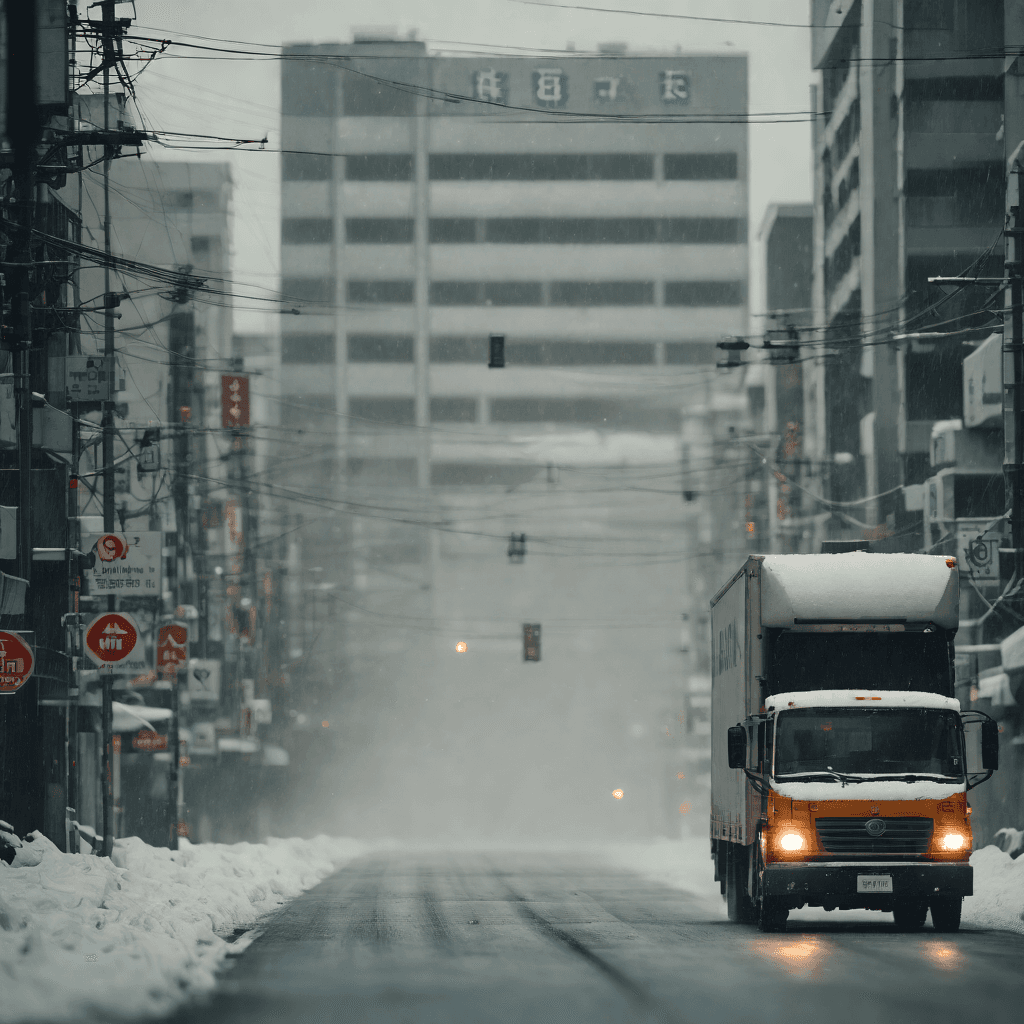
The Sound Truck and the Snowplow
In the streets of Kumamoto City, the air is thick with the deafening roar of 80-decibel loudspeakers. It is February 3, 2026, and the "sound trucks"—Japan’s unique, rolling political billboards—are engaged in a ferocious decibel war. For local residents like Kenji Tanaka (a pseudonym), a logistics manager coordinating chip shipments near the TSMC fab, the noise is the sound of an economy in overdrive. "They scream my name, then they scream about the tax rate," Tanaka says, shouting over a passing Liberal Democratic Party (LDP) van. "But look at the cranes. Look at the trucks. We are the only part of Japan that feels like it’s living in the 21st century."
Tanaka’s observation is backed by hard data. While the International Monetary Fund and Dai-ichi Life Research Institute project a modest national GDP growth of 1.0% for 2026, the Kyushu region is sprinting ahead at 1.4%, according to the Kyushu Economic Research Center. This "Silicon Island" boom, anchored by the massive TSMC semiconductor plant, should be a firewall for the ruling LDP.
Yet, even here, the political ground is shifting. The Mainichi Shimbun’s January 31 survey reveals a startling fragility: in the neighboring Miyazaki 2nd District, incumbent Taku Eto, a political heavyweight, is trailing the opposition’s Shinji Nagatomo. Support from the LDP’s own base has dipped below 60%, a statistic that would have been unthinkable in previous election cycles.
This political volatility in the prosperous south masks a darker, colder reality unfolding in the north. While candidates in Kumamoto debate the finer points of the consumption tax and the impact of President Trump’s latest tariff threats, the "snowplow" has become a symbol of state failure in Niigata and Tohoku. The record snowfall has paralyzed entire prefectures, exposing the "infrastructure collapse" that experts have warned about for a decade.
The disconnect is jarring: the "sound trucks" of Kyushu represent the zombie-like persistence of performative democracy, blasting slogans into the void, while the silence of the snow-buried north represents the physical attrition of the nation.
The Silicon Island Paradox
The political seismographs in Tokyo often fail to detect the tremors in the periphery until the ground actually opens up. The latest data from Kyushu suggests a significant fault line is shifting. The structural decay of the LDP’s machine is most visible in the internal metrics of the Mainichi data, which reveals a collapse in party discipline rather than a surge in opposition popularity.
In a staggering deviation from historical norms, Eto has secured the loyalty of less than 60% of identified LDP supporters in his district. To put this in an American context, this is akin to a senior Republican incumbent in a deep-red district like Alabama or Wyoming failing to command the support of 40% of registered Republicans. It indicates that the "Zombie News" cycle—the national theater of scandal and distraction—has failed to energize the base, leaving local candidates exposed to the raw friction of voter apathy and dissatisfaction.
The profound irony of this political volatility is that it coincides with a regional economic renaissance that should, in theory, guarantee an incumbent landslide. Data from the Kyushu Economic Research Center projects the region's growth at 1.4% for 2026, significantly outpacing the national average forecast of 0.8%. Driven by the "Silicon Island" revival and the massive TSMC semiconductor ecosystem in Kumamoto, Kyushu is ostensibly Japan's economic bright spot.
However, the survey data suggests a complete decoupling between macroeconomic indicators and voter sentiment. The "TSMC Boom" has brought rising land prices and traffic congestion, but seemingly not the political gratitude the LDP expected. This proves that in 2026, GDP growth alone cannot resuscitate a zombie candidacy.
Echoes of 2024: The Zombie Agenda
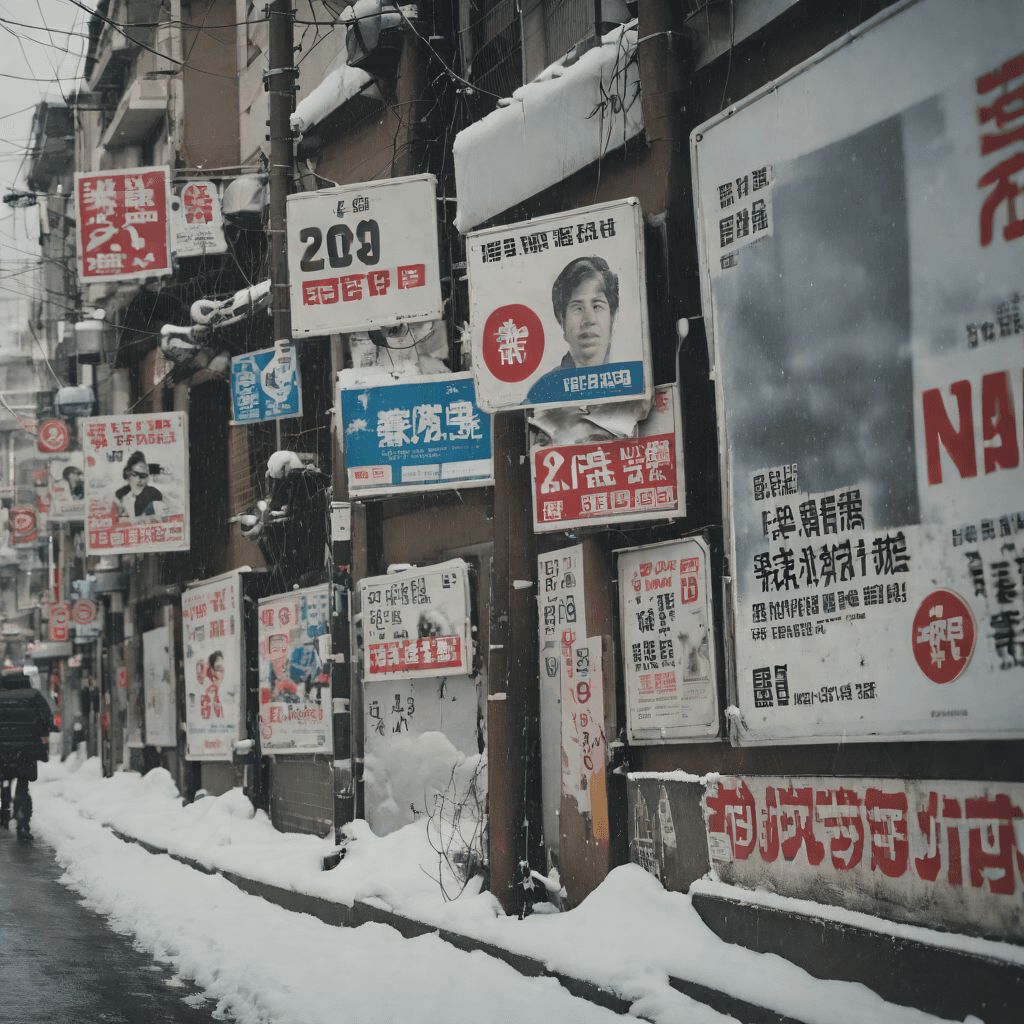
To walk through the bustling campaign offices in Miyazaki and Kumamoto this week is to experience a jarring sense of temporal dislocation. The banners are fresh, and the dates on the election posters read 2026, but the rhetoric echoing from the sound trucks belongs firmly to 2024. In Miyazaki’s 2nd District, the debate remains myopically focused on "political ethics" and fundraising transparency.
This obsession with rectifying the scandals of the past decade consumes the oxygen in the room, effectively crowding out any substantive discussion on the region's rapidly shifting economic reality. It is a zombie agenda: a reanimated corpse of previous election cycles that continues to walk because it is safer for politicians to debate the morality of political donations than to address the complex, physical challenges of a reindustrializing Japan.
The opposition’s strategy mirrors this retrospective gaze, relying on political arithmetic rather than policy innovation to unseat the LDP. The newly formed "Centrist Reform Alliance" (Chudo Kaikaku Rengo) has fielded candidates like Satoshi Kamata in Kumamoto’s 1st District. They are attempting to leverage the organizational muscle of Komeito against its former coalition partners.
While the Kumamoto Nichinichi Shimbun notes that this alliance presents a "unique challenge" to the LDP stronghold, the platform is fundamentally negative—a coalition built on opposition to LDP governance style rather than a coherent vision for Kyushu’s distinct future. By framing the election as a referendum on the past, the Alliance allows the LDP to avoid answering difficult questions about how the region’s aging power grid and road networks will support the energy-hungry semiconductor fabs defining its future.
The Infrastructure Deficit
While election sound trucks struggle to navigate the icy roads of Miyazaki and Kumamoto, a starker reality is setting in for the voters of Kyushu. The "Only Sunday" of the 12-day campaign period—traditionally a frenzy of stump speeches and handshakes—has been muffled by a blanket of snow that has paralyzed regional logistics.
For observers of democratic resilience, the juxtaposition is jarring: political machinery grinding through its scripted motions while the physical machinery of the state—bridges, roads, and emergency services—fails to cope with a predictable winter storm. This is not merely a weather event; it is a stress test for the LDP's governing capacity, revealing cracks in the foundation that rhetoric can no longer paper over.
For residents on the ground, this gap between political theater and daily reality is becoming a source of cynical fatigue. Tanaka Ren, a logistics manager who coordinates freight for a supplier near the Kikuyo manufacturing hub, sees the election as a distraction from the tangible crisis unfolding on the highways.
"The politicians talk about 'trust in politics' and 'consumption tax,' but my drivers are sitting in traffic jams on two-lane roads built in the 1980s," Tanaka says. His frustration highlights the "physical" risk that the zombie news cycle obscures: while the media fixates on the abstract health of Japan’s democracy, the physical arteries of its most promising economic engine are clogging up.
Warning Signs for Washington
The turmoil unfolding in Kyushu offers a grim preview for U.S. policymakers observing from the other side of the Pacific. While Washington focuses on the high-level metrics of the U.S.-Japan alliance, the ground truth reveals a partner increasingly distracted by political theater while its physical foundation crumbles. This phenomenon suggests that the "Zombie Election" is not merely a domestic quirk but a symptom of institutional decay where the issues debated on the campaign trail have little relation to the existential threats actually facing the electorate.
This disconnect is most visible in the semiconductor heartland of Kumamoto, a region critical to the "America First" supply chain strategy championed by the Trump administration. If the LDP cannot maintain order in its conservative rural bastions because it is too busy fighting phantom wars in Tokyo, the stability of key strategic assets—specifically the semiconductor supply chain essential for U.S. defense industries—comes into question.
A partner consumed by internal, theatrical gridlock is ill-equipped to handle the external pressures of a shifting geopolitical order. As Japan heads to the polls on February 8, the true contest is not merely between the LDP and the disparate opposition forces, but between the comfortable illusion of "Zombie News" and the cold, hard reality of governance in a decaying state.
What do you think of this article?