The 'Zombie News' Trap: Japan's Viral Bicycle Scandal Hides a Deadly Reality

The video clip currently dominating American social media feeds is as visceral as it is infuriating. It shows a lone Japanese postal worker, drenched in sweat under a blistering sun, dragging a heavy bicycle loaded with mail rather than riding it. The caption explains the cruelty: he caused a minor traffic accident, and as penance, his employer has stripped him of his scooter, forcing him to manually haul deliveries in 95°F (35°C) heat for two weeks.
For US observers, already sensitive to labor rights debates under the Trump administration’s deregulation push, the footage is a perfect crystallization of corporate tyranny. It has sparked millions of shares, hot takes on "feudal management," and calls for boycotts. There is just one problem with this wave of righteous digital indignation: the man in the video is suffering for a policy that ceased to exist nearly eighteen months ago.
The "punishment bicycle" (chobatsu jitensha) was a very real and draconian practice, but it was effectively dismantled in October 2024. At that time, following intense pressure from the Postal Industry Workers Union (PIWU), Japan Post Co., Ltd. issued an internal circular explicitly prohibiting the restriction of duties—such as banning vehicle use—as a consequence for causing accidents. The union had long characterized these measures, along with the humiliating "standing platforms" (otachidai) where workers were forced to publicly apologize, as forms of power harassment rather than corrective training. The 2024 directive was a victory for labor organizers, marking the official end of a dark chapter in Japanese corporate logistics.

The Anatomy of a Corporate Shaming Ritual
To understand why this story has retained such zombie-like resilience in the algorithms of 2026, we must first dissect the visceral nature of the original scandal that erupted nearly two years ago. The footage that is currently flooding American social media feeds—depicting a uniformed postal worker laboring on a heavy bicycle in sweltering heat—is not a live broadcast from today's snowy Niigata, but a digital echo from the summer of 2024.
According to data released by the Postal Industry Workers Union (PIWU) during the 2024 labor dispute, punitive measures were often enacted regardless of external conditions. In one cited case from Tokyo, a driver was forced to pedal a non-electric bicycle in temperatures exceeding 95°F (35°C) for two weeks as "reflection" for a minor scraping incident. This was not a retraining module designed for safety; it was, as the union argued, a performative ritual of shame designed to break the individual’s resistance under the guise of corporate discipline.
This corporate behavior was rooted in a distorted application of hansei (self-reflection), a cultural concept that, when weaponized by management, mutated into harassment. The 2024 union complaint detailed practices such as the "standing platform," where workers were reportedly made to stand in conspicuous areas of the office to apologize or reflect on their errors in front of colleagues. These details, confirmed by the internal prohibition order released in late 2024, provided the perfect narrative fuel for Western observers critical of Japan's rigid corporate hierarchy.
However, the resurrection of this settled history in February 2026 serves a distinct function in the current information ecosystem. By stripping the 2024 video of its chronological context—specifically the fact that Japan Post explicitly prohibited these "inappropriate duty restrictions" sixteen months ago—the algorithm creates a "zombie news" cycle. It presents a resolved injustice as an active, ongoing crisis. For the American viewer, this generates a comfortable, distant moral outrage that obscures the far more complex and immediate logistical collapse currently unfolding in Japan's snow-buried north.
The Algorithm's Preference for Old Villains
In the high-velocity economy of the digital age, clarity often sells better than truth. The story has all the hallmarks of a perfect viral villain: a monolithic corporation forcing mail carriers to suffer in blistering heat. It is a narrative of Dickensian corporate cruelty that triggers immediate, satisfying moral outrage. Why, then, is an algorithm in 2026 prioritizing a resolved labor dispute from 2024 over a catastrophic infrastructure collapse happening in real-time?
The answer lies in the "Zombie News" phenomenon, where content recommendation engines favor high-arousal, morally unambiguous stories over complex, systemic tragedies. The "punishment bicycle" offers a clear antagonist (abusive middle managers) and a clear victim (the sweating worker), a binary that fits neatly into the "Liberty vs. Security" debates popular in the current US media landscape. In contrast, the current crisis in Niigata—where heavy snow is crushing aging homes and isolating elderly populations—lacks a singular villain. It is a diffuse disaster caused by demographics, fiscal austerity, and climate physics, none of which generate the immediate click-through engagement of a "bad boss" story.
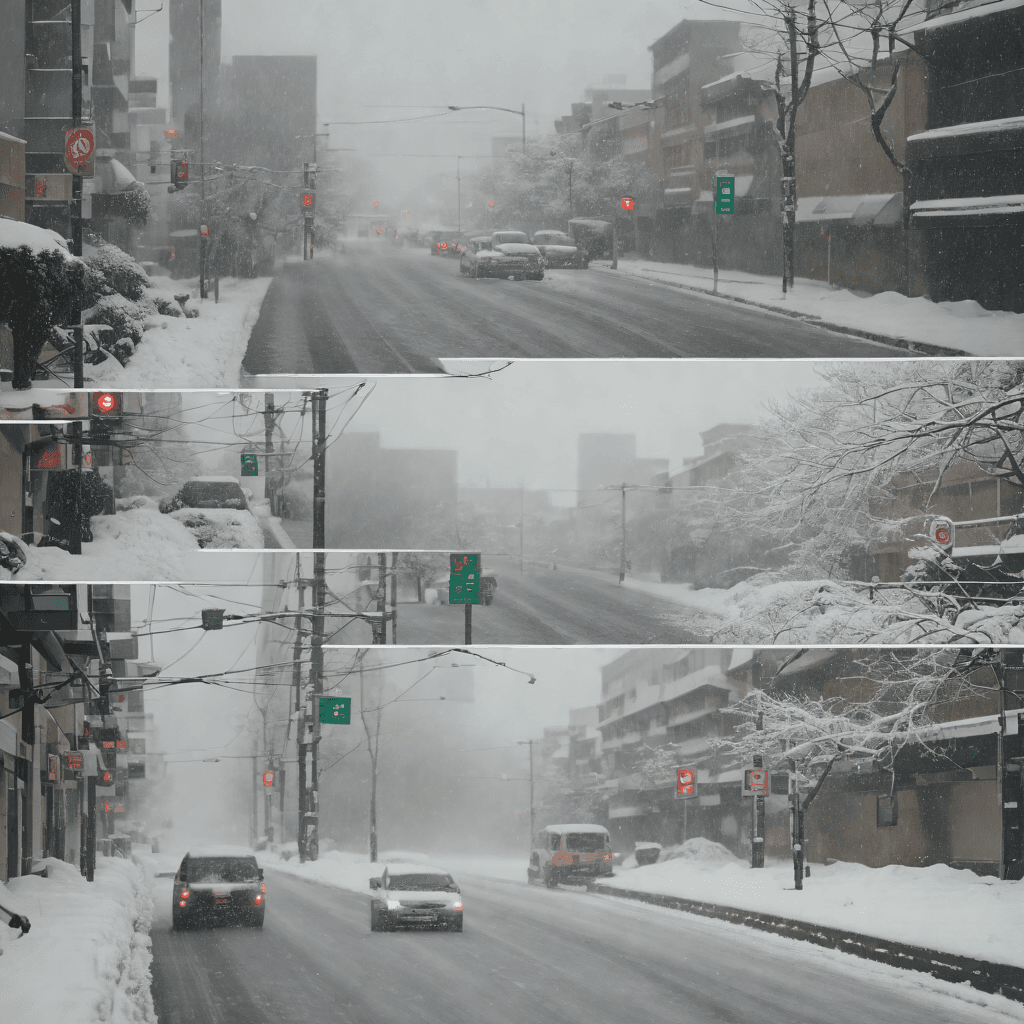
This digital distortion has tangible consequences for global awareness and aid. While American audiences share two-year-old clips of postal workers struggling on bikes, believing they are witnessing a live human rights abuse, the actual humanitarian emergency in the Sea of Japan coastal region is buried. By resurrecting this ghost today, the digital ecosystem is effectively actively concealing the present. It allows global observers to feel righteous anger about a problem that has been solved, while remaining blissfully ignorant of a disaster that is currently claiming lives.
A Convenient Distraction from the Freeze
This resurrection of resolved grievances serves a potent psychological function that distracts from more complex, immediate crises. While American timelines are clogged with outrage over a policy abolished in 2024, the actual, lethal crisis unfolding in Japan right now is being algorithmically buried. In Niigata, record snowfall has collapsed aging infrastructure, leaving thousands isolated without power or heat—a direct result of the demographic and economic "shrinkage" that Japan Post’s 2024 reforms were actually trying to navigate.
For US investors and policy analysts, this distortion poses a genuine risk to market intelligence. The viral re-litigation of the "punishment bicycle" creates a false narrative that Japan's primary struggle is cultural rigidity, masking the acute material risks of the current liquidity crisis and infrastructure collapse. Michael Johnson, a macro-strategist at a New York-based hedge fund, notes that the noise-to-signal ratio has become dangerous. "We see retail sentiment turning negative on Japan based on 'human rights' clips from two years ago," Johnson observes, "meanwhile, the real story is that the physical supply chain in the Sea of Japan corridor has snapped due to snow, and almost no one is pricing that in."
In the attention economy of 2026, the ghost of a postal worker on a bike is pedaling hard enough to obscure an entire collapsing region. The "punishment bicycle" offers a safe target for moral indignation; the enemy is a specific policy that can be (and was) overturned. In contrast, the infrastructure collapse in Niigata presents a crisis with no easy villain and no immediate solution.
Did the Culture Actually Change?
The persistence of this story in 2026 serves as a textbook example of information that is factually outdated yet emotionally potent enough to influence current discourse. For the American observer, the narrative fits a comfortable stereotype of corporate draconianism, yet it obscures a far more sophisticated shift in labor management. When the "punishment bicycles" were retired in late 2024, the culture of "reflection" did not vanish; it simply migrated from the physical world to the digital one.
The "Otachidai" (standing platforms) where workers were once shamed in morning assemblies have largely been replaced by algorithmic flags and GPS-tracked efficiency scores, creating a silent, invisible pressure that is harder to film but equally coercive. Yamamoto Hiroshi, a veteran delivery driver in Tokyo, notes that the 2024 ban was a victory on paper that failed to alter the underlying reality of the depot floor. "The heavy red bikes are gone, but the silence remains," Yamamoto says, describing an environment where the fear of reprisal has shifted from physical exhaustion to administrative exile.
The union's 2024 victory was specific—targeting the method of punishment—but the management logic that prioritizes punitive correction over systemic safety reform remains intact. This nuance is lost in the current viral cycle, which focuses on the visceral image of sweat and gears rather than the abstract, modern threat of digital surveillance that actually defines the 2026 workplace.
The Trap of Retroactive Justice
Ultimately, the persistence of the "punishment bicycle" story reveals a critical vulnerability in our digital information ecosystem. We gravitate toward the moral clarity of past battles we know we can win, rather than the ambiguity of present disasters we fear we cannot fix. By obsessing over the injustices of 2024, we are effectively abandoning the victims of 2026, leaving them frozen in the shadow of a viral algorithm that prioritizes engagement over chronology.
The scandal is real, but its timeline is a fabrication, serving as a comfortable distraction from the harder work of addressing Japan's current, freezing reality. Every trending hashtag and op-ed dedicated to a resolved labor dispute from 2024 sucks oxygen away from the immediate, lethal crisis unfolding in Niigata. While American pundits debate the ethics of a disciplinary policy that no longer exists, elderly residents in Japan's snow-buried prefectures are facing imminent infrastructure collapse.
If your moral outrage is triggered more effectively by a solved injustice from yesterday than by an ongoing tragedy today, are you consuming the news, or is the nostalgia for a clear enemy consuming you?
What do you think of this article?