Kawaguchi's Fiscal Shock: The End of Japan's 'Dream Line'
The Morning Rush and the Ballot Box
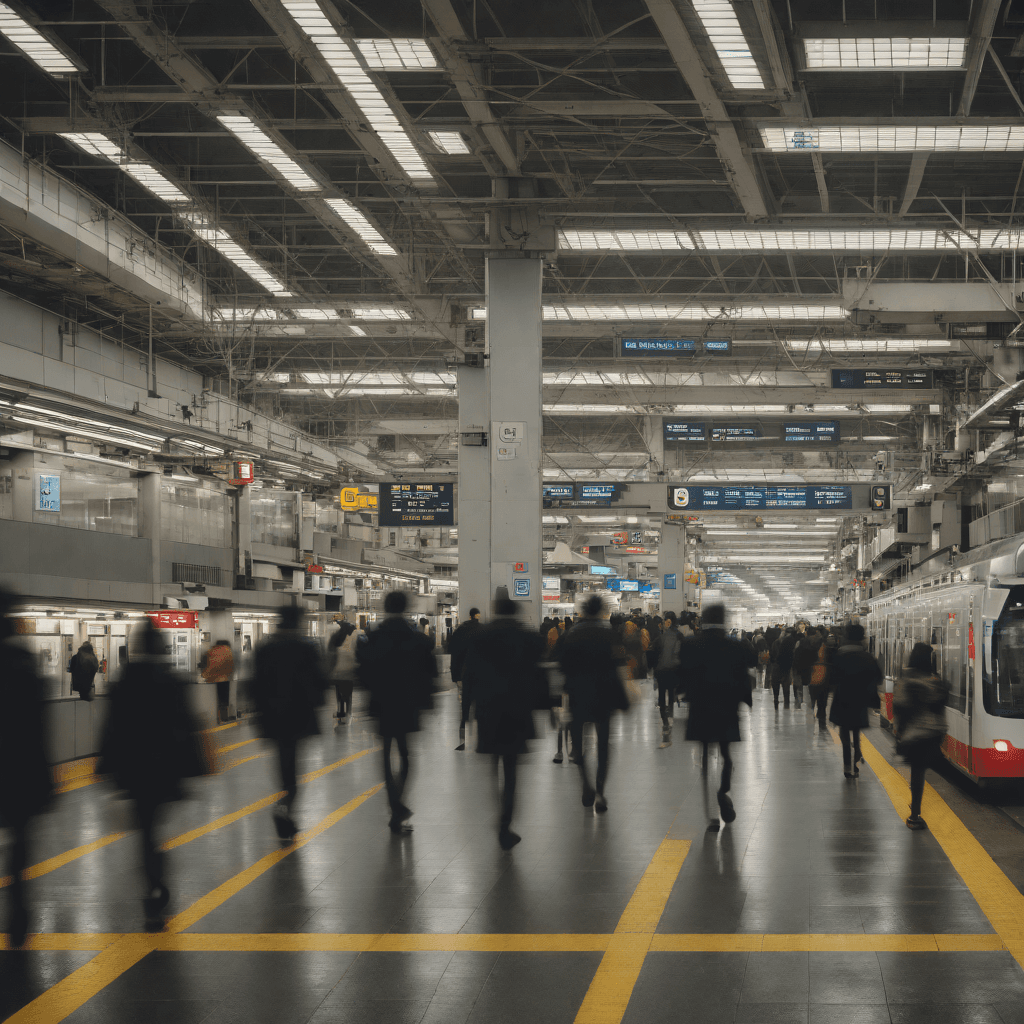
For the 600,000 residents of Kawaguchi, the "morning rush" is not a metaphor; it is a physical ordeal that defines the city's relationship with Tokyo. Situated just across the Arakawa River from the capital, Kawaguchi has long served as a dormitory city, funneling its workforce into Tokyo via the chronically congested Keihin-Tohoku Line. For decades, the political contract here was simple: residents endured the crush of 180% capacity trains in exchange for the promise of future infrastructure relief. This unspoken agreement was embodied in the "Dream Line" project—a plan to construct a new stop for the faster Ueno-Tokyo Line at Kawaguchi Station, theoretically bypassing the local train bottleneck and slashing commute times.
However, the financial reality of this promise was unveiled in stark terms just months before the election. An agreement signed in April 2025 between the previous city administration and the JR East Omiya Branch estimated the total project cost at 43 billion JPY (approximately $285 million), with the city—and by extension, its taxpayers—shouldering the vast majority of the burden. For a household of four, this translated to a localized debt burden of roughly 280,000 JPY ($1,850), a figure that transformed the abstract concept of "infrastructure investment" into a tangible kitchen-table anxiety.
In an era where the Trump administration's trade policies have already squeezed global export margins and the "Warsh Shock" has tightened domestic liquidity, the appetite for debt-financed mega-projects has evaporated. The rejection of this burden at the ballot box was decisive and historically anomalous. Yuriko Okamura, running on a platform that explicitly questioned the "growth-at-any-cost" dogma, defeated the incumbent-backed candidate by framing the station expansion not as an asset, but as a liability. Her victory signals a new phase in Japanese local governance where financial sustainability overrides long-held development goals.
The Billion-Yen Question
The arithmetic of this development deal became the central battleground of the election. Unlike typical national infrastructure projects where the central government shoulders the burden, the April 2025 agreement left the city on the hook for the vast majority of the construction costs. Campaign estimates translated this to roughly 70,000 JPY per citizen. This per-capita debt obligation sparked a voter revolt that transcended traditional party lines.
To understand the shift in public sentiment, one must look at the commuter's reality on the ground. For Sato Kenta (pseudonym), a 34-year-old systems engineer who commutes daily to Shinagawa, the project represented a "lost decade" of potential disruption for a benefit he might not see until 2037. "We moved here banking on that direct connection," Sato notes, highlighting the real estate speculation that often precedes such infrastructure deals. "But by the time the train actually stops there, my children will be leaving for college. We are being asked to mortgage our current financial stability for a convenience we might not even use."
This generational anxiety fueled a massive surge in civic engagement. Voter turnout surged to 40.98%, nearly doubling the lethargic 21.67% seen in the previous election cycle. This statistical anomaly underscores the intensity of the fiscal debate; residents are no longer passive recipients of infrastructure promises but active arbiters of their city’s fiscal survival.
The End of the Construction State
The victory of Yuriko Okamura is not merely a breaking of the gender barrier; it is a decisive referendum on the financial viability of Japan’s post-growth infrastructure ambitions. For decades, local governance in the Greater Tokyo Area has operated on a tacit assumption: build, and the economy will follow. This model, known as doken kokka (construction state), relied on concrete—stations, highways, bridges—to secure votes.
By pledging a "zero-base review" of the Ueno-Tokyo Line station project immediately upon her election, Okamura has signaled that for Japan’s municipalities, the era of unquestioned mega-projects is over. Former Mayor Nobuo Okunoki had framed the station as "essential for the city's future development," a view that aligns with traditional Keynesian stimulus. In contrast, Okamura’s victory validates a new conservative pragmatism, prioritizing immediate financial health over 12-year construction horizons with uncertain returns.

This cancellation acts as a bellwether for other "bedtowns" across the Kanto plain. As Japan faces a shrinking population and stagnant real wages, the question is no longer just about train platforms; it is about whether local governments can survive the transition from an era of expansion to an era of maintenance and austerity. The voters of Kawaguchi have effectively signaled that they prefer a solvent city government over a shiny new platform, a choice that prioritizes current economic stability over speculative development.
What do you think of this article?