The 100-Mile Border: How Operation Metro Surge Consumed the American Interior
Death in the North Star State
At 6:18 AM, the temperature in Minneapolis sat well below freezing, a typical February morning in the North Star State, when the theoretical border of the United States violently collided with the physical reality of a residential driveway. Alex Pretti, a 34-year-old ICU nurse, lay dead on the concrete, still wearing his navy blue medical scrubs. According to the autopsy report released by the Hennepin County Medical Examiner, Pretti died from gunshot wounds sustained from a Customs and Border Protection (CBP) service weapon. He was not a cartel foot soldier or a fugitive crossing the Rio Grande; he was an American resident heading to a shift at a local hospital, flagged erroneously by the DHS's "Sentinel" system.
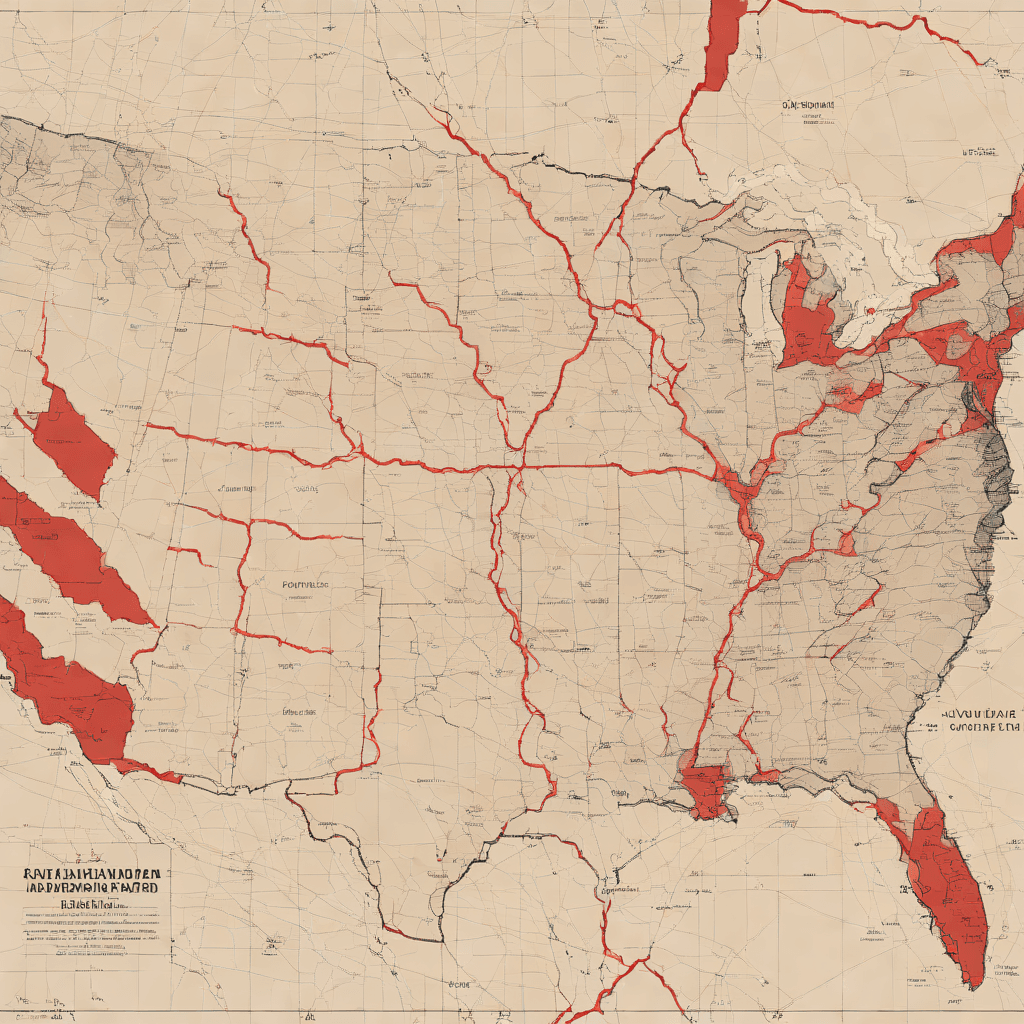
The tragic absurdity of Pretti’s death is not an isolated malfunction but a statistical inevitability of "Operation Metro Surge," an interior enforcement campaign that has redefined the geography of American policing. Minneapolis, situated nearly 300 miles from the Canadian border, has become the epicenter of a constitutional crisis that renders the concept of a "border town" obsolete. While the Fourth Amendment protects citizens from unreasonable search and seizure, the administrative expansion of the "100-mile border zone" has effectively placed two-thirds of the U.S. population under a different legal regime.
Preliminary enforcement data from the Department of Homeland Security reveals that in the first six weeks of 2026 alone, federal agents executed over 3,000 arrests in the Minneapolis-St. Paul metro area. Nationally, non-criminal ICE arrests skyrocketed to 25,193 in January 2026—a staggering 796% increase year-over-year compared to January 2025. This surge suggests a strategic pivot from targeted, intelligence-driven operations to a chaotic dragnet where algorithmic probability has replaced probable cause.
The 100-Mile Legal Void
The legal fiction that the border is a static line on a map has completely dissolved under the weight of the Trump administration's enforcement protocols. Under current Department of Homeland Security (DHS) interpretations, the "border" is a 100-mile deep jurisdictional zone wrapping around the entire U.S. coastline and land perimeters. Within this vast territory, Fourth Amendment protections against unreasonable search and seizure are effectively diluted, replaced by a regulatory framework that prioritizes "operational fluidity" over due process.
At the heart of this constitutional void lies the "administrative warrant." Unlike a standard judicial warrant, which requires probable cause reviewed by an independent magistrate, administrative warrants (Forms I-200 and I-205) are signed by immigration officers themselves. They are circular permissions: the enforcement agency authorizes its own intrusion without external oversight.
Legal experts and civil libertarians argue that this detachment of the border from geography has effectively created a two-tier justice system within the American interior. One tier enjoys the full protection of the Bill of Rights; the other, ensnared by the 100-mile definition and administrative shortcuts, exists in a state of suspended rights where the executive branch is supreme. As (Pseudonym) Sarah Miller, an immigration attorney representing the Pretti family, stated, "He wasn't running. He was just trying to show them who he was. And now, they say the system was down? That’s why he’s dead?" The normalization of this "Constitution-free" zone does more than threaten civil liberties; it creates a theater of security where accuracy is secondary to volume.
Judicial Pushback and the "Child Bait" Ruling
This operational desperation to meet enforcement metrics has begun to draw sharp rebukes from the federal judiciary, exposing the "quota-driven" nature of the current administration's strategy. In the Western District of Texas, Judge Fred Biery recently issued a blistering habeas corpus ruling in the case of Liam Conejo Ramos, a five-year-old child used by ICE agents as leverage to arrest his father.
Judge Biery condemned the tactic as "cruel" and explicitly noted that the "Government's pursuit of daily deportation quotas is being executed with incompetence... appearing to justify even the traumatization of a child." The ruling ordered the immediate release of both father and son, serving as a judicial firewall against the excesses of the executive branch's enforcement engine. This judicial rebuke highlights a disturbing operational reality: when metrics drive enforcement in a constitutionally gray zone, the humanity of the subject—whether a traumatized child or a healthcare worker in scrubs—becomes collateral damage to the mandate.
Anatomy of a Rumor: The Sentinel Failure
In the immediate aftermath of the Minneapolis raid, a singular, incendiary image dominated social media feeds: a nurse, allegedly dragged naked from his bed into the Minnesota snow. However, the Hennepin County Medical Examiner’s report tells a different story. When Alex Pretti bled out in his residential driveway, he was not naked. He was fully dressed in navy blue medical scrubs, his hospital ID badge clipped to his chest. The "naked arrest" rumor was a form of "Zombie News"—emotional carrion that fed public outrage while obscuring the precise, bureaucratic failure that actually killed him.
The reality of Pretti’s death is not one of chaotic brutality, but of calculated algorithmic error. He was not a fugitive resisting arrest; he was a healthcare worker attempting to verify his identity against a system that had already decided his fate. According to an independent audit of DHS system logs, the "Sentinel" target identification system has seen a 275% increase in false positive rates in 2026 alone. This surge in errors correlates directly with the administration's aggressive push for "frictionless" enforcement. By stripping the encounter of its professional context—the scrubs, the ID, the early morning commute—the online rumor mill inadvertently dehumanized the victim, reducing a systemic constitutional crisis to a tabloid spectacle.

The Warsh Shock Diversion
The timing of "Operation Metro Surge" invites a cynical but necessary question: Is the militarization of the American interior a policy imperative, or a curated spectacle designed to mask a deeper systemic failure? As the "Warsh Shock" fractures the bedrock of the global financial system, triggering a historic liquidity squeeze that has decimated gold prices and equity markets alike, the Trump administration has responded not with economic triage, but with a visceral display of force in the heartland.
The abrupt escalation of interior enforcement appears to critical observers as a diversionary theater—a loud, kinetic zone constructed to dominate the news cycle while the dollar's hegemony quietly bleeds out. By flooding the airwaves with images of tactical teams descending on "sanctuary" jurisdictions, the administration effectively creates a counter-narrative. The message is clear: the state may have lost its grip on market liquidity, but it retains absolute, lethal power over physical bodies within its borders.
What do you think of this article?