The Transparency Paradox: Why 'Perfect' Data May Cost Drivers More

On February 2, 2026, the United Kingdom’s Competition and Markets Authority (CMA) initiated what is ostensibly a victory for the digital consumer: a legal requirement for all petrol stations to report price changes to a centralized database within thirty minutes. This "Thirty-Minute Mandate" was sold to the public as the ultimate tool for bargain hunting, promising to shatter price opacity and force retailers to compete for the driver’s pound in real-time. However, for US economic observers monitoring the intersection of regulation and free markets, this policy represents a dangerous experiment in "perfect information."
While the intent is to empower the consumer, the mechanism inadvertently constructs a high-speed data infrastructure that allows retailers to monitor each other with unprecedented precision. This shift potentially moves the market from competitive chaos to algorithmic synchronization, a warning bell for American regulators navigating the "America First" deregulation agenda of the second Trump administration.
The Algorithmic Mirror
The economic theory underpinning this skepticism is not merely speculative; it is rooted in academic rigor that challenges the intuitive benefits of transparency. Research led by Kyle Woodward, an Assistant Professor of Economics at the University of North Carolina at Chapel Hill, suggests that such granular information disclosure often leads to a "softening" of competition. Woodward’s study indicates that when competitors have immediate access to each other’s pricing strategies, the incentive to undercut rivals diminishes, replaced by a tacit agreement to maintain higher baselines.
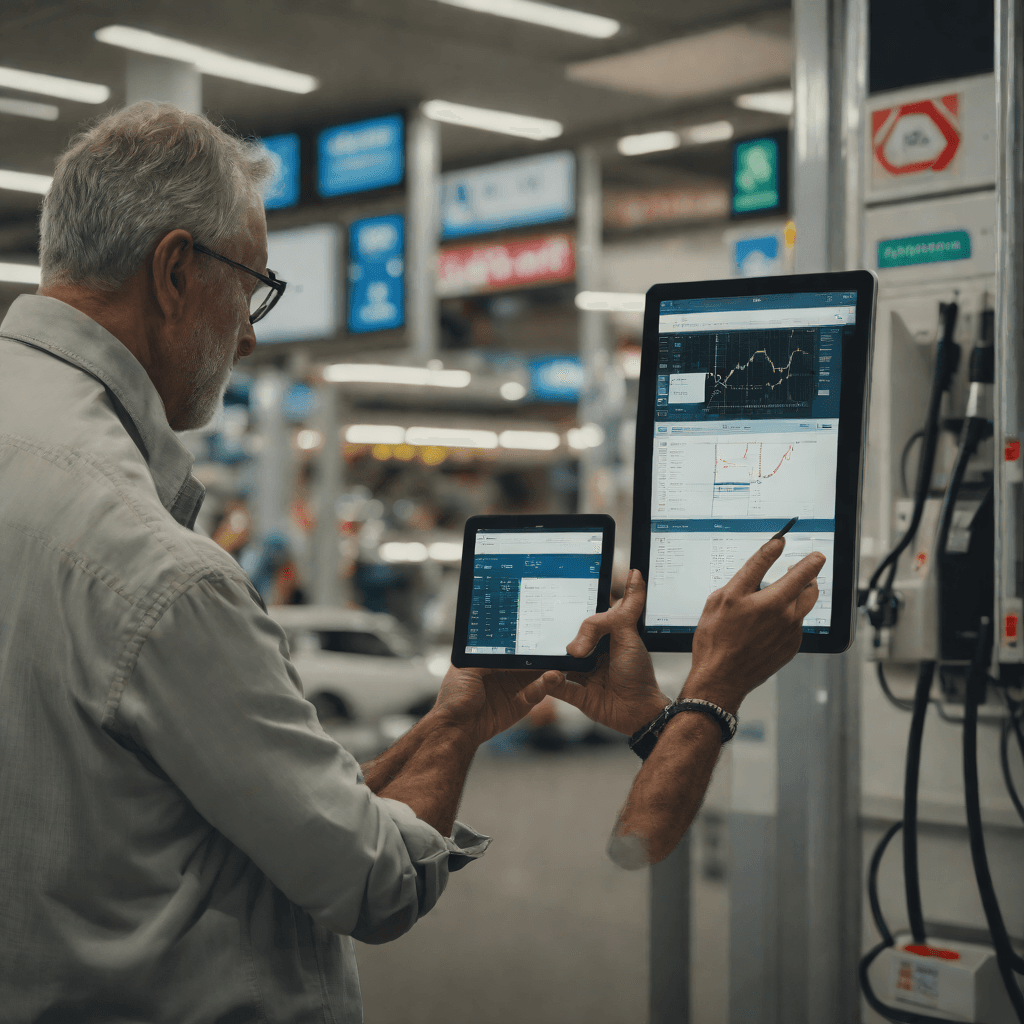
His data reveals that price transparency apps can result in an average 9% increase in retail margins, a "transparency tax" that disproportionately impacts low-income demographics who rely most heavily on finding cheaper fuel. In this data-rich environment, the opaque fog of war that typically encourages competitive undercutting evaporates. Station owners no longer need to guess if a competitor has dropped their price; the government’s own API tells them, allowing their pricing algorithms to match—rather than beat—the market floor instantly.
A Cathedral of Data
At the heart of the UK's initiative lies a digital architecture so comprehensive it makes American data collection look positively analog. While the U.S. Energy Information Administration (EIA) still relies on a weekly ritual of calling a sample of retail outlets every Monday morning—a methodology that feels almost quaint in 2026—the British government has effectively nationalized the pricing signal itself. By mandating that every fuel retailer push real-time price changes to a central government database within minutes of a manual update, they have constructed not just a consumer tool, but a cathedral of perfect information.
This centralized data lake serves as the backend for a new ecosystem of third-party applications, transforming the humble dashboard sat-nav into a high-frequency trading terminal for the average driver. In the U.S., the market relies on the crowdsourced model epitomized by the Bureau of Labor Statistics' reliance on secondary sources and the voluntary reporting driving apps like GasBuddy. In that system, data has latency; there is a gap between a station raising its price and the market "seeing" it. The UK's new architecture erases this gap entirely.
However, the technical failures of the 'Fuel Finder' rollout serve as a cautionary tale for US regulators eyeing similar digital interventions. When the state mandates data availability without securing the infrastructure to support it, the result is often an exhausted producer rather than an empowered consumer. For James Carter, an independent fuel station owner operating on the outskirts of Leeds, the promise of the digital economy has arrived as a relentless compliance burden.
"If I miss the thirty-minute window to update a price change, I'm flagged," Carter explains. This operational friction creates a "digital pothole"—a regulatory gap where the technical demands of transparency disproportionately punish small, analog operators while streamlining the market dominance of data-rich giants who integrated their point-of-sale systems directly with the government’s API months ago.
A Warning for the Interstate
For Michael Johnson, a logistics fleet manager in Ohio, the morning ritual is dictated by a glowing screen. Before a single truck leaves his depot, he scans three different fuel aggregation apps, hunting for fractional cent savings across a network of diesel pumps. "It feels like we're beating the system," Johnson says, noting that 41 percent of his peers now rely exclusively on digital tools to lock in fuel costs. But while Johnson sees a tool for efficiency, economists see a trap.
The United States is arguably already living in this future, driven not by government mandate but by private sector efficiency. Organizations like AAA partner with OPIS to survey approximately 130,000 stations daily, creating a data fidelity that rivals any government census. With the average gas price projected to hover around $3.22 per gallon in 2025-2026, the stakes of this algorithmic synchronization are massive. When every station knows exactly what its neighbor is charging in real-time, the incentive to undercut evaporates, replaced by an incentive to match.
This creates a complex dilemma for the Trump administration's "America First" energy agenda, which prioritizes deregulation and production dominance. The administration's push to unshackle domestic energy production assumes that increased supply will naturally lower costs for the consumer. However, if the retail mechanism—the pump itself—is captured by algorithmic pricing rigidity, the benefits of cheap crude may be absorbed by retailer margins rather than passed to the driver.
Ultimately, the warning from the UK is that the digital tools we associate with consumer liberty may be quietly engineering a new form of servitude. We have traded the friction of the physical market—driving down the street to compare signs—for the frictionless convenience of the app, unaware that we have handed the market makers a perfect surveillance tool. As the US debates whether to further deregulate or intervene in digital commerce, the question is no longer just about the price of oil, but whether the "free market" can truly exist when every player can see every other player's cards.
What do you think of this article?