The Defiant Lens: Don Lemon, the FACE Act, and the New Federal Frontier
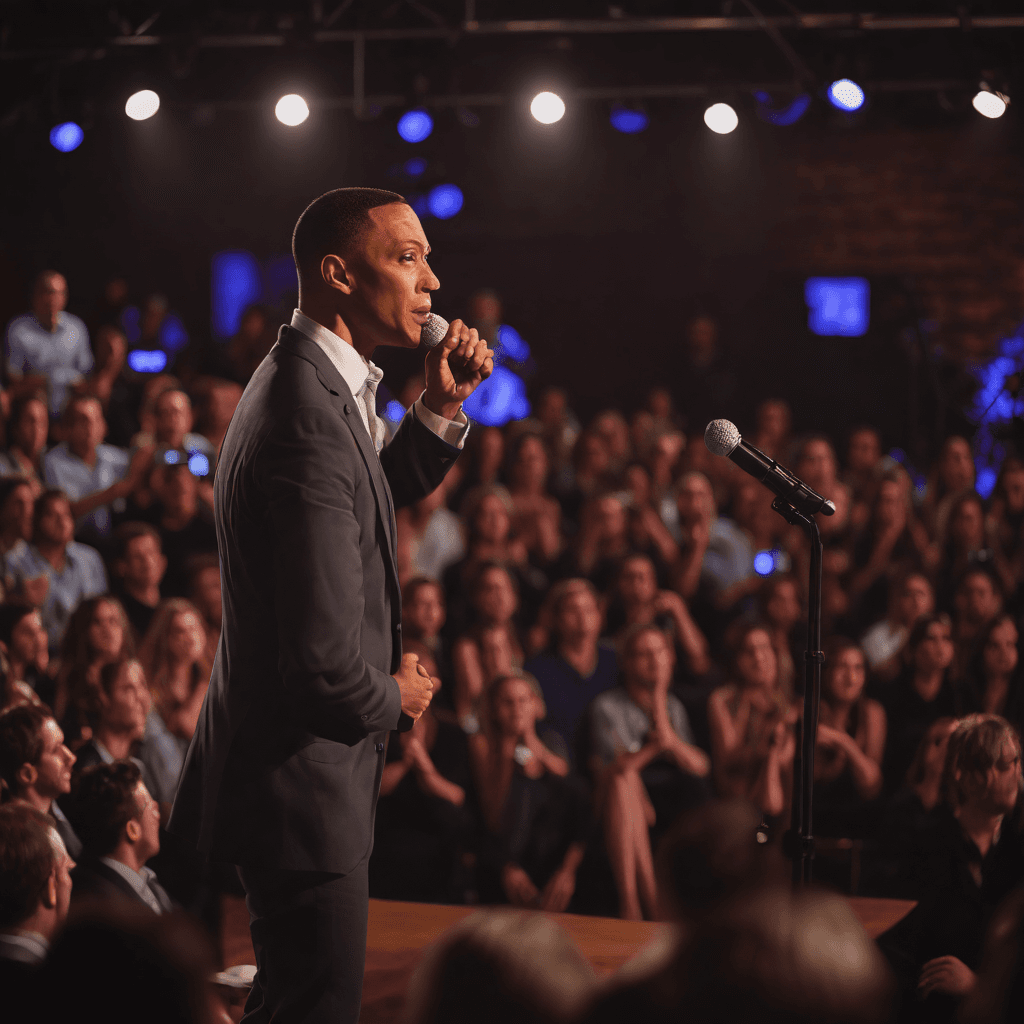
The City Winery Spotlight: From Federal Custody to Center Stage
The neon lights of City Winery NYC on this Wednesday evening, February 4, 2026, provide a stark contrast to the federal courtroom where Don Lemon’s legal future now hangs. As a crowd of legal analysts, media professionals, and civil liberties advocates filters in, the former news anchor is no longer just a media personality; he has become the face of a landmark federal case testing the limits of the First Amendment in the Trump 2.0 era.
Lemon’s presence on stage is a calculated act of defiance against a Justice Department that has signaled a significantly more aggressive stance on civil unrest and the journalists who cover it. This appearance serves as the opening salvo in a public relations battle that mirrors the complex legal fight brewing in the Midwest. The indictment, United States of America v. Don Lemon, et al., filed in the U.S. District Court for the District of Minnesota, alleges a criminal conspiracy that the government argues far exceeds the typical bounds of journalistic coverage.
The Minnesota Affidavit: Deconstructing the January 18 Charges
According to the U.S. Attorney’s Office, Lemon and eight co-defendants, including journalist Georgia Fort, are charged with conspiring to "injure, oppress, threaten, and intimidate" individuals exercising their right to religious freedom at Cities Church in St. Paul during a January 18 incident. The specific application of the law here marks a pivot in federal enforcement strategy.
Historically utilized to protect reproductive health centers, the FACE Act is now being applied to a house of worship under an administration that has prioritized "Order and Religious Liberty." Federal prosecutors argue that the documentation provided by Lemon and Fort served as a "force multiplier" for the disruption rather than a neutral recording of public interest. If convicted of these felony conspiracy charges, Lemon faces a maximum penalty of 10 years in federal prison—a sentence that would effectively redefine the risks of boots-on-the-ground reporting.
The Shadow of Trump 2.0: Media Figures in the Crosshairs
The arrest of Don Lemon in Los Angeles on January 30, 2026, was the first major journalist arrest of the year, according to the U.S. Press Freedom Tracker. It underscores the mounting friction between state-enforced religious protection and the rights of the press. In the context of the Trump administration's broader push for the prioritization of traditional institutions, federal prosecutors are increasingly viewing journalists who film disruptive protests not as neutral observers, but as active participants.
Data from the U.S. Press Freedom Tracker indicates a sharp escalation in the detention of media workers since the start of the second Trump term. While 48 journalists were arrested or detained in 2024, the focus in 2025 shifted toward those covering immigration and civil rights protests, as shown in the following data.
The Legal Machinery: Conspiracy vs. Documentation
Defense attorney Abbe D. Lowell, representing Lemon, has framed the government’s case as a fundamental targeting of the journalistic process. "Mr. Lemon was acting in his capacity as a journalist, documenting a matter of significant public interest," Lowell stated, arguing that to charge a reporter with conspiracy for filming a protest is a "dangerous overreach" that threatens the core of the First Amendment.
The Committee to Protect Journalists (CPJ) echoed this sentiment, calling the federal indictment an "egregious assault" and emphasizing that reporting on a protest is not a crime. However, the Department of Justice’s strategy appears designed to test the limits of "sacred ground" protections in a polarized society. By elevating a local disturbance to a federal conspiracy case, the government is signaling that the era of hands-off reporting during civil unrest may be coming to an end.

Advocacy in an Age of Litigious Governance
For independent media creators, the Lemon case represents a terrifying precedent. (Pseudonym) James Carter, a veteran media law consultant, notes that the boundary between documenting an event and "conspiring" to facilitate it has become dangerously porous. This "chilling effect" is forcing many independent nodes within the information economy to reconsider their proximity to the events they cover.
If the law can redefine the act of witnessing a crime as an act of committing one, the very nature of public transparency is fundamentally altered. The resolution of the Lemon case will likely dictate the boundaries of investigative advocacy for the remainder of the decade. As the Trump administration continues to pivot toward a model of governance that prioritizes institutional stability and religious protection, the role of the independent observer becomes increasingly precarious.
Ultimately, the fight at City Winery tonight is about more than one man’s legal future. It is a debate on whether a journalist’s presence functions as a tool of transparency or a tool of intimidation. If the judicial system can no longer distinguish between a reporter’s lens and a conspirator’s intent, the concept of the "independent observer" may become an extinct species in American democracy.
Sources & References
United States of America v. Don Lemon, et al. - Federal Indictment
U.S. Attorney's Office, District of Minnesota • Accessed 2026-02-04
The indictment alleges that Don Lemon and eight co-defendants conspired to 'injure, oppress, threaten, and intimidate' individuals exercising their right to religious freedom at Cities Church in St. Paul. The charges include felony conspiracy and violations of the Freedom of Access to Clinic Entrances (FACE) Act applied to a place of worship.
View OriginalU.S. Press Freedom Tracker: 2026 Incident Database
Freedom of the Press Foundation • Accessed 2026-02-04
The report documents the arrest of Don Lemon in Los Angeles on January 30, 2026, and his subsequent transfer to federal jurisdiction. It categorizes the incident as a significant escalation in the use of conspiracy charges against journalists covering civil unrest.
View OriginalJournalists Arrested or Detained in the U.S.: 48
U.S. Press Freedom Tracker • Accessed 2026-02-04
Journalists Arrested or Detained in the U.S. recorded at 48 (2024)
View OriginalJournalists Detained or Charged (Immigration-related protests): 32
Freedom of the Press Foundation • Accessed 2026-02-04
Journalists Detained or Charged (Immigration-related protests) recorded at 32 (2025)
View OriginalAbbe D. Lowell, Defense Attorney
Winston & Strawn LLP • Accessed 2026-02-04
Mr. Lemon was acting in his capacity as a journalist, documenting a matter of significant public interest. To charge a reporter with conspiracy for filming a protest is a dangerous overreach that threatens the core of the First Amendment.
View OriginalCommittee to Protect Journalists (CPJ), Official Statement
CPJ • Accessed 2026-02-04
The federal indictment of Don Lemon and Georgia Fort is an egregious assault on the First Amendment. Reporting on a protest is not a crime, and it is certainly not a conspiracy.
View OriginalDon Lemon arrested in LA over coverage of Minnesota church protest
The Guardian • Accessed 2026-01-30
Provides details on the arrest in Los Angeles during the Grammy Awards week and the background of the St. Paul protest.
View OriginalFormer anchor Don Lemon facing federal charges in Minnesota church disruption
CBS News • Accessed 2026-01-31
Reports on the U.S. Attorney's statement and the specific legal statutes (FACE Act) being invoked.
View OriginalPress freedom advocates condemn indictment of Don Lemon
Washington Post • Accessed 2026-02-01
Analysis of the First Amendment implications and quotes from legal experts regarding the 'conspiracy' charge.
View OriginalWhat do you think of this article?