The Ethics Theater: Why the Supreme Court Scandal Masks a National Infrastructure Collapse
The Echo Chamber of Ethical Outrage
The investigative spotlight on the Supreme Court has intensified into a familiar, rhythmic cadence of condemnation, yet the political output remains curiously stagnant. According to the December 2024 Majority Staff Report from the U.S. Senate Committee on the Judiciary, Justice Clarence Thomas is documented to have accepted approximately $4.2 million in undisclosed gifts and travel since his confirmation—a figure that serves as a lightning rod for critics of the Court’s internal oversight. This exhaustive investigation highlights what the committee describes as a "systemic failure" of transparency, yet as the Trump administration enters the second year of its second term, the discourse feels increasingly decoupled from legislative action.
While the dollar amount provides a convenient headline, the persistent focus on these figures often obscures the deeper, more immediate crisis of confidence in the federal government’s ability to manage the nation’s crumbling physical and regulatory infrastructure. The erosion of institutional legitimacy is no longer a theoretical concern for legal scholars but a measurable reality reflected in the skepticism of the American electorate. Data from Gallup in 2025 indicates that public approval of the Supreme Court has plateaued at a meager 42%, while trust in the judicial branch overall sits at 49%. Even more striking is the 2024 report from the Annenberg Public Policy Center, which found that 56% of Americans now harbor little to no trust in the nation's highest court.
The Enforcement Vacuum in High Court Oversight
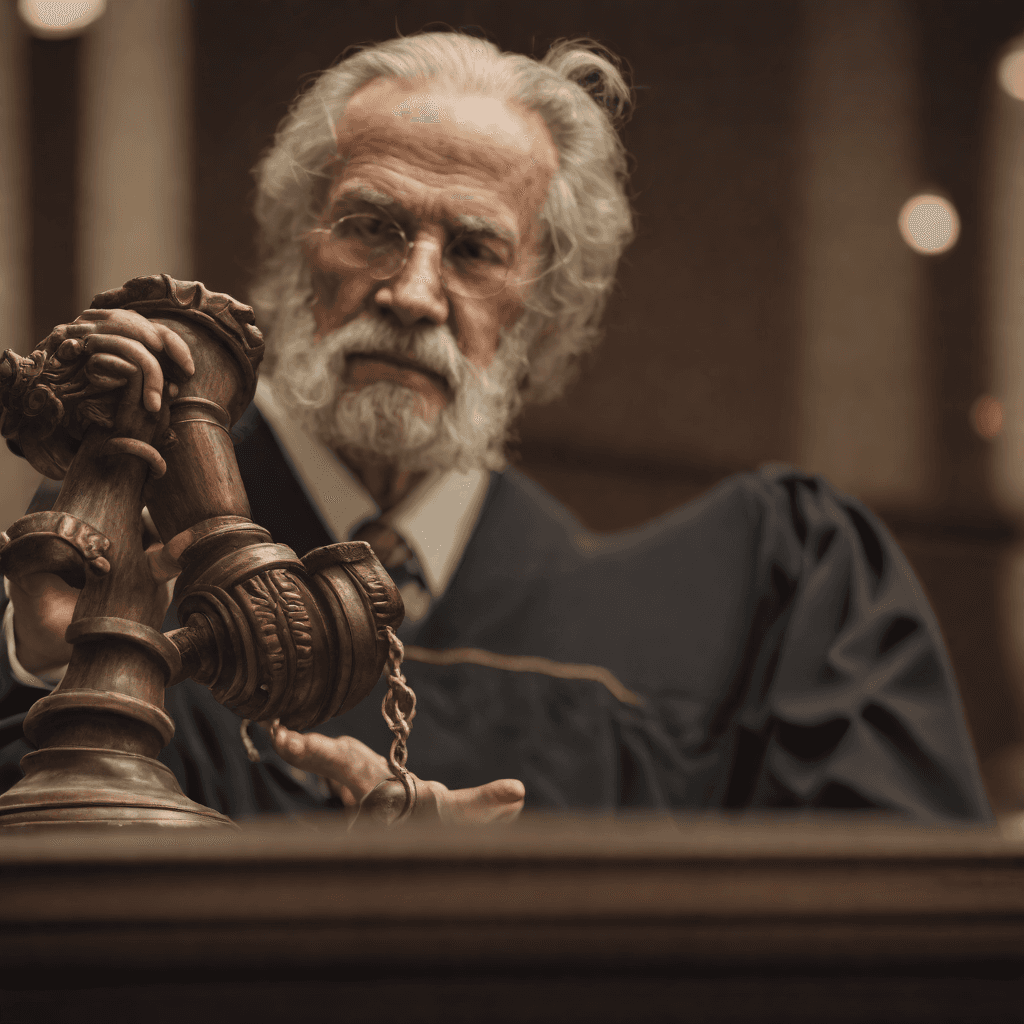
This trust deficit creates a vacuum where ethical debates are often weaponized as partisan distraction. As Senator Sheldon Whitehouse, Chairman of the Subcommittee on Federal Courts, noted following the release of the Senate Judiciary report, the Supreme Court remains the only part of the federal government without a binding and enforceable code of conduct. This reality, according to legal analysts, is less an oversight and more a feature of the current political gridlock. The structural paralysis of Supreme Court oversight has transformed from a legal debate into a permanent feature of the American political landscape, as the 2026 legislative session finds itself once again mired in a procedural deadlock.
The institutional resistance to external accountability is exemplified by the tepid reception of the Court’s own self-adopted Code of Conduct, issued in response to mounting public pressure. Though the 14-page document outlines five canons of behavior, it notably lacks any provision for an independent ombudsman or a transparent process for handling public complaints. This enforcement vacuum ensures that the cycle of scandal and outrage will continue, providing a perpetual backdrop of ethical noise while the physical foundations of the country continue to fracture under the weight of neglect.
The Anatomy of a Narrative Distraction
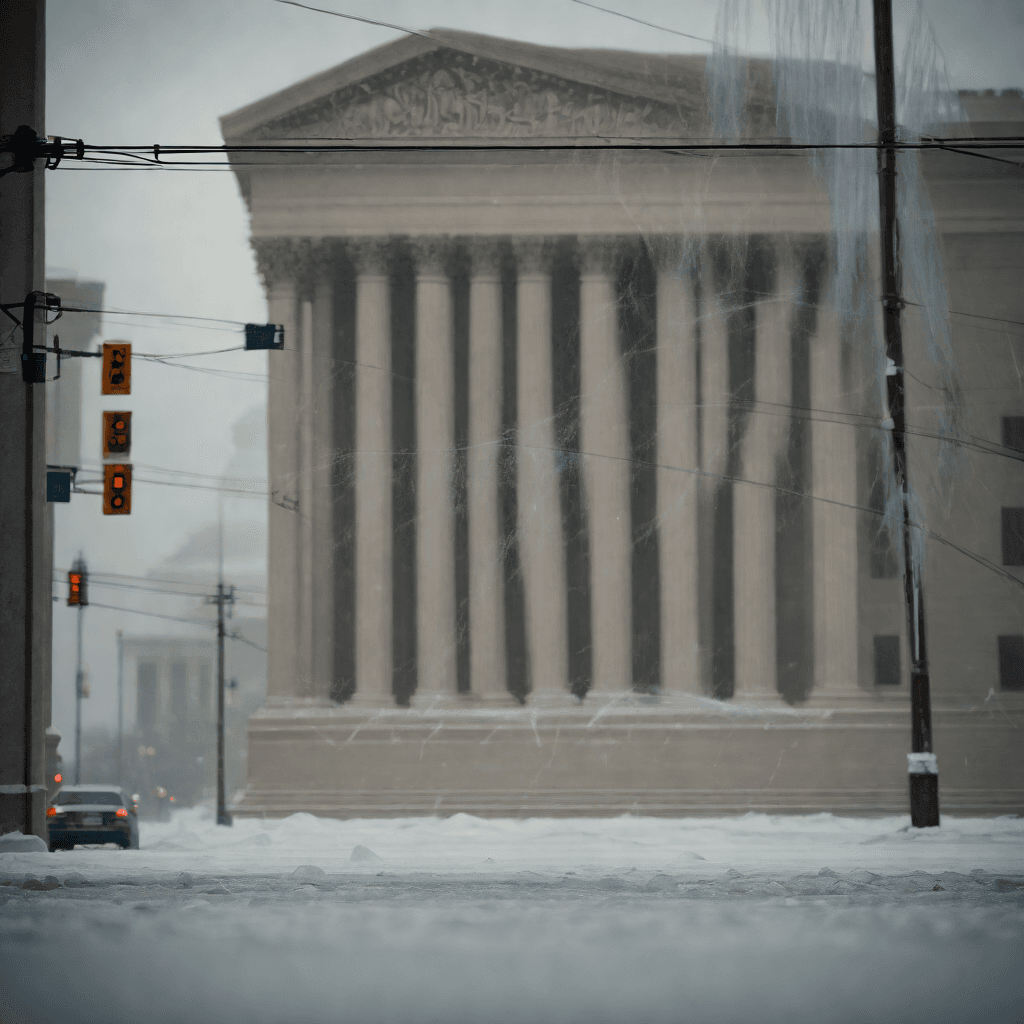
For citizens outside the Beltway, the distance between high-stakes ethical theater and daily survival is widening, especially as lethal snowstorms continue to batter the deregulated power grids of the Midwest and Northeast. While cable news cycles revolve around the $4.2 million in gifts, small business owners in suburbs currently facing rolling blackouts observe that the focus on judicial luxury feels worlds away from the freezing reality of their neighborhoods. This disconnect illustrates the "narrative distraction" thesis: the more the public is encouraged to debate the morality of a single Justice, the less oxygen is available to discuss the deregulation policies that have left the nation's energy utilities vulnerable to the increasingly volatile climate of 2026.
The revitalization of the Justice Clarence Thomas ethics probe represents what some analysts call a "Zombie News" cycle—a loop of recycled controversy that gains momentum whenever the federal government faces a collapse in domestic utility. By resurfacing a decades-old debate over judicial behavior, the current political apparatus effectively shields itself from the immediate failures of a deregulated power grid currently buckling under the 2026 winter vortex. This is not merely an investigation into the past; it is a calculated management of the present's outrage.

Real World Consequences of Grid Fragility
The legislative preoccupation with judicial ethics has created a dangerous vacuum where physical national security should be. As the Senate Judiciary Committee finalizes its reports, the American public is grappling with a far more immediate threat: the collapse of energy infrastructure during a record-breaking February freeze. In the suburbs of Minneapolis and the rural stretches of the Carolinas, the rhetoric of "ethics reform" feels secondary to the reality of rolling blackouts. For municipal engineers in the Northeast, the distance between the $4.2 million debate in D.C. and the freezing reality of the grid is measured in megawatts.
The Trump administration's second-term pivot toward radical deregulation, while aimed at spurring technological acceleration, has inadvertently stripped away the redundancies required to survive the 2026 "Adjustment Crisis." While the administration emphasizes energy independence through fossil fuel expansion, aging transmission lines are snapping under the weight of ice storms. By focusing national discourse on the 14-page Code of Conduct—a document that fix-the-court advocates describe as a mere list of suggestions—lawmakers avoid the far more expensive conversation regarding the trillion-dollar overhaul required for the U.S. electrical backbone.
The 2027 Horizon: Permanence vs. Reform
Despite persistent rumors in Washington about a potential vacancy, Justice Clarence Thomas appears to be entrenching himself for the long haul. Judicial insiders point to his recent commitment to clerkship hires extending well into the 2027 term as a definitive signal of his intent to remain on the bench. This administrative foresight effectively neutralizes the "retirement watch" narrative, suggesting a justice who remains unmoved by shifting political winds. Meanwhile, S.359—the Supreme Court Ethics, Recusal, and Transparency Act—remains caught in the gears of a divided Congress. The bill's path to enactment is blocked by fundamental disagreements over the separation of powers.
The persistence of the ethics narrative, even in the absence of a viable enforcement path, raises questions about the true priorities of the legislative branch. As long as the public is focused on the ethics of the individual, they are less likely to demand accountability for the failure of the system. The widening gap is not just a distance of wealth, but a distance of priority; it is the space between a multi-million dollar disclosure failure and a multi-billion dollar infrastructure collapse. If the mechanisms of justice are primarily used to manage public perception rather than to ensure accountability, the law ceases to be a shield for the citizen and becomes merely a script for the powerful.
Sources & References
Majority Staff Report: An Investigation of the Ethics Challenge at the Supreme Court
U.S. Senate Committee on the Judiciary • Accessed 2026-02-04
The report concludes a 20-month investigation finding that Justice Thomas accepted at least $4.75 million in undisclosed gifts and travel since his confirmation. It highlights a 'systemic failure' of the Court's internal oversight.
View OriginalS.359 - Supreme Court Ethics, Recusal, and Transparency Act of 2023
U.S. Congress • Accessed 2026-02-04
Proposed legislation to require a binding code of conduct, establish a process for investigating complaints, and mandate stricter disclosure of gifts and travel for Justices.
View OriginalCode of Conduct for Justices of the Supreme Court of the United States
Supreme Court of the United States • Accessed 2026-02-04
The Court's self-adopted code issued in response to ethics concerns. Critics note it lacks an independent enforcement mechanism.
View OriginalPublic Approval of the Supreme Court: 42%
Gallup • Accessed 2026-02-04
Public Approval of the Supreme Court recorded at 42% (2025)
View OriginalTrust in the Judicial Branch: 49%
Gallup • Accessed 2026-02-04
Trust in the Judicial Branch recorded at 49% (2025)
View OriginalPercentage of Americans with little/no trust in SCOTUS: 56%
Annenberg Public Policy Center • Accessed 2026-02-04
Percentage of Americans with little/no trust in SCOTUS recorded at 56% (2024)
View OriginalSenator Sheldon Whitehouse, Chairman of the Subcommittee on Federal Courts
U.S. Senate • Accessed 2026-02-04
The Supreme Court remains the only part of our federal government without a binding and enforceable code of conduct, and the latest evidence of massive, undisclosed gifts shows why that must change.
View OriginalGabe Roth, Executive Director
Fix the Court • Accessed 2026-02-04
A code without enforcement is just a list of suggestions. The current status quo allows for a level of opacity that is damaging to the institution's legitimacy.
View OriginalClarence Thomas and the Billionaire
ProPublica • Accessed 2023-04-06
Foundational investigative report that triggered the current ethics debate by detailing decades of undisclosed luxury travel provided by Harlan Crow.
View OriginalDemocratic-led Senate panel reports millions in gifts to Justice Thomas
Reuters • Accessed 2024-12-21
Reports on the conclusion of the Senate Judiciary Committee's investigation and the Republican boycott of the process.
View OriginalJudicial Conference declines to refer Thomas ethics complaints to DOJ
SCOTUSblog • Accessed 2025-01-14
Explains the legal hurdle Democrats face after the federal court policymaking body refused to take formal action against the Justice.
View OriginalWhat do you think of this article?