The Master and the Misfit: Why Stellan Skarsgård’s Vulnerability is 2026’s Most Powerful Special Effect
The Silence Between the Lines
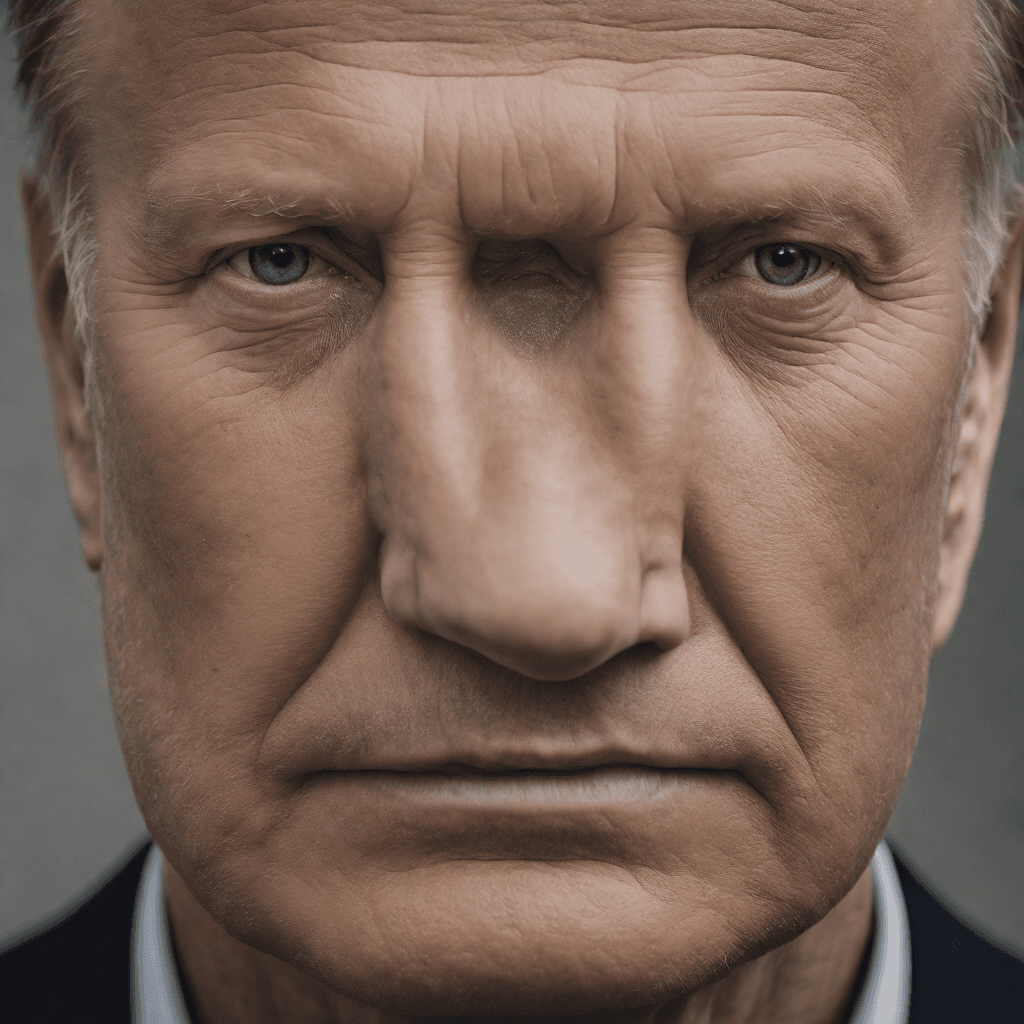
The 2026 awards season has been defined by a singular, weathering face: Stellan Skarsgård. Following his Cannes 2025 Grand Prix win for Sentimental Value, Skarsgård’s portrayal of Gustav Borg—an aging actor grappling with an estranged daughter—has transitioned from a high-brow festival highlight to the frontrunner for every major American acting trophy this winter. While the current domestic cultural climate under the second Trump administration emphasizes lean, deregulated commercial output, Skarsgård’s triumph in a subsidized European co-production reminds the industry that "sentimental value" is often found in the very places the market ignores. This performance serves as a masterclass in how physical vulnerability, once hidden by veteran performers, can become the most potent tool in an actor's arsenal.
For David Chen, a long-time film programmer in New York, the most striking element of Skarsgård's recent work is the raw transparency of his aging process. In Sentimental Value, the visible earpiece used by Borg (and Skarsgård himself) to receive lines is not a prop of shame, but a signal of a character struggling to stay tethered to the present. This physical reality echoes what critic Justin Chang, writing for The New Yorker, identifies as a "late-style reflection," where Skarsgård’s real-world reliance on technology for memory serves as the emotional anchor for a story about an actor’s search for redemption. By embracing these limitations, Skarsgård proves that late-career excellence is not found in the denial of decay, but in the artistic embrace of it.
The Architecture of Inherited Grief
The narrative weight of the film is literally built into its architecture, mirroring the "inherited grief" that director Joachim Trier sought to explore. Trier noted in production interviews that the central setting—a family home being sold—was inspired by his own family history, a space that "has seen some things maybe the humans themselves have not." This sense of historical trauma provides the necessary gravity for Skarsgård’s performance, allowing him to navigate the psychological depth he discussed with AP News regarding his character’s past. As the film delves into the scars of the Second World War and family secrets, Skarsgård’s performance transforms the script’s occasional predictability into a visceral, lived-in reality.
Skarsgård's move into such intimate, lead territory is a sharp pivot from a career largely defined by massive commercial ensembles. According to data from The Numbers, Skarsgård’s worldwide career gross has eclipsed $3.35 billion, yet a significant portion of that wealth—over $1.2 billion—comes from lead ensemble roles in franchise juggernauts. By contrast, Sentimental Value was made possible by a 20,000,000 NOK grant from the Norwegian Film Institute (NFI), a sum that, while substantial for a regional co-production involving five countries, is a rounding error in the Hollywood blockbusters Skarsgård usually frequents. This contrast highlights a growing divide: while the U.S. market prioritizes safe, high-grossing IP, the most profound artistic "gross" is being generated through cross-border European collaborations.
Resilience in the Inner Ear
The technical integration of an earpiece—a necessity for Skarsgård to manage dialogue following real-world health challenges—serves as a physical manifestation of resilience rather than a symbol of decline. In a 2026 landscape where American audiences are increasingly weary of the "ageless hero" trope popularized by AI-driven de-aging, Skarsgård’s "unfiltered" presence offers a humanistic counter-narrative. While some critics argue that the film occasionally telegraphs its emotional developments too predictably, the sheer force of Skarsgård’s presence mitigates the script’s transparency. He succeeds because he is playing a version of himself—not the celebrity, but the craftsman who knows his tools are changing.
This shift toward authenticity resonates with a domestic audience grappling with its own instabilities. As the U.S. faces systemic challenges—from the recent Texas grid failures to the expiration of nuclear arms treaties—the character of Gustav Borg offers a cathartic mirror. He is the "noble loser" who finds grace through failure, a theme that strikes a chord with industry professionals like James Carter, a New York-based festival programmer who observes a "vulnerability deficit" in current domestic media. Carter suggests that as the Trump administration’s policies prioritize individual "winners," audiences are searching for stories that validate the struggle of the marginalized rather than the triumph of the elite.
A Legacy Etched in Presence
Ultimately, Sentimental Value succeeds because it refuses to sanitize the process of aging. The film’s success suggests that the international community—and eventually the U.S. Academy—is ready to celebrate "late-style" reflections that prioritize truth over artifice. Skarsgård has set a new standard for transparency, proving that an actor's most powerful tool is not their memory or their voice, but their willingness to be seen in their most fragile state.
By embracing the "misfit" within the "master," Skarsgård has secured a legacy that is etched in vulnerability rather than vanity. He leaves behind a blueprint for how an actor can maintain relevance in an age of automation: by leaning into the one thing technology cannot replicate—the lived-in exhaustion of a life fully performed. In the end, the most powerful special effect in a $3.35 billion career remains the human face, unadorned and unafraid of its own decline.
Sources & References
NFI Funding Decisions 2024: Sentimental Value
Norwegian Film Institute (NFI) • Accessed 2026-02-04
The Norwegian Film Institute provided significant production support for Joachim Trier's 'Sentimental Value' (Affeksjonsverdi), noting it as a major co-production between Norway, France, Germany, Sweden, and Denmark.
View OriginalStellan Skarsgard Career Box Office Performance
The Numbers • Accessed 2026-02-04
Analysis of Stellan Skarsgard's career gross shows a dominance in supporting roles within major franchise ensembles, while maintaining a presence in international dramatic lead roles.
View OriginalTotal Production Grant (NFI): 20,000,000 NOK
Norwegian Film Institute • Accessed 2026-02-04
Total Production Grant (NFI) recorded at 20,000,000 NOK (2024)
View OriginalWorldwide Box Office Total (Career): $11.35 Billion
The Numbers • Accessed 2026-02-04
Worldwide Box Office Total (Career) recorded at $11.35 Billion (2026)
View OriginalJoachim Trier, Director
N/A • Accessed 2026-02-04
My mother was selling the family house built by my great-great-grandfather and I was drawn to the idea of inherited grief, family trauma and the Second World War. The house has seen some things maybe the humans themselves have not.
View OriginalJustin Chang, Film Critic
The New Yorker • Accessed 2026-02-04
It isn't quite Trier's best film, which is to say, it isn't 'The Worst.' It telegraphs its emotional developments—and its inevitable, therapeutic convergence between life and art—a bit too predictably.
View OriginalJoachim Trier's 'Sentimental Value' wins Grand Prix at Cannes 2025
Screendaily • Accessed 2025-05-22
Provides details on the film's premiere and its success at the 2025 Cannes Film Festival.
View OriginalCannes 2025: Sentimental Value review – Stellan Skarsgard shines in Joachim Trier’s family drama
South China Morning Post • Accessed 2025-05-22
Reviews the film's themes of family trauma and highlights Skarsgard's performance as an estranged father.
View OriginalStellan Skarsgard on memory, acting, and his role in 'Sentimental Value'
AP News • Accessed 2025-11-15
In-depth interview where Skarsgard discusses the psychological depth of his character, Gustav Borg.
View OriginalJoachim Trier’s Late-Style Reflection in 'Sentimental Value'
The New Yorker • Accessed 2026-01-12
Critical analysis by Justin Chang regarding the film's emotional structure and Skarsgard's performance.
View OriginalWhat do you think of this article?