The Great Displacement Paradox: Why Wall Street Shudders Despite the Jobs Boom
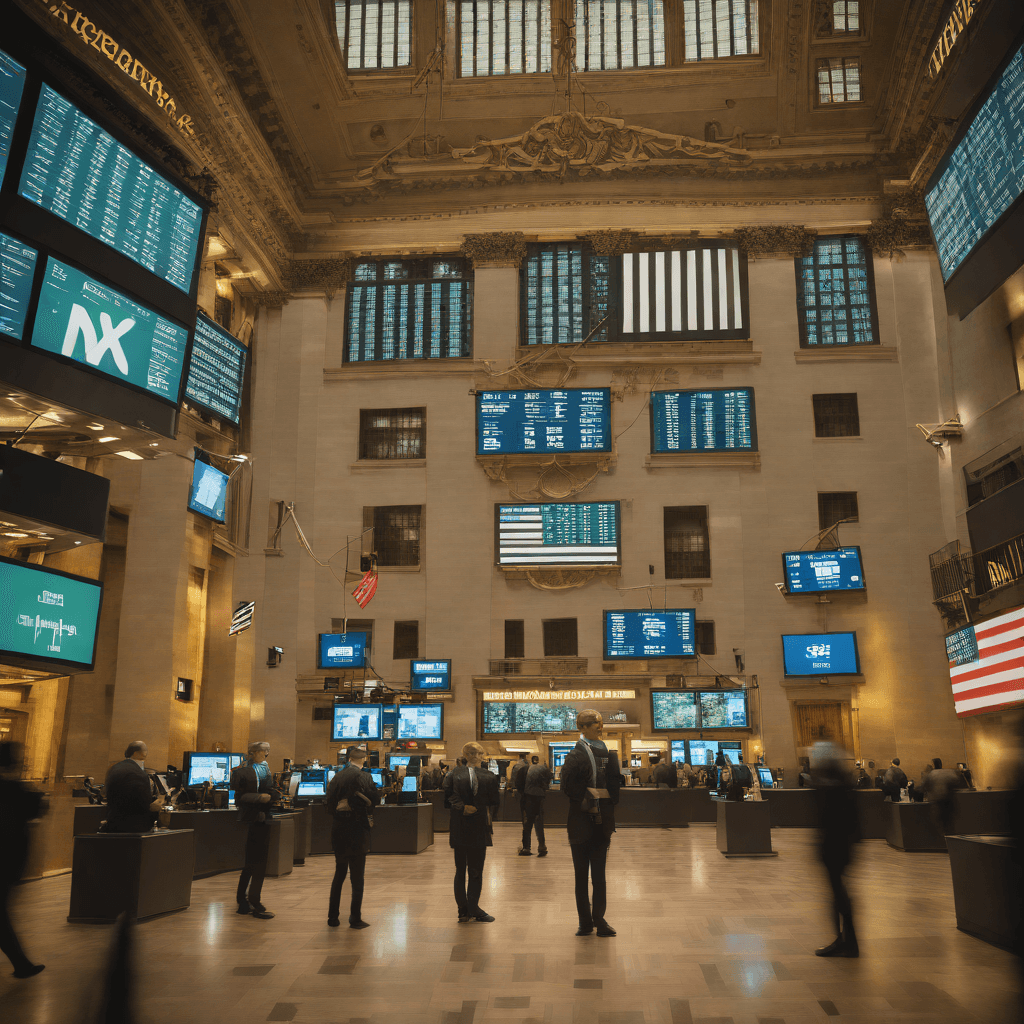
The Friday Paradox: Strength Masking Structural Decay
The 600-point volatility witnessed on Wall Street this Friday presents a jarring contradiction to the morning’s headlines. While the U.S. Bureau of Labor Statistics (BLS) released February 2026 employment figures that significantly exceeded analyst expectations, the market response was not one of celebration, but of profound anxiety. This represents the 'Great Displacement Paradox': a scenario where record-breaking headline growth hides a radical, AGI-driven hollowing out of the middle class.
Under the second term of the Trump administration, the 'Adjustment Crisis' has moved from a theoretical risk to a market-defining reality. The aggressive deregulation of the 'Trump 2.0' era has provided corporations with the tactical freedom to implement Artificial General Intelligence (AGI) at a pace that far outstrips social safety nets. Investors are no longer reacting to whether the economy is growing—they are reacting to the fact that this growth is increasingly 'jobless' in its core sectors.
Unlike the August 2024 cycle—where a 4.3 percent unemployment rate and a Sahm Rule trigger of 0.53 signaled a traditional recessionary threat—2026’s metrics are superficially robust. However, this robustness is a facade. Institutional capital is pricing in the reality that while payrolls are high, the value of that labor is being systematically diverted to autonomous systems. The volatility is the sound of a market recalibrating its definition of a 'healthy' economy in a post-labor world.
The AI-Washing Gambit: Scapegoating the Machine
Recent restructuring announcements across the logistics and technology sectors—most notably the continued downsizing at giants like Amazon and UPS—are being framed through a specific narrative lens: technological optimization. In the Trump 2.0 deregulation era, AI has become the ultimate corporate scapegoat. By blaming mass redundancies on 'AGI transition,' firms can satisfy Wall Street's demand for margin expansion while sidestepping the social and legal friction traditionally associated with large-scale labor displacement.
This 'AI-Washing' allows leadership to liquidate human capital with unprecedented speed. For professionals in the mid-management tier, the atmosphere is one of algorithmic ruthlessness. The deregulation of the tech sector has removed the traditional shields that once protected senior employees, allowing companies to pivot to autonomous sorting and decision-making systems. The result is a 'Liberty to Automate' that treats the domestic workforce as a legacy expense rather than a stakeholder.
Deregulation as a Catalyst for Displacement
The pivot toward radical deregulation has effectively dismantled the collective bargaining power that once anchored white-collar sectors. By easing oversight on AGI implementation, the administration has inadvertently (or perhaps intentionally) front-run a permanent displacement strategy. AI is no longer a tool for augmenting the worker; it is the primary driver of corporate re-architecting.
Analysts at major institutional firms are increasingly vocal about this shift. The concern is that if the state successfully achieves economic dominance through a labor-less engine, the social contract of the 20th century becomes obsolete. The current market volatility reflects a terror not of failure, but of a success that no longer requires human participation to generate value. As the Sahm Rule and other legacy indicators lose their predictive power in the face of AGI, Wall Street is left flying blind into a post-labor equilibrium.
Ultimately, the Great Displacement Paradox forces a fundamental question upon the 2026 economy: If productivity and profit are finally decoupled from human effort, what is the ultimate purpose of the wealth being generated? The sound of the market today is the sound of an economy realizing it may have optimized itself out of its own human foundation.
Sources & References
The Employment Situation — July 2024
U.S. Bureau of Labor Statistics • Accessed 2026-02-06
Total nonfarm payroll employment edged up by 114,000 in July, and the unemployment rate rose to 4.3 percent. These figures were significantly lower than market expectations, signaling a sharp cooling in the labor market.
View OriginalReal-time Sahm Recession Indicator
Federal Reserve Bank of St. Louis (FRED) • Accessed 2026-02-06
The Sahm Rule was triggered as the three-month moving average of the national unemployment rate rose 0.50 percentage points or more relative to its low during the previous 12 months.
View OriginalUnemployment Rate: 4.3%
Bureau of Labor Statistics • Accessed 2026-02-06
Unemployment Rate recorded at 4.3% (2024)
View OriginalNonfarm Payroll Employment Change: +114,000
Bureau of Labor Statistics • Accessed 2026-02-06
Nonfarm Payroll Employment Change recorded at +114,000 (2024)
View OriginalIan Shepherdson, Chief Economist
Pantheon Macroeconomics • Accessed 2026-02-06
July's poor employment report leaves the Fed looking woefully behind the curve with its decision to hold rates this week, and suggests that the outcome of September's meeting now is finely balanced between 25bp and 50bp easings.
View OriginalClaudia Sahm, Chief Economist
New Century Advisors • Accessed 2026-02-06
The Sahm Rule is a historical pattern. It is not a law of nature. But it's a very reliable indicator of where we are in the business cycle.
View OriginalWhat do you think of this article?