Turbocharged Deception: Reconciling Khan’s 2023 Warning with the 2026 Deregulatory Vacuum
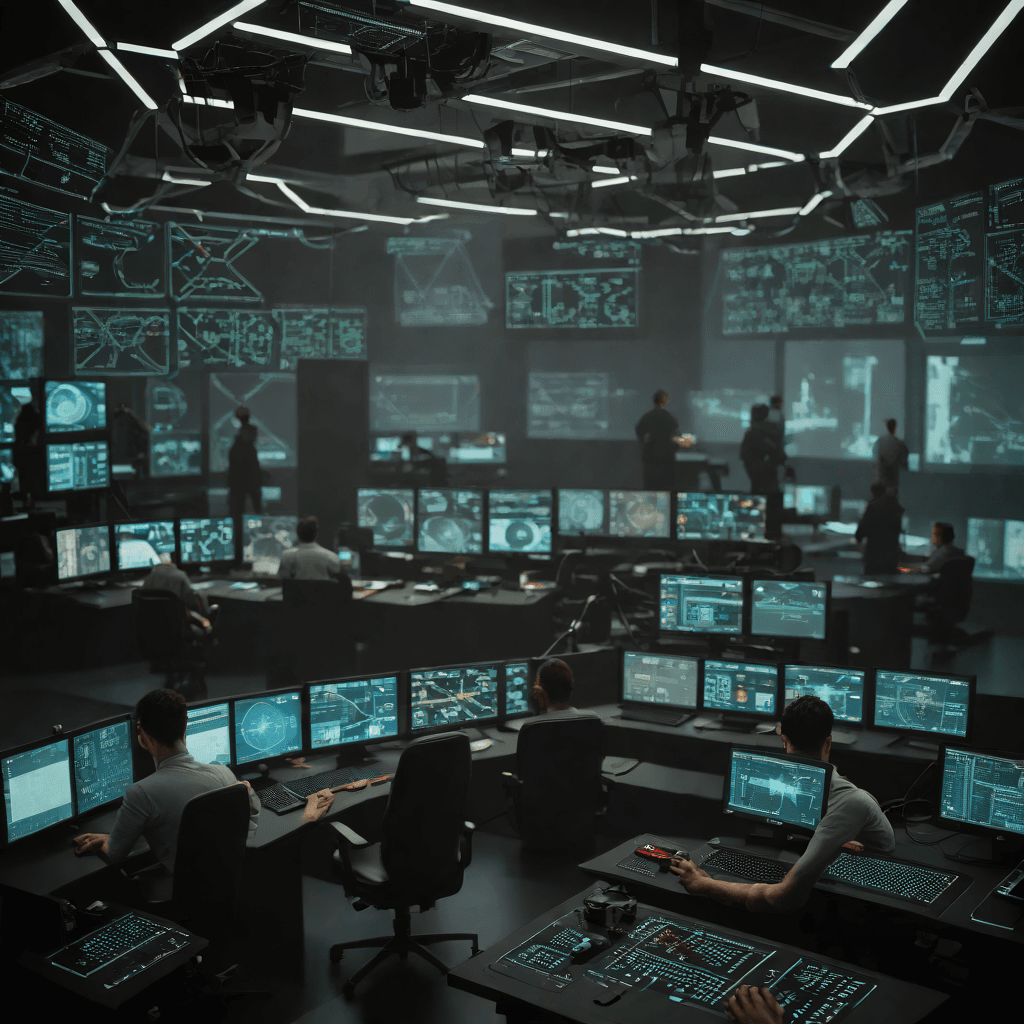
The Synthetic Storm of 2026
The industrialization of deception in 2026 represents the grim fruition of warnings issued by regulators years ago. As the United States navigates the second year of the Trump 2.0 administration, a federal mandate prioritizing radical deregulation to maintain a competitive edge against global rivals has inadvertently created an unprecedented security vacuum. The "turbocharged" fraud once theorized by former FTC Chair Lina Khan in 2023 is no longer a fringe threat; it is the primary engine of a shadow economy operating with the same frictionless efficiency as the Silicon Valley giants it mimics.
For small business owners like David Chen in Ohio, the synthetic storm arrives not as a technical hack but as a perfectly pitched conversation. Earlier this year, Chen received a voice-cloned call that replicated his lawyer’s cadence with 99% fidelity, demanding an immediate wire transfer to settle a non-existent regulatory fine. This tactic utilizes the large-scale generation capabilities first flagged during the FTC’s 2024 "Operation AI Comply." This hyper-personalization allows criminal syndicates to bypass traditional security filters, replacing them with human-like interactions that target psychological vulnerabilities rather than technical flaws.
A 2023 Prophecy in a 2026 World
In the spring of 2023, the federal government issued a warning that today reads like a discarded survival manual for the digital age. Lina Khan stated clearly that there was "no AI exemption to the laws on the books," cautioning that generative tools would automate manipulation at an unprecedented scale. While critics at the time dismissed this as regulatory overreach—an attempt to stifle nascent American innovation—the reality of 2026 has transformed that skepticism into a form of collective negligence.
The statistical trajectory of this crisis was never a secret. The Stanford Institute for Human-Centered AI (HAI) documented that AI-related incidents surged significantly between 2013 and 2023, representing a twentyfold increase over the decade. By the time the current administration pivoted toward total retreat from tech oversight to secure AI hegemony, those figures were viewed by the market as the acceptable cost of progress. This mentality has only hardened in the current environment, where rapid deployment is prioritized over consumer safety.
The Great Pivot: From Oversight to Acceleration
The inauguration of the second Trump administration in early 2025 signaled an abrupt end to the era of algorithmic accountability. With a directive to prioritize technological acceleration, the robust enforcement actions seen in late 2024—which targeted entities like Rytr for fake reviews and DoNotPay for unauthorized legal services—were deprioritized in favor of market expansion. By removing these "speed bumps" to promote global hegemony, the administration effectively dismantled the guardrails designed to protect consumers from the very automation Khan warned could "automate discrimination."
This transition has inadvertently subsidized the growth of criminal syndicates. The 2024 AI Index Report highlighted that deepfakes were becoming exponentially harder to detect, creating a persistent "authenticity gap" in the digital marketplace. This suggests that "acceleration" is a double-edged sword; while it fuels the 2026 tech boom, it simultaneously provides bad actors with the industrial efficiency required to exploit a deregulated environment. The burden of defense has shifted from the state to the individual, creating a two-tiered society where safety is a luxury purchase rather than a civil right.
Efficiency vs. Exploitation: The Cost of Silence
The regulatory retreat of 2026 has validated the core of the 2023 warnings regarding the "turbocharging" of fraudulent practices. Policy analysts now observe that the "efficiency" sought by removing oversight has primarily benefited bad actors who utilize the same advanced large language models (LLMs) prioritized by the government. This shift raises critical questions about the hidden costs of a frictionless market where the barriers to entry for exploitation have been systematically lowered.
In the absence of the "Operation AI Comply" framework, which once penalized firms for fraudulent storefront schemes, the 2026 landscape is defined by a "wild west" where the barrier to entry for digital exploitation is effectively zero. Data suggests that while the US leads in model performance under the Trump 2.0 administration, it is simultaneously leading in systemic vulnerability. The case of Ecommerce Empire Builders, which defrauded millions before the 2025 pivot, served as a blueprint for the 2026 syndicates that now use AGI-driven storefronts to siphon capital with near-total anonymity.
The Fragmentation of Digital Defense
This federal void has forced a "Patchwork Defense," where legal protection against AI-driven exploitation is determined by state borders rather than national standards. For individual citizens, the reality of this fragmentation is stark. While some state Attorneys General have attempted to pass localized "Digital Integrity" acts, they lack the jurisdictional reach to combat syndicates operating under the shield of federal deregulation.
In the absence of a central regulator, the burden of digital defense has shifted almost entirely to private platforms. Companies are now forced to implement their own internal protocols to protect their brand ecosystems, effectively turning private platforms into the de facto police of the American digital frontier. This privatization of justice creates a world where a user’s safety is a premium feature of their software subscription rather than a constitutional right.
The Algorithmic Tipping Point: Looking Toward 2027
As the United States moves toward 2027, the debate is no longer about whether to regulate AI, but how to survive the deregulation already embraced. The 2023 prophecy of a fraud-laden future has been fulfilled with a precision that should haunt every architect of the current "move fast and break things" policy. We are witnessing a Darwinian struggle where the most innovative players are not just the developers of AGI, but the syndicates treating deregulated markets as a testing ground for automated larceny.
If truth is no longer a requirement for a successful transaction, the fundamental currency of the free market—trust—will continue to rapidly depreciate. The 2026 paradox remains: while the removal of federal reporting requirements has lowered the cost of entry for legitimate startups, it has also lowered the cost of "turbocharged" fraud for actors who respect neither borders nor balance sheets. If we continue to view tech oversight solely as a barrier to liberty, we risk a total collapse of public trust in the digital economy.
Sources & References
FTC Announces Crackdown on Deceptive AI Claims and Schemes
Federal Trade Commission (FTC) • Accessed 2026-02-06
Launched 'Operation AI Comply' to target companies using AI for deceptive practices. Key targets included Rytr (fake reviews), DoNotPay (fake 'robot lawyer'), and Ecommerce Empire Builders (fraudulent storefronts).
View OriginalArtificial Intelligence Index Report 2024
Stanford Institute for Human-Centered AI (HAI) • Accessed 2026-02-06
Documented a 32.3% increase in AI-related incidents in 2023, with a twentyfold increase in incidents since 2013. Highlighted the rise of deepfakes and the ease of generating misinformation.
View OriginalLina Khan, Chair
Federal Trade Commission (FTC) • Accessed 2026-02-06
There is no AI exemption to the laws on the books. firms should be aware that systems bolstering fraud or perpetuating unlawful bias could violate the FTC Act.
View OriginalLina Khan, Chair
Federal Trade Commission (FTC) • Accessed 2026-02-06
AI can turbocharge fraudulent practices and automate discrimination. Scammers can use these tools to manipulate and deceive people on a massive scale.
View OriginalWhat do you think of this article?