The Orchestrated Echo: Japan’s 51st General Election as a Shield for Structural Decay
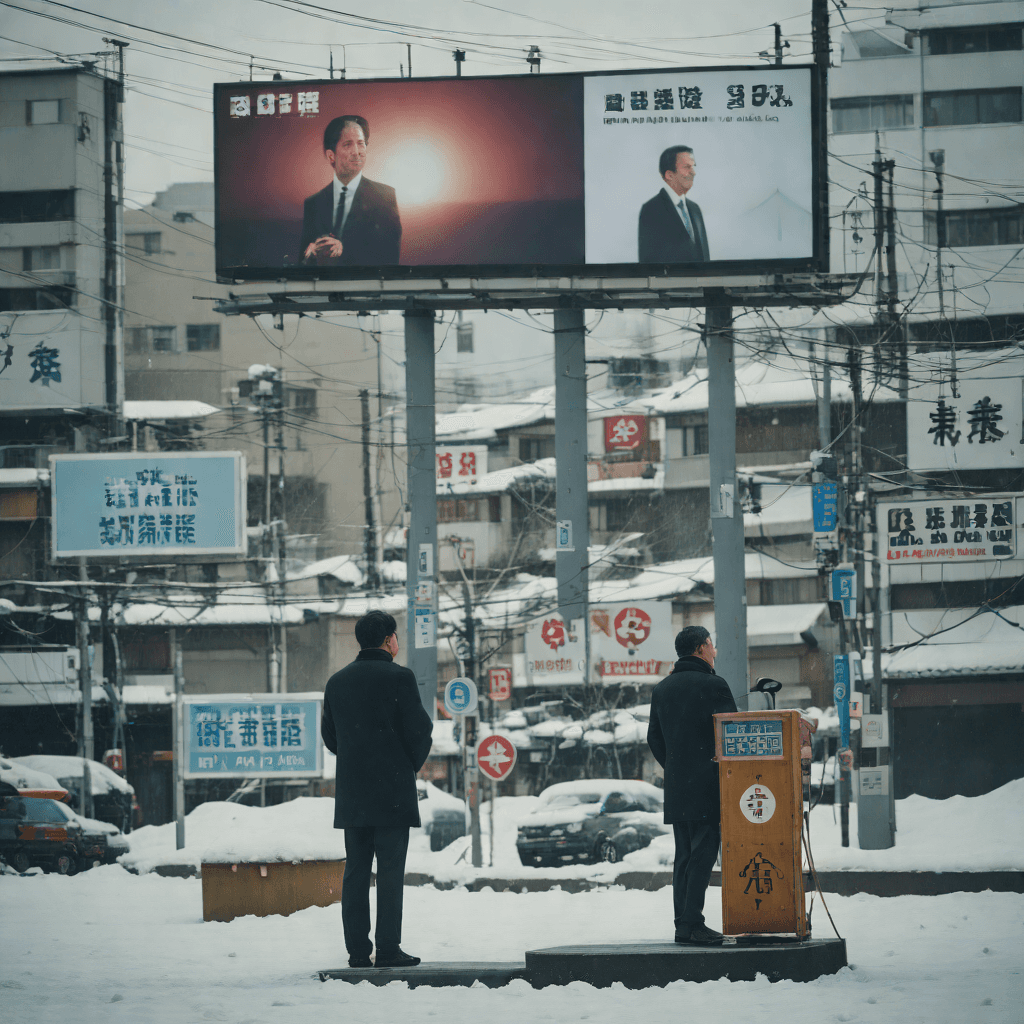
The Ritualized Fervor of the Final Stretch
The final days of Japan’s 51st General Election campaign are defined by a performative intensity that masks a growing disconnect between high-level geopolitical alignment and the eroding economic security of the average voter. On the streets of Tokyo and Osaka, candidates from the Liberal Democratic Party (LDP) and the Japan Innovation Party (Ishin) amplify their rhetoric on "defense autonomy" and "technological sovereignty." This messaging echoes the themes of the January 2026 CSIS U.S.-Japan Security Seminar, emphasizing a "new golden age" of trans-Pacific cooperation.
Yet, this noise competes with the silent pressure of a $64.7 billion trade deficit and the 15% tariff baseline imposed by the second Trump administration on Japanese industrial imports. This ritualized fervor serves a dual purpose: it signals reliability to Washington while distracting a domestic audience from the reality that their "strategic pivot" comes at a high price of industrial friction and fiscal strain. For those on the ground, the spectacle of the stump speech feels less like a democratic dialogue and more like a carefully managed broadcast.
For the global investor, the stability of this narrative management is the primary metric of success, even as it risks alienating the Japanese workforce. Michael Johnson (a pseudonym), a Tokyo-based political and logistics strategist for a U.S.-led equity fund, notes that the market prefers the predictable choreography of the LDP-Ishin coalition over any genuine populist upheaval that might disrupt the $150 billion in U.S.-bound investments promised through 2029. This preference for stability over substance aligns with the July 2025 Strategic Trade and Investment Agreement, which prioritizes semiconductor supply chains over the immediate relief of Japan’s domestic cost-of-living crisis.
The Niigata Void: Infrastructure in the Shadows
While the neon-lit districts of Tokyo reverberate with the ritualized static of campaign trucks, a profound and heavy silence has settled over the disaster-stricken corridors of Niigata and Myoko. This geographic dissonance serves as a physical manifestation of a broader political strategy: the 2026 General Election functions less as a democratic pulse check and more as a sophisticated exercise in narrative management. As the ruling coalition saturates the airwaves with "battleground" rhetoric, the literal collapse of aging infrastructure in the snowy north is relegated to the periphery of the national consciousness.
According to the U.S. Department of State’s 2025 Investment Climate Statement, while Japan has committed massive capital to U.S.-bound projects, its own internal stability is under threat from an aging infrastructure grid. This disconnect is particularly stark when viewed through the lens of the U.S. Bureau of Economic Analysis (BEA) data, which reported a persistent trade deficit. While Washington leverages tariffs to balance the scales, the Japanese government is doubling down on a 2% GDP defense spending target by 2027—a move that analysts describe as a strategic pivot toward a more autonomous defense posture.
In the snow-choked streets of Niigata, the human cost of this structural silence is articulated not in stump speeches, but in the absence of basic services. For Yamamoto Hiroshi, a small business owner in the region, the election feels like a broadcast from a different country. While the television discusses 6G governance and AI-driven technological security, Hiroshi is preoccupied with the three-day delay in road clearing that has paralyzed his local delivery network. Dr. Kristi Govella, a senior fellow at the German Marshall Fund, warns that the upcoming vote will determine whether this alliance-first priority faces internal resistance from populist coalitions who are beginning to realize that the flags on the podium are being bought with taxes intended for their roads.
The Looming Walsh Shock and Strategic Theater
The 2026 election is operating as a strategic firewall, shielding the electorate from the harsh arithmetic of the "Walsh Shock"—the anticipated realization of the massive fiscal burden required to meet new defense and technological targets. This shock is being strategically delayed by the tactical timing of the election cycle. As highlighted in the January 2026 U.S.-Japan Security Seminar, Japan's commitment to an unprecedented 2% GDP defense spending target represents a significant diversion of capital from domestic social safety nets.
Strategic theater allows the current Japanese administration to normalize military expansion under the guise of populist autonomy, effectively practicing a form of political "Shock Doctrine." By focusing the public’s attention on the fervor of the campaign trail, the political establishment effectively insulates the electorate from the reality that Japan’s export-driven stability is being squeezed by the very "America First" policies the Takaichi administration claims to have mastered. The absence of a formal bilateral investment treaty (BIT) continues to create a regulatory vacuum, leaving long-term capital at the mercy of political volatility.
The Road Beyond the Ballot Box
The February 8 general election is being framed as a mandate for a "new golden age" of security, yet the price of this alignment is visible in the operational budgets of firms navigating new regulatory walls. Michael Johnson observes that while the 2025 investment framework facilitates semiconductor entry, the 15% tariff overhead on specialized industrial equipment remains a constant pressure for those managing cross-border logistics.
Ultimately, the 51st General Election serves as a sophisticated exercise in narrative management, ensuring that the ritual of the vote precludes any deep questioning of the nation's structural decay. If a state successfully projects strength abroad by masking its fragility at home, at what point does the mask become the only thing left to govern? The long-term stability of this arrangement hinges on whether the post-election government can continue to suppress internal populist resistance to the heavy investment commitments made to the United States.
Sources & References
2026 U.S.-Japan Security Seminar: Findings and Strategic Outlook
Center for Strategic and International Studies (CSIS) • Accessed 2026-02-06
Held on January 23, 2026, in collaboration with the Japan Institute of International Affairs (JIIA), the seminar highlighted the 'new golden age' of the U.S.-Japan alliance following the October 2025 meeting between President Trump and PM Takaichi. Key focus areas include defense integration, AI-driven technological security, and supply chain resilience against China's rare earth restrictions.
View Original2025 Investment Climate Statements: Japan
U.S. Department of State • Accessed 2026-02-06
The report notes that while Japan remains a highly stable and open market, the lack of a bilateral investment treaty (BIT) persists. It highlights the July 2025 Strategic Trade and Investment Agreement as a critical framework for U.S. firms entering the Japanese semiconductor and pharmaceutical sectors.
View OriginalU.S. Goods and Services Trade Balance with Japan: -$4.7 Billion (Deficit)
U.S. Bureau of Economic Analysis (BEA) • Accessed 2026-02-06
U.S. Goods and Services Trade Balance with Japan recorded at -$4.7 Billion (Deficit) (2025)
View OriginalSheila A. Smith, Senior Fellow for Asia-Pacific Studies
Council on Foreign Relations (CFR) • Accessed 2026-02-06
The 2026 election is not merely a domestic contest but a referendum on Japan's strategic pivot toward a more autonomous and robust defense posture within the U.S. alliance framework.
View OriginalDr. Kristi Govella, Japan Chair
Center for Strategic and International Studies (CSIS) • Accessed 2026-02-06
The result of the February 8 vote will determine whether the 'new golden age' of U.S.-Japan relations remains a policy priority or faces internal resistance from populist coalitions.
View Original2026 Japanese general election: Fact Sheet
Wikipedia • Accessed 2026-02-06
Verified baseline facts for the February 8, 2026 election, including the 16-day campaign period and the coalition dynamics between the LDP and Ishin (Japan Innovation Party).
View OriginalWhat do you think of this article?