The Hollow Recovery: Japan’s Consumption Surge Masks a Deepening Wage Crisis
The Statistical Mirage of 2026
The 0.9% increase in Japan’s real consumption expenditure for 2025, as reported by the Statistics Bureau of Japan (SBJ), represents a statistical mirage rather than a genuine economic pivot. While the figure marks the first uptick in household spending in three years, it masks a systemic decay in purchasing power that should alarm global financial analysts monitoring East Asian stability. This divergence suggests a dangerous exhaustion of the middle class, where the cost of existence is rising faster than the value of labor.
According to SBJ data, real income for Japanese households actually decreased by approximately 1.5% during the same period, signaling that the modest rise in spending is not a byproduct of wealth but a desperate response to the "hollow recovery" of the late 2020s. This decoupling of spending and earnings suggests that the inflationary pressures of 2026 are effectively taxing the Japanese workforce at the source, creating a fragile consumer base that contrasts sharply with the more robust 2.6% real consumption growth seen in the United States over the same period.
Diverging Realities: The US vs. Japan
The divergence between the Japanese consumer and their American counterpart highlights the fragility of the Japanese market under current global inflationary pressures. In contrast to Japan's anemic 0.9% growth, the U.S. Bureau of Economic Analysis (BEA) reports that U.S. Real Personal Consumption Expenditures grew at a resilient 2.6% throughout 2025. This gap is further widened by the Trump administration’s aggressive deregulation and isolationist trade stances, which have accelerated domestic U.S. spending while leaving trade-dependent nations like Japan to navigate a landscape of imported inflation.
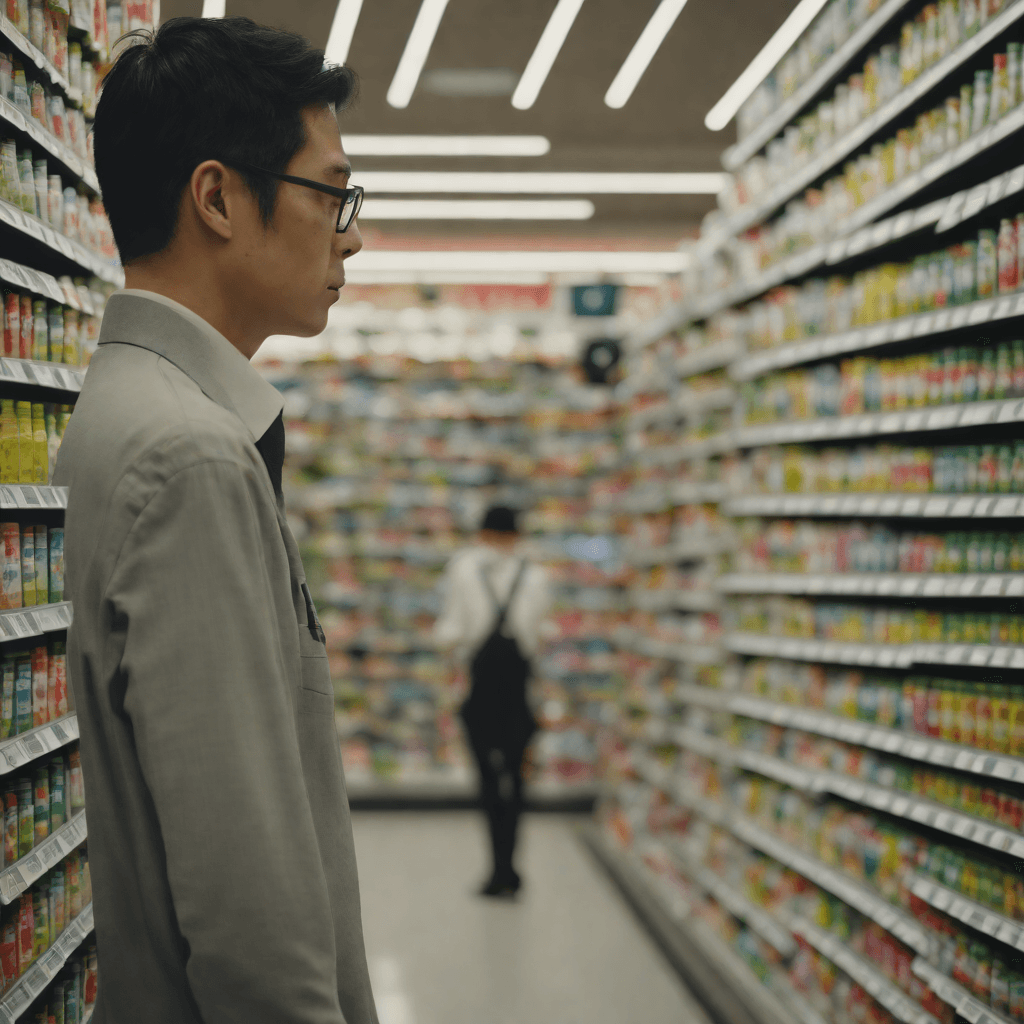
While U.S. consumers are navigating a 2.4% PCE price index with relative fluidity, the Japanese public is retreating into survival mode. The reality of this "spending peak" is best illustrated by the visceral choices being made in the aisles of local markets. For Sato Kenta, a middle-management professional in Tokyo, the statistical rise in consumption reflects the necessity of paying more for less. This is evidenced by the 1.2% drop in real food expenditure reported by the Ministry of Internal Affairs and Communications. Kenta observes that while his monthly debit transactions have technically increased, his grocery bags are lighter, and premium ingredients have been replaced by discount staples to offset the spike in utility and logistics costs.
The Automation Anchor and the Adjustment Crisis
This trend validates the assessment of Taro Saito, Executive Research Fellow at NLI Research Institute, who argues that the sustainability of this consumption trend is fundamentally "questionable" as real incomes continue to struggle under persistent inflation. The risk is no longer just a lack of growth, but a transformation of the consumer from a voluntary participant into a captive subject of inflationary necessity. This "Spending Paradox" is being exacerbated by the 2026 AGI boom, where labor value is being cannibalized by technological capital.
Consider the "Adjustment Crisis" where companies redirect capital toward autonomous AI agents rather than wage stability. For workers like Kenta, whose department budgets remain frozen while firms invest in automated verification systems, the statistical growth is a painful abstraction. This micro-level struggle mirrors the macro-level data, highlighting a society that is running faster just to stay in the same place. If the metrics of success—GDP and consumption—can rise while the quality of life for the individual worker falls, the traditional link between hard labor and increased standard of living has been severed by the velocity of inflationary adjustment.
The Efficiency Paradox of the Late 2020s
As the global economy recalibrates around aggressive U.S. trade postures and rapid technological acceleration, Japan’s "spending paradox" serves as a warning for other advanced economies. The aggressive push for deregulation under the second Trump administration has fundamentally altered the global labor-capital contract, leaving nations like Japan in a defensive posture that prioritizes corporate liquidity over the domestic standard of living. This shift is turning the traditional middle class into a new class of "working precarious."
Leading economists now question whether this inflationary spending can provide a stable foundation for the future. The analysis suggests that Japan is entering a dangerous feedback loop where high corporate profits—buoyed by a weak yen and deregulatory tailwinds—fail to trickle down, instead fueling a speculative environment that treats labor as a liability. If the primary metric of progress is the velocity of capital rather than the well-being of the worker, the statistical "growth" we see today may be nothing more than the final embers of a consumer society being priced out of its own existence.
Sources & References
Family Income and Expenditure Survey (2025 Average)
Statistics Bureau of Japan (SBJ), Ministry of Internal Affairs and Communications • Accessed 2026-02-06
Real consumption expenditure in 2025 increased by 0.9% year-on-year, marking the first increase in three years. However, real income decreased for the second consecutive year, indicating a 'hollow recovery' where spending grows despite falling purchasing power.
View OriginalPersonal Income and Outlays, June-December 2025
U.S. Bureau of Economic Analysis (BEA) • Accessed 2026-02-06
US Real Personal Consumption Expenditures (PCE) showed resilient growth throughout 2025, with an annual average growth rate significantly outpacing Japan at approximately 2.6%.
View OriginalJapan Real Consumption Expenditure Growth: 0.9%
Statistics Bureau of Japan • Accessed 2026-02-06
Japan Real Consumption Expenditure Growth recorded at 0.9% (2025)
View OriginalJapan Real Food Expenditure Change: -1.2%
Ministry of Internal Affairs and Communications • Accessed 2026-02-06
Japan Real Food Expenditure Change recorded at -1.2% (2025)
View OriginalUS Real Consumer Spending Growth (Annualized): 2.6%
Deloitte / BEA Data • Accessed 2026-02-06
US Real Consumer Spending Growth (Annualized) recorded at 2.6% (2025)
View OriginalTaro Saito, Executive Research Fellow
NLI Research Institute • Accessed 2026-02-06
While real consumption has finally turned positive after three years, the sustainability of this trend is questionable as real incomes continue to struggle under the weight of persistent inflation.
View Original2025 Family Income Survey: Consumption Up 0.9% but Living Standards Remain Stagnant
Limo.media • Accessed 2026-02-06
Highlights the disconnect between the statistical increase in consumption and the actual feeling of financial pressure among Japanese households.
View OriginalWhat do you think of this article?