The Double Frost: How US Protectionism Brittle-Tests South Korea’s Infrastructure
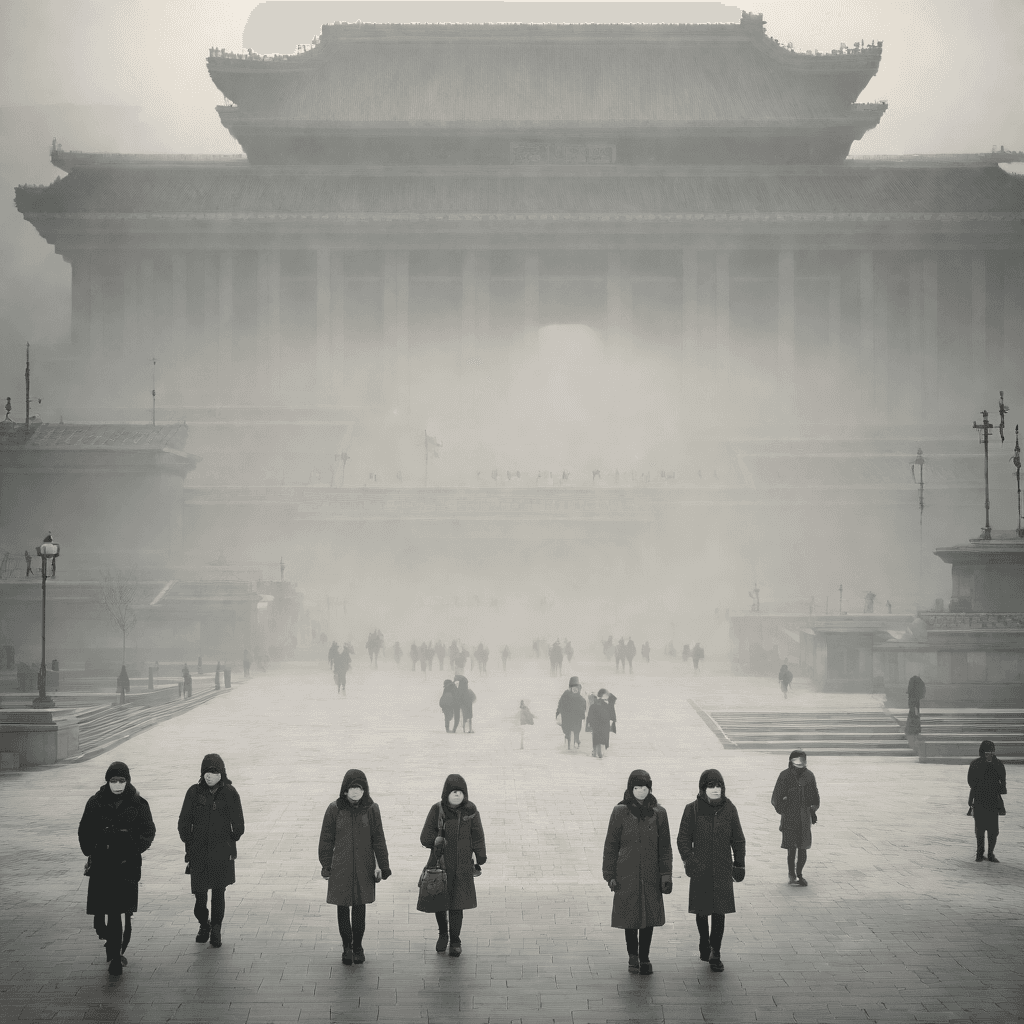
The Grey Winter: A Convergence of Climate Extremes
Seoul’s Gwanghwamun Square is currently gripped by a stagnant, metallic-tasting haze that locals have dubbed the "Grey Winter." As temperatures plunge to -10°C, the traditional "three cold days, four fine days" cycle has collapsed into a persistent, frozen atmospheric trap. For David Chen, a supply chain analyst based in the capital, the bite of the wind is less concerning than the visual evidence of industrial stagnation overhead. This environmental lockdown serves as the physical manifestation of a broader systemic paralysis, where domestic infrastructure failure is no longer a localized inconvenience but a critical vulnerability in the face of shifting global trade dynamics.
The physical toll of this convergence is exacerbated by a dangerous atmospheric synergy between extreme cold and low humidity. As noted by Dr. Howard Frumkin, Professor Emeritus at the University of Washington, dry air during these cold snaps compromises the respiratory system's physical barriers precisely when fine particulate matter levels spike due to increased heating demands. According to data from the Centers for Disease Control and Prevention (CDC), these conditions are a catalyst for the airborne transmission of respiratory viruses like influenza and RSV, which thrive when respiratory membranes are dried by low-moisture Arctic air. In Seoul, this translates to a workforce already under pressure from Trump 2.0 industrial shifts now facing a silent public health crisis that further saps national productivity.
Beyond the immediate health risks, the "Double Frost" represents a deepening fiscal wound for South Korea as it navigates an increasingly isolationist Washington. The infrastructure required to sustain a modern economy under these extremes—heating grids, medical surge capacity, and logistics networks—is being tested to the breaking point. Adam Smith, a climate economist and NOAA consultant, argues that the compounding effects of an infrastructure freeze and the suspension of health-cost monetization create a "hidden debt" for the national economy. Under the Trump administration’s pivot toward deregulation and "America First" protectionism, the cost of this climate-induced instability cannot be easily exported; it remains a domestic burden that threatens to derail the nation's fragile post-automation recovery.
A Grid Under Pressure: The High Cost of Survival
The looming Arctic outbreak, which the NOAA National Weather Service forecasts will bring wind chills as low as -30°F to the US Northeast by February 7, 2026, serves as a chilling precursor to a global phenomenon: the systemic failure of aging energy infrastructure under the pressure of extreme weather and isolationist trade policies. In South Korea, this manifests as a critical stress test for a national power grid that was never designed for the volatile climate of the mid-2020s. As temperatures fail to rise above single digits, the strain on the grid is no longer just a technical concern; it is a socio-economic crisis that exposes the widening gap between the nation’s technological ambitions and its physical resilience.
For citizens like Kim Seo-yeon, a resident in an aging apartment complex in northern Seoul, the cold is a direct threat to both her health and her financial stability. Her utility bills have surged by nearly 25% since the beginning of the year, a spike driven by the "Trump 2.0" era of global trade protectionism which has increased the cost of the liquefied natural gas (LNG) that South Korea relies on for peak heating demand. In a deregulated global market where "America First" policies have disrupted traditional energy subsidies, nations like South Korea are finding it increasingly expensive to buffer their most vulnerable populations from price volatility.
The intersection of environmental stress and public health is further complicated by the secondary effects of increased heating demand. Dr. Frumkin points out that during severe cold snaps, the physical barrier of the respiratory system is compromised at the exact moment that fine particulate matter levels spike due to the intensified use of heating fuels. In the Seoul metropolitan area, this creates a lethal synergy where poor air quality and extreme cold act together to overwhelm local clinics. If we treat the warmth of a home as a mere market commodity, the international community must grapple with the reality that an "efficient" grid is not necessarily a resilient one.
The External Chill: How 25% Tariffs Deepen Domestic Hardship
The Trump administration’s aggressive implementation of a 25% tariff hike on imported industrial components has forced a fundamental recalibration of South Korean fiscal priorities, effectively cannibalizing the funds necessary for domestic infrastructure resilience. As the 'America First' doctrine shifts from rhetoric to rigid policy in early 2026, Seoul finds its export-driven margins evaporated by US customs duties, leaving little capital to address the aging heating and water grids currently failing under the weight of an unprecedented cold snap. This economic vacuum illustrates a critical trade-off: when global trade protectionism rises, the ability of secondary economies to maintain essential social services during environmental emergencies diminishes.
This fiscal migration creates what Adam Smith describes as a "hollowing out" of South Korea’s industrial core. Capital is a heat-seeking missile, and in the second year of the Trump administration’s aggressive resurgence, that heat is being vacuumed out of the Korean peninsula. As the giants of the K-economy—Samsung, SK, and Hyundai—accelerate their "Stateside-First" pivots to maintain market access and secure US subsidies, the tax revenue intended to modernize domestic systems is evaporating. Every new factory breaking ground in the American Midwest represents a potential radiator that goes cold in a Seoul high-rise.
The Policy Paradox: Short-term Subsidies vs. Long-term Survival
The reliance on temporary energy vouchers in Seoul represents a classic policy trap where immediate political relief masks a deepening structural deficit. While the South Korean government has ramped up emergency heating subsidies to combat the current sub-zero temperatures, this fiscal "Band-Aid" fails to address the underlying fragility of an aging power grid. By prioritizing short-term liquidity over systemic retrofitting, the administration is effectively borrowing from the nation’s future stability to pay for today’s thermostat settings. In an era where Trump’s deregulation is driving a massive pivot in global energy markets, the cost of maintaining obsolete infrastructure is becoming a drag on national sovereignty.
The pursuit of national resilience in a protectionist era requires a synthesis of climate adaptation and industrial strategy that moves beyond simple deregulation. The "Double Frost"—the literal arctic cold and the metaphorical isolationist barrier—demands a new economic model that treats infrastructure not as a regulatory burden, but as the foundational capital of a sovereign nation. If the goal of the current US administration is to decouple from global vulnerabilities, the first step for its allies must be the fortification of the domestic systems that are currently buckling under the weight of predictable environmental shifts.
Ultimately, if we strip away the regulatory layers that once buffered our critical systems against nature's extremes, we are not gaining liberty; we are merely trading it for an expensive, life-threatening fragility. The choice for 2026 is no longer between different types of subsidies, but between a managed transition toward high-efficiency, climate-resilient architecture or an unmanaged collapse during the next inevitable freeze.
Sources & References
Winter Weather Safety and Health Guidance
Centers for Disease Control and Prevention (CDC) • Accessed 2026-02-06
The CDC provides critical protocols for preventing hypothermia and frostbite during extreme cold waves, noting that dry winter air significantly increases the survival and transmission of respiratory viruses like influenza and RSV.
View OriginalNational Short Range Forecast Discussion: Arctic Outbreak (Feb 7-8, 2026)
NOAA National Weather Service (NWS) • Accessed 2026-02-06
NWS forecasts a severe Arctic outbreak for the Northeast and Mid-Atlantic starting February 7, 2026, with wind chills projected to reach -30°F in interior New England, posing life-threatening risks.
View OriginalAdam Smith, Climate Economist
Climate Central / NOAA Consultant • Accessed 2026-02-06
The compounding effects of infrastructure freeze and the suspension of health-cost monetization create a hidden debt for the US economy.
View OriginalDr. Howard Frumkin, Professor Emeritus of Environmental and Occupational Health Sciences
University of Washington • Accessed 2026-02-06
When you have dry air during a cold snap, the physical barrier of your respiratory system is compromised just as fine particulate matter levels often spike due to increased heating demand.
View OriginalWhat do you think of this article?