The Mar-a-Lago Gamble: Is Taiwan the Price of Trump’s ‘Grand Deal’?
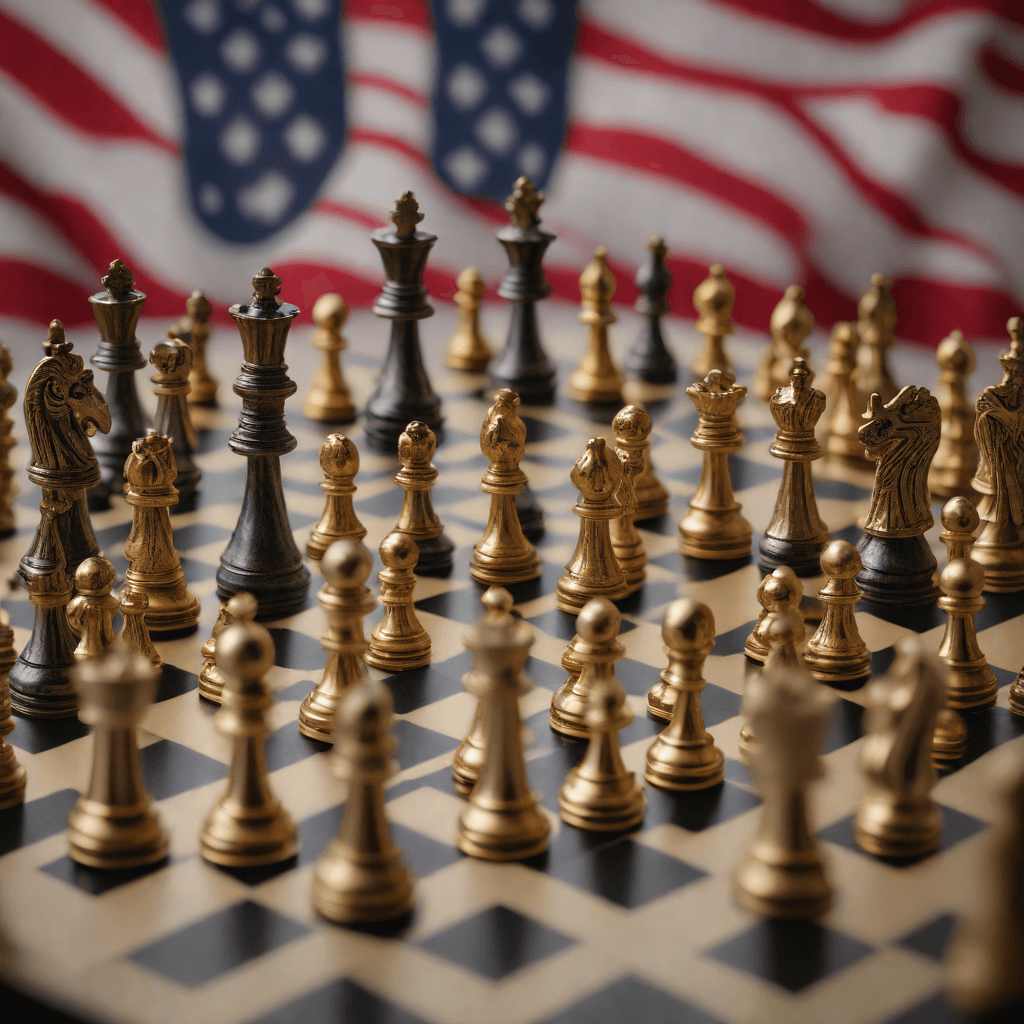
A Mercantilist Pivot in the Florida Sun
The winter air at Mar-a-Lago on February 4, 2026, signaled a definitive frost for the old geopolitical order. As President Donald J. Trump hosted Chinese President Xi Jinping for a high-stakes summit at the Florida estate, the contours of a "Grand Deal" began to emerge from the gilded halls. Unlike the diplomatic dances of the past, this summit was defined by the cold logic of the ledger, suggesting that the democratic sovereignty of Taiwan has transitioned from a point of principle to a primary bargaining chip in American trade policy.
According to reports from the Ministry of Foreign Affairs of the People's Republic of China (FMPRC), President Xi used the summit to reiterate that the Taiwan question remains the "most important issue" and a non-negotiable "red line." He explicitly urged the Trump administration to exercise prudence regarding arms sales and military support. While the White House has publicly signaled a desire to make 2026 a year of "win-win cooperation," the transactional nature of this second-term diplomacy suggests that the bedrock of regional security is being re-evaluated through the lens of a balance sheet.
The Architecture of the Ledger
Foreign policy observers view this shift as a sharp departure from the "strategic ambiguity" that governed the Taiwan Strait for decades. The Trump administration’s isolationist leanings, intensified by a desire for unchecked technological acceleration, suggest a willingness to trade security guarantees for direct economic concessions. This mercantilist approach views treaty allies not as permanent assets, but as liabilities that must justify their cost to the American taxpayer.
The primary leverage driving this potential deal is rooted in the staggering economic disparity of the preceding year. Data from the General Administration of Customs indicates that China’s overall trade surplus reached $1.189 trillion in 2025. President Trump has frequently cited this figure as evidence of "economic carnage" that must be rectified through aggressive purchasing agreements or massive tariff reductions. By treating this surplus as the primary grievance, the administration creates a scenario where concessions on Taiwan’s defense could be the currency used to buy a legacy-defining trade victory.
Existential Anxiety in the First Island Chain
This "Adjustment Crisis" in trade relations risks reducing complex sovereignty issues to mere line items. While the official diplomatic channel maintains a veneer of constructive progress, the underlying tension is palpable. The U.S. appears to be pivoting toward a foreign policy that prioritizes economic reciprocity over the maintenance of the liberal international order. For nations from Tokyo to Manila, the fear is that the "security ladder" they have relied upon is being retracted in favor of a short-term financial win for Washington.
In Taipei, this geopolitical recalibration is felt as a tangible weight on the future of democratic sovereignty. Recent diplomatic communications have sounded less like security consultations and more like a series of deadlines. This sense of existential dread is a micro-reflection of a broader regional anxiety. As the U.S. signals a pivot toward isolationism, the stability of the First Island Chain—once considered a fixed geopolitical constant—now appears subject to the fluctuations of the global market.
Domestic Realities and the 'Grand Deal' Anesthetic
The high-stakes diplomatic theater at Mar-a-Lago also serves as a necessary diversion from a fraying domestic interior. Washington is currently grappling with the widespread displacement of white-collar labor driven by generative AI models. For an administration that has tethered its legitimacy to economic nationalism, the spectacle of a "Grand Deal" with Beijing provides a powerful anesthetic against the pain of structural unemployment and stalling infrastructure projects.
The disconnect between the gilded summit and the American heartland is illustrated by the experiences of former operations managers in the Midwest, many of whom have seen their roles automated by the very technological acceleration the administration champions. While the White House touts the summit as a stabilizer for the global economy, local communities remain skeptical, observing that the promises of "economic reciprocity" rarely translate into the restoration of regional industrial centers.
The Strategic Vacuum of Transactionalism
Security analysts warn that this transactional approach carries the risk of dismantling decades of regional stability. The concern is that the Trump administration may treat Taiwan as a negotiable asset—a price worth paying for a trade deal that secures the President’s domestic legacy and provides a temporary boost to the U.S. economy. However, a peace bought with the sovereignty of an ally is rarely more than a temporary ceasefire.
Ultimately, the Mar-a-Lago gamble reflects a broader 2026 zeitgeist where the protection of democratic values is forced to compete with the immediate demands of market access. If the U.S. prioritizes the balance sheet over the balance of power, it risks leaving Pacific allies isolated and emboldening further expansionism. The coming months will reveal if Washington's new "Art of the Deal" can actually produce a sustainable peace, or if it is simply the first step toward a long-term systemic collapse of the post-war alliance system.
Sources & References
Xi Jinping Speaks with Donald Trump on the Phone
Ministry of Foreign Affairs of the People's Republic of China (FMPRC) • Accessed 2026-02-06
President Xi emphasized that the Taiwan question is the most important issue in China-U.S. relations and urged prudence regarding arms sales. Both leaders discussed trade, military cooperation, and global conflicts including Ukraine and Iran. Xi expressed readiness to make 2026 a year of 'win-win cooperation.'
View OriginalSurveying the Experts: The State of U.S.-China Relations Entering 2026
Center for Strategic and International Studies (CSIS) • Accessed 2026-02-06
Experts surveyed on January 13, 2026, analyzed the impact of Trump's second term on bilateral stability. The report highlights the 'Busan Truce' of October 2025 as a stabilizing factor but warns of volatility ahead of the April 2026 summit.
View OriginalChina Overall Trade Surplus (2025): $1.189 trillion
General Administration of Customs (PRC) / Trading Economics • Accessed 2026-02-06
China Overall Trade Surplus (2025) recorded at $1.189 trillion (2025)
View OriginalDavid Perdue, U.S. Ambassador to China
U.S. Department of State • Accessed 2026-02-06
The atmosphere of interactions between our two nations has noticeably improved following the Busan agreement. We are working toward a framework for the April visit that prioritizes economic reciprocity.
View OriginalXi Jinping warns Trump on Taiwan as leaders agree on April summit
The Straits Times • Accessed 2026-02-04
Highlights the diplomatic friction over Taiwan arms sales contrasted with the 'deal-making' atmosphere surrounding the April visit.
View OriginalWhat do you think of this article?